Kururi Castle: A Japanese Hilltop Fortress and Domain Centre
Site at a Glance
- Rating
- 3.8
- Popularity
- Low
- Country
- Japan
- Primary era
- Early Modern
- External website
- Open
- Eras represented
- Medieval, Early Modern, Modern
- Civilizations
- Ashikaga shogunate, Tokugawa
- Site type
- Military
- Remains
- Castle
On this page12 sections
History
Kururi Castle is a hilltop Japanese castle in Japan, whose earliest historically supported construction was carried out in 1456 by Takeda Nobunaga, founder of the Kazusa Takeda lineage, during the Muromachi period. The fortress later became a Satomi base against the Hojo clan and, under Tokugawa rule, the centre of the Kururi Domain.
Takeda and Satomi control
Kururi is also known as Rain Castle, Kirifuri Castle, and Urata Castle. A tradition attributes an earlier foundation to a third son of Taira no Masakado, but that account remains uncertain. The first firmly supported construction followed Takeda Nobunaga’s appointment as deputy governor of Kazusa in 1455. His descendants, including the Mariya clan, controlled the original mountain fortress afterward.
During the Sengoku period, an era of prolonged warfare among rival regional lords, the Satomi clan took control as the Takeda regime weakened through warfare and internal conflict. The transfer is associated either with Satomi Naruyoshi forcing the castle to surrender or with Satomi Yoshitaka persuading Takeda Masakatsu to relinquish it. Yoshitaka made Kururi his base and built a new castle below the earlier fortress, generally dated to 1535, although that date is disputed. Kururi and nearby Sanuki Castle then served as frontline positions against the Hojo clan. Hojo forces captured Kururi during their invasion of Kazusa in 1564, but the Satomi recovered it in 1567.
Tokugawa administration and abandonment
In 1590, Toyotomi Hideyoshi, who had unified much of Japan in the late sixteenth century, confiscated the Satomi holdings in Kazusa after Satomi Yoshiyasu violated Hideyoshi’s ban on private warfare during the conquest of Odawara. After Tokugawa Ieyasu entered the Kanto region, he assigned Kururi to his retainer Matsudaira (Osuga) Tadamasa. Tadamasa became lord of the 30,000-koku Kururi Domain, with a koku being a historical measure of assessed agricultural production, and developed the castle town around the stronghold.
In 1601, after receiving an additional 30,000 koku for his service at the Battle of Sekigahara, Tadamasa was transferred to Yokosuka Castle in Totomi Province. Tsuchiya Tadanao then entered Kururi with an income of 20,000 koku. The Tsuchiya clan was attainted in 1679, the domain was abolished, and the castle was temporarily abandoned.
The Kururi Domain was restored in 1742 when Kuroda Naozumi, a hereditary daimyo or powerful feudal lord, was transferred from Numata. He rebuilt the fortifications, and his descendants ruled Kururi until the Meiji Restoration. The Meiji government’s 1872 abolition order ended the castle’s official existence and led to the destruction of its remaining structures. The former castle land became a castle park in 1955, and a reconstructed keep was erected beside the original keep foundation in 1979.
Remains
Kururi stands on a hill approximately 227 metres high. Its surviving remains form four related areas: the early-modern castle area with the main enclosure, the Azumibara district, the Nuta archaeological site, and the early-modern residential area at the foot of the hill beside the Obitsu River. During the Edo period, only the hilltop castle area and the foothill residential area were maintained as parts of the castle. The mountain-top remains are comparatively well preserved, although a road has cut through part of them.
Archaeological districts and fortifications
Mountain-top castle area
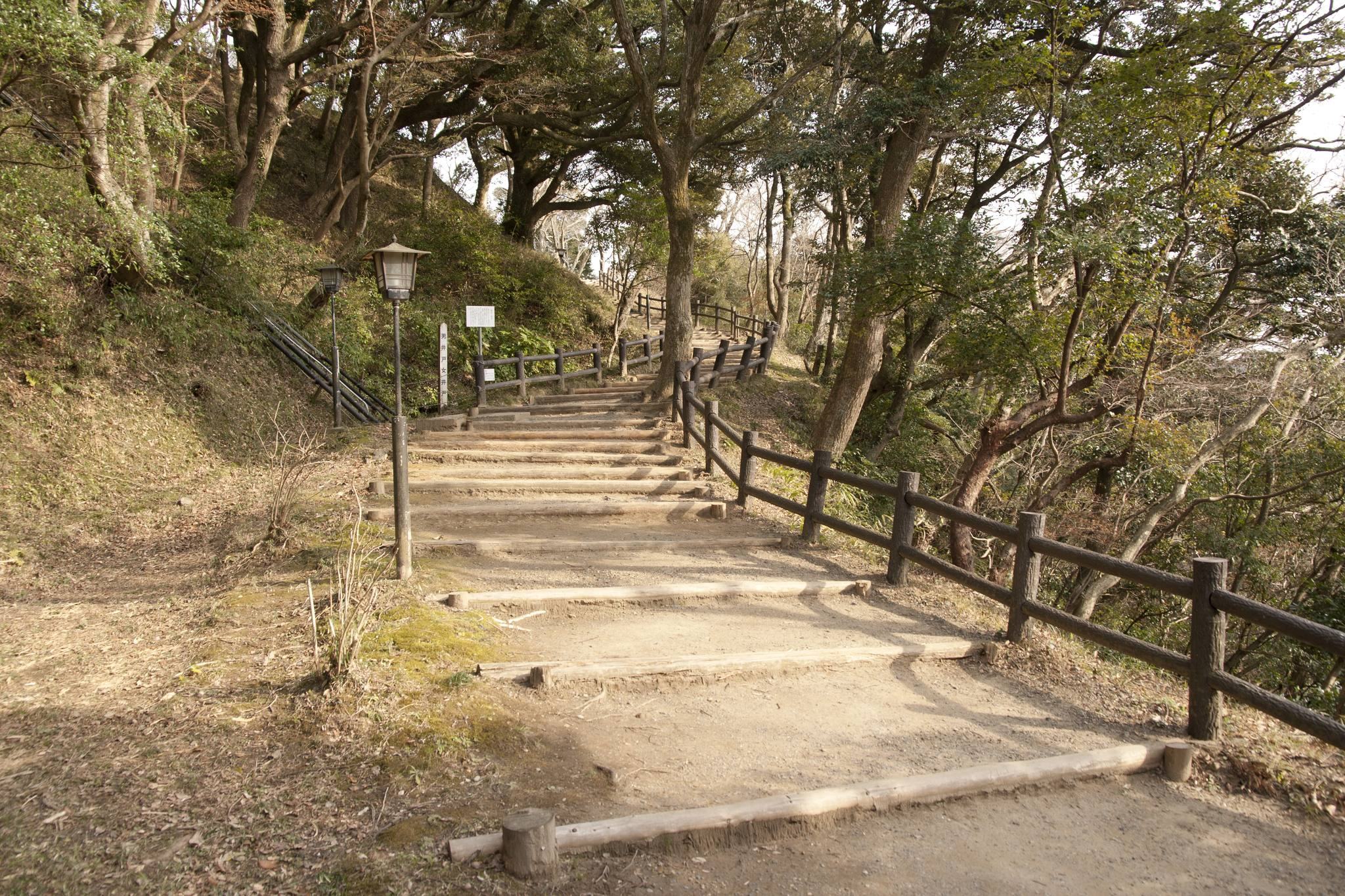
The hilltop retains earthen ramparts, dry moats, enclosures, an earthen bridge, wells, and the foundation of the original keep. The dry moats are defensive ditches without permanent water. Medieval features associated with the Satomi period include further moats and banks created by leaving sections of the natural ground uncut. Several water sources remain on the hill, including the Male Well, the Female Well, and Otama Pond.
Azumibara and Nuta
Azumibara preserves remains attributed to the Mariya period. It is generally thought to have been abandoned by the Satomi period, although continued use during that period has also been proposed. The Nuta archaeological site forms another of the four surviving groups within the historical castle landscape.
Foothill residential area
The early-modern residential area beside the Obitsu River has largely disappeared through later development. Parts of its earthen ramparts survive, preserving evidence of the settlement that supported the castle and its governing lord.
Keep and museum
Original keep foundation
The original Edo-period keep was probably a two-tier, two-floor structure. This form is inferred from surviving documentary evidence and the arrangement of its foundation stones. The earthen foundation remains beside the reconstructed keep, near the former second enclosure.
Reconstructed keep
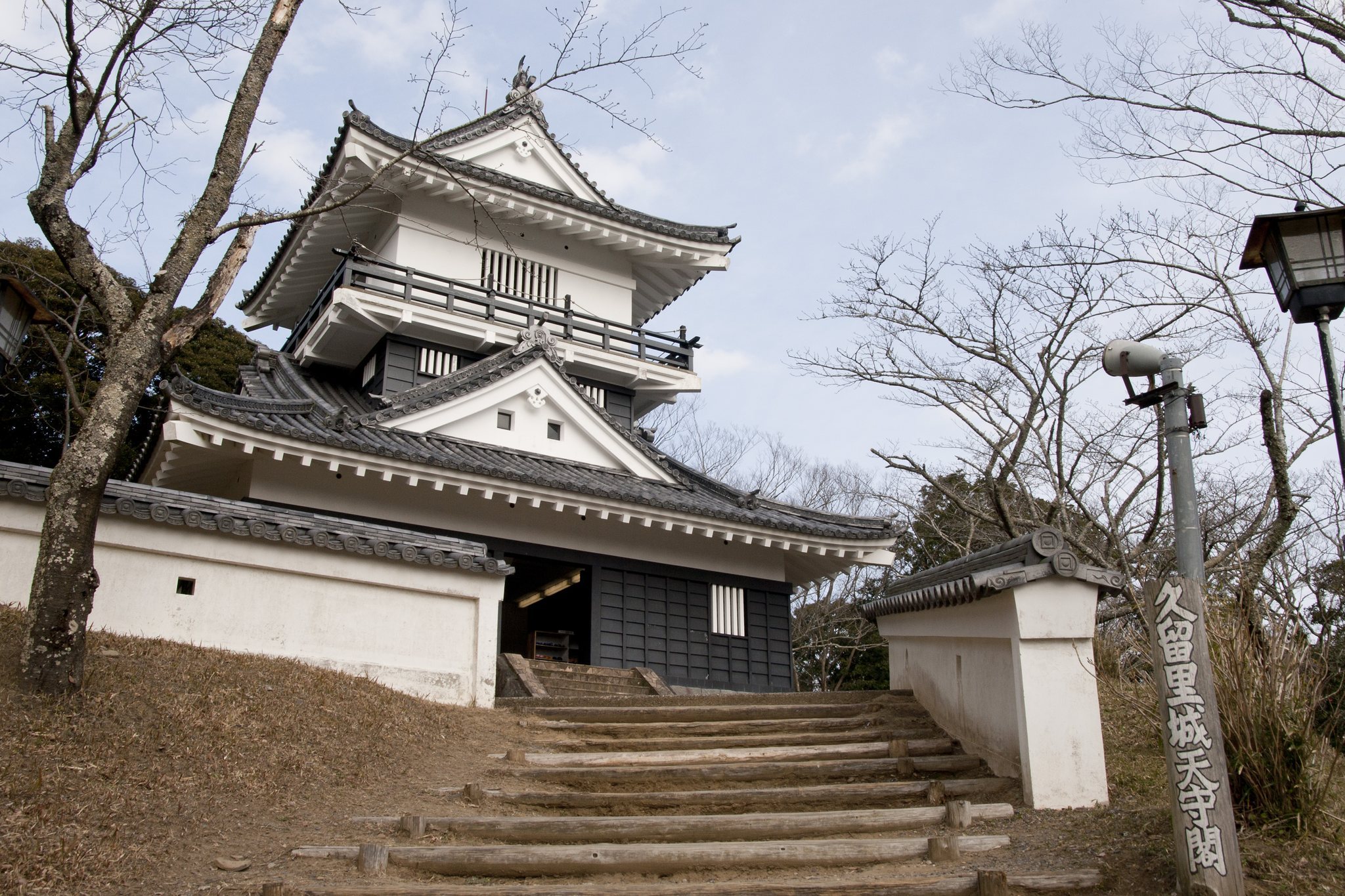
The present keep is an independent watchtower-style building made of reinforced concrete. It has two tiers and three internal floors and was modelled on the reconstructed keep of Hamamatsu Castle. Its form differs substantially from the historical keep. The building serves as an observation structure and museum, with exhibits chiefly devoted to local history.
Kururi Castle Site Museum
The Kururi Castle Site Museum opened in 1979 near the reconstructed keep and the original keep foundation. It also presents the traditional well-drilling method known as Kazusa-boring, connecting the castle site with a regional technical tradition.