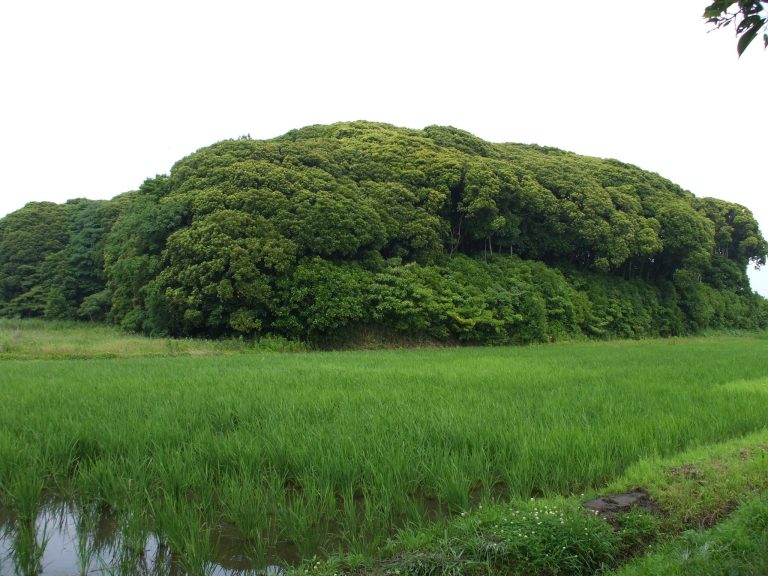
Jin’ya-ji Temple: A Buddhist Temple in Kimitsu, Japan

Site at a Glance
- Rating
- 4.1
- Popularity
- Low
- Country
- Japan
- Primary era
- Medieval
- External website
- Open
- Eras represented
- Medieval
- Civilizations
- Ashikaga shogunate
- Site type
- Religious
- Remains
- Temple
On this page9 sections
History
Jin’ya-ji Temple is a Buddhist temple in Kimitsu, Japan, belonging to the Chizan School of Shingon Buddhism, an esoteric Buddhist tradition introduced to Japan in the early ninth century. Temple tradition attributes its foundation to Prince Shotoku during the reign of Emperor Suiko in AD 598 and describes it as the oldest temple in the Kanto region.
Traditional foundation and revival
Prince Shotoku was an imperial prince and statesman traditionally associated with the early promotion of Buddhism in Japan. Emperor Suiko ruled Japan during the early seventh century, with a traditionally dated reign from AD 592 to 628. Jin’ya-ji’s foundation is placed within that period, although the account of its origin belongs to temple tradition.
The temple was reportedly revived during the Eisho era, which lasted from 1504 to 1521, by a monk of the Shingon tradition. Its principal Buddhist images are Yakushi Nyorai, the Buddha associated with healing and medicine, and Gundari Myoo, a Wisdom King regarded as a protector against hostile forces.
The 1979 tiger escape
In August 1979, three Bengal tigers escaped from a zoo then located within the temple grounds. One animal returned and was captured immediately. A one-year-old male and female, each weighing about 100 kilograms and measuring approximately 1.5 meters in length, remained outside the zoo.
After the escape was reported during the early hours of August 3, the Chiba Prefectural Police established a local operations headquarters. About 500 police officers, volunteer firefighters, hunters, and other participants searched for the tigers, while nearby residents were ordered to remain indoors.
The female was shot on the morning of August 4. The search was temporarily suspended after animal-welfare organizations submitted numerous complaints. The temple’s head priest also stated that, because sufficient time had passed, the tiger might not have needed to be shot.
A nearby resident’s dog was found dead after a tiger attack during the early morning of August 28. Later that day, a joint search by members of the hunters’ association and a police team selected for shooting ability killed the male tiger, which had remained at large for 27 days. After the incident, the temple stopped keeping dangerous animals and transferred them to other zoos or facilities. The episode also contributed to the later development of local ordinances concerning the keeping and custody of dangerous animals.
Typhoon damage and conservation
In September 2019, the Boso Peninsula Typhoon, known as Typhoon No. 15, caused extensive damage to Jin’ya-ji Temple. The Front Gate was completely destroyed, while the Former Goma Hall and the Inner Sanctuary were also damaged.
Conservation repairs to the Front Gate took place from January 16, 2020, through December 31, 2021, and the gate was subsequently restored. The gate had been designated in 1916 under the former Ancient Shrines and Temples Preservation Law as a Specially Protected Structure, a category corresponding to Important Cultural Property under Japan’s current legal system.
Remains
The temple complex includes the Front Gate, the Former Goma Hall, and the Inner Sanctuary. These buildings represent the principal architectural features identified at Jin’ya-ji, while the temple’s principal Buddhist images are Yakushi Nyorai and Gundari Myoo.
Temple buildings and Buddhist images
Front Gate
The Front Gate is a four-legged gate from the Muromachi period, a period of Japanese history that broadly extended from the fourteenth to the sixteenth century. This gate type is supported by four subsidiary posts in addition to its principal posts. The structure was completely destroyed by the 2019 typhoon and later returned to its restored form through conservation-repair work carried out between 2020 and 2021.
Former Goma Hall and Inner Sanctuary
The Former Goma Hall and the Inner Sanctuary are additional buildings within the temple complex. The Goma Hall was associated with goma, an esoteric Buddhist fire ritual in which offerings are burned before a sacred fire. Both buildings sustained damage during the September 2019 typhoon.
Principal Buddhist images
Yakushi Nyorai and Gundari Myoo are identified as Jin’ya-ji Temple’s principal Buddhist images. Yakushi Nyorai represents the Buddhist association with healing and medicine, while Gundari Myoo belongs to the group of Wisdom Kings understood as protective figures.