Sanuki Castle: A Strategic Japanese Castle and Domain Seat in Chiba

Site at a Glance
- Rating
- 3.7
- Popularity
- Very Low
- Country
- Japan
- Primary era
- Medieval
- External website
- Open
- Eras represented
- Medieval
- Civilizations
- Ashikaga shogunate
- Site type
- Military
- Remains
- Castle
On this page11 sections
History
Sanuki Castle was a Japanese castle in Futtsu, Japan, built during the Ōnin era, approximately 1467 to 1469, in the early Muromachi period. It became a stronghold in the prolonged warfare of the Sengoku period and later served as the administrative seat of Sanuki Domain. The castle was also known as Kame Castle.
Origins and the Mariya family
The castle’s foundation is traditionally attributed to Takeda Yoshihiro. Another tradition credits its construction to the Sōshū Nagao family, which was said to have been based at Sanuki. The castle was built by the Mariya branch of the Takeda warrior house, a family active in Kazusa.
From the Eishō era through 1537, Mariya Zenpō, also known as Takeda Nobuaki, held Sanuki Castle. Members of the Katō family served as castellans, or officials responsible for managing a castle. The Katōs were considered descendants of Katō Nyūdō Bonken, a retainer of Takeda Nobunaga, and remained influential local leaders under successive rulers after the Mariya family declined.
Conflict between the Mariya, Satomi, and Later Hōjō families
In 1537, a succession dispute within the Mariya family brought about the fall of Sanuki Castle. Mariya Nobutaka, who held the castle, was defeated by Ashikaga Yoshiaki and Satomi Yoshiaki, who supported Mariya Nobumasa.
Hōjō Ujiyasu temporarily occupied the castle in 1545. Sanuki then became a recurring objective in the struggle between the Satomi family, based mainly in Awa, and the Later Hōjō, a powerful warlord house based in the Kantō region. The Later Hōjō controlled the castle during part of this period and appointed a castellan.
Ujiyasu occupied Sanuki again in 1555 and reported its capture to his ally Yūki Harutomo. Satomi Yoshihiro recaptured the castle in 1556 and used it as the base for an attack on Kamakura led by naval forces.
The Later Hōjō regained control around 1559, when their retainer Fuse Danjōzaemon Yasunori served as castellan. In 1562, Ashikaga Yoshiuji, the Koga kubō, established a temporary residence at Sanuki under Ujiyasu’s protection. A Koga kubō was an Ashikaga family member who served as the Ashikaga political leader in the Kantō region. Yoshiuji had been driven from Koga Palace by Uesugi Kenshin and withdrew to Kamakura after Satomi Yoshihiro recaptured Sanuki around 1563.
In 1567, Yoshihiro set out from Sanuki Castle for the Battle of Mifuneyama against the Later Hōjō. He died of illness at the castle in 1578. Satomi Yoshiyori, who was based in Awa Province, then attacked the castellan Katō Nobukage and his heir, Umemaru. Their submission enabled Yoshiyori to succeed to the Satomi leadership, after which the family’s main base shifted to Awa.
Tokugawa rule and the Sanuki Domain
After the Odawara Campaign of 1590, the Satomi family was reduced to control of Awa Province. Naitō Ienaga, a retainer of Tokugawa Ieyasu, then entered Sanuki Castle. Ieyasu had gained control of Japan in the late sixteenth century and founded the Tokugawa shogunate.
In 1622, Ienaga’s son Masanaga was transferred to Iwakitaira Domain in Mutsu Province with an increase in his landholding. Matsudaira Tadashige succeeded him after receiving an increased holding and established Sanuki Domain with 15,000 koku. A koku was a historical measure used to assess agricultural yield and stipends. Tadashige had previously been an 8,000-koku hatamoto based at Fukaya in Musashi Province. A hatamoto was a direct shogunal retainer who generally held a smaller fief than a daimyō, the lord of a domain.
In 1633, Tadashige was transferred to Tanaka Domain in Suruga Province with a larger holding. Matsudaira Katsutaka, previously a hatamoto, then entered Sanuki with 15,000 koku and became a daimyō for the first time.
On November 10, 1684, Katsutaka’s son Shigeharu was dispossessed. Sanuki Domain was abolished, and the castle was dismantled. Yanagisawa Yasuaki, later known as Yanagisawa Yoshiyasu, was appointed a daimyō by Shogun Tokugawa Tsunayoshi in 1688. Tsunayoshi was the fifth Tokugawa shogun and Yoshiyasu’s close personal aide. Yoshiyasu re-established Sanuki Domain with 15,000 koku, later increased to 20,000.
When Yoshiyasu was transferred to Kawagoe Domain in Musashi Province in 1694, Sanuki Castle was abandoned again. Abe Masayasu revived the castle in 1710 after transferring from Kariya Domain in Mikawa Province, bringing a holding of 16,000 koku.
Abolition of the castle
In 1869, Abe Masatsune returned his domain to the imperial government, placing Sanuki under the administration of the Meiji government. The castle was abolished in 1871 during the abolition of the domains and the establishment of prefectures. Apart from the two periods of abandonment in the late seventeenth and early eighteenth centuries, Sanuki was maintained as a castle until this final abolition.
Remains
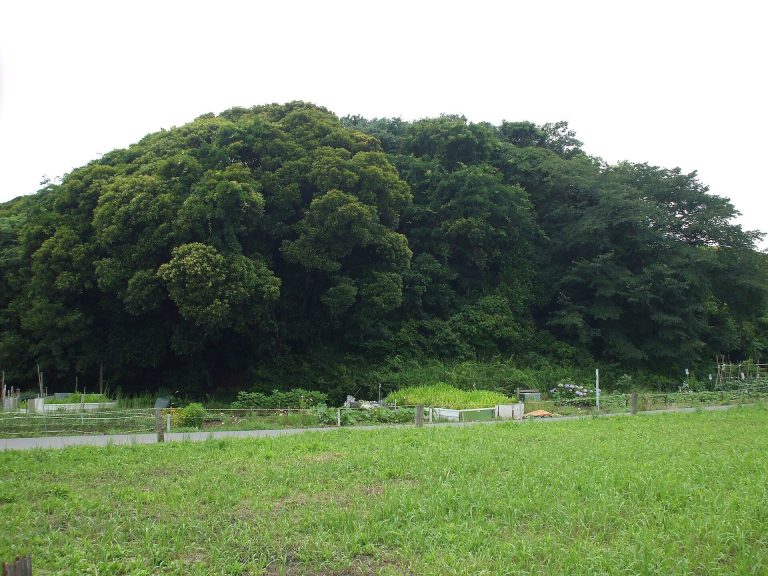
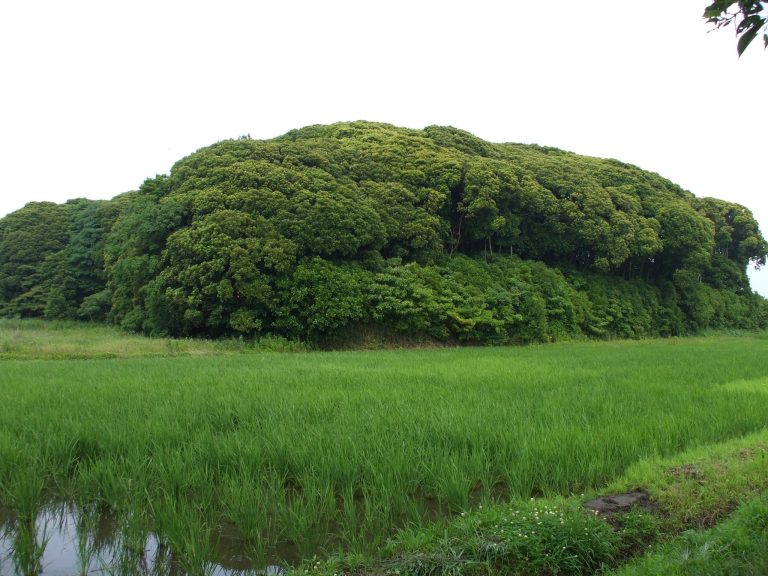
Sanuki Castle occupied the end of a ridge between valleys cut by the Kitakami and Some rivers. It was a hill castle without a keep, with connected fortified enclosures arranged successively along several ridges. The principal enclosures extended southwest from the main enclosure on Castle Hill through the second and third enclosures. Other enclosures continued along the ridge behind the main enclosure from Sanshodani toward Kamijuku, while further enclosures lay near Kita-Shinjuku at the southeastern edge of the castle area beyond Kurobe Valley.
Ridge enclosures and landscape
A deep valley called Jimbā, also known as Jimbā Valley, separated the castle area on the west from the rear hills. Other valleys, including Kurobe Valley, penetrated the castle interior. Much of the surrounding terrain consisted of narrow ridges, while the principal enclosures occupied several broader ridgelines.
The settlement around the castle included the port town of Hachimanura, probably near the present Tsurumine Hachiman Shrine. It faced the Miura Peninsula across the Edo Inland Sea. North-to-south routes through the Uchibō area converged at the port, and a mountain route connected Sanuki with the Sotobō coast through Kannōji, Seichōji, and Tanzanjōji. These connections helped the area develop as a market and post town and as an economic and transportation center.
Defensive works
Main-enclosure approach
The route from the third enclosure toward the main enclosure incorporated a main-enclosure entrance, turret platforms, additional entrances, dry moats, and earthen ramparts. A dry moat is a ditch without standing water, while a turret platform is a raised position for a defensive tower or related structure. Together, these features formed a sequence of defensive works between the outer and principal enclosures.
Valley and ridge enclosures
The enclosure groups around Kurobe Valley and Kamijuku included levelled areas cut into the ridges. Earth was deliberately left unexcavated to form ramparts around these spaces, an arrangement associated with Satomi-style castle construction. Several dry moats were cut directly into the bedrock, creating rock-cut escarpments that are also associated with this construction tradition.
Surviving stone and earth features
The mountain remains include dry moats, stone walls, earthen ramparts, and wells. Stone-built features are unusual in Kazusa Province, and the turret platform of the third enclosure survives among them. These remains preserve elements of the castle’s historical appearance and show how its ridge-top defenses were combined with the natural valleys and bedrock of the site.