Seichō-ji Temple: A Major Nichiren Buddhist Head Temple in Japan


Site at a Glance
- Rating
- 4.3
- Popularity
- Medium
- Country
- Japan
- Primary era
- Early Modern
- External website
- Open
- Eras represented
- Medieval, Early Modern, Modern
- Civilizations
- Ashikaga shogunate, Japanese, Kamakura shogunate, Tokugawa
- Site type
- Religious
- Remains
- Temple
On this page15 sections
History
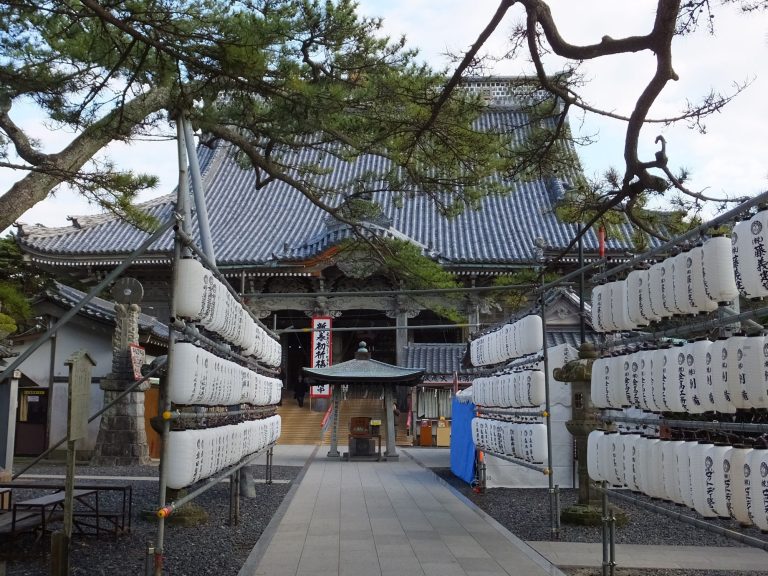
Seichō-ji Temple, formally called Senkōzan Seichō-ji, is a major Nichiren Buddhist temple in Japan, located in Kamogawa, Chiba. Its foundation tradition places its establishment in 771, when the traveling priest Fushigi enshrined Kokūzō Bosatsu, a bodhisattva associated with wisdom and memory. The temple is traditionally regarded as the place where Nichiren was ordained and established his teaching, and it is one of the Four Sacred Places of Nichiren Shū, a group of four temples given special importance in the history of Nichiren Buddhism.
Foundation and Tendai development
The traditional story connects both the mountain and temple names with local features. An old oak near the summit was said to shine with a thousand rays of light, giving the mountain the name Senkōzan. A dried pond was believed to have become a clear spring through ritual empowerment, inspiring the name Seichō-ji. The site developed as a center of mountain worship and later became a large Tendai complex. Tendai is a major Japanese Buddhist tradition that gives the Lotus Sutra a central place within a broad system of teachings. The complex reportedly included twelve subsidiary residences and twenty-five halls.
The priest Ennin is traditionally said to have visited in 836 and revived the temple, after which it became associated with Tendai Buddhism. Lightning destroyed the buildings in a fire in 1096, and the provincial governor Minamoto Chikamoto rebuilt them. In 1157, Hōjō Masako, the wife of the shogun Minamoto no Yoritomo and an important political figure of the Kamakura period, sponsored a thousand-day devotional assembly. Her patronage was linked to the construction of a treasure pagoda and a revolving repository for Buddhist scriptures, where more than 4,000 volumes were placed.
Nichiren and the establishment of his teaching
Nichiren entered Seichō-ji as a student in 1233 under the priest Dōzen. He was formally ordained there at sixteen, first taking the Buddhist name Zeshō-bō Renchō before becoming known as Nichiren. After studying in Kamakura and other religious centers, he returned to Seichō-ji in 1253.
On April 28, 1253, Nichiren preached against Pure Land Buddhism and declared the Lotus Sutra to be the highest teaching. Nichiren Buddhism understands this sermon as the establishment of the religion. Later biographies state that he first chanted the title of the Lotus Sutra, “Namu Myōhō Renge Kyō,” at Asahimori that morning. Opposition from Pure Land devotees led to attempts to arrest him, and Dōzen and two senior disciples helped him escape from Awa Province. After Dōzen died in 1276, Nichiren composed Hō’on-shō and had it offered at his teacher’s grave.
Medieval and early modern changes
Kōken of Daigo Sanbō-in became Seichō-ji’s chief administrator in 1387. The temple bell was cast in 1392, and a stone hōkyō pagoda, a Buddhist memorial or reliquary monument, was erected in 1424. The grounds also preserve the remains of a sutra mound at Asahimori dating to 1276.
In 1618, Tokugawa Hidetada, the second shogun of the Tokugawa shogunate, ordered Seichō-ji to change from Tendai to Shingon Buddhism. Shingon is an esoteric Buddhist tradition centered on rituals, mantras, mandalas, and related practices. Raizei of Chishaku-in entered the temple during this transition. Seichō-ji received an income grant of 500 koku, a formal rank associated with a domain of 100,000 koku, and a special temple rank. It also became the Kantō branch temple of Daigo Sanbō-in, a major Shingon institution associated with the Daigo-ji complex. Under this affiliation, it received permission to use the sixteen-petal chrysanthemum crest, and fugitives who sought refuge there could receive special pardons.
Return to Nichiren Buddhism
The temple continued to change during the nineteenth and twentieth centuries. The Central Gate was built in 1647, the Main Hall in 1682, and the Nio Gate in 1863. The Kannon Hall was reconstructed in 1880. In 1920, Gyokuryū Gishū, the thirtieth Shingon head priest, lifted a restriction on followers of the Lotus tradition entering the temple and organized a large commemoration of the establishment of Nichiren Buddhism. A bronze statue of Nichiren was erected in 1923.
On February 16, 1949, under the thirty-first Shingon head priest Iwamura Giun, Seichō-ji separated from forty-five branch temples and converted to Nichiren Buddhism. It subsequently functioned as a major Nichiren temple. The postwar complex expanded through a training hall in 1952, Hō’on Hall in 1962, a Founder’s Hall in 1973, and a Treasure Hall in 1981. The Nichiren statue was repaired in 1993, a bell tower was added in 1995, the training hall was rebuilt in 1999, and the principal temple buildings were repaired in 2017.
Seichō-ji is formally affiliated with Nichiren Shū and holds the status of a daihonzan, or major head temple, within the organization. Its principal devotional object is the Great Mandala of the Ten Spiritual Realms. The grounds lie within Minami Bōsō Quasi-National Park, and the Great Kiyosumi Cypress is protected as a natural monument.
Remains
The temple occupies Kiyosumi Mountain, with its main area at about 310 meters above sea level. The mountain’s principal summit, Myōken-san, reaches approximately 377 meters. Kiyosumi forms part of the watershed between Awa and Kazusa, and the Yōrō and Obitsu rivers rise there. The mountain was formed during the Neogene Period and consists of mudstone slate and sandstone. Its slopes mark a transition between the warm-temperate vegetation of the north-facing side and the subtropical vegetation of the south-facing side.
Mountain landscape and sacred grove
Asahimori, within the temple grounds, is associated with the New Year’s sunrise and is described as the earliest such mainland viewing place in Japan apart from Mount Fuji, earlier even than Inubōsaki. The area also contains the remains of a sutra mound dated to 1276. The Great Kiyosumi Cypress, known as the “thousand-year cypress,” is a protected ancient tree. The surrounding temple forest was praised by the forestry scholar Shizoku Honda as an exemplary sacred grove.
Principal historic buildings
Central Gate
The Central Gate dates from 1647 and was repaired in 1837. It forms part of the surviving early modern temple fabric and reflects the rebuilding and institutional development that followed Seichō-ji’s conversion to Shingon Buddhism.
Main Hall
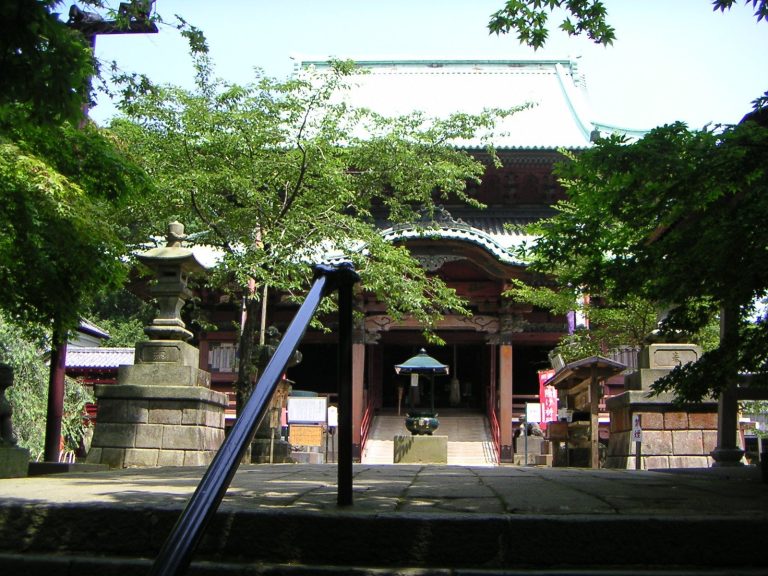
The Main Hall, also called Maniden, dates from 1682. It remains one of the principal historic buildings of the temple complex, whose main buildings underwent repair in 2017.
Nio Gate and Kannon Hall
The Nio Gate was built in 1863. The Kannon Hall was reconstructed in 1880, adding a later nineteenth-century layer to the complex’s surviving religious architecture.
Medieval monuments and former repositories
Pagodas and temple bell
The grounds contain a temple bell cast in 1392, a stone treasure pagoda dated to 1407, and an inscribed stone hōkyō pagoda erected in 1424. The hōkyō pagoda is a stone Buddhist memorial or reliquary monument associated with sacred texts and Buddhist merit.
Former pagoda and scripture repository
The site also includes the locations of a former pagoda and a repository or library that held more than 4,000 Buddhist scriptures during the Kamakura period. These remains preserve the physical setting associated with the religious patronage of Hōjō Masako.
Modern buildings and commemorative features
The postwar complex includes the training hall, Hō’on Hall, the Founder’s Hall, and the Treasure Hall. The training hall was rebuilt in 1999. A bronze statue of Nichiren, erected in 1923 and repaired in 1993, and a bell tower added in 1995 are also part of the temple’s modern commemorative landscape.