Ōtaki Castle: A Hill Castle and Domain Center in Japan
Site at a Glance
- Country
- Japan
- Primary era
- Early Modern
- Eras represented
- Medieval, Early Modern
- Civilizations
- Tokugawa
- Site type
- Military
- Remains
- Castle
On this page11 sections
History
Ōtaki Castle is a hill castle in Japan, traditionally founded as Odaki Castle in 1521 by Mariya Nobukiyo, a member of the Kai Takeda warrior house. Developed from a stronghold of the Sengoku period, an era of warfare among regional powers, it was substantially rebuilt during the Edo period, under Tokugawa shogunal rule from 1603 to 1868. The castle became a fortified center of the Ōtaki Domain, a feudal territory governed under the shogunate.
Early stronghold and Satomi control
In 1544, Masaki Tokishige, a retainer of the Satomi family, took the castle from the Mariya clan. The Masaki house held it for three generations, using it as a base for controlling eastern Kazusa, a historical province in what is now Chiba Prefecture.
After Satomi Yoshihiro died in 1578, his successors Yoshiyori and Umemaru disputed leadership of the family. The castle’s lord, Masaki Noritoki, opposed Yoshiyori and sought to act independently. In 1580, while Yoshiyori was away from his home castle, Noritoki and Shibukawa Yoshikatsu tried and failed to seize his base. Noritoki was killed in September 1581. Ōtaki then became Satomi family territory under direct control, while Yoshiyori’s son, Masaki Tokishige, inherited the Awa Masaki house.
Tokugawa rule and expansion
In 1590, Toyotomi Hideyoshi confiscated the Satomi family’s Kazusa lands for breaking his order prohibiting private warfare among regional lords. After Tokugawa Ieyasu took control of the Kanto region, he appointed Honda Tadakatsu lord of Ōtaki. The Ōtaki Domain was assessed at 100,000 koku, a measure of rice yield used to express a territory’s wealth. Tadakatsu greatly expanded the castle to help guard against a northward advance by the Satomi, and established a castle town below it.
After the Battle of Sekigahara, Tadakatsu was transferred to Kuwana and his son Honda Tadatomo became lord. In 1609, a storm wrecked the ship carrying Don Rodrigo, governor of the Philippines, and about 300 companions near the coast of Onjuku. Local people rescued the survivors, and Tadatomo sent them food and clothing. Rodrigo later visited the castle to thank him, and Tadatomo gave him a horse. Rodrigo’s description portrayed a castle on high ground, enclosed by a moat and equipped with large iron gates, rich gold-and-silver coloring, and a substantial armory.
Changing fortunes and the keep debate
Tadatomo died in 1615 during the Summer Campaign of Osaka, a military campaign, and his nephew Honda Masatomo succeeded him. In 1619, Abe Masatsugu moved his base elsewhere, the domain was temporarily abolished, and the castle fell into disrepair. When Abe Masaharu entered the castle in 1672 with a domain assessed at 16,000 koku, the shogunate ordered gradual rebuilding. A 1690 inspection, probably conducted for shogunate intelligence, found that the order had not been carried out and the castle remained badly neglected. Later lords apparently made some additions, though the hilltop keep continued to deteriorate.
The castle passed through the Abe, Aoyama, and Inagaki families before Matsudaira Masahisa took over in 1703. The Ōkōchi-Matsudaira house held the lordship until 1871, while the domain’s assessed holdings fell over time from 100,000 to 16,000 koku. A keep burned in 1842, and a two-story building called the Shinden is thought to have been erected in its place in 1844. Whether the castle had a keep before the fire remains disputed. Interpretations of a seventeenth-century plan and written descriptions have not settled the question; two drawings of a keep and the later leveling of the Honmaru leave open the possibility that traces of foundations were removed.
Dismantling and archaeological interpretation
The castle was dismantled in 1871, and the principal enclosure was later levelled. The Honmaru ruins, including the large well and Yakui Gate, received designation as a Chiba Prefectural historic site in 1966. Excavations revealed substantial remains beneath the present site and helped clarify how the earlier stronghold related to the later Edo-period castle. A 1973 excavation uncovered a large quantity of burned soil, supporting the conclusion that a keep burned in 1842.
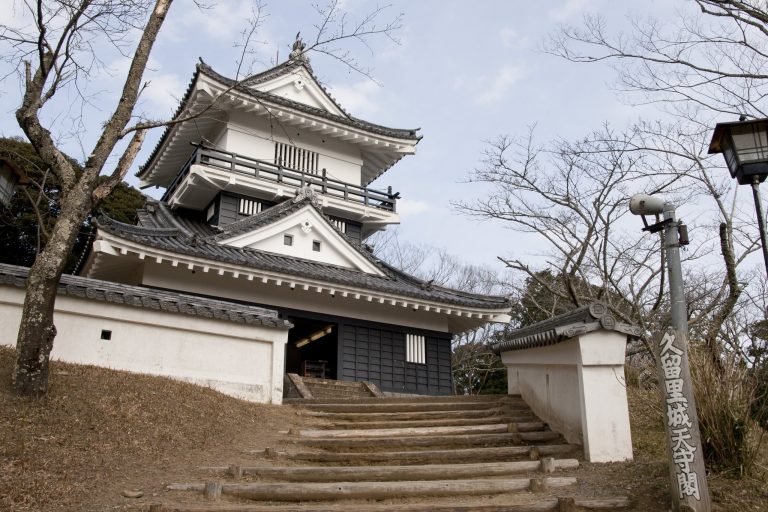
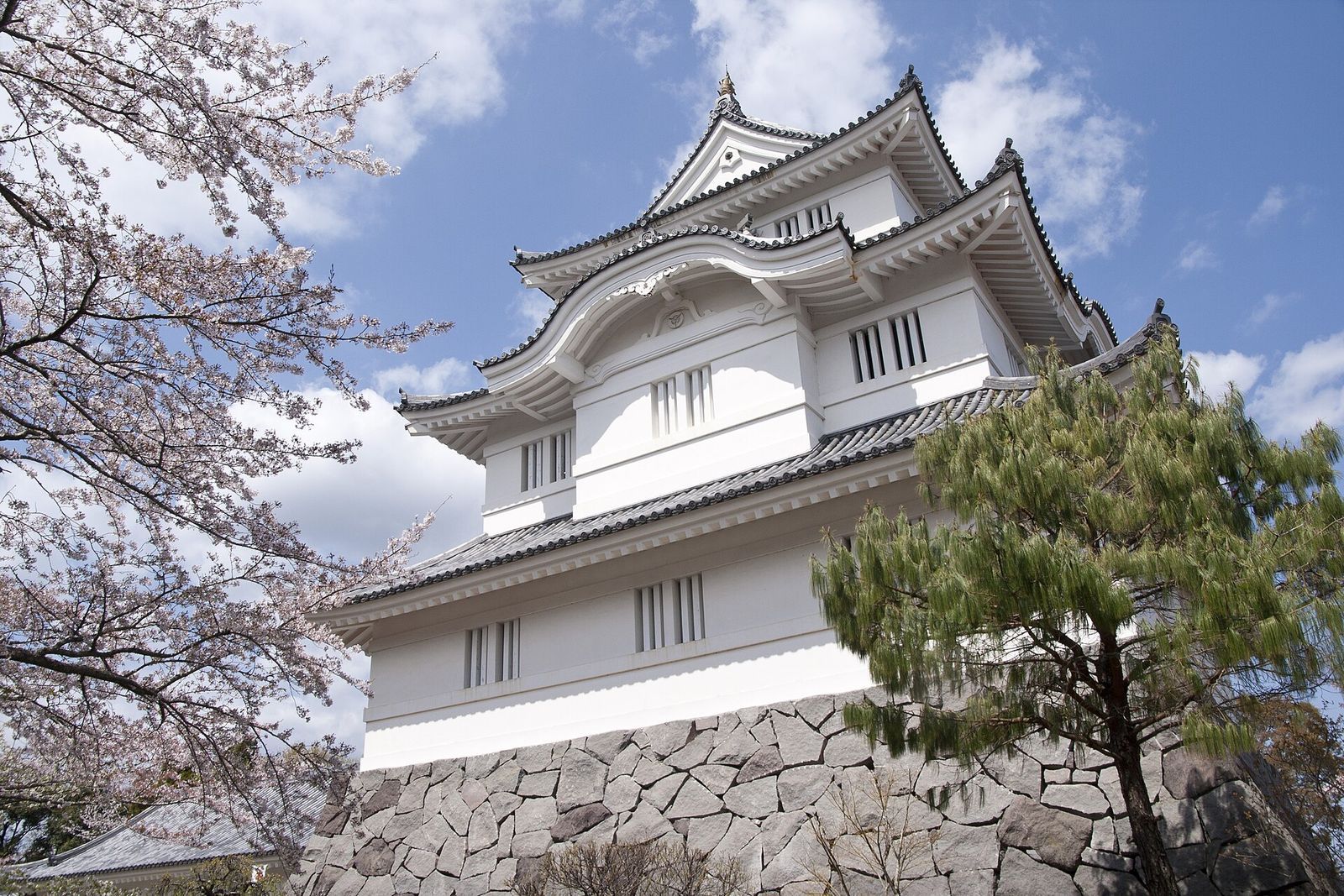
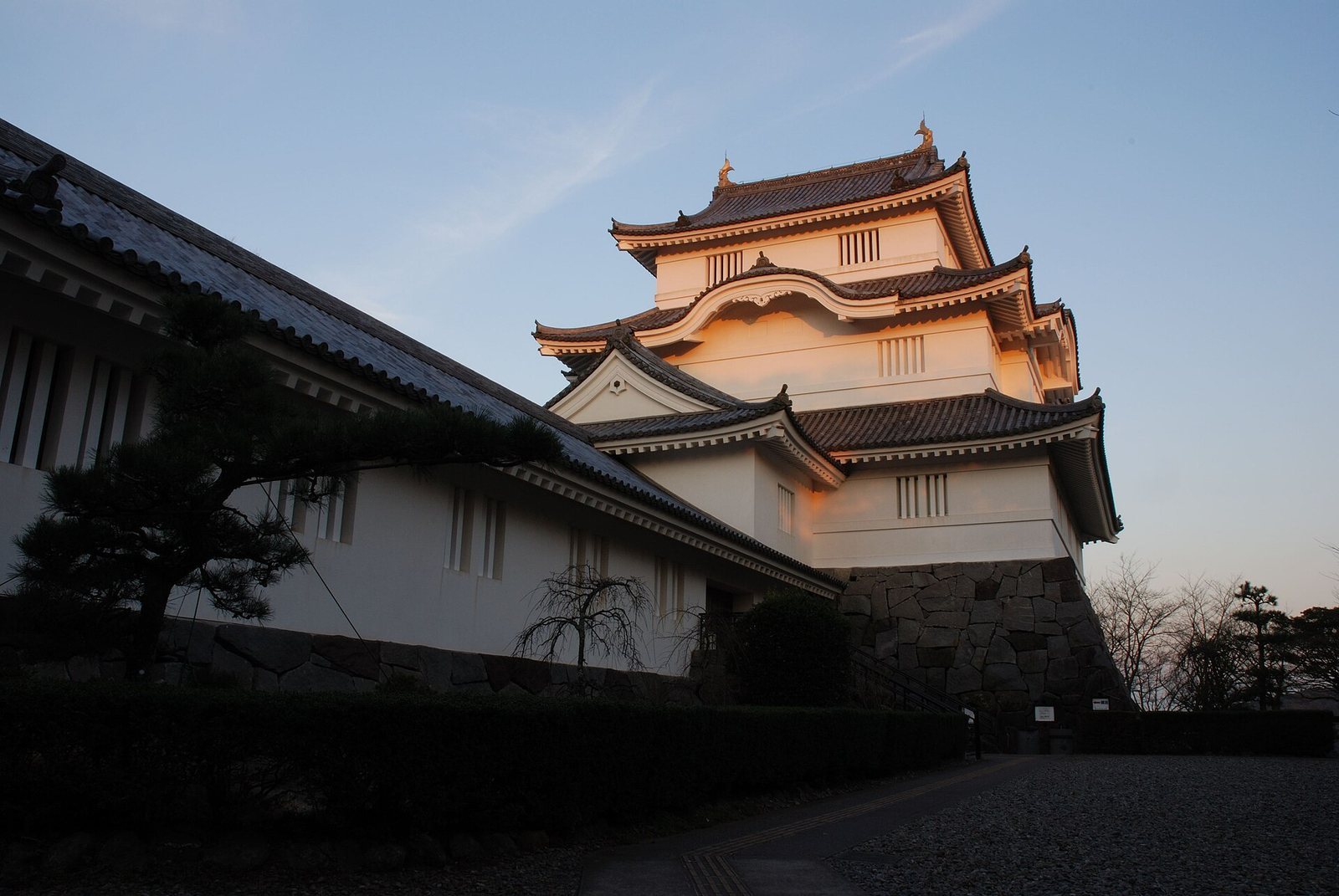
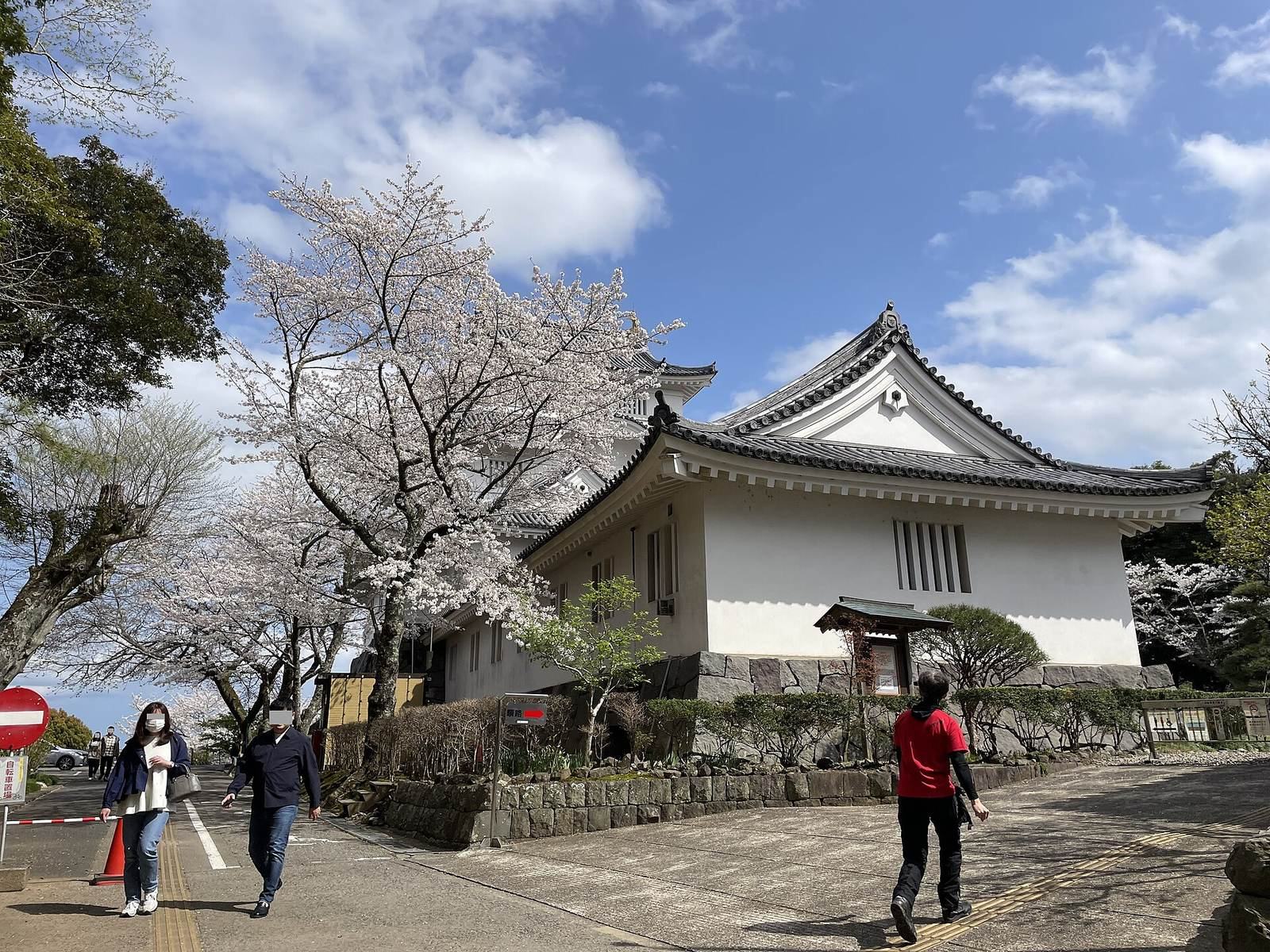
A reconstructed keep was completed in 1975, and the Chiba Prefectural Sonan Museum opened inside it that year. The museum became a branch of the Chiba Prefectural Central Museum in 2006. In 2017, Ōtaki Castle was selected for the Continued Top 100 Japanese Castles.
Remains
Layout and earthworks
Ōtaki was arranged as a hill castle, with its enclosures linked in sequence and defensive earthworks and moats shaping the site. In the Sengoku-period layout, Kuriyama, the hill behind the castle, formed part of the stronghold. The later Edo-period layout shifted somewhat toward the foot of the hill and excluded Kuriyama, so the successive castle footprints do not fully coincide. Visible or surviving features include earthworks near the principal enclosure, enclosure remains, level moats, and moats cut into the terrain. Traces of a moat also remain near the main gate, and substantial remains of the earlier castle lie buried beneath the present site.
Well and gate
Ninomaru well
The large well in the second enclosure, or Ninomaru, has a circumference of about 17 metres and is attributed to Tadakatsu’s building work. In the Edo period, it had an octagonal well curb and eight supporting pillars beneath a shelter roofed with cedar bark. Eight pulleys and sixteen buckets were used to draw water.
Yakui Gate
A traditional Japanese gate form known as a yakui-mon survives at Ōtaki High School. It is thought to have served either as the rear gate of the second enclosure or as the rear gate of the palace. Sold into private hands during the Meiji period, which began in 1868, it was moved to the school during the Taishō period (1912–1926).
Reconstructed keep and museum
The present keep is a three-tier, four-story reinforced-concrete building designed by Michio Fujioka. Its form was estimated from castle drawings dating to the 1830s and the typical appearance of an Edo-period keep, rather than established as an exact reconstruction of the original. The museum inside holds a small collection of Japanese armor and swords, a color painting on paper depicting Honda Tadakatsu, and a large naginata, a Japanese pole weapon with a curved blade.