Moni Epanosifi: An Eastern Orthodox Monastery in Crete
Site at a Glance
- Rating
- 4.9
- Popularity
- Low
- Country
- Greece
- Primary era
- Early Modern
- External website
- Open
- Eras represented
- Early Modern
- Civilizations
- Venetian
- Site type
- Religious
- Remains
- Monastery
On this page9 sections
History
Moni Epanosifi, also known as Apanosifi, is an Eastern Orthodox monastery dedicated to Saint George in Greece. Its foundation is dated to 1614, during the final period of Venetian rule in Crete, and it is regarded as one of the oldest monasteries in the Heraklion region and on the island. The monastery belongs to the Archdiocese of Crete, an Eastern Orthodox ecclesiastical jurisdiction, to which it was assigned from the beginning of the twentieth century.
Foundation traditions
A monastic codex, a bound manuscript containing institutional and historical records, preserves a different and uncertain account of the foundation. Written in 1864, it connects the monastery with the monk Paisios, who had previously belonged to Apezanon Monastery. After disputes with other monks, Paisios left and travelled toward Agarathos Monastery. At a small church dedicated to Saint George, he dreamed that the saint instructed him to remain and enlarge the building. With help from local inhabitants, Paisios completed the work.
The monastery’s traditional name is linked with the feudal lord Laggouvardos, who maintained two pastoral settlements. One stood at Charaki, south of the monastery, while the other occupied the monastery site. Shepherds at both settlements were called Sifis, and the two groups were distinguished as “Upper Sifis” and “Lower Sifis.” The monastery took its name from the former designation. It appears in Creta Sacra as Monasterium Sancti Georgii Mart. Apanosiffi.
Ottoman period and the Greek Revolution
Under Ottoman rule, the monastery became an important spiritual centre and educated several members of the clergy. It also operated a manuscript workshop, where texts were copied and sometimes decorated with illustrations. The artist and scribe Georgios Gounales worked there in the late eighteenth century.
The monastery suffered severe violence during the Greek Revolution of 1821, the uprising that led to the creation of the modern Greek state. Ottoman forces from Kakos Chorio executed 18 monks. The community was then abandoned, and the monastery was destroyed and rebuilt three times. In 1834, the traveller Pashley recorded that 11 monks were living there.
Ecclesiastical life and continuing traditions
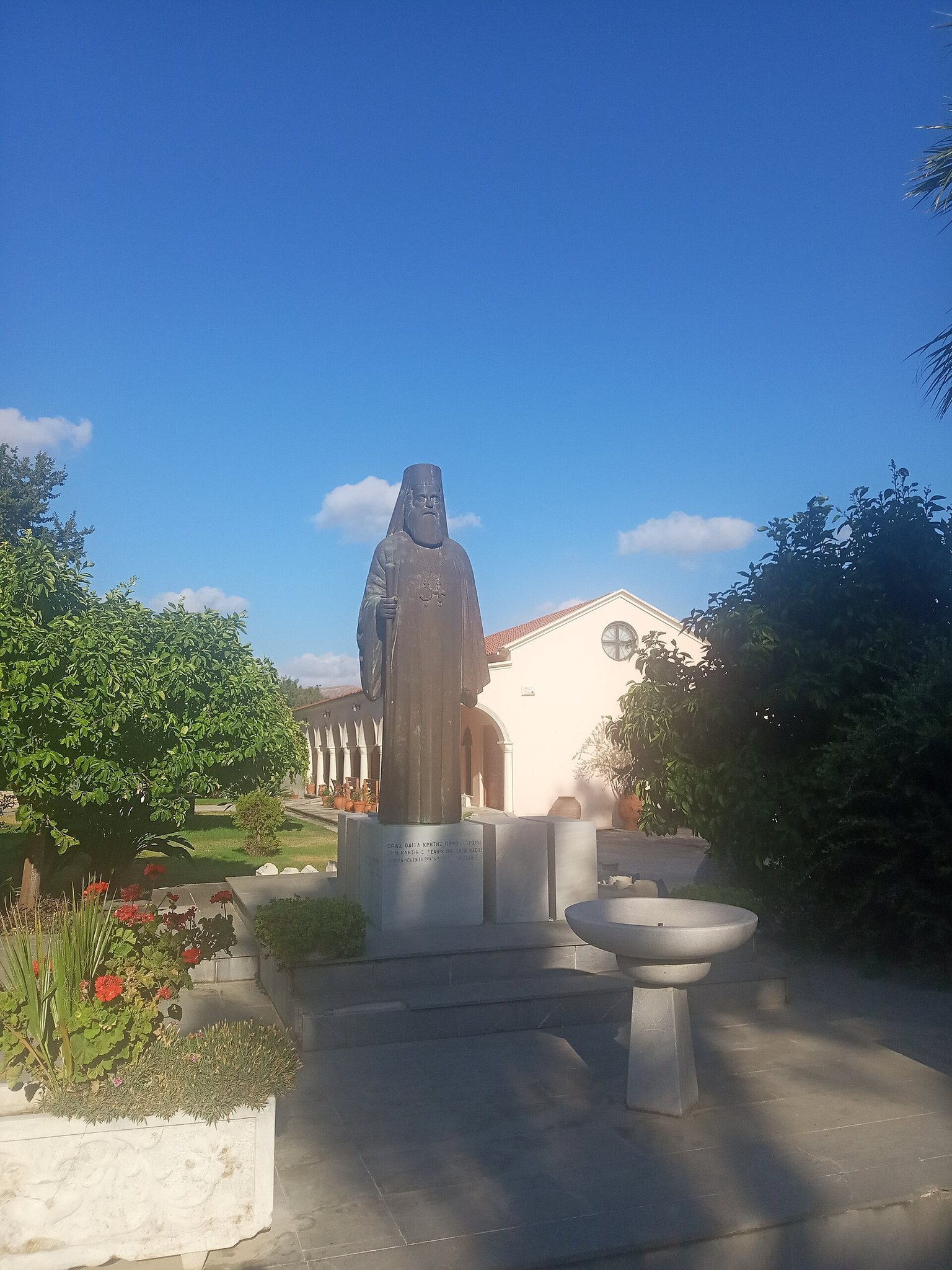
Several monks from Moni Epanosifi later became bishops of Arcadia. Its recorded brethren also included Archbishop Makarios of Australia, Metropolitan Nathanael of Chicago, Metropolitan Arsenios of Austria, and Bishops Paisios of Apamea, Athenagoras of Canberra, and Panaretos of Tamasos.
The monastery’s principal feast days are 23 April and 3 November. Popular devotion connects Moni Epanosifi with the miraculous appearance of a spring after prayers to Saint George during a severe drought. A theological school, which provides education in religious subjects, operates at the monastery.
Remains
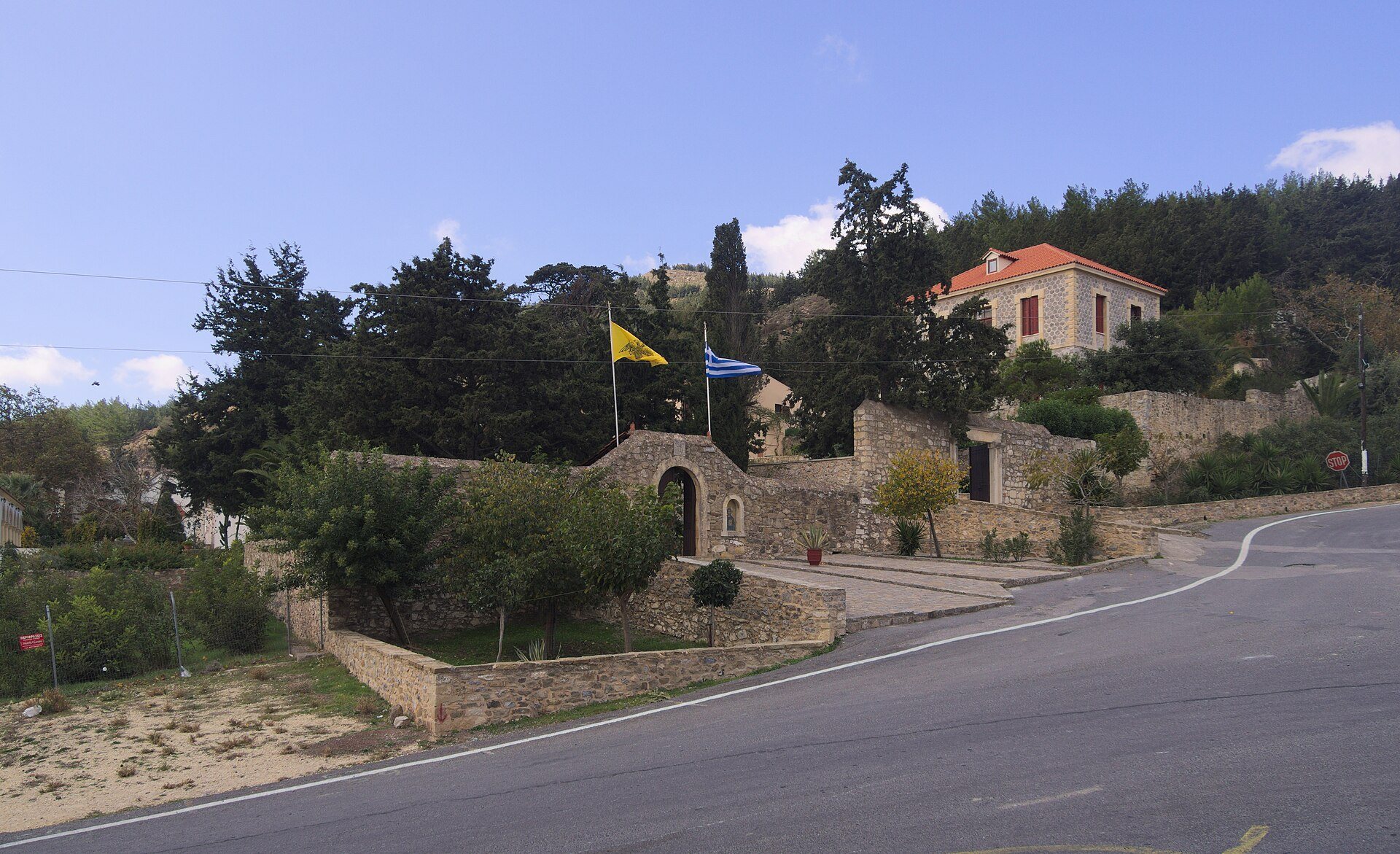
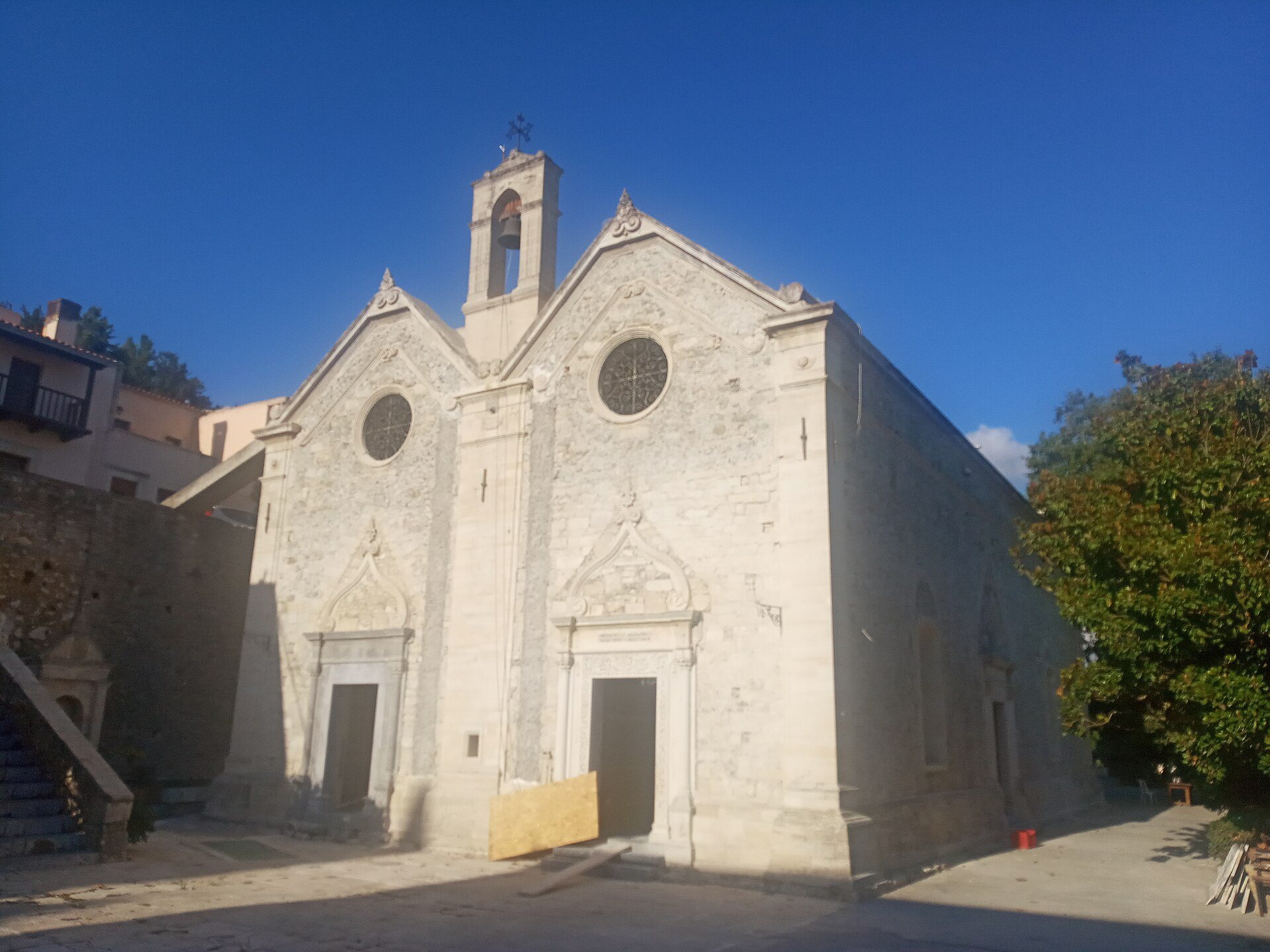
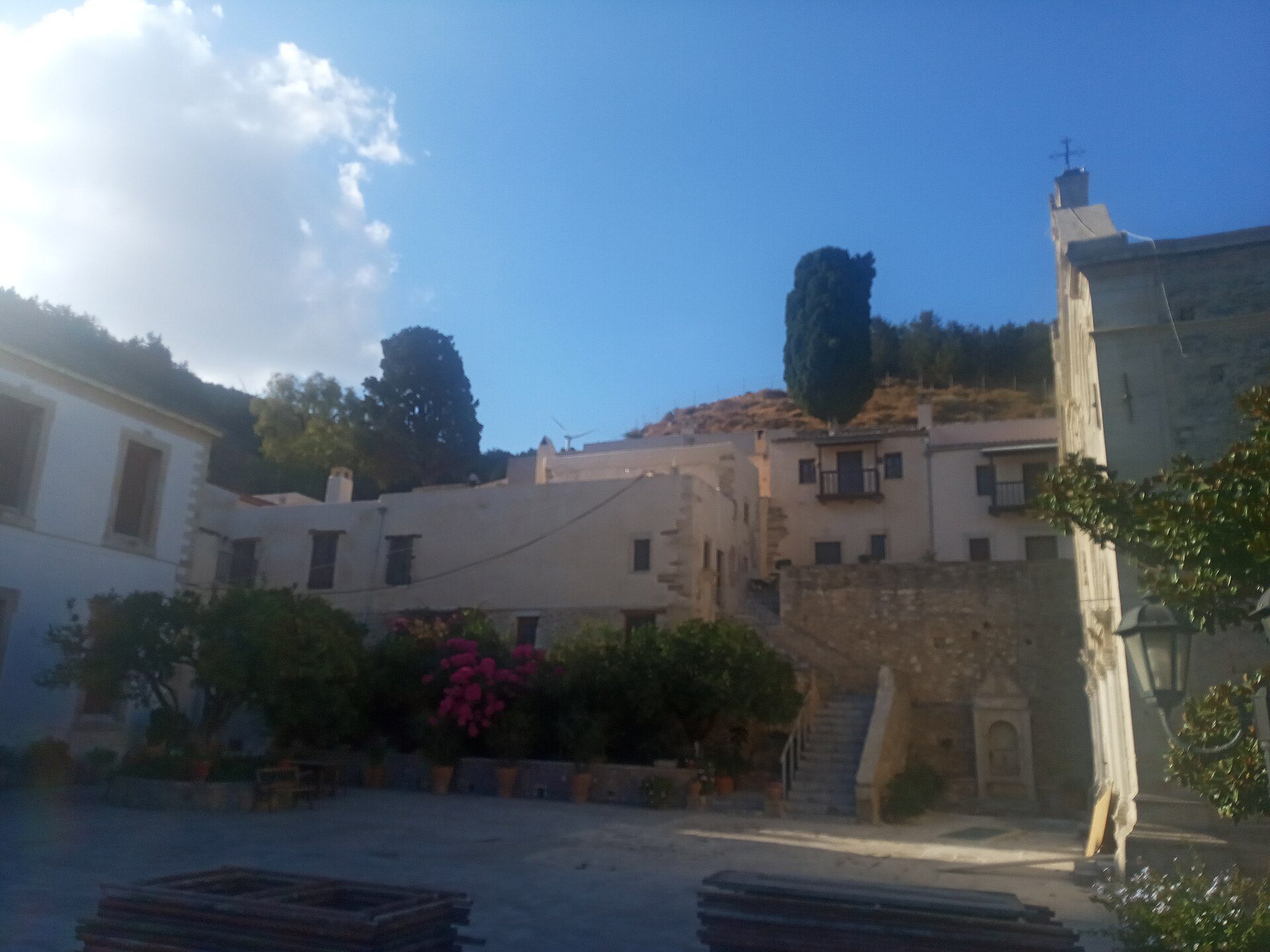
Moni Epanosifi is a male Orthodox monastic complex at Metaxochori in the Monofatsi province of the Heraklion region, approximately 31 kilometres from Heraklion. Its principal buildings include the main church of Saint George and a monastery museum containing religious, artistic, liturgical, and domestic objects.
Church and sacred remains
Church of Saint George
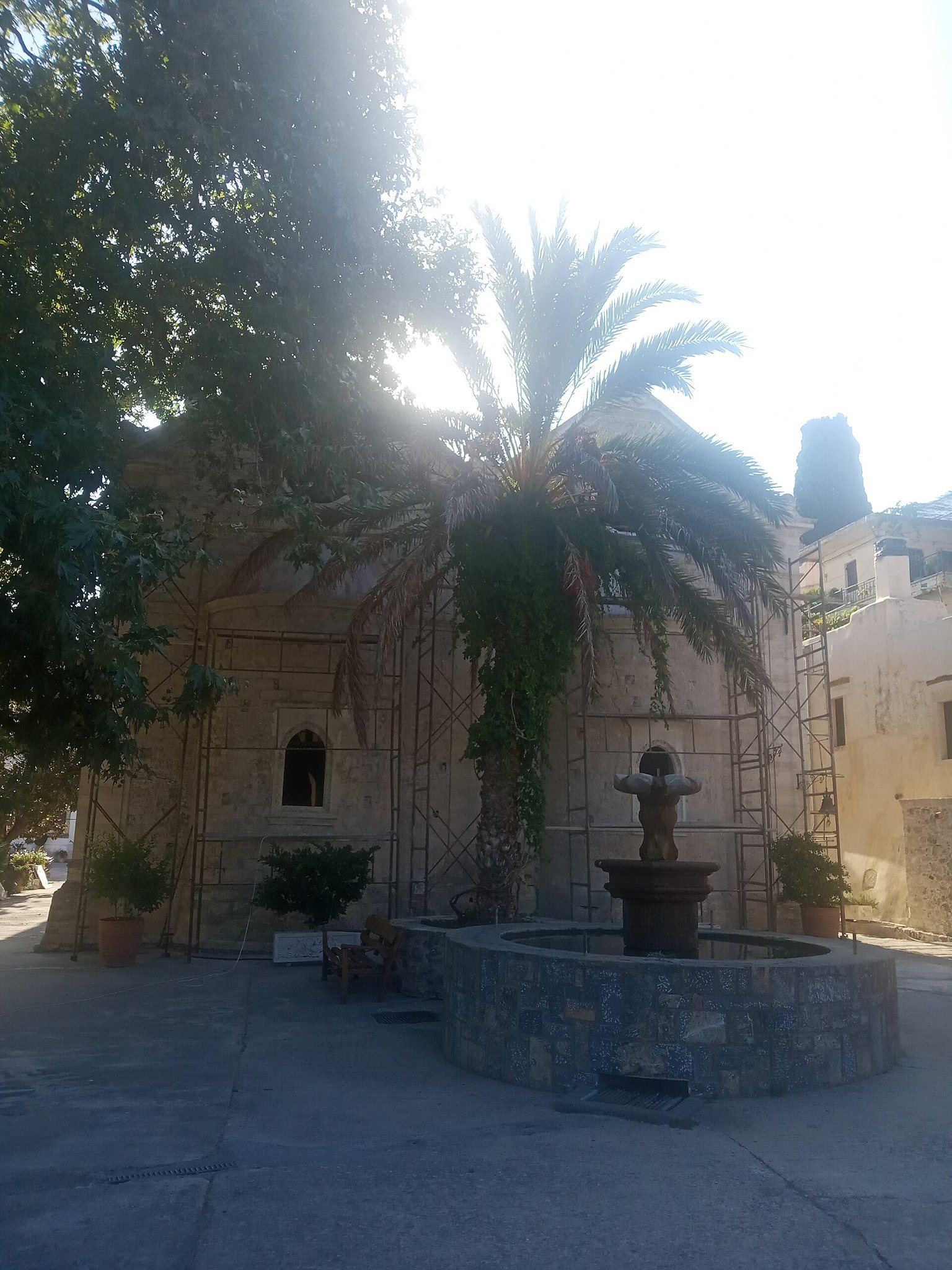
The main church is dedicated to Saint George, the Christian martyr and saint to whom the monastery is dedicated. It preserves a fragment of Saint George’s relics, a physical remain revered because of its connection with a holy figure, together with fragments associated with 21 other saints.
Earlier Saint George church
The foundation tradition places an earlier sacred building at the centre of the monastery’s origins. This small church of Saint George stood on the estate of Laggouvardos before Paisios enlarged it with assistance from local inhabitants.
Museum collection
The monastery museum preserves precious religious treasures, eighteenth-century illustrated manuscripts, carved crosses, liturgical vestments, Gospels, domestic objects, and an icon of Saint George. Its collection also includes a silver chalice dated 1842, a chalice being the liturgical cup used in Christian worship.