Anemospilia: A Minoan Sanctuary Site on Crete


Site at a Glance
- Rating
- 4.2
- Popularity
- Low
- Country
- Greece
- Primary era
- Bronze Age
- External website
- Open
- Eras represented
- Bronze Age
- Civilizations
- Minoan
- Site type
- Religious
- Remains
- Sanctuary
On this page9 sections
History
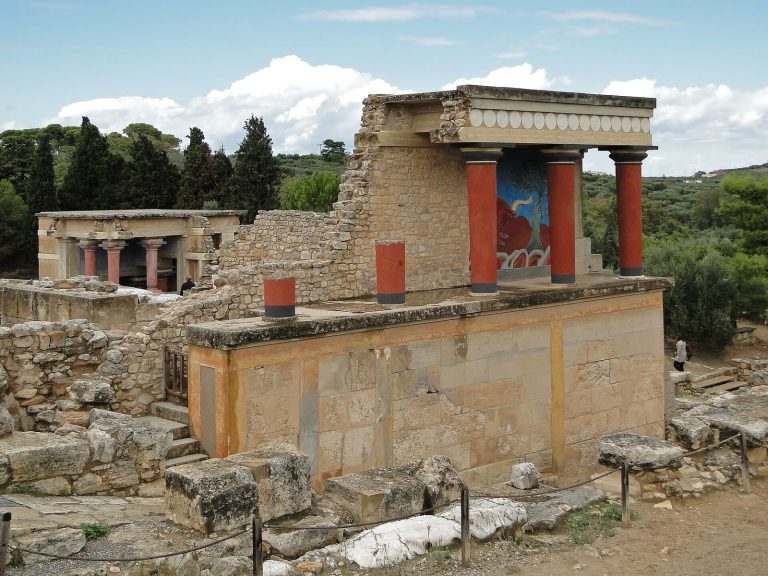
Anemospilia is a Minoan archaeological site in Greece, near Archanes on Crete, where a sanctuary or ritual building was used during the Old Palace period, an early phase of Minoan palatial society. The Minoans were a Bronze Age civilization centered on Crete, known for palace complexes, distinctive religious practices, and writing systems such as Linear A, which remains only partly understood. Active for probably no more than half a century, the building may have served the palace at Knossos and was destroyed around 1700 BC, when an earthquake and a subsequent fire brought the structure down.
A Sanctuary in the Old Palace Period
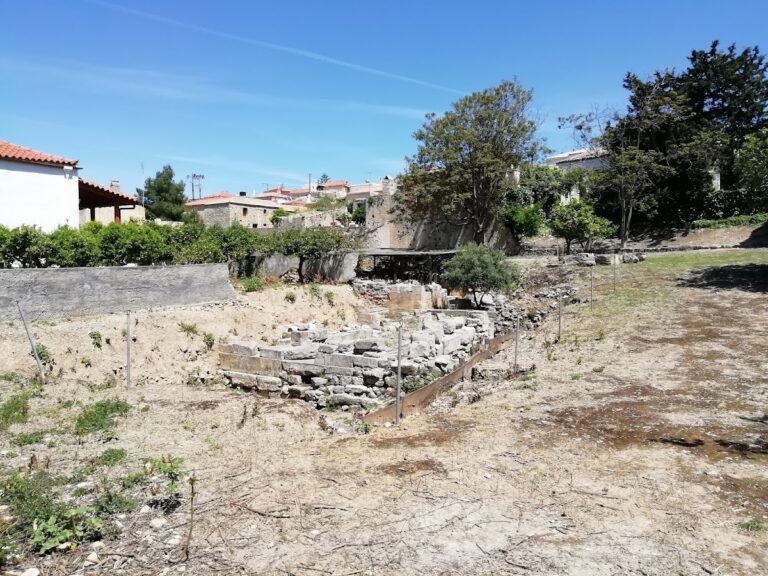
The site stands on the northern foothills of Mount Juktas, close to the Minoan path between Knossos and the mountain summit. It is about 3 kilometres from Archanes and 7 kilometres from Knossos, at an elevation of approximately 440 metres, facing north toward the palace complexes of Knossos. Mount Juktas was traditionally associated with the burial place of Zeus, the principal god of ancient Greek mythology and ruler of the Olympian gods. Anemospilia overlooks the Heraklion plain, with a view extending from Mount Psiloritis to the Lasithi Mountains. Its modern name means “caves of the wind,” while its Minoan name is unknown.
The earthquake appears to have caused the building’s collapse. Ash, charcoal, and burned materials show that fire followed or accompanied the destruction. The timing was approximately the same as the destruction of the first Minoan palaces. The disaster left pottery, ritual equipment, a burned wooden cult image, and human bodies in the rooms, preserving evidence of the building’s final use.
Discovery and Interpretation
Anemospilia was discovered accidentally on 28 March 1979. Excavation took place from 9 July to 11 August that year under the direction of the Greek archaeologist Yannis Sakellarakis. Sakellarakis interpreted the remains in the western chamber as evidence of human sacrifice and identified the building as a sanctuary. One proposed reconstruction holds that seismic activity prompted worshippers to perform a sacrifice intended to appease the gods, before a larger earthquake interrupted the ceremony and killed other people inside. This interpretation has been treated as early evidence for human sacrifice in Minoan religion, but it remains disputed.
Dennis Hughes argued that the object identified as a knife could instead have been an ornate spearhead that fell from a shelf, and that the platform was not demonstrably an altar. Nanno Marinatos likewise interpreted the young man as a victim of the earthquake rather than a sacrificial victim and questioned whether the building should be called a temple. The evidence from the western chamber, including the position of the body, the decorated blade, and the laboratory interpretation of contrasting bone coloration, therefore remains central to an unresolved debate about the site’s rituals and its destruction.
Remains
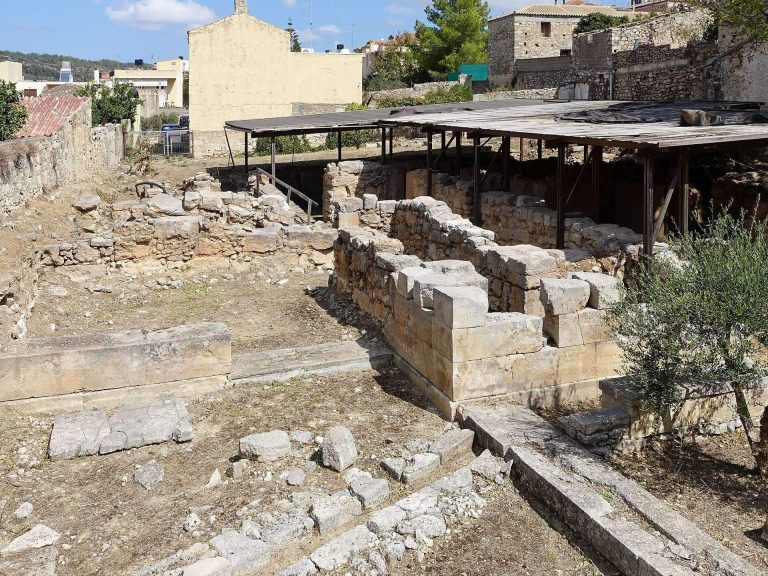
Anemospilia was a four-part building enclosed by a low temenos, an area set apart for religious use. A northern entrance opened into an east-west passage or vestibule, from which three similarly sized rooms extended southward. The walls survive to only a low height, while the northern vestibule has been heavily eroded. The chambers preserve a sequence of ritual spaces, pottery deposits, altars or altar-like structures, and human remains associated with the building’s final destruction.
Ritual Chambers and Finds
Eastern Chamber
The eastern chamber held a stepped structure in its southern part. It has been interpreted as an altar or altar-like platform, with offerings placed upon it. Pithoi and other pottery vessels stood on the floor, containing residues of milk, honey, grain or cereals, and peas. Reconstructed vessels carry scenes understood as representations of religious ceremonies, and one bears Linear A signs. Other finds included a libation jug, used for ritually pouring liquid to a deity, an eggshell Kamares vessel from a finely decorated Minoan ceramic tradition, and a stone kernos, a ritual vessel or installation with multiple receptacles.
Central Chamber
On the southern side of the central chamber was a roughly hewn stone altar made from rock taken from the sacred hillside. A pair of clay feet on its surface probably formed the base of a life-sized xoanon, a wooden cult image or sacred statue. Charred wood and surrounding ash indicate that the image burned with the building. More than 400 pottery vessels were represented at the base of the altar, including a decorated container interpreted as a vessel for collecting blood during animal sacrifice.
A mound or block of hillside rock stood beside the xoanon. It symbolized the earth, one of the eternal elements that the Minoans regarded as forming the world alongside the sea and sky. The sacred stone appears to have had an important ritual function, including the pouring of libations over it to a deity.
Western Chamber
The western chamber contained two skeletons on the floor and a third body on a platform. One skeleton belonged to a woman about 28 years old, possibly a high priestess. The other was a strongly built adult male approximately 1.8 metres tall. He lay on his back with his hands over his face, wearing an iron-and-silver ring and an engraved seal on his wrist. His legs were broken.
The body on the platform belonged to a male about 18 years old. He lay on his right side in a foetal position beside a trough or container at the platform’s base. Among his bones was a richly decorated knife or dagger about 40 centimetres long and weighing more than 400 grams. Its blade showed an animal head combining a boar’s snout and tusks with butterfly-like ears and fox-like eyes. His legs bent backward, with the heels close to the thighs, a position interpreted as evidence that they had been tied. That interpretation has been challenged because his hands were not bound. Laboratory examination was understood to show contrasting white and black coloration in the bones on opposite sides of the body, a pattern used to argue that blood had been lost before burning.
Northern Vestibule
The vestibule contained a human body whose bones, particularly the pelvis, had been crushed, probably by a falling boulder or another heavy object. Broken pottery fragments surrounded the body, and its position has been interpreted as indicating that the person was fleeing from the central chamber when killed. Approximately 150 vessels of different types and animal bones were also found in this area, adding to the evidence for activity in the building immediately before its collapse.