Sanctuary of the Egyptian Gods at Gortyn: A Hellenistic Cult Center
Site at a Glance
- Popularity
- Medium
- Country
- Greece
- Primary era
- Classical
- Eras represented
- Classical
- Civilizations
- Roman
- Site type
- Religious
- Remains
- Sanctuary
On this page21 sections
History
Gortyn and the Ptolemaic sanctuary
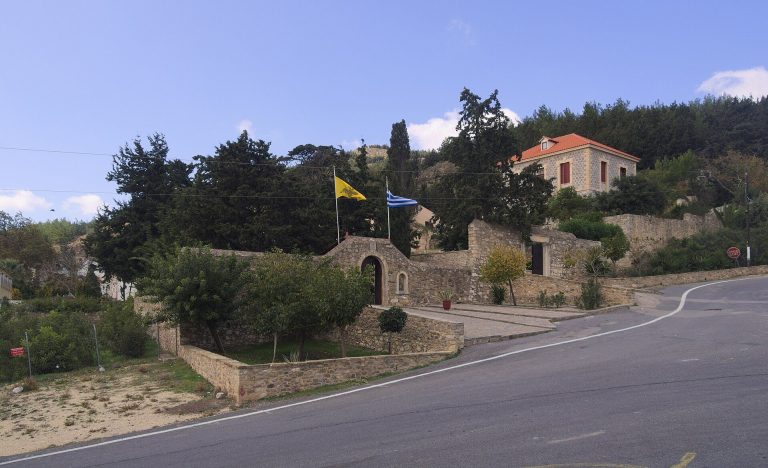
The Sanctuary of the Egyptian Gods at Gortyn is an ancient cult precinct in Gortyn, Greece, established for a Ptolemaic garrison in the first half of the second century BC, perhaps around 163 BC. It was dedicated to Isis, Sarapis, and Anubis, and was the only sanctuary of this kind on Crete, though similar cults existed elsewhere in the Greek world.
Gortyn expanded from its acropolis onto the plain in the eighth century BC. During the Archaic period, its urban center shifted to the area around the Temple of Apollo Pythios, and it displaced Phaistos as the principal city of the Messara. Its population was estimated at about 50,000 in the fifth century BC.
Around 220 BC, at the initiative of Ptolemy IV Philopator, new walls extended roughly 1,500 metres across the hills of Pervolopetra, Armi, and Prophitis Ilias. The Ptolemies were the dynasty that ruled Egypt after Alexander the Great’s conquests. Their troops stationed in parts of Crete helped spread the mystery cult of the Egyptian gods, and the Gortyn sanctuary was probably established for the garrison during this period. Isis was a major Egyptian goddess, Sarapis a Greco-Egyptian deity, and Anubis an Egyptian god associated with funerary rites. Greek worshippers identified them with Persephone, Hades, and Hermes respectively. On Crete, Sarapis was also linked with Zeus, while Isis was associated with Kore, another name for Persephone.
Roman rule and the city’s prosperity
During Rome’s campaign against Crete, prompted by piracy and the island’s support for Mithridates VI, king of Pontus, Gortyn sided with Rome and escaped destruction and plunder. The conquest was completed in 67 BC by the Roman general Quintus Caecilius Metellus. Gortyn then became a provincial capital, first serving as the administrative seat of the joint province of Crete and Cyrene, and later, after Diocletian reorganized provincial administration, as the seat of the province of Crete. The cult of the Egyptian gods also became important at settlements along the trade route between Egypt and Campania.
An earthquake destroyed Gortyn in AD 46, but the city was quickly rebuilt. Its prosperity continued from the reign of Hadrian, around AD 120, through the Severan period. The population may then have risen to about 300,000.
Destruction and rediscovery
The sanctuary was destroyed in the fourth century AD. The temple building ceased to be used, and a brief later phase ended with further destruction and abandonment. These changes took place as Christianity spread and developed into the Roman Empire’s state religion.
Italian archaeologists discovered the sanctuary in 1913, and Gaspare Oliverio excavated it in 1913–14. Antonino Di Vita directed another excavation in 1997, which prompted a revised interpretation of the plan. Later graves were found north of the sanctuary, along with a hoard of Byzantine coins.
Remains
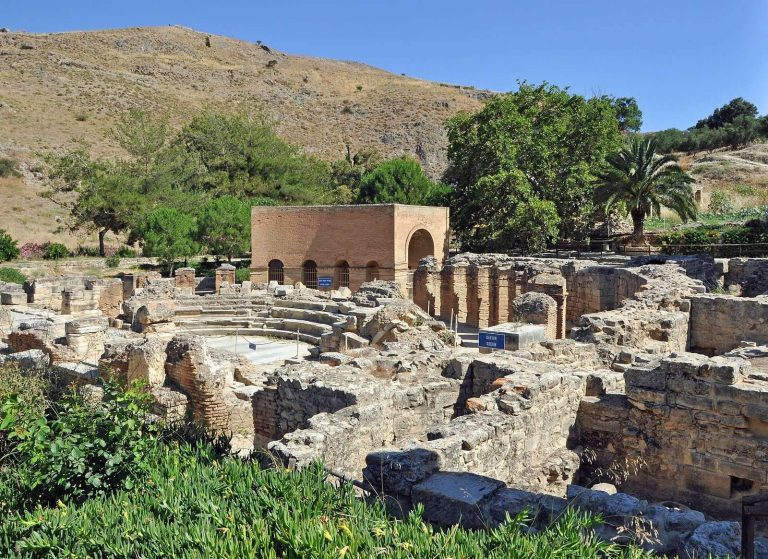
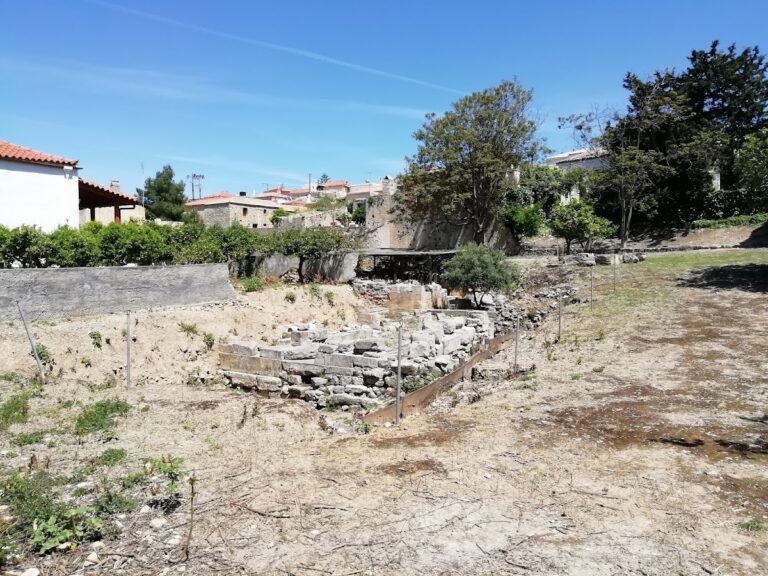
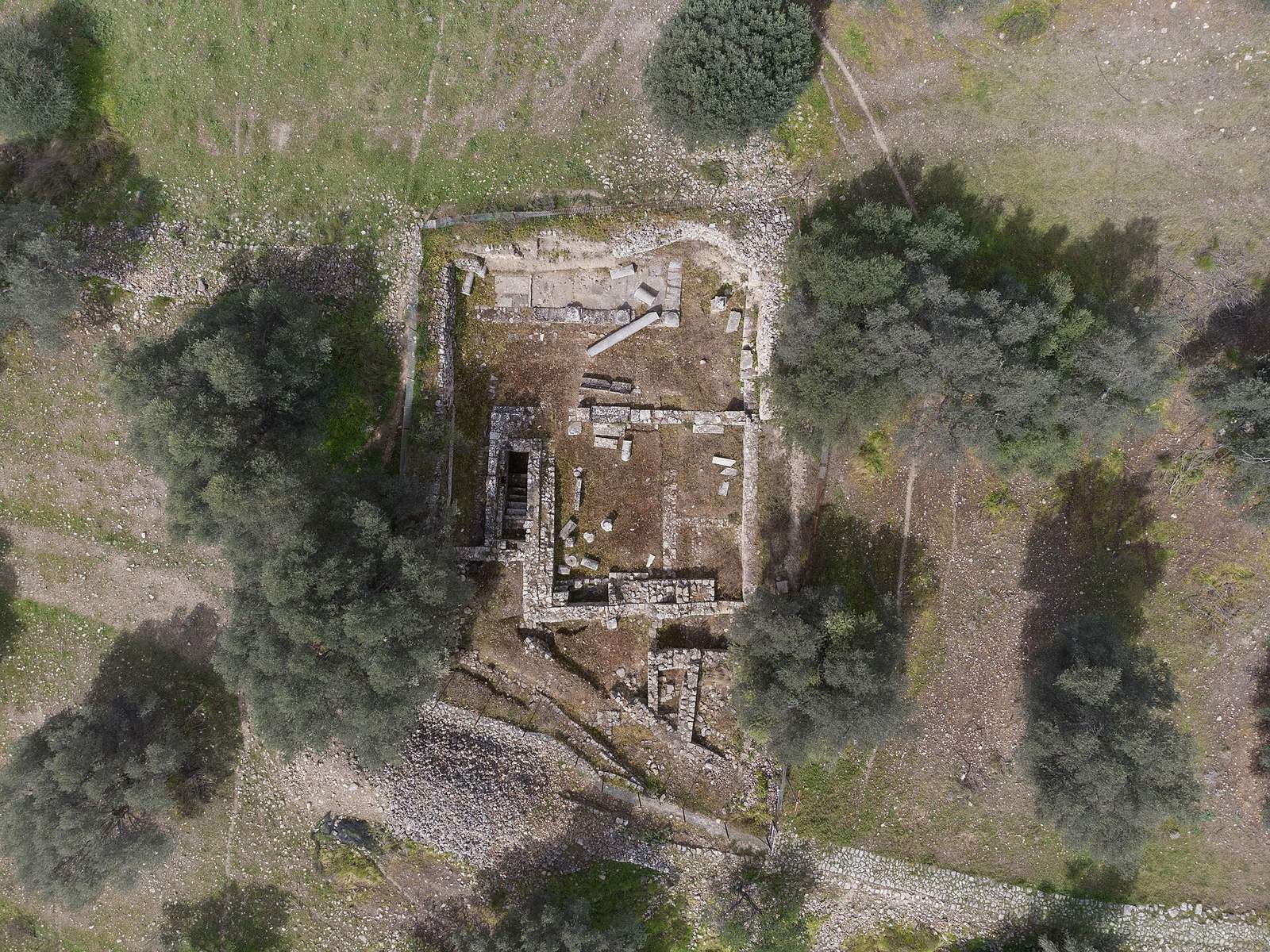
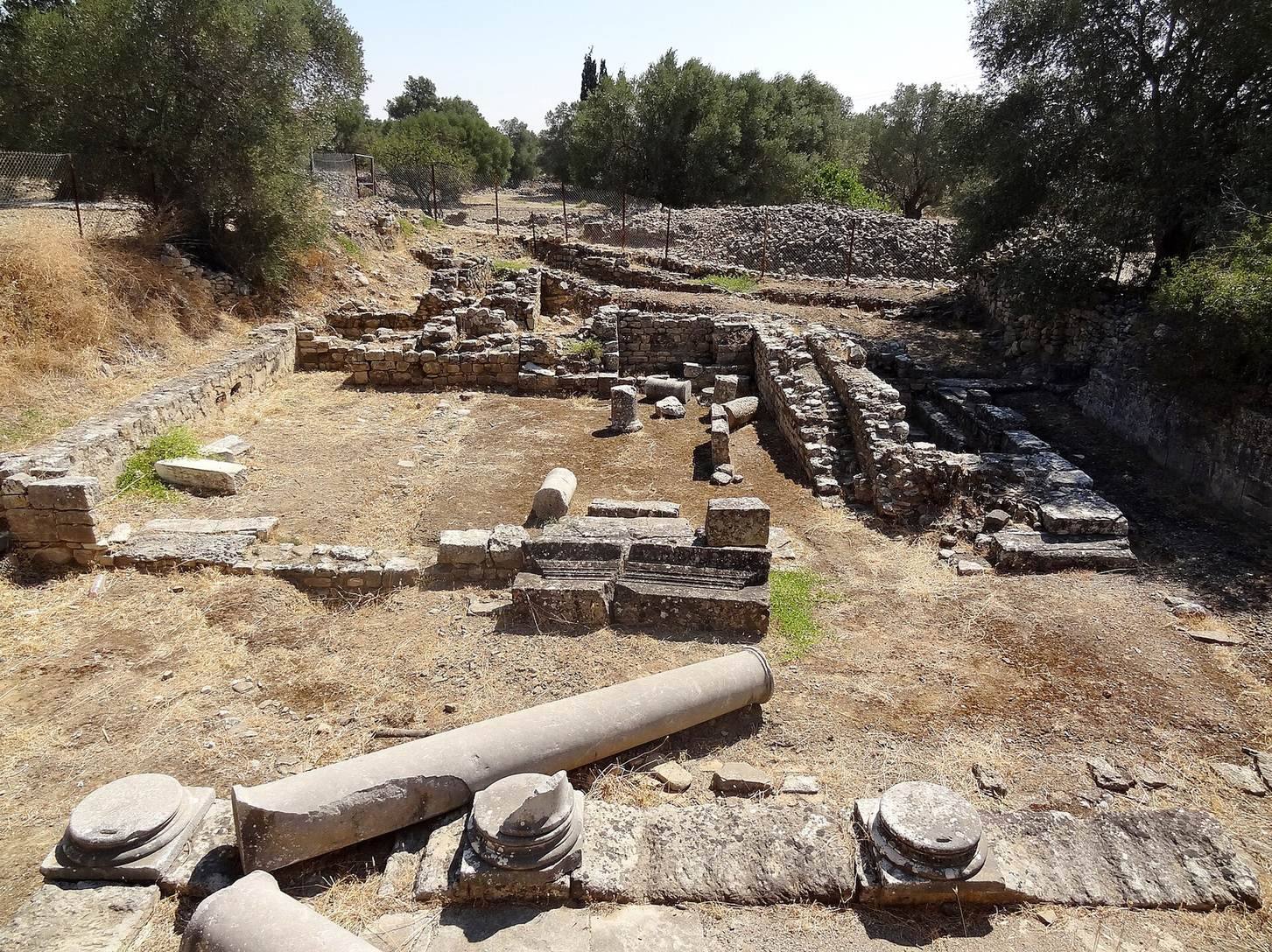
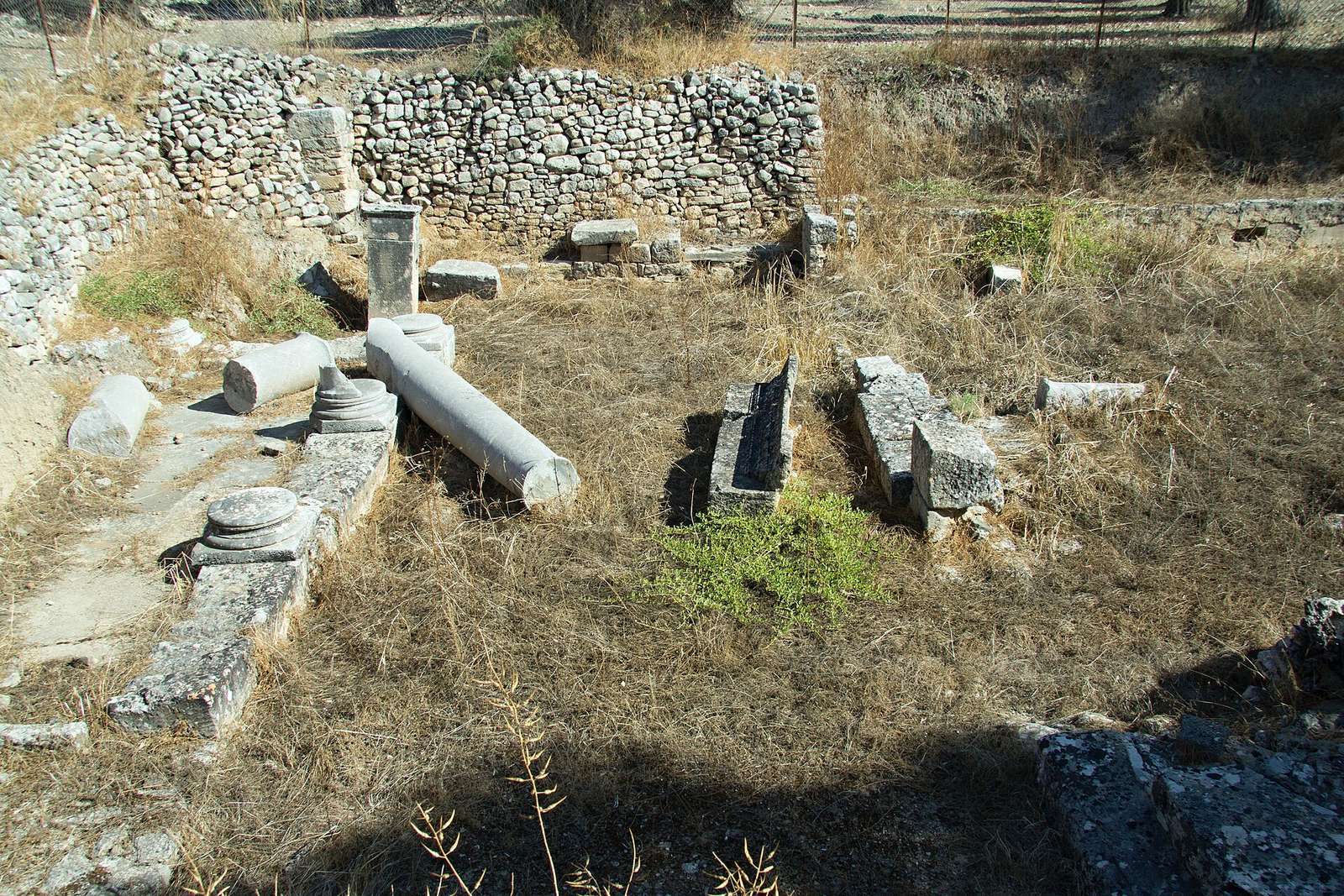
The surviving sanctuary is organized around a small walled courtyard, with the temple building at its rear and an extension along its southern side. Its layout also includes a western colonnade and, after the temple went out of use, a platform for cult images. Brick flooring, stone architectural elements, water installations, inscriptions, and statues preserve evidence of the site’s successive arrangements.
Core sanctuary structures
Courtyard and temple
The second-century AD courtyard measured 8.50 by 8.20 metres. It was open to the sky, enclosed by walls, and paved with brick. Two entrances stood on its western side, while a small stair led from the courtyard to the temple building, or oikos, behind it. Low benches along the rear wall of the temple provided space for three nearly life-size images of Isis, Sarapis, and Hermanubis.
Seven inscriptions from an earlier Hellenistic building were found at the sanctuary, with six reused in the temple. Votive offerings and further inscriptions were set up in the courtyard, where worshippers could leave dedications to the gods.
Later image platform
After the temple building stopped being used, a platform was constructed at the courtyard’s entrance stair to support the three cult images. It measured 7.50 metres long and 1.05 metres high. A stair about 0.65 metres wide rose to the platform at its southern end.
Dedication and western colonnade
Temple dedication
A limestone beam, 2.35 metres long, lies west of the temple façade. Its inscription names Flavia Philyra and her children, C. Metronius Maximus, Philyra, and Lyscia, and records that they rebuilt the temple from its foundations for worship and thanksgiving to Isis, Sarapis, and related gods. The work probably took place during the reign of Trajan, from AD 98 to 117. The name Metronius Maximus may alternatively be read as Petronius Maximus.
Stele and columns
A stone stele northwest of the temple façade bears an ancient Greek inscription naming Isis and Sarapis as worshipped at the sanctuary. South of the stele, and 3.80 metres west of the façade, a stone base for columns survives with four bases arranged across it. Each measures 0.64 by 0.64 metres; three form a row, while the fourth stands to their north at a right angle. The columns had scroll-shaped Ionic capitals.
A complete grey-granite column shaft, 3.60 metres long, and several fragments survive. The shafts measured 0.54 metres in diameter at the base and 0.43 metres at the top. The columns probably belonged to a limestone-paved, roofed walkway leading south toward the Pythion and Gortyn’s theatre, rather than to an entrance porch for the temple.
Southern extension and water installations
Shallow basin
An addition against the temple’s south wall was divided by a north–south partition 0.90 metres thick. On its eastern side was a shallow basin measuring 2.50 by 1.70 metres. Coloured plaster survives on its two preserved walls. The brick floor, coated with mortar, lies 0.10 metres below the usual floor level.
Crypt and lower basin
West of the partition was a deep, enclosed chamber, or crypt, built within its own walls and covered by a barrel vault, a ceiling shaped like a half-cylinder. Its entrance faced west, opposite the colonnade and south of the temple’s two entrances. A corridor along the crypt’s southern side measured 6.30 metres long and 1.50 metres wide, and led east to a 1.30-metre-wide passage into the lower chambers.
Three steps led north to a landing 0.50 metres below the normal floor level. Five further steps descended west to another landing, 1.80 metres down, beyond which lay a basin 0.40 metres deep and measuring 1.10 by 1.15 metres. A pipe in the western wall, 0.11 metres wide and positioned 2.10 metres above the basin floor, supplied water.
Each wall of the crypt contained a niche. Three niches retain round arches made of fired brick. They may have held small images of Sarapis, Isis, Anubis, and Harpocrates, a child deity associated with Sarapis and Isis, though the placement of the figures is uncertain. The shallow basin and crypt have been interpreted as facilities for initiation rites, involving cleansing followed by immersion. The water ritual may have symbolized death in a manner associated with Osiris; the chamber could have allowed a person to stand in water up to the knees.
Cistern
A revised plan places a cistern northeast of the courtyard. Di Vita interpreted it as part of several rooms beneath the second-century temple building.
Sculptures and offerings
Sarapis
A nearly life-size white-marble statue of Sarapis was found in the courtyard. He wears a short-sleeved tunic and a cloak, sandals, and a basket-shaped headdress decorated with branches. His long, curly hair and beard frame his face. The raised left arm rested on a staff, which may have been a sceptre or trident; a replacement was made for display at the Heraklion Archaeological Museum. A three-headed Kerberos, guardian of the Greek underworld, sits at Sarapis’s right. Its heads turn in different directions, and its body has a mane-like treatment. The statue was probably placed between images of Isis and Hermanubis.
Isis
The white-marble statue of Isis wears a double-belted tunic and a pleated mantle drawn over her shoulders and the back of her head. Her carefully curled hair falls to her shoulders, and a small solar disk appears between the cult horns above her forehead. Her raised right hand holds a sistrum, a ritual rattle. A handle-like fragment and an impression in the mantle suggest that her left hand may have held a bucket-shaped vessel.
Hermanubis
A nearly life-size statue of a youth, probably Hermanubis, wears a mantle fastened at both shoulders. Hermanubis combined features associated with Anubis and Hermes. Part of a staff linked with Hermes is visible at the youth’s left shoulder. A marble hand holding a money bag and a fragment of a dog’s head, found nearby, may belong to the statue and support the identification.
Female figure
A somewhat over-life-size female figure in a tunic and cloak was found beside the Hermanubis fragments, in front of the platform’s right side. It may have stood at ground level rather than on the platform, whose other images were more carefully made and included Isis. The figure may represent Flavia Philyra, although that identification remains uncertain.
The four statues found in front of the platform are assigned to the second-century AD Antonine period, the era associated with the Antonine emperors. They may have come from a workshop in Alexandria.
Other figures and votive objects
Near the courtyard’s southwest corner, excavators found a seated marble figure that may have represented Sarapis enthroned. It was probably set on a pedestal about 0.50 metres high at the crypt entrance. A male half-bust found at the northwest corner has its left arm raised and clothing draped over the left shoulder; its identity is uncertain.
Other finds included small sculpted heads, two female torsos, three small terracotta female heads, terracotta bulls, and additional small offerings. A terracotta female figure wrapped in a mantle may represent the mourning Isis. Fragments of cattle may relate either to Isis in cow form or to Apis, the sacred bull deity in Egyptian religion.