Knossos: A Minoan Urban and Palatial Centre in Greece
Site at a Glance
- Rating
- 4.1
- Popularity
- Low
- Country
- Greece
- Primary era
- Bronze Age
- External website
- Open
- Eras represented
- Stone Age, Bronze Age, Iron Age, Classical
- Civilizations
- Ancient Greek, Minoan, Roman
- Site type
- City
On this page26 sections
History
Knossos is an ancient urban centre in Greece, on Crete, occupied from about 7000 BC into the first millennium AD and the Byzantine period. Founded during the Neolithic era, it became the largest and best-known centre of the Minoan civilisation, a Bronze Age culture centred on Crete and the Aegean. Its exceptionally long occupation has led to its description as one of Europe’s oldest cities.
Neolithic foundations
The earliest settlement dates to the seventh millennium BC. Its inhabitants farmed, kept animals and produced domestic crafts. Settlement layers at the site reach about 8 metres in thickness, reflecting repeated building and occupation over many centuries. A possible interruption between about 6600 and 5700 to 5500 BC was followed by renewed Neolithic settlement, which continued through the Early, Middle, Late and Final Neolithic phases.
During the Early Bronze Age, approximately 3000 to 1900 BC, Knossos grew in size and complexity. Craft production became more specialised, exchange networks widened and social differences became more pronounced. Earlier buildings on Kephala hill were levelled or reorganised to form the platform for the first palace.
The palatial periods
The first palace was built around 1900 BC. It combined administration, storage, redistribution, ritual activity and craft production. Writing, sealings and specialised storage facilities point to a complex bureaucracy managing people, goods and activities within the palace and its surrounding community.
An earthquake or series of seismic events destroyed the first palace around 1700 BC. It was then rebuilt on a larger scale, marking the transition from the earlier palatial period to the later palatial period on Crete. The rebuilt palace and settlement reached their greatest prosperity during the Second Palace period, approximately 1700 to 1450 BC.
Knossos probably became a leading Cretan city-state and may have served as a major religious and political centre. The extent of its political control remains uncertain. Its connections with Crete and the wider eastern Mediterranean are reflected in trade, artistic exchange and administrative activity. Egyptian lists of Aegean place names have been interpreted as possibly including Knossos, suggesting that the city may have held wider diplomatic or commercial importance.
A further destruction affected the palace around 1450 BC, during a period of wider disruption at Minoan sites. Knossos continued to function afterward, but under stronger Mycenaean influence. Mycenaean culture consisted of Late Bronze Age Greek-speaking societies centred on mainland Greece, and at Knossos its influence is especially visible in later administration and in Linear B, a syllabic script used to write an early form of Greek.
The eruption of Santorini, possibly dated by scientific methods to 1628 BC but placed later by traditional chronology, has no archaeologically demonstrated destruction layer at Knossos. Its effects on the city therefore remain uncertain. Knossos may have survived a severe earthquake around 1400 BC with limited damage, perhaps because cedar timbers had been inserted vertically and horizontally into some walls.
The palace remained in use until approximately 1370 to 1350 BC, when fire destroyed its upper storeys and many limestone and gypsum walls. The cause of the destruction is uncertain. An earthquake has been proposed, but no conclusive evidence establishes that one preceded the fire. Some archaeologists have also connected the collapse with an invasion by Mycenaean Greeks from the mainland, possibly combined with an uprising by Mycenaeans already living on Crete. Poor harvests, ash deposits, climatic deterioration and the destruction of the fleet and northern Cretan harbours have been proposed as contributing factors, but these explanations remain interpretive.
Archaeological indications have led to a proposed date for the final destruction between December and April. These indications include prevailing southern winds, the processing of sheep’s wool and the condition of the grain harvest. Parts of the wider settlement continued to be inhabited, but the administrative centre was not rebuilt on the same scale, ending the palace’s central role.
Iron Age and Greek Knossos
Knossos was resettled during the Protogeometric period and remained an important community during the Early Iron Age. Cemeteries at the North Cemetery, Fortetsa and Teke provide evidence for continuing prosperity, social organisation, overseas contacts and elite display.
In the Archaic and Classical periods, Knossos was a major Cretan city-state. Greek tradition associated it with King Minos, the legendary ruler and lawgiver of Crete, and with the island’s laws. The city issued coinage and took part in the political and military rivalries of Crete, especially its competition with Gortyn.
During the third century BC, Knossos was among the most powerful cities on the island. Together with Gortyn, it controlled much of Crete except Lyktos. Their conflict with Lyktos developed into the Lyktian War, approximately 221 to 219 BC. Knossos eventually gained the advantage with Aitolian support, Gortyn surrendered, and Lyktos was captured and destroyed.
Knossos also intervened in conflicts beyond the island. In 305 BC, it sent 150 auxiliary troops to support the Rhodians against Demetrius I Poliorcetes. Around 343 BC, Knossian recruiters hired Phalaikos and his Phocian mercenaries for an unsuccessful campaign against Lyktos. In 189 BC, the Roman praetor Quintus Fabius Labeo demanded the return of Roman prisoners held by Knossos, but the Knossians refused. In 184 BC, the Roman envoy Appius Claudius settled a territorial dispute between Knossos and Gortyn in Knossos’s favour.
Knossos and Gortyn allied around 165 BC against Rhaukos, while Knossos again sought hegemony over Crete in 144 BC. Around 110 BC, the commander Dorylaos, a supporter of Mithridates V, defeated Gortyn on behalf of Knossos.
Roman and Byzantine occupation
Rome conquered Knossos during its war against the Cretans. From 69 BC, the Roman consul Quintus Caecilius Metellus besieged and captured the city. In 67 BC, Rome made Gortyn the capital of the province of Creta et Cyrene. In 36 BC, Octavian settled veterans from Capua in Knossian territory. The settlement subsequently became the Roman colony Colonia Iulia Nobilis Cnossus and continued into late antiquity.
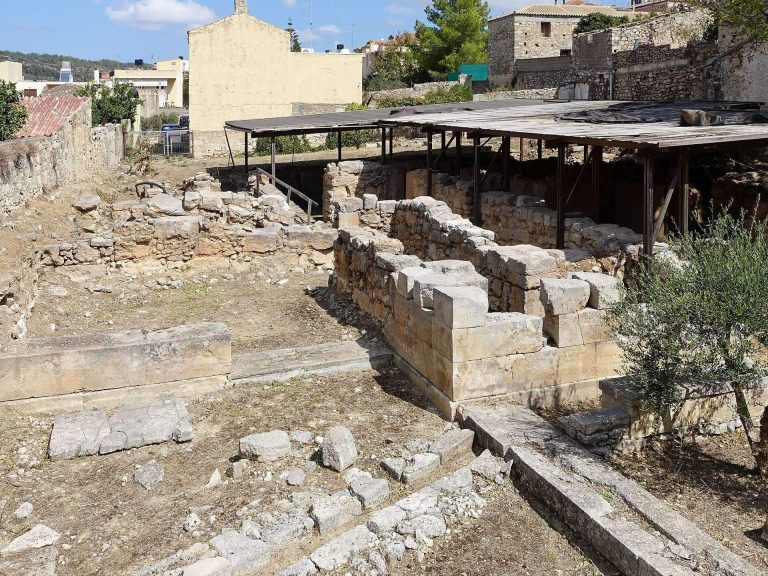
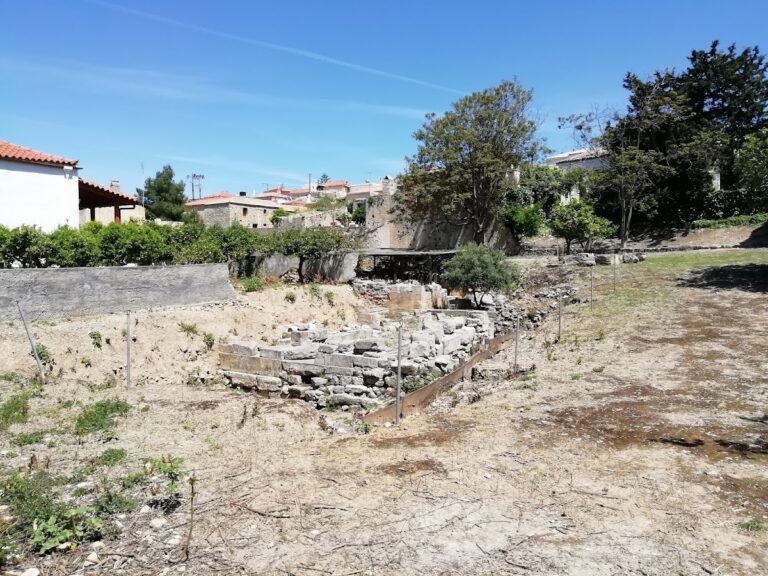
Roman Knossos remained inhabited and acquired new public and private buildings. Occupation continued into the early Byzantine period, although the city gradually declined as nearby Heraklion became the region’s dominant urban centre. The Greek and Roman city lay close to the palace, but only a limited area has been excavated.
Myth and archaeological investigation
Greek mythology made Knossos the seat of Minos, son of Zeus and Europa. The city was also associated with Pasiphae, Ariadne, Theseus, Daedalus, Icarus and the Minotaur. Later tradition identified the palace’s complex plan with the Labyrinth. In the myth, Minos commissions Daedalus to build the Labyrinth for the Minotaur, while Theseus kills the creature with Ariadne’s help. These stories became important subjects in Greek, Roman and later European art, literature and political symbolism. Their relationship to the historical palace remains interpretive rather than a direct historical record.
Minos Kalokairinos, a Cretan antiquarian and merchant from Heraklion, first excavated Knossos in 1878 and 1879. He exposed parts of the west wing, including two storage rooms containing large jars and cult objects. Ottoman political conditions prevented large-scale excavation at that time.
Arthur Evans began systematic excavation in March 1900 on behalf of the British School at Athens. His main campaigns continued until 1913 or 1914 and resumed from 1922 to 1930. Working with Duncan Mackenzie, David George Hogarth, Theodore Fyfe, Christian Doll and other workers, Evans uncovered most of the palace and parts of the surrounding settlement. He introduced the term Minoan for the Bronze Age civilisation of Crete, placing Knossos at the centre of the study of Aegean prehistory.
The excavations recovered fresco fragments, pottery, sealings, figurines, stone vessels, metal objects and thousands of Linear B tablets. Further excavations by J. D. Evans in the 1950s and 1960s exposed Neolithic and Aceramic Neolithic layers among the earliest Neolithic remains known in Greece. Since 2005, surveys led by Todd Whitelaw and the Knossos Urban Landscape Project have examined the wider valley and the long-term history of settlement. The project surveyed approximately 11 square kilometres, identifying occupation from about 7000 BC into the modern period, an urban centre of approximately 1.5 square kilometres, cemeteries and other archaeological features.
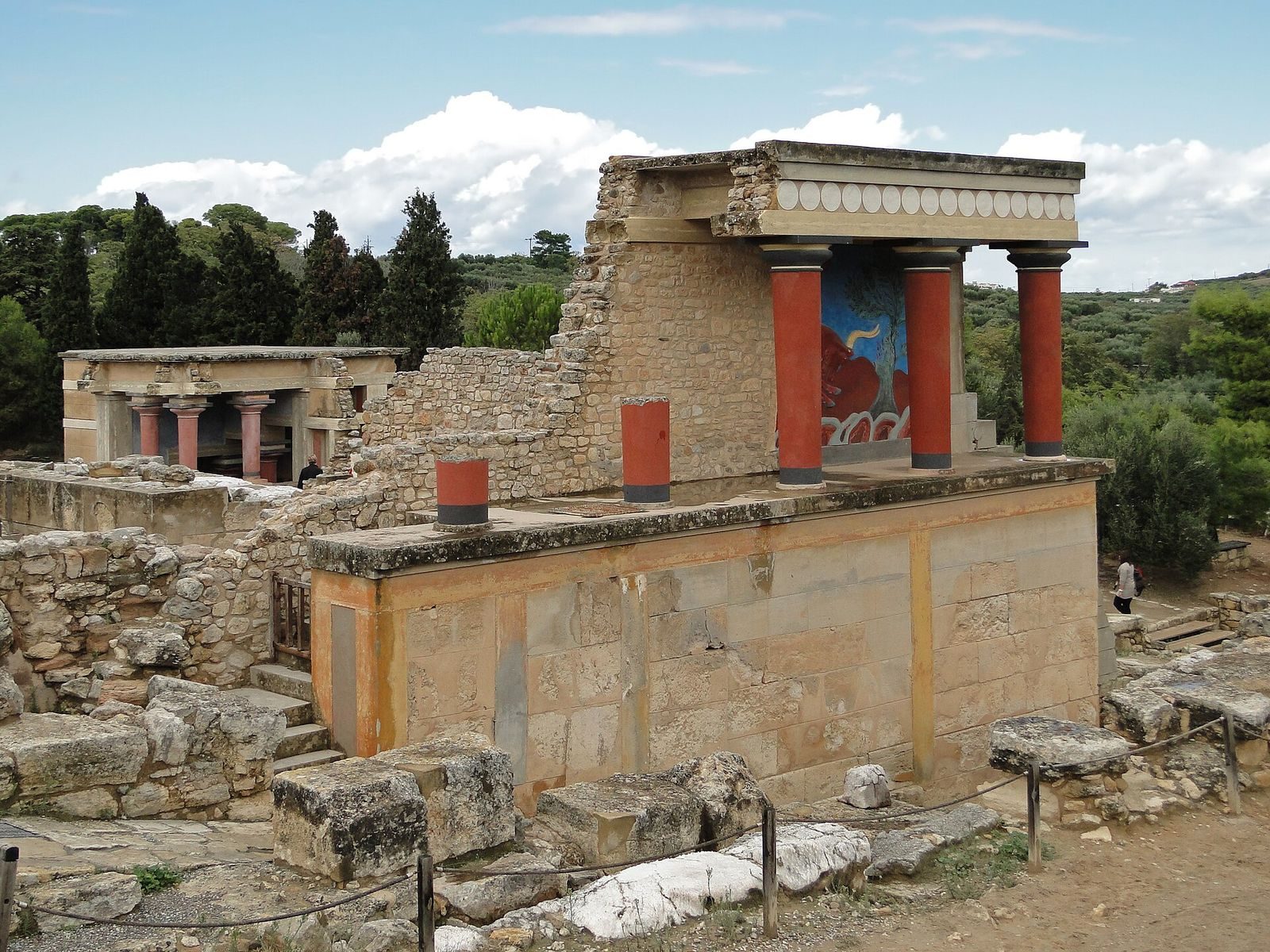
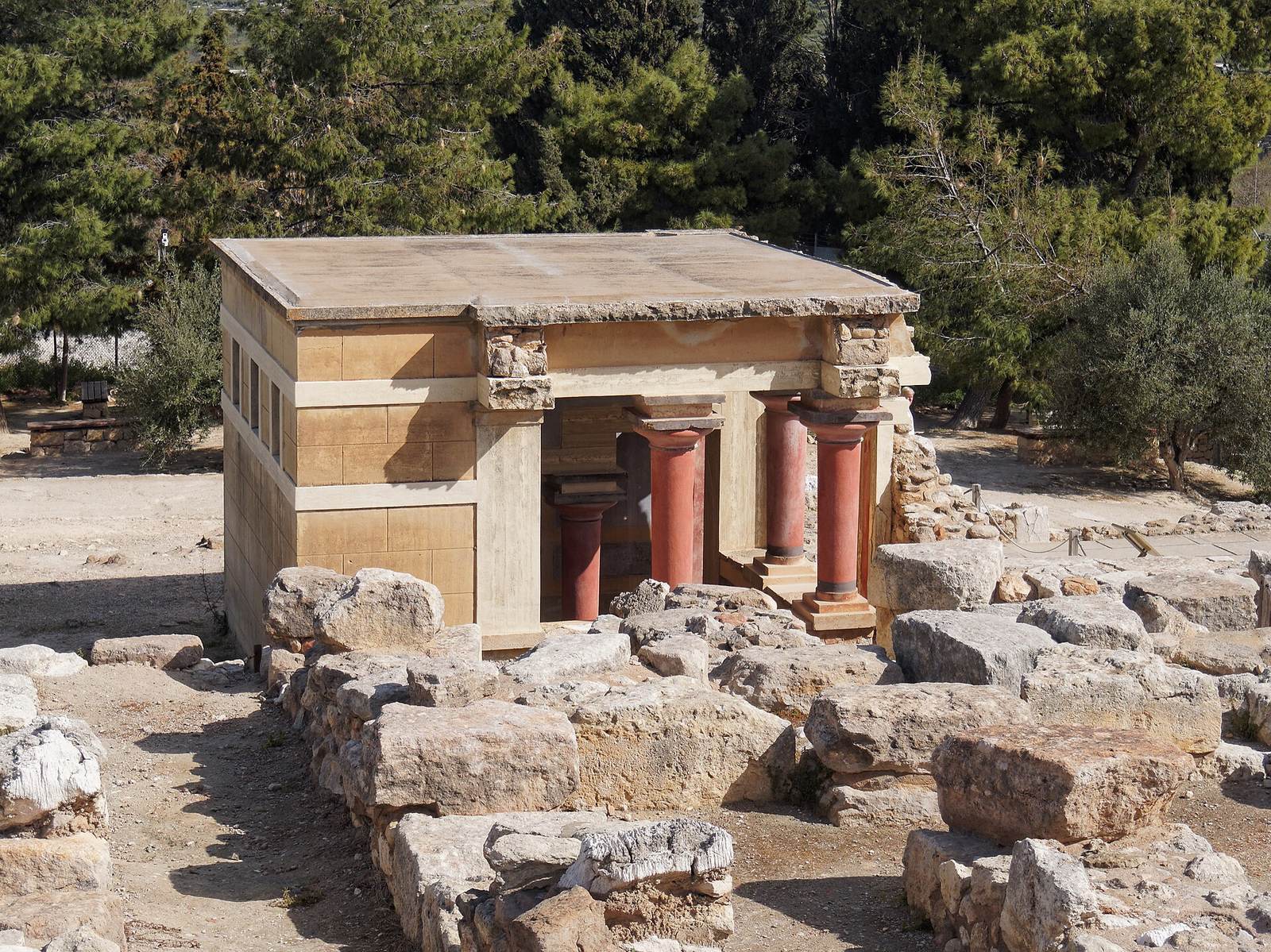
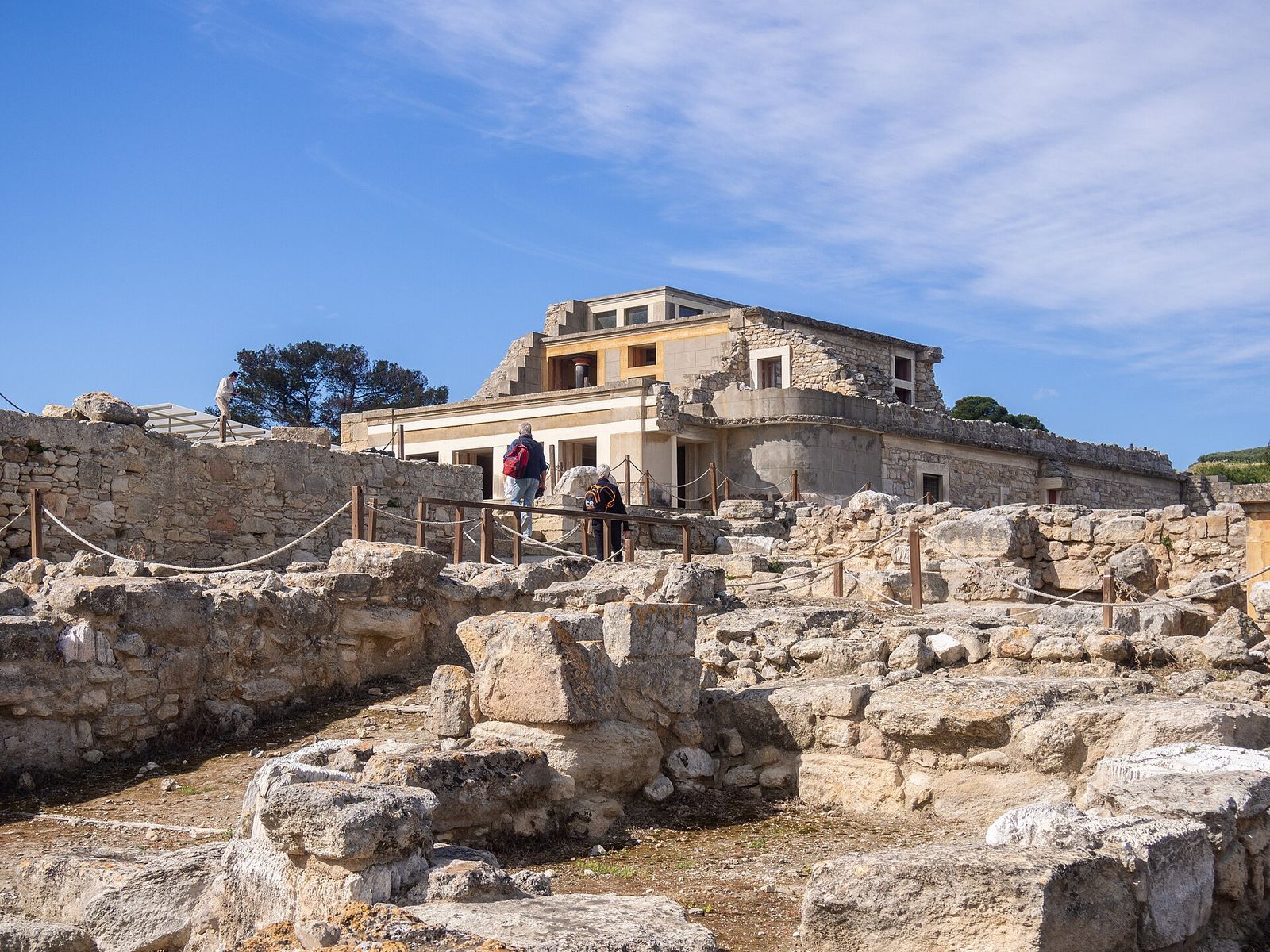
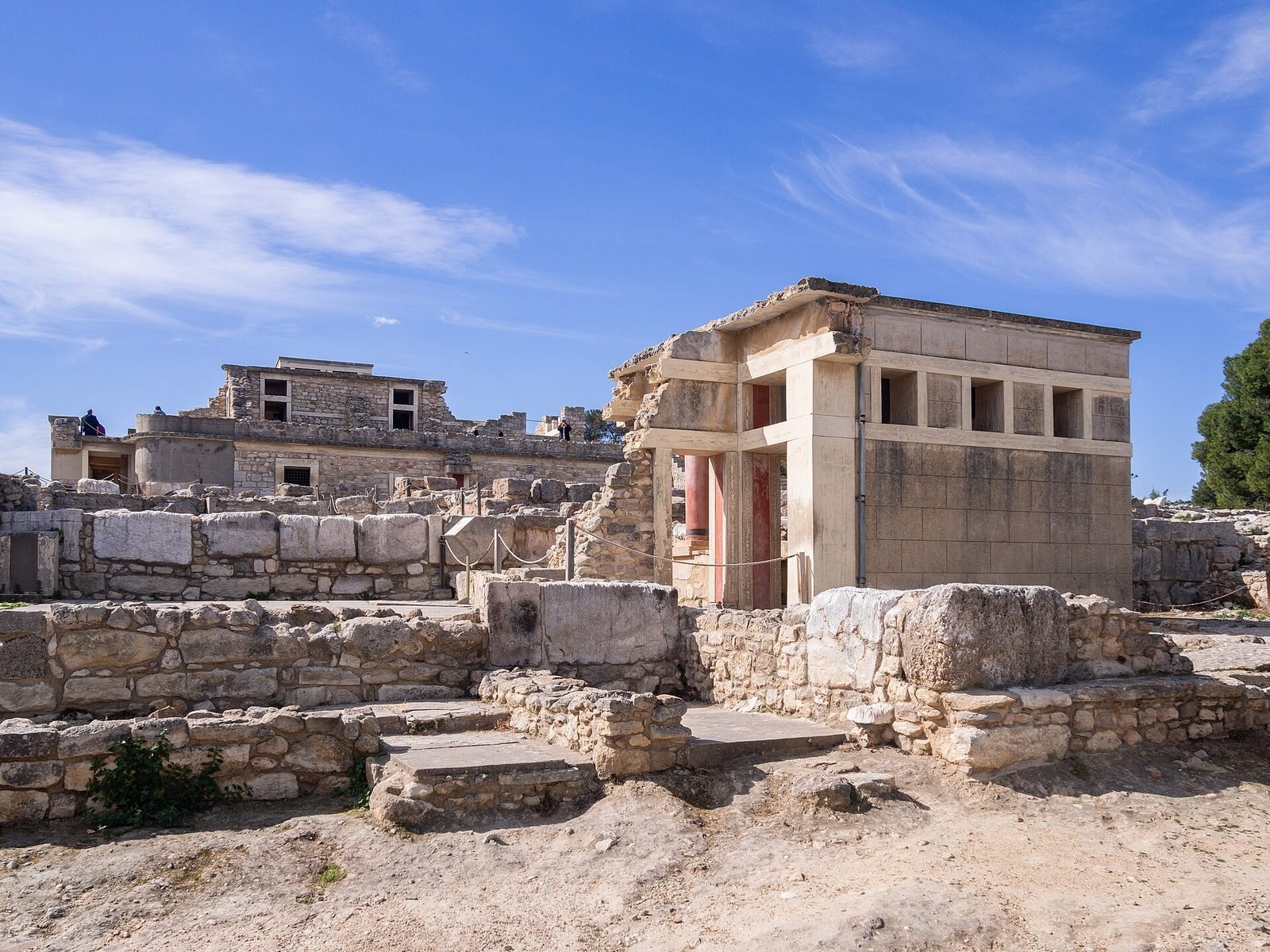
Arthur Evans’s reconstructions used reinforced concrete, colour and architectural interpretation to make the exposed remains intelligible and protect them. They are central to the modern appearance of Knossos, but have been criticised as speculative, irreversible and sometimes more interpretive than the archaeological evidence permits. Room names such as the Throne Room, Queen’s Bathroom, Caravanserai and Custom House have likewise been criticised for suggesting greater certainty about function than the evidence supports. Some frescoes and other finds were restored by Emile Gilliéron and his son Emile in artistically free ways, and some associated works have consequently been suspected of being modern fabrications.
Research and conservation continue through excavation, survey, museum study, reanalysis and maintenance by the Greek Archaeological Service, the British School at Athens and other institutions. In 2025, Knossos was inscribed with Phaistos, Malia, Zakros, Zominthos and Kydonia as part of the UNESCO World Heritage Site known as the Minoan Palatial Centres.
Remains
The archaeological landscape extends across approximately 10 square kilometres, while the palace complex covers about 14,000 square metres on Kephala hill in the valley of the Kairatos river. The palace was a multi-level building of as many as five storeys. About 800 rooms can be demonstrated, while the complete complex may have contained up to 1,300. It was repeatedly renovated and enlarged, so the visible remains largely reflect the Second Palace period rather than a single original plan.
Palace layout and approaches
Central Court
The palace was organised around a rectangular Central Court measuring approximately 53 by 28 metres. It was about twice as long from north to south as from east to west. The court probably served ceremonies, gatherings, ritual activity and movement through the complex. Four principal entrances approached the palace from the cardinal directions. The south and north entrances connected it with processional routes and the surrounding town, while the West Court formed a major approach with probable ceremonial functions.
Corridors and interior spaces
Corridors, staircases, courts and rooms created an irregular and densely connected plan. Narrow winding passageways, decorated corridors, painted halls, ramps, galleries, light wells, reception rooms, shrines, workshops, magazines and multi-storey staircases occupied the complex. Light wells, open courts, porticoes, shafts and pier-and-door partitions brought daylight and air into the interior. This intricate arrangement contributed to the later association of the palace with the Labyrinth.
West and east wings
The west wing contained administrative and ritual areas, including magazines, the Throne Room complex, pillar crypts and repositories. The east wing included rooms built into the slope of Kephala hill, among them the Hall of the Double Axes and the Queen’s Hall. Some chambers were linked by polythyra, systems of full-height double doors between pillars. Closing the doors divided adjoining rooms, while opening them created passages or connected the spaces.
Processional and viewing area
At the north-western edge of the palace, a right-angled staircase complex closed a processional route approaching from the west. It is interpreted as a theatre or viewing area for approximately 500 people.
Storage and administration
Magazines and pithoi
Extensive storage magazines, particularly in the west wing, held commodities in large ceramic jars called pithoi. Up to about 400 pithoi have been identified, some nearly human height. Their combined capacity has been estimated at approximately 78,000 litres, with contents including wine, olive oil, grain and honey. Other stored goods included dried fish, olives and seeds.
The storage areas were connected with administrative control and redistribution. Grain mills, oil presses and wine presses show that some supplies were processed within the palace. Stone hollows beneath certain pithoi were used to store valuable objects such as gold and silver.
Scripts and records
Sealings and records in Cretan hieroglyphs, Linear A and Linear B provide evidence for palace administration. Linear A was an earlier Cretan administrative script that remains undeciphered. The Linear B tablets record land, livestock, labour, textiles, personnel, offerings and commodities.
Ritual and residential areas
Throne Room complex
The Throne Room complex contains a gypsum seat set against a wall, stone benches, a lustral basin and painted griffins. A lustral basin is a shallow installation interpreted as having a ritual washing function. A porphyry bowl in the antechamber was probably used for ritual washing, although it has also been interpreted as an aquarium. The function of the room remains debated. Arthur Evans interpreted it as a royal throne room, while other interpretations propose ritual or priestly use.
Painted decoration
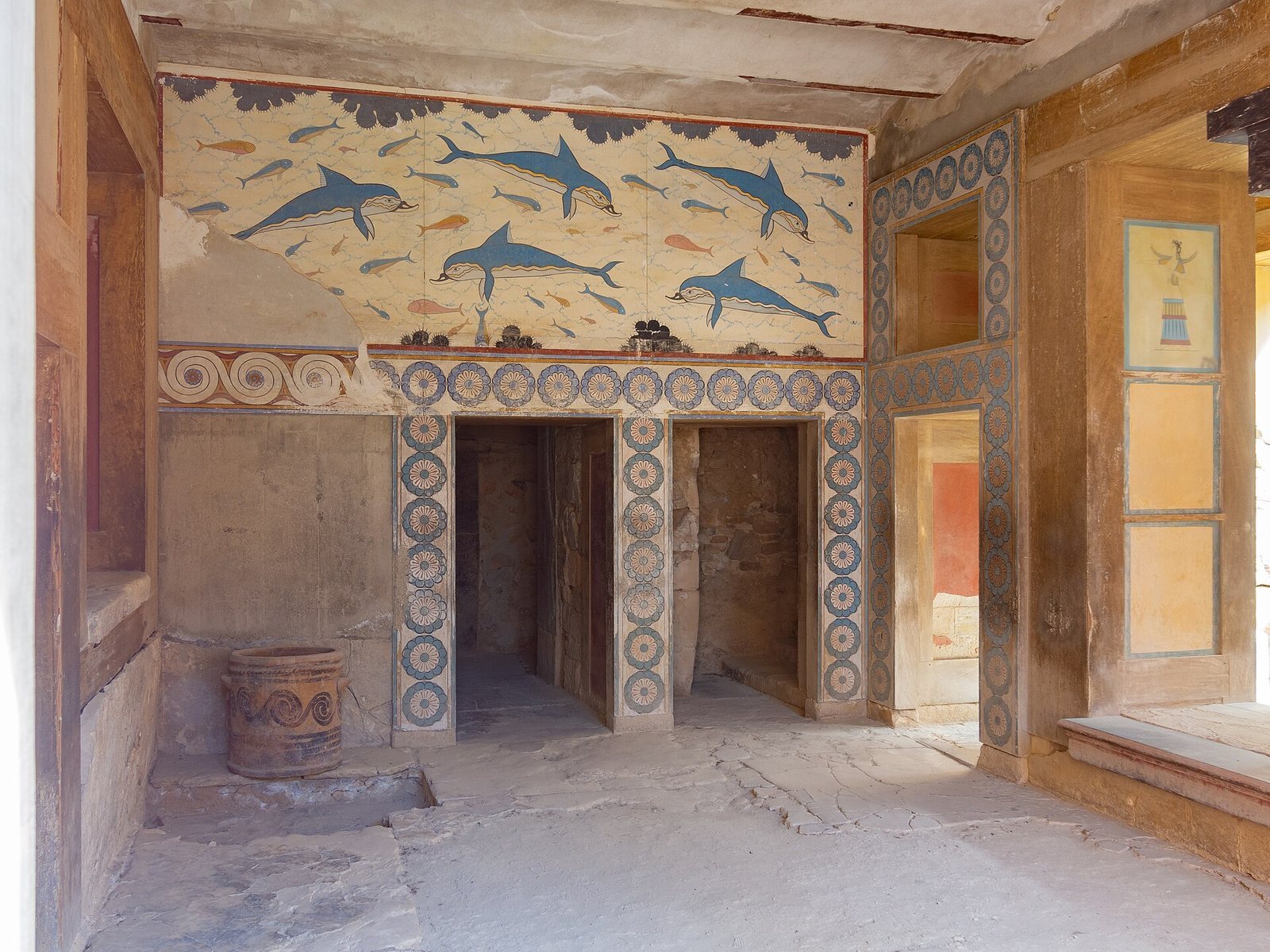
Painted plaster and wall paintings decorated many parts of the palace. The surviving scenes include bull-leaping, processions, animals, plants, marine life, ritual activity, fishing, flower gathering and other athletic pursuits. Important frescoes associated with Knossos include the Bull-Leaping Fresco, Procession Fresco, Cup-Bearer, Dolphin Fresco, Sacred Grove fresco and the image commonly called the Prince of the Lilies. Many paintings survive only in fragments, and some well-known images are modern reconstructions based on ancient remains.
Minoan artistic conventions at Knossos represent men with darker or reddish-brown skin and women with very pale skin. Most surviving human figures are young or adult, while relatively few depict children or elderly people. The palace and surrounding settlement also produced figurines, including the well-known snake goddess figurines, pottery, stone vessels, seal stones, bronze objects, jewellery and other ritual or administrative materials. Many of these finds are housed in the Heraklion Archaeological Museum.
Bull horns and double axes
Bull-horn motifs recur throughout the palace, including large horn-shaped architectural or cult elements placed near stairs and terraces. The double axe is another repeated motif on palace walls. It has been proposed as a possible source for the Labyrinth tradition, although that interpretation remains debated.
Water systems and construction
Water management
At least three separate water systems served the palace, one bringing water into the complex, another removing rainwater and a third carrying sewage away. Aqueducts conveyed water from nearby springs, while closed drains carried wastewater beyond the palace and the city. Rainwater was collected through carefully laid conical terracotta pipes and covered stone channels. Channels, drains, sloping surfaces and relatively small cisterns formed part of the system, while few wells have been identified within the palace area.
Building materials and columns
Construction used limestone, gypsum, timber, rubble masonry, plaster and stone revetments. Timber-reinforced masonry and multi-storey building techniques were employed, and some walls reached approximately 5 metres in height. Distinctive Minoan columns were generally made of timber, set on stone bases and finished with rounded capitals. Unlike later Greek columns, they commonly tapered downward. Reconstructed examples are now prominent visual elements of the site.
Wider urban landscape
Neighbouring buildings
The settlement around the palace included the Small Palace, Royal Villa, South House, Caravanserai, Temple Tomb and Theatral Area. Houses, sanctuaries, tombs and the Roman Villa of Dionysus show that Knossos was a wider urban and ceremonial landscape rather than an isolated palace. The Royal Road connected the palace area with parts of the surrounding town.
Greek, Roman and harbour remains
The wider landscape contains later Greek and Roman buildings, cemeteries, roads, villas, sanctuaries and ritual structures. The Roman Villa of Dionysus is a notable later building with mosaic decoration. Only a small part of the Greek and Roman city near the palace has been excavated.
The Kairatos stream, later called Katsambas, lay near the settlement and may have been navigable by large boats, although that interpretation is uncertain. The harbour of Knossos was situated at the stream’s mouth near the present harbour area of Heraklion, while another harbour was associated with Amnisos.
Human remains and interpretation
Children’s bones with cut marks were reported in 1979 in an area behind the Stratigraphical Museum. Their interpretation as possible evidence of human sacrifice remains uncertain.