Maruyama Kofun: A Keyhole-Shaped Burial Mound in Japan
Site at a Glance
- Rating
- 3.8
- Popularity
- Very Low
- Country
- Japan
- Primary era
- Classical
- External website
- Open
- Eras represented
- Classical
- Civilizations
- Yamato
- Site type
- Burial
- Remains
- Burial Mound
On this page6 sections
History
Maruyama Kofun is a keyhole-shaped burial mound in Kaizuka, Osaka, Japan, built during the latter half of the fourth century in the later part of the early Kofun period. The Kofun period was an era when powerful political and regional elites were buried in large earthen mounds. Maruyama Kofun formed part of the Jizodō Kofun Group and is placed after the separate Mayuyama Kofun in the sequence of major burials in the Izumi region.
A Local Burial Ground
Excavations at the nearby Kaizuka Minami Elementary School revealed six smaller burial mounds, including four circular mounds and two square ones. Together with Maruyama Kofun, they indicate a local chiefly burial ground that developed from the late fourth into the fifth century. The group provides evidence for the political organization of the Izumi region during the early Kofun period, when large burial mounds expressed the status of regional leaders.
Later Tradition and Protection
Local tradition holds that Toyotomi Hideyoshi, the sixteenth-century military ruler who campaigned to bring regions of Japan under his control, established a field headquarters on the mound in 1585. The position was associated with his attack on Shakuzenji Castle during his campaign against Kii Province.
In 1952, large-scale soil extraction threatened Maruyama Kofun. An emergency archaeological investigation halted its demolition for use as landfill. The mound became a National Historic Site on May 15, 1956. Its owner donated the land to Kaizuka City in 1957, and the city became the designated management body in 1958. Investigations carried out around the mound from fiscal years 2000 to 2002 accompanied improvements to its surroundings. The haniwa recovered during this work were designated Kaizuka City Tangible Cultural Properties on November 10, 2006.
Remains
Mound and Setting
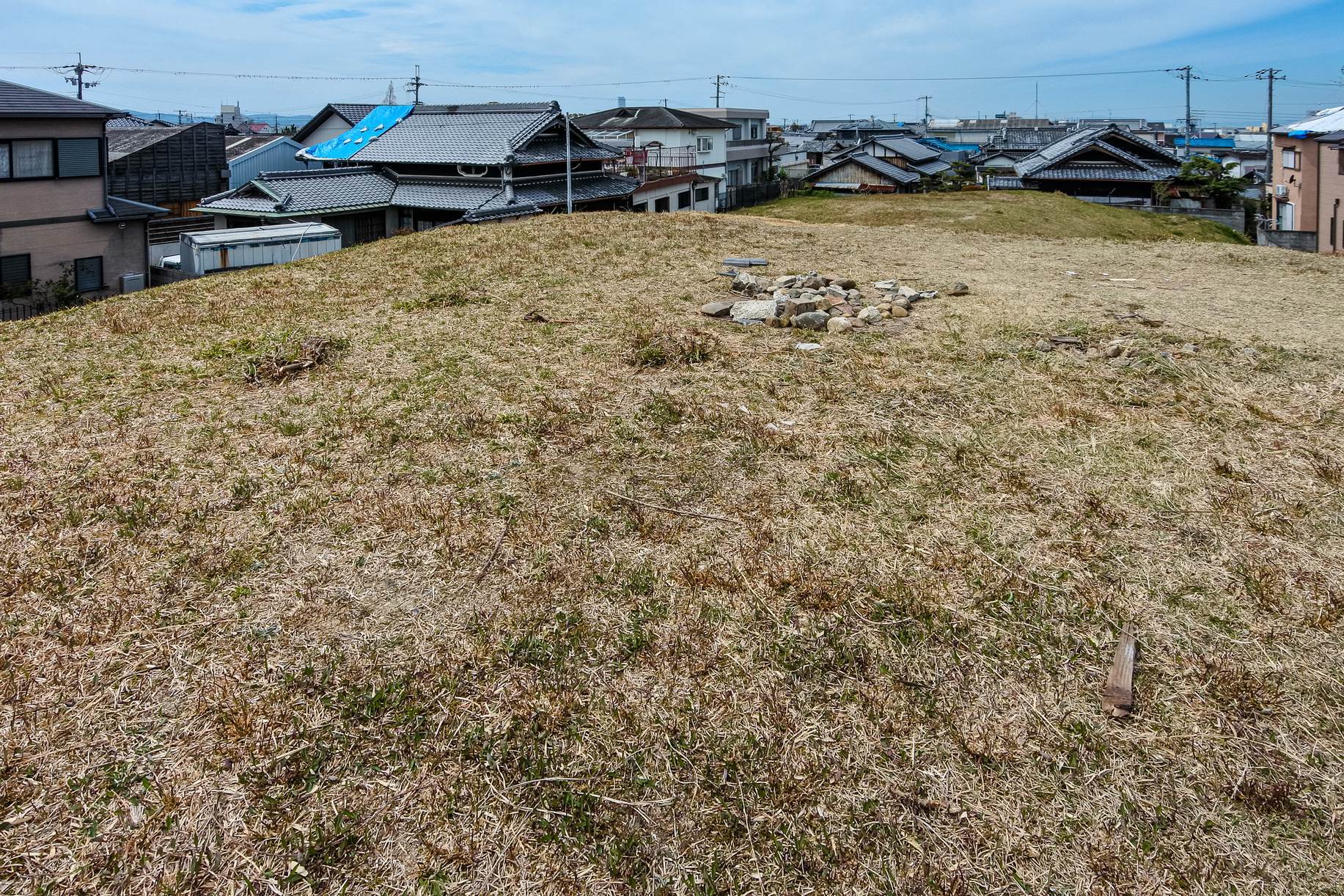
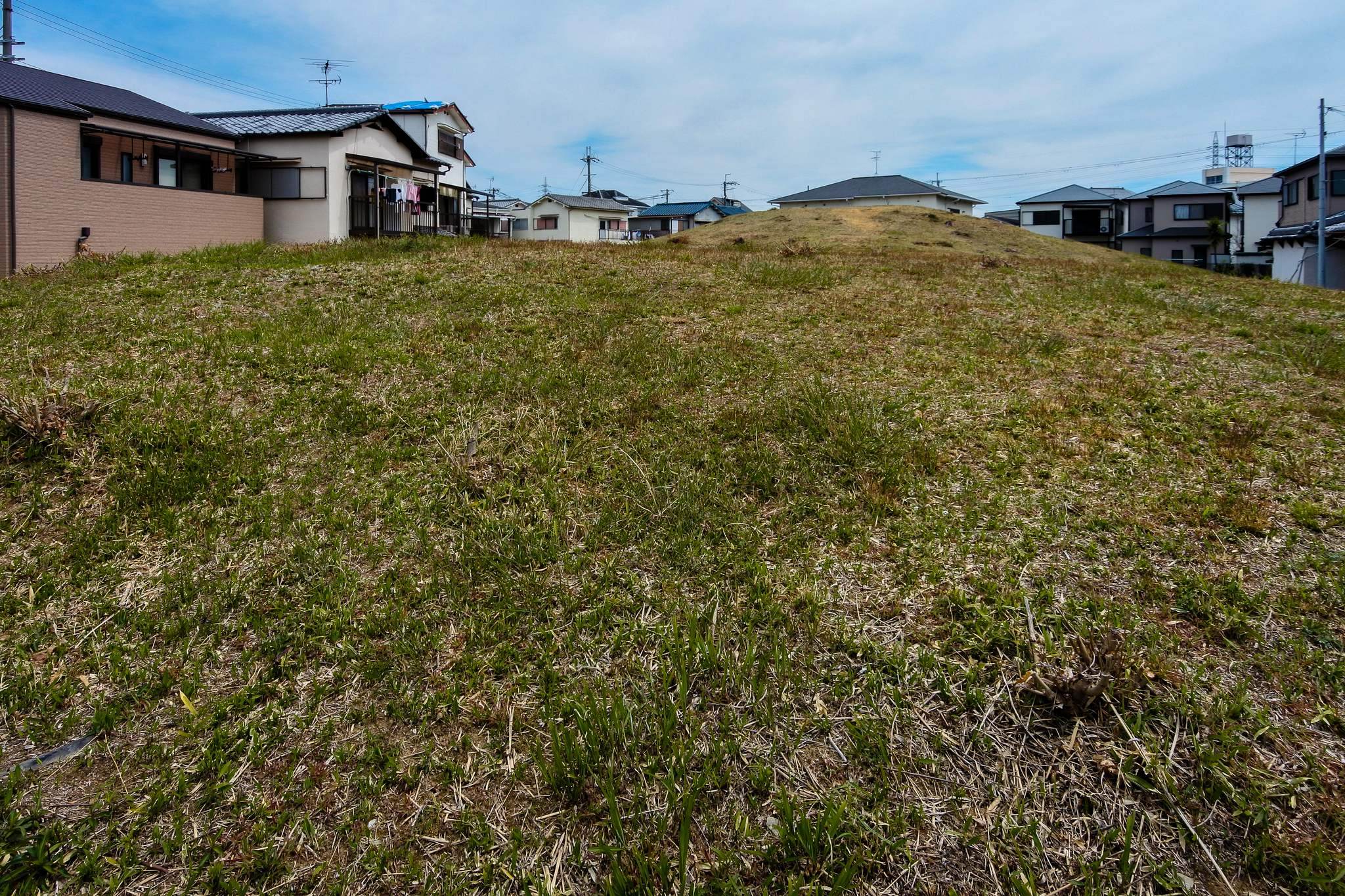
Maruyama Kofun stands on the edge of a fluvial terrace on the left bank of the Kogi River and faces west. Viewed from above, its keyhole plan combines a square front section with a circular rear section. The mound measures approximately 72 to 73 metres in total length, while the rear circular section is about 43 metres across and approximately 5 metres high. It is believed to have been built in three tiers, with the earthen surface covered by fukiishi, stones laid over a burial mound to help protect and reinforce it.
Haniwa
Excavations identified rows of cylindrical haniwa, clay funerary objects placed on or around burial mounds. Some were shaped like morning glories, while figurative examples represented houses, quivers, shields, and crown-like headgear. The crown-shaped form is particularly rare in Japan. Forty-one haniwa were designated Kaizuka City archaeological cultural properties: six cylindrical pieces, five morning-glory-shaped pieces, and 30 figurative examples. The figurative group includes one house-shaped haniwa, eight quiver-shaped examples, one shield-shaped example, one crown-shaped example, and 17 pieces whose original type cannot be determined.
No surrounding moat has been identified. The position and structure of the burial chamber remain unknown, and no grave goods have been documented. The surviving mound and its clay figures nevertheless preserve evidence of the burial practices, social distinctions, and regional connections associated with the Jizodō Kofun Group.