Akechi Castle: A Medieval Mountain Castle in Japan
Site at a Glance
- Rating
- 3.8
- Popularity
- Low
- Country
- Japan
- Primary era
- Medieval
- Eras represented
- Medieval
- Civilizations
- Ashikaga shogunate
- Site type
- Military
- Remains
- Castle
On this page11 sections
History
Foundation and Akechi Family Seat
Akechi Castle is a medieval mountain castle in Kani, Japan, built in 1342 at Nagayama in Akechi Manor, Mino Province. It used the natural ridges and valleys of the mountain setting and belonged to the period later known as the Sengoku period, an era of intense political and military conflict when regional warlords competed for territory and power.
The castle was also known as Nagayama Castle or Akechi Nagayama Castle. Tradition identifies its founder as Toki Yorikane, a member of the Mino Genji, a branch of the Minamoto lineage associated with Mino Province. According to this tradition, Yorikane adopted the Akechi name. The castle then served as the hereditary residence of the Akechi family for approximately 200 years, and tradition holds that it remained their seat until the time of Akechi Mitsuhide, a sixteenth-century samurai commander and political figure.
The Battle of 1556
Akechi Castle fell during the Battle of Akechi Castle, fought from September 19 to 21, 1556. Saito Yoshitatsu, lord of Inabayama Castle, attacked with a force of more than 3,700 men. Akechi Mitsuyasu, the castle’s deputy, defended the stronghold with his brother Mitsuhisa and more than 870 men.
As the defense collapsed, Mitsuyasu and Mitsuhisa committed suicide, as did Mitsuyasu’s wife and concubines. The castle was not rebuilt after its capture, and its abandonment is traditionally dated to 1556. The Akechi War Chronicle states that, when the fall became imminent, Mitsuyasu entrusted Mitsuhide with restoring the Akechi family. Mitsuhide escaped from the castle.
Akechi Castle is traditionally regarded as Mitsuhide’s birthplace, although this remains a tradition rather than an established fact. Tenryuji, a Buddhist temple at the northern or northeastern foot of the castle site, contains the cemetery of successive Akechi family members. A memorial service for Mitsuhide is held there in the sixth month of the traditional lunar calendar.
Preservation and Commemoration
The Akechi Castle Ruins are designated a historic site by Kani City. An approach route through the ruins, known as the Akechi Castle Ruins Walking Trail, follows the surviving remains and has also served as a hiking course from spring through autumn. A bronze statue of Akechi Mitsuhide was installed in the main enclosure in June 2020 in connection with the broadcast of the historical television drama The Kirin Comes, which featured Mitsuhide as its principal character.
Remains
Mountain-Castle Layout
Akechi Castle followed a linked-enclosure mountain-castle plan, using projecting ridges, valleys, and other natural features as part of its defenses. No keep was constructed. Only a small part of the original layout survives, although the principal remains are comparatively well preserved. The surviving complex includes the main enclosure, several baileys and other enclosed areas, earthen ramparts, and a steep-sided defensive ditch cut into the slope.
Approach and Main Gate
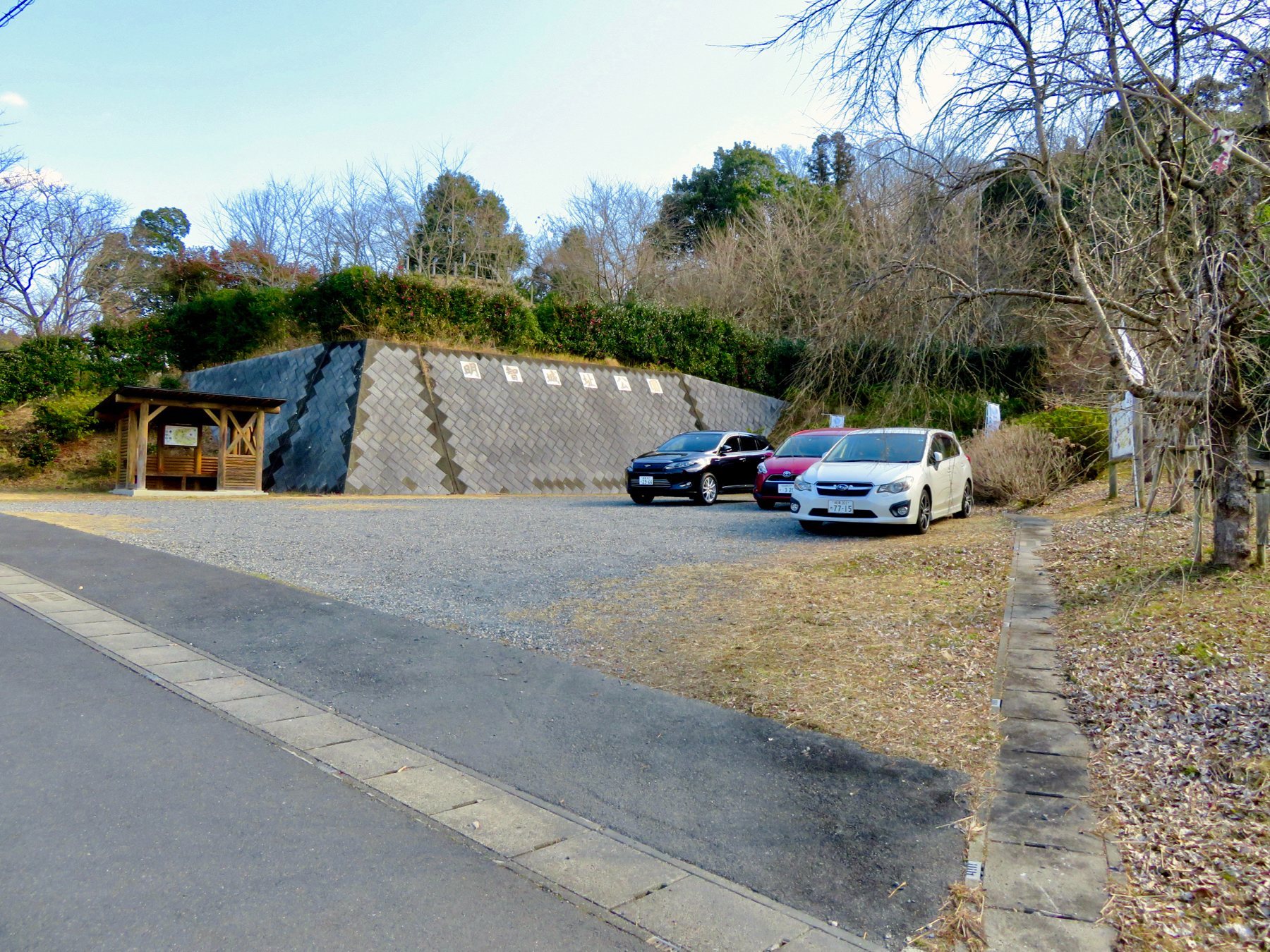
The main approach contains a present-day entrance, a main gate, and a path rising toward the summit. The route passes through the surviving castle area and helps connect the lower approach with the upper enclosures.
Main Enclosure
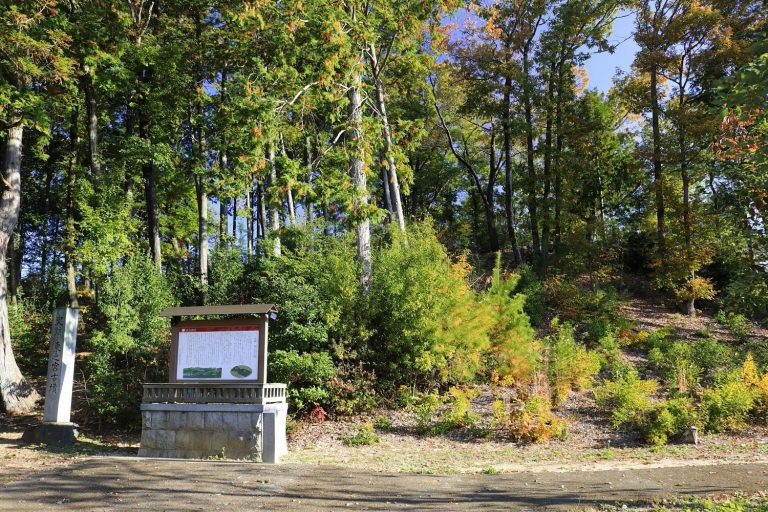
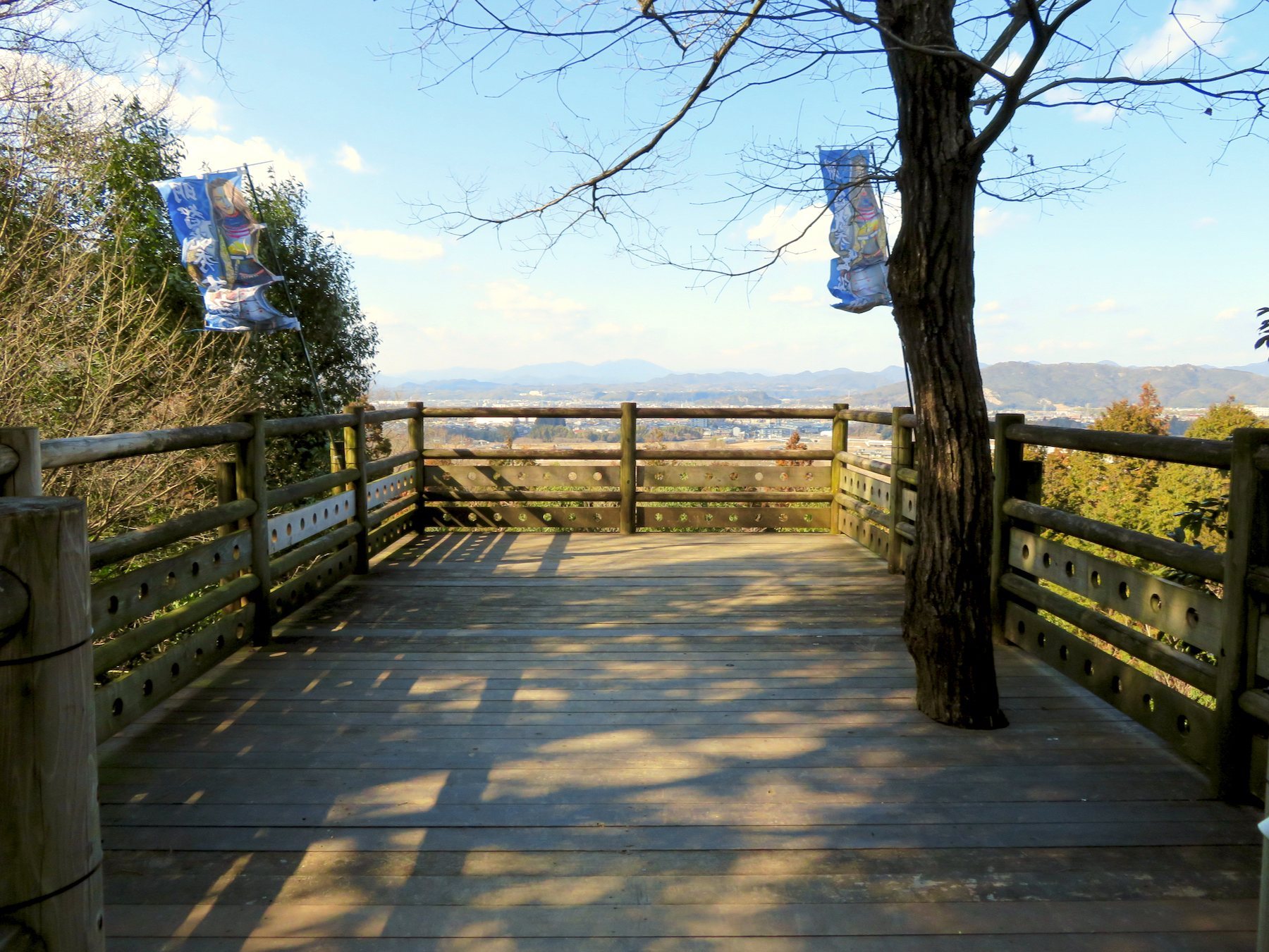
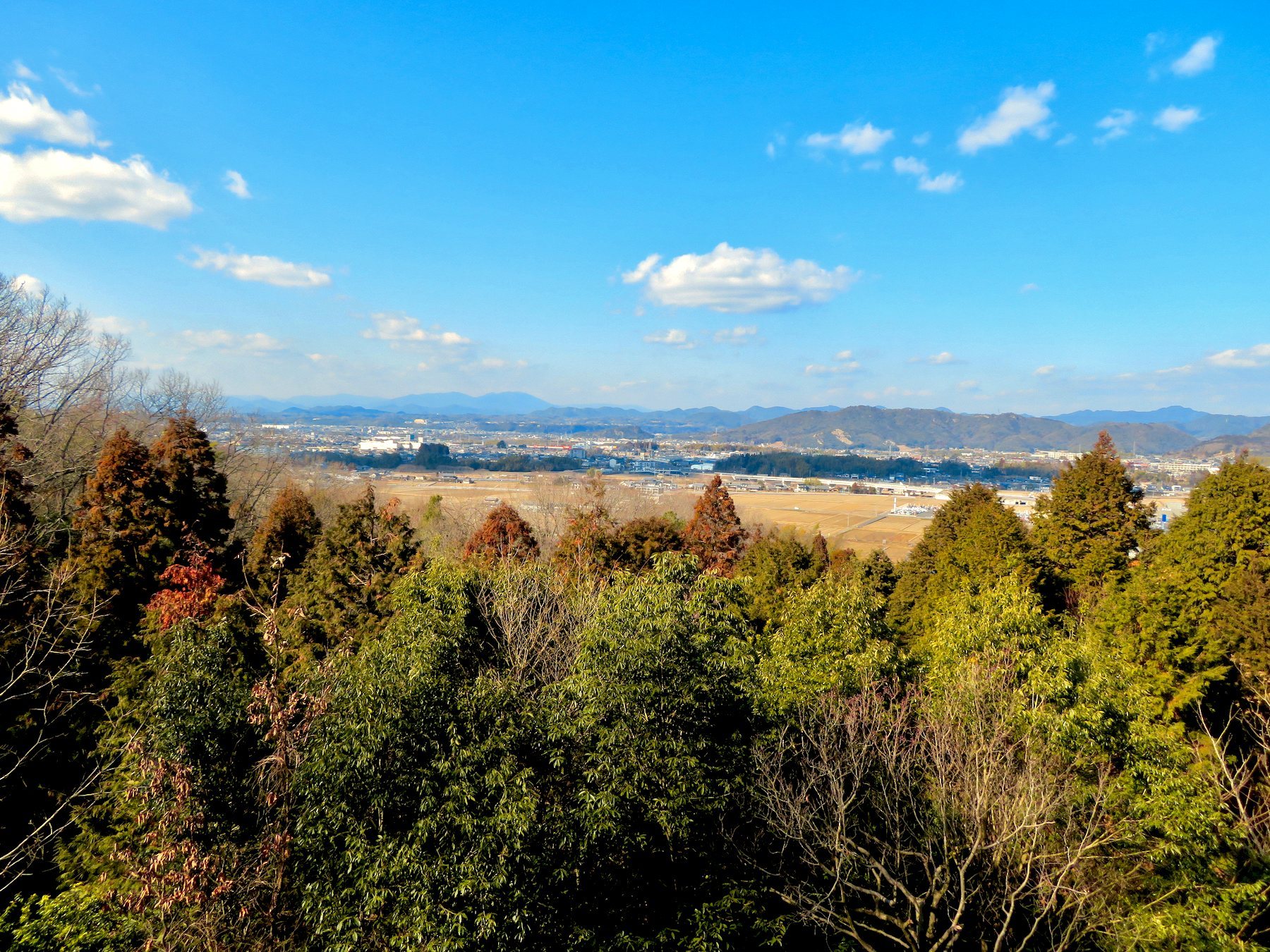
The main enclosure, the principal fortified area of the castle, contains a stone monument and a viewing platform. From the platform, the open land behind the castle corresponds to Akechi Manor, the former territory of the Akechi family. The broad plain and the mountain ranges beyond it are described as retaining a landscape fundamentally similar to that observed by Akechi Mitsuyasu.
Second Enclosure and Seven Mounds
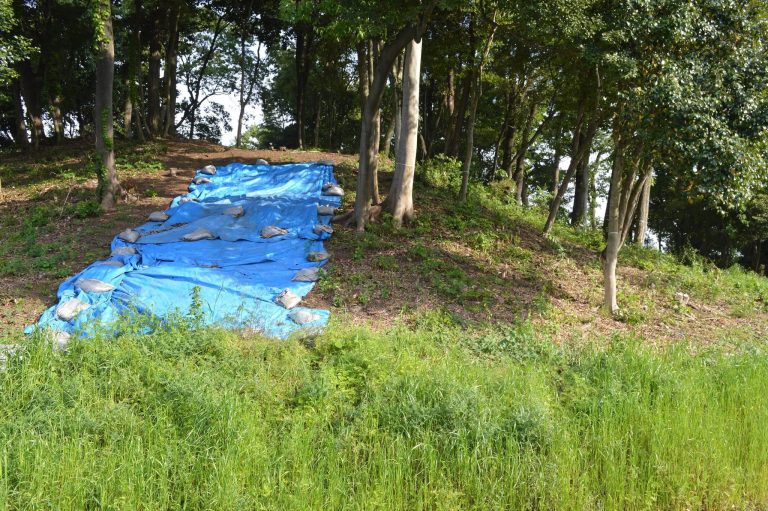
The area around the second enclosure, also described as a detached enclosure, contains the Seven Mounds. These are burial mounds for those killed when the castle fell in 1556. A stone monument stands near the mounds.
Western Detached Enclosure
The western detached enclosure forms another surviving part of the castle remains. The site also includes the bronze statue of Akechi Mitsuhide erected in the main-enclosure area in 2020.
Tenryuji Memorial Remains
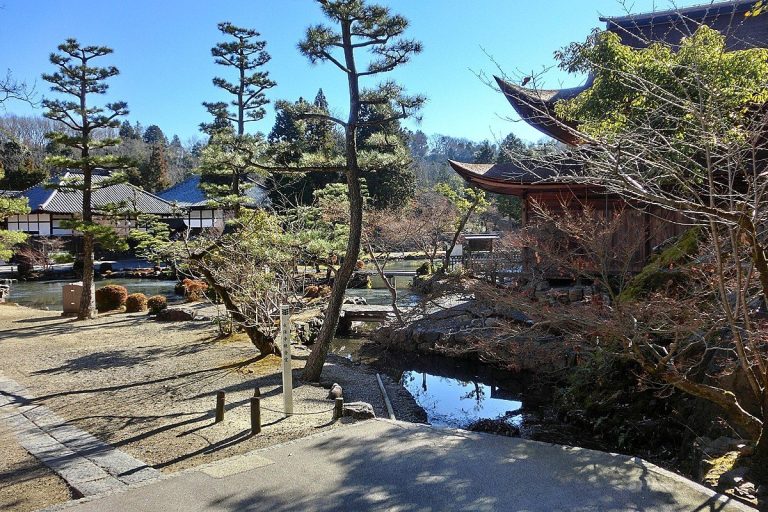
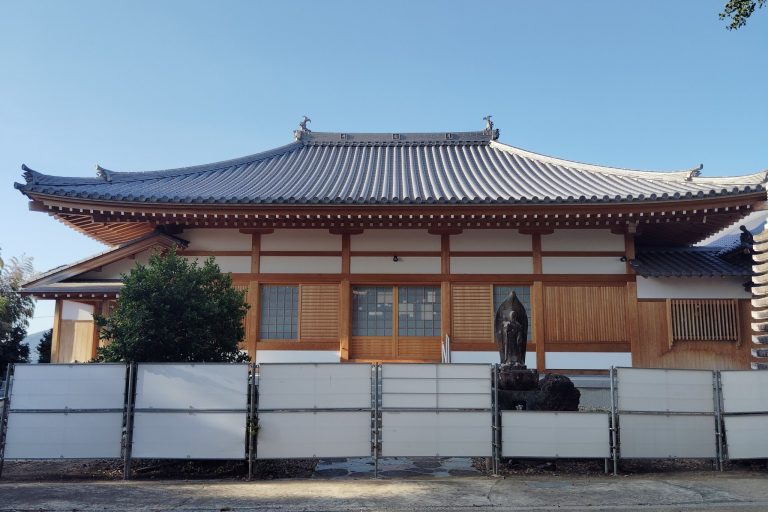
At the northern or northeastern foot of the castle, Tenryuji contains the Akechi family cemetery and a memorial tablet to Akechi Mitsuhide. The tablet measures 184 centimeters and is described as Japan’s largest. Its height, equivalent to six shaku, one sun, and three bu, refers to the sixth month and the thirteenth day of the traditional lunar calendar, the date associated with Mitsuhide’s death anniversary.