Cagli Cathedral: A Basilica and Co-Cathedral in Italy
Site at a Glance
- Rating
- 4.6
- Popularity
- Very Low
- Country
- Italy
- Primary era
- Early Modern
- External website
- Open
- Eras represented
- Medieval, Early Modern
- Civilizations
- Papal States
- Site type
- Religious
- Remains
- Cathedral
On this page20 sections
History
Cagli Cathedral, formally the Basilica Concattedrale di Santa Maria Assunta, is a Roman Catholic church in Cagli, Italy, dedicated to the Assumption of the Virgin Mary. It is a parish church and a co-cathedral of the Diocese of Fano-Fossombrone-Cagli-Pergola, sharing cathedral status within the diocese, and formerly served as the episcopal seat of the Diocese of Cagli.
Medieval Cagli and the new cathedral
The early medieval cathedral probably stood on the hill now called the Cappuccini, the political and religious center of the earlier fortified city. In 1287, part of Cagli was destroyed by fire during a violent conflict between the Guelphs and Ghibellines, opposing medieval Italian factions broadly associated with papal and imperial interests.
After the destruction, the inhabitants rebuilt Cagli on the lower plain of Sant’Angelo, also known as Mercatale, with the protection and decisive support of Pope Nicholas IV. The new settlement developed beside the Via Flaminia and already included the churches of San Francesco and Sant’Angelo Maggiore. Construction of its cathedral began in 1292 with financial support from the commune and was completed by the early fifteenth century. Most of this medieval building was later reconstructed.
Reconstruction and earthquake damage
The present cathedral emerged from rebuilding that began in 1646. It was solemnly consecrated on 10 October 1677, although work continued until 1754, when interventions in the Chapel of the Blessed Sacrament were completed. The earthquake of 3 June 1781 brought down the high dome and damaged other substantial parts of the building. Recovery and reconstruction followed, and the cathedral reopened in 1792 without its former dome.
The replacement ceiling took the form of a shallow basin, while the bell tower was reduced in height and later given its present octagonal brick structure. Another major structural restoration followed the 1997 Umbria and Marche earthquake. The work included underfloor heating and new electrical and lighting installations, and the church reopened for worship on Palm Sunday in 2004 after almost seven years.
Religious status
Pope John Paul II granted the church minor-basilica status in 1982, a papal recognition of its religious and historical importance. Since 1986, it has functioned as a co-cathedral of the Diocese of Fano-Fossombrone-Cagli-Pergola.
Remains
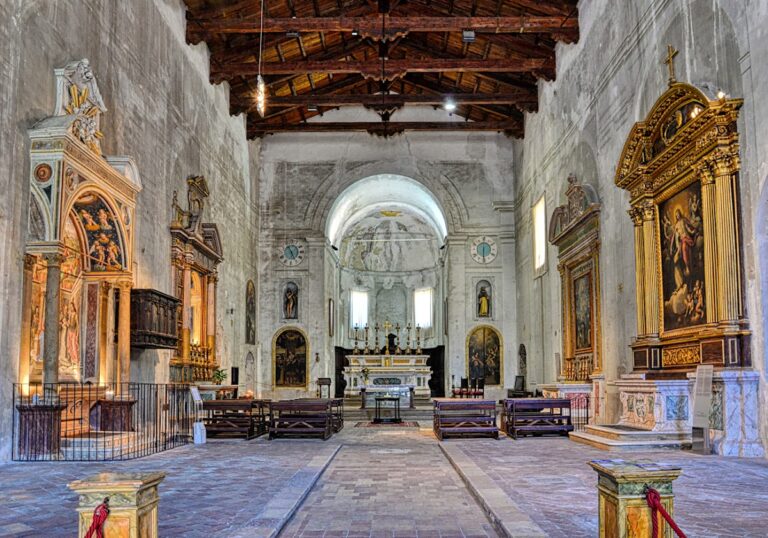
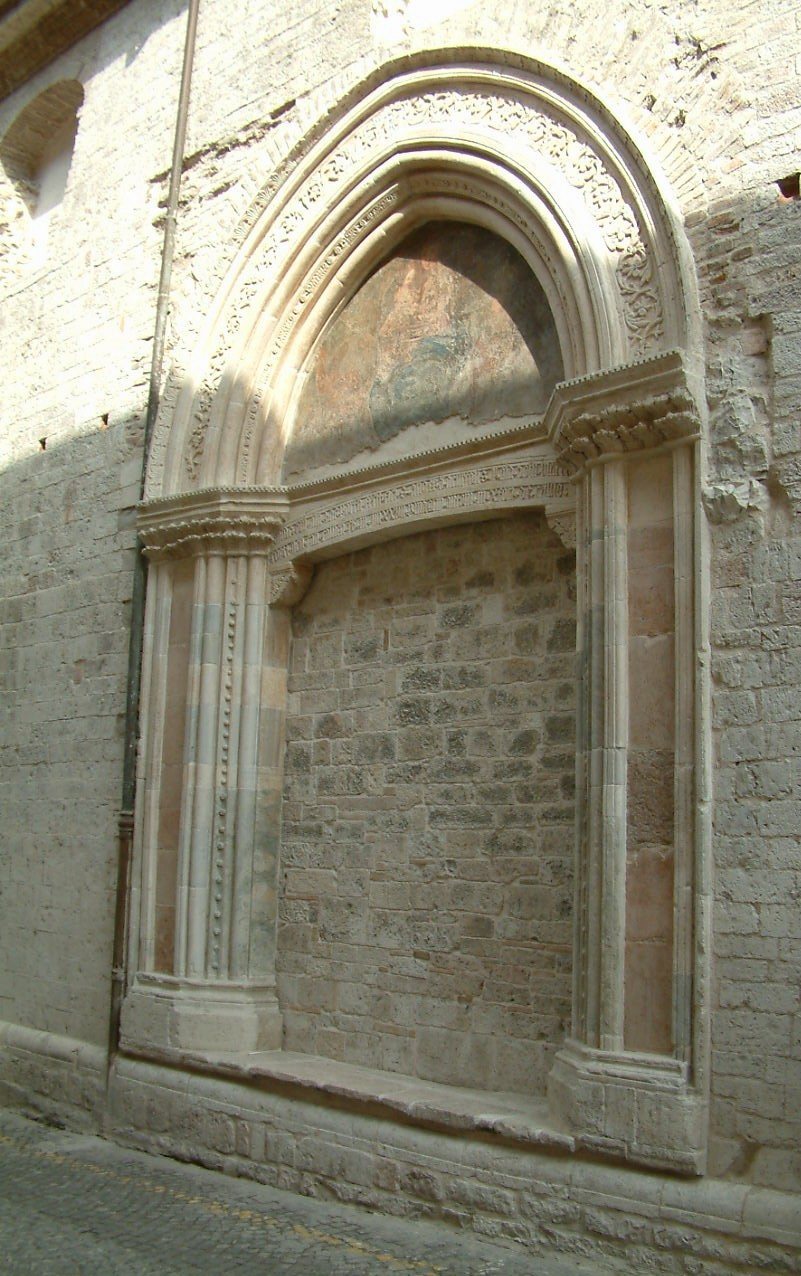
The cathedral has a basilican plan, with a central space flanked by two aisles. Its surviving medieval fabric includes a Gothic side portal signed and dated by Antonio di Cristoforo of Cagli in the early fifteenth century. A seventeenth-century painting by Lodovico Viviani of Urbino accompanies the portal.
Ceiling, tower, and apse
Crossing and bell tower
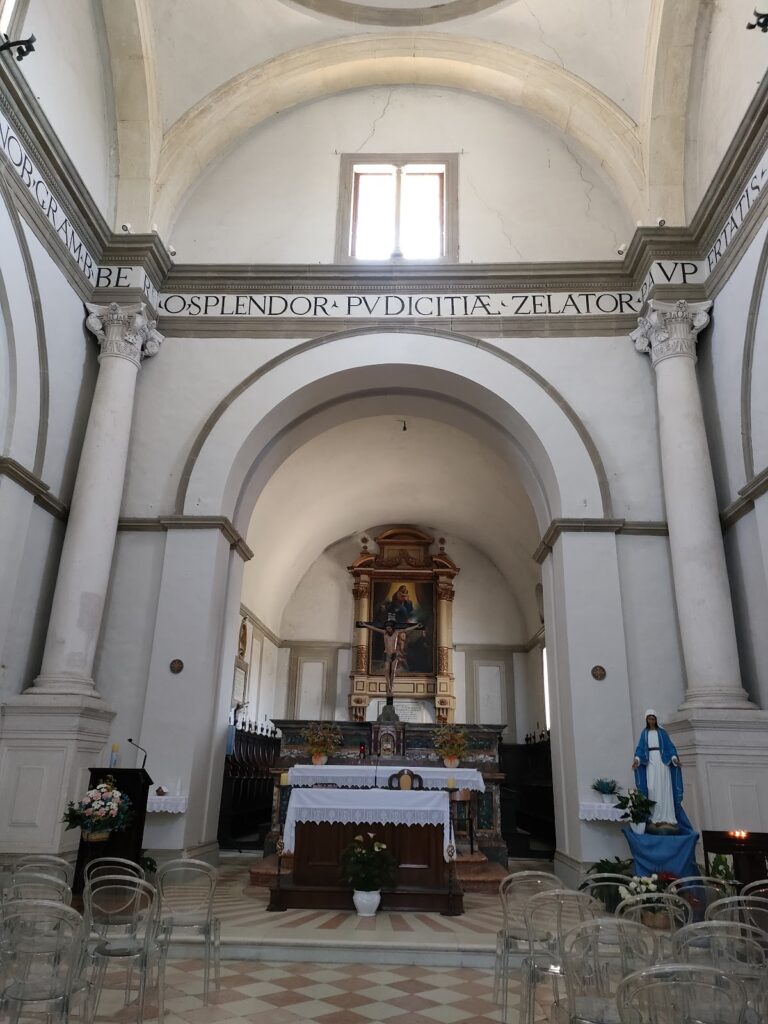
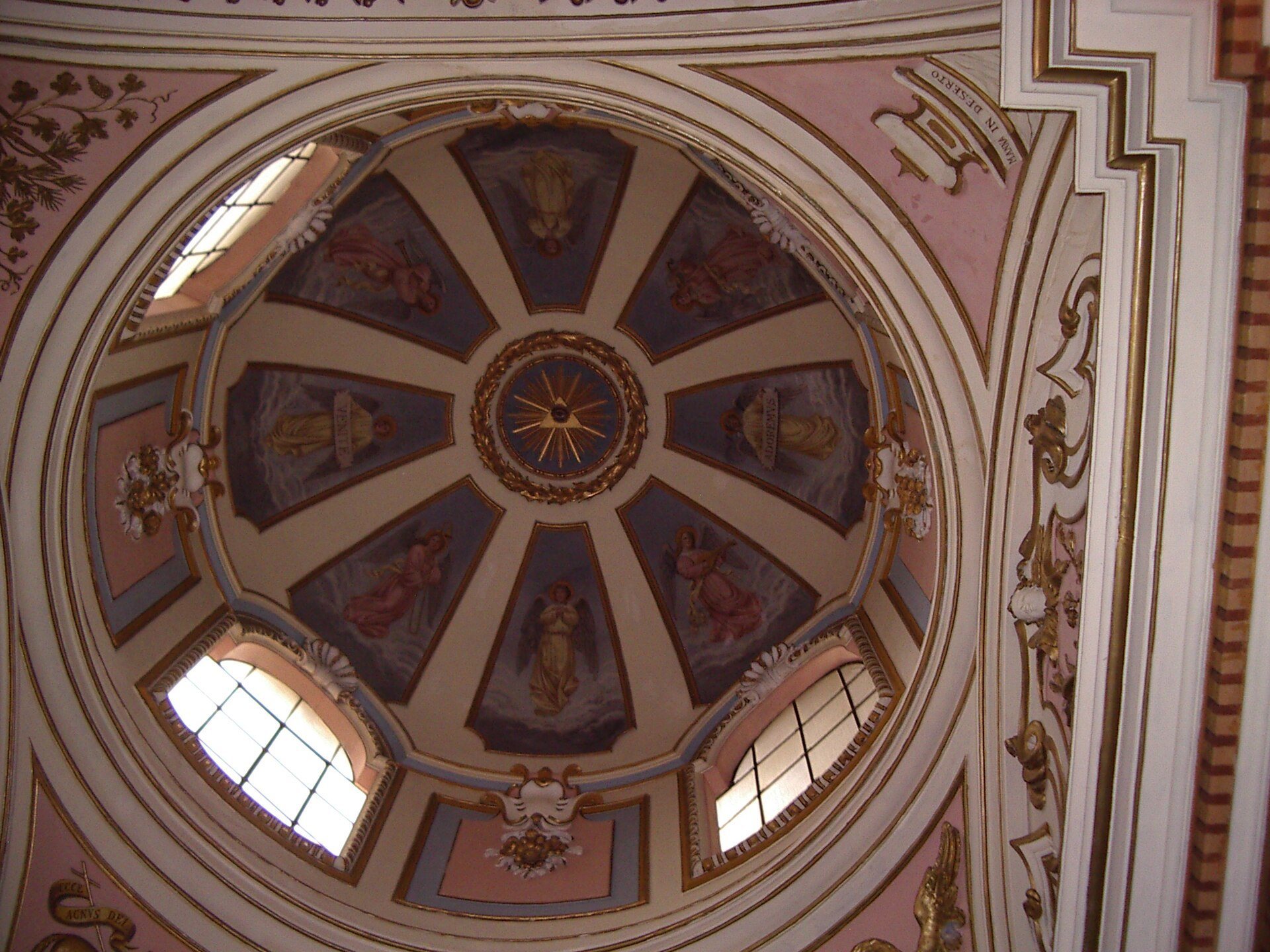
The high dome designed by Pietro Giacomo Patriarca was destroyed in 1781. It was replaced by the present shallow basin-like ceiling, called a catino, a form used to cover an apse or crossing. The bell tower was also lowered, and its present octagonal brick structure was designed in 1790 by Giovanni Antinori, the court architect.
Apse paintings
Since 1805, the center of the apse has displayed a small fragment of the early fifteenth-century fresco known as the Madonna delle Grazie, set within a gilded radiance. At the direction of Pope Pius VI, Fabieni painted the Four Evangelists in chiaroscuro, using strong contrasts of light and dark, and depicted the Apostles at the Virgin’s Tomb in tempera, a water-based painting medium, in the apsidal basin. He also painted Cagli’s principal patron saints in the pendentives of the crossing, while the central part of the basin presents the Assumption.
Right aisle and transept
Right aisle chapels
The right aisle contains a funerary monument by Francesco Benni, who was born in Cagli, together with a stucco statue of Saint Peter and Gaetano Lapis’s Death of Saint Andrew Avellino, dated 1758. Farther along the aisle, a chapel contains Sebastiano Conca’s 1720 painting of the Madonna and Child appearing to Saint Teresa.
Municipal altar
In the right arm of the transept, the municipal altar of Cagli was designed by Gianfrancesco Buonamici of Rimini. It contains Luigi Garzi’s large Patron Saints of Cagli, painted in 1704.
Choir gallery
The choir gallery contains a pipe organ built in 1889 by Nicola Morettini of Perugia. The instrument has 14 stops, two manuals, and a pedalboard.
Left transept and aisle
Marble-dust altar
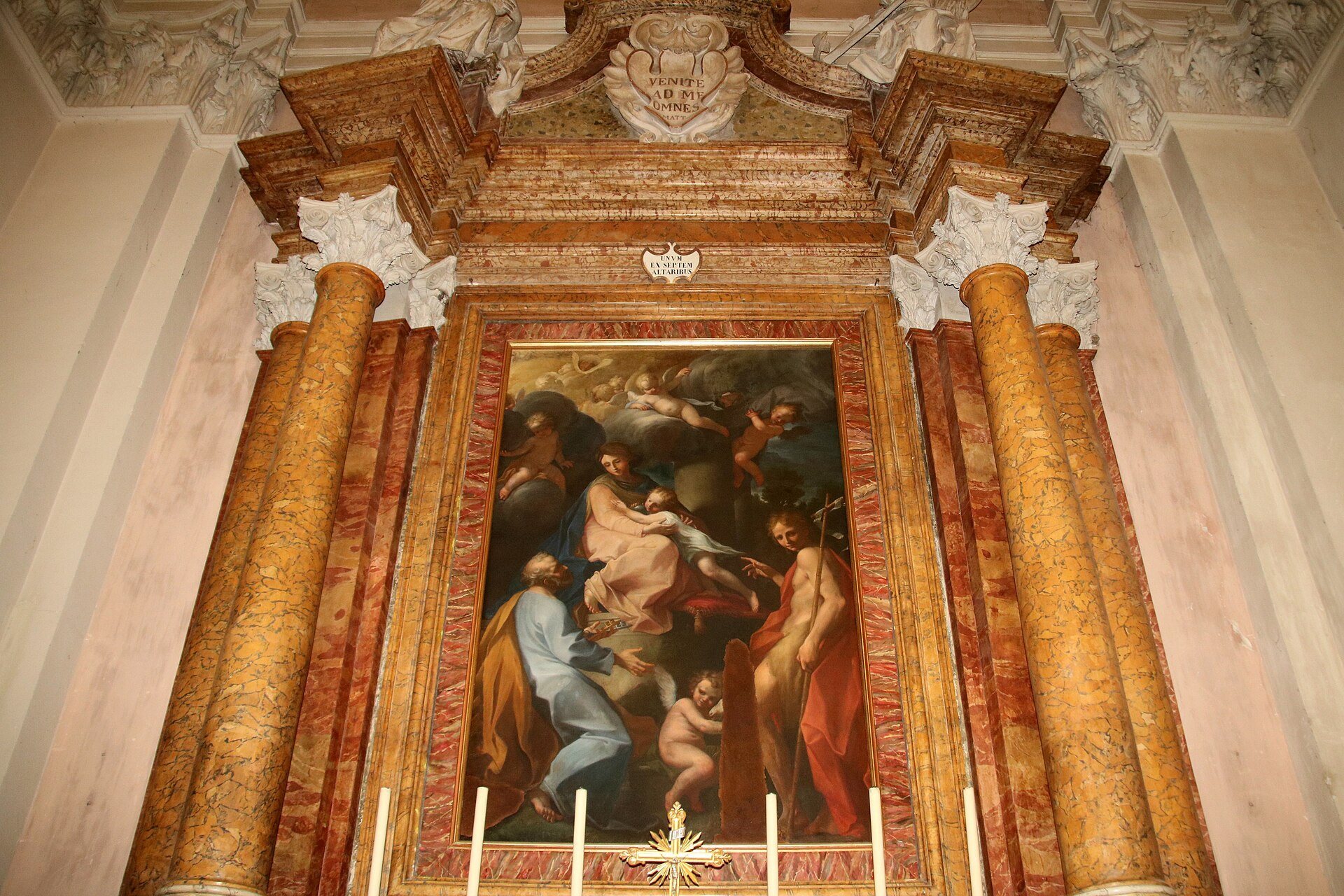
The left arm of the transept contains the cathedral’s only altar made of marble dust, dated 1791. It formerly consisted of marble and belonged to the Medici of Florence, who commissioned a Madonna and Child with Saints Peter and John the Baptist in 1695 from a member of the Nasini family of Siena.
Chapel of the Blessed Sacrament
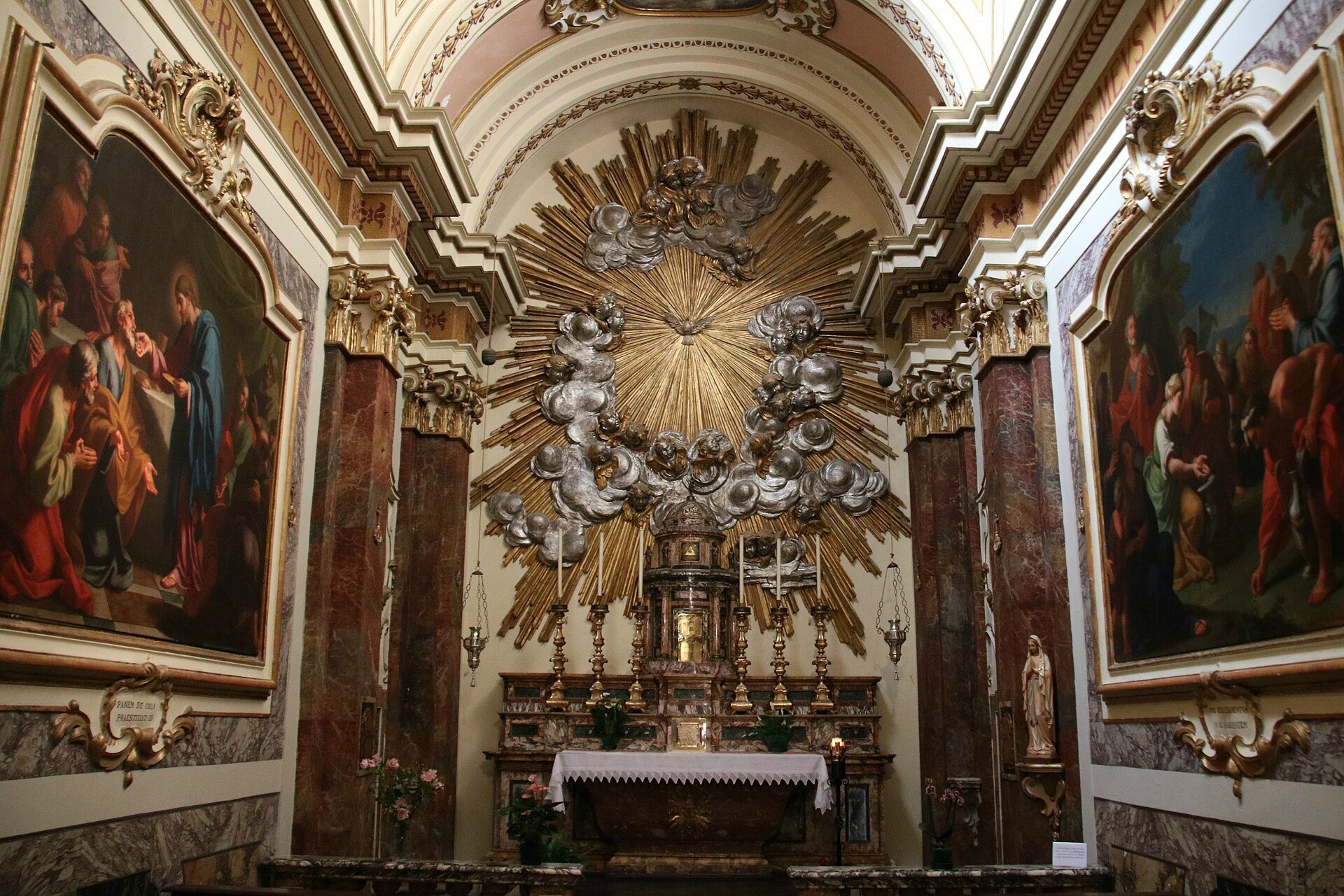
The transept leads to the Chapel of the Blessed Sacrament. Its confraternity, a voluntary religious association organized around worship and devotion, commissioned Gaetano Lapis to paint the Communion of the Apostles and the Gathering of Manna. The paintings were sent from Rome between 1754 and 1756 and are characterized by vivid coloration.
Left aisle paintings
The left aisle contains an Annunciation from the workshop of Federico Barocci, with an Eternal Father in the tympanum. The work is described as an early painting by Lapis. A later chapel contains a fragment of a sixteenth-century fresco of the Immaculate Conception, attributed to Giuliano Persciutti of Fano but possibly painted by Dionigi of Cagli. Above its altar is a seventeenth-century Eternal Father by Giambattista Gambarini, who was born in Cagli.
Saint Liborius altar
The next altar contains a seventeenth-century altarpiece of Saint Liborius by Giulio Cesare Begni of Pesaro.
Chapter house and sacristy
Chapter house
The chapter house contains a seventeenth-century Madonna and Child attributed to Giovanni Battista Salvi, known as Sassoferrato.
First sacristy
The first sacristy contains Sebastiano Conca’s Saint Aloysius Gonzaga and an Annunciation painted by Giovanni Giacomo Pandolfi in 1636.