Castello di Pietralata: Medieval Fortress of the Furlo Valley
Site at a Glance
- Rating
- 4.2
- Popularity
- Very Low
- Country
- Italy
- Primary era
- Medieval
- Eras represented
- Medieval, Early Modern
- Civilizations
- Papal States
- Site type
- Military
- Remains
- Castle
On this page10 sections
History
Castello di Pietralata is a medieval fortress in Acqualagna, Italy, built around the year 1000 or in the early eleventh century by monks of the Abbey of San Vincenzo. Its elevated position on Mount Pietralata allowed it to defend the abbey and its territory against the expansionist ambitions of Cagli and Fossombrone while controlling the basin formed by the Candigliano River between Acqualagna and Furlo.
Abbey Territory and Medieval Rule
The community of Pietralata supported the numerous churches established by the monks in their territory and worked in local stone extraction for their construction. Between 1280 and 1285, Pope Martin IV may have seized the castles belonging to the Abbey of San Vincenzo in Petra Pertusa and to the Diocese of Urbino as punishment, assigning them to the Brancaleoni, a medieval noble family active in the Marche and neighboring parts of central Italy.
As the Abbey of San Vincenzo declined, Pietralata lost the churches of Santa Croce and San Martino. San Nicolò became the principal religious reference point for the mountain area. The castle also reflected the political changes surrounding Urbino. After Urbino acquired Cagli and Fossombrone, Pietralata lost strategic importance. On 14 November 1439, its inhabitants opposed the removal of Abbot Genesio of the Abbey of Petra Pertusa in favor of the Diocese of Urbino.
Political Conflict and Local Refuge
A Malatesta political claim states that Oddantonio Montefeltro, Duke of Urbino, was killed on 22 July 1444 by a peasant from Pietralata using a billhook. Oddantonio’s death was followed by the accession of Federico da Montefeltro, another member of the ruling Montefeltro house. If the claim is true, the episode connected Pietralata with a major change in the political balance of the region.
Repeated troop movements brought demands for supplies and protection that worsened the valley population’s difficult economic conditions. Pietralata served as a refuge for people affected by these movements. In 1593, Giuseppe Ferreiro, Archbishop of Urbino, transferred the baptismal font from Saint Michael the Archangel at Grauleto to San Nicolò. Pietralata then became a parish center under the Curia of Urbino, incorporating the territories of churches within its jurisdiction.
French Occupation and Italian Unification
In 1797, French forces established a military command in the Furlo Gorge to suppress banditry and required Pietralata to support the garrison. Local resistance was followed by the arrival of General Monnier on 23 June 1799. On the next day, 24 June, he carried out severe repression in the community.
On 17 September 1860, Pietralata passed to the House of Savoy. On 17 March 1861, it became part of the Kingdom of Italy and lost its status as a dependent municipality. Archimede Fantoni, who came from Pietralata, served as Acqualagna’s first mayor after unification, holding office from 17 March to 26 May 1861.
Twentieth-Century Transformation
The community later sheltered opponents of the new Italian state, including members of the Grossi band during the period of brigandage. Mariano Brigidi, identified as Acqualagna’s first Fascist mayor, held office from 30 November 1922 to 31 January 1926. In 1936, the forest militia created a profile of Benito Mussolini on the mountain. Mussolini was the Fascist leader who headed the Italian government from 1922 to 1943.
On 8 June 1944, a partisan detachment of the Lugli Brigade was established at Montevarco. Operating on Pietralata under its commander, Pietro Polcri, it formed part of the armed resistance during the final phase of the Second World War in Italy. Industrialization and rural depopulation then sharply reduced Pietralata’s population during the twentieth century. Electrification followed the nationalization of the electricity industry and the creation of ENEL, Italy’s national electricity utility, in 1962.
In the 1980s, ANAS adapted the Flaminia road by constructing two parallel one-way tunnels. The State Nature Reserve of Gola del Furlo was established on 6 February 2001, incorporating the castle and the church of San Nicolò into the protected area and its walking and cycling trail network. Later consolidation and renovation have involved the church, sacristy, rectory, surviving walls, and castle entrance. The work has received partial co-financing from the Marche Region through Italy’s National Recovery and Resilience Plan, a program for directing European post-pandemic recovery funds toward public investment and restoration.
Remains
Fortification and Mountain Setting
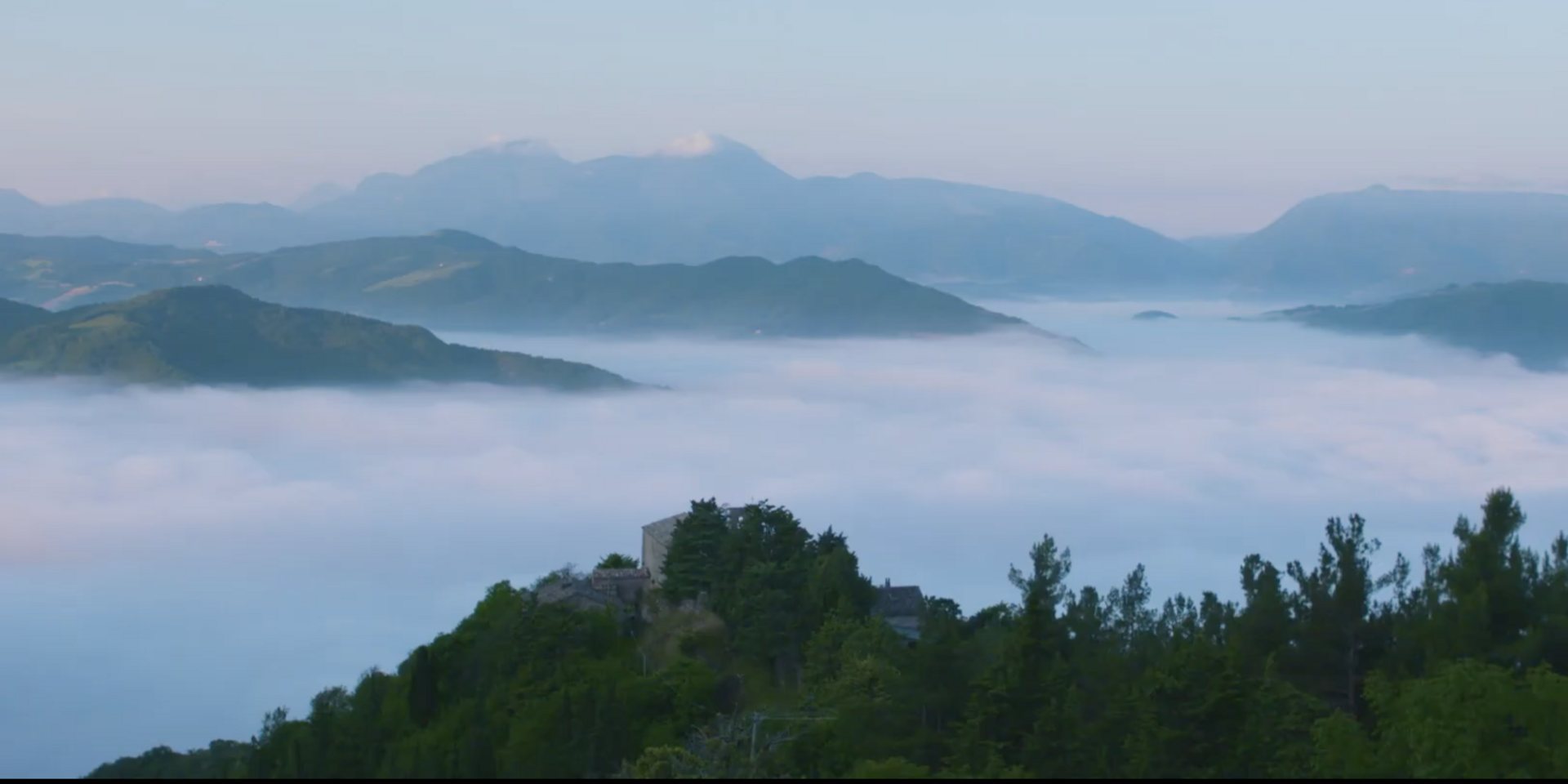
The castle occupies an almost inaccessible rocky spur on the slopes of Mount Pietralata, which rises to approximately 900 meters above sea level within the Gola del Furlo nature reserve. The original fortification retains a massive enclosing wall just under 10 meters high. Ruins of the central keep, the principal fortified and residential part of a medieval castle, also survive and are dated to the eleventh century.
Church and Rectory
A church within the complex remains consecrated to the Trinity and is used annually for the celebration of the Most Holy Trinity. The historical role of San Nicolò identifies it as the only church still preserved in the mountain area. Its adjoining rectory dates from the fourteenth century, rises over three floors, and is connected to the church by a distinctive suspended corridor. Consolidation and renovation have affected the church, its sacristy, and the rectory.
Buildings Outside the Walls
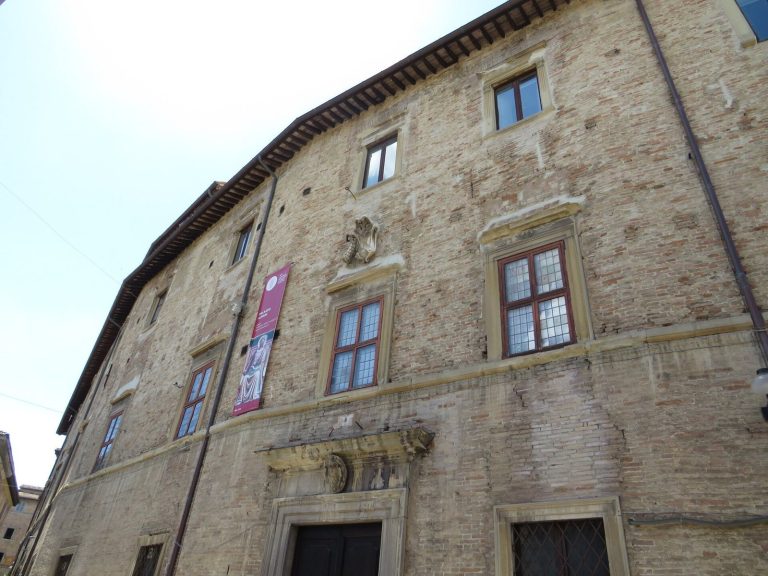
Outside the fortification stands an eighteenth-century building that formerly housed the municipal school. It has been adapted as a private restaurant and since 2019 has also accommodated the refreshment point known as the Eagles’ Kiosk, described as the only still-active element of the complex. The castle entrance and the surviving walls have likewise been included in later consolidation and renovation work.
Belvedere Installation
In June 2024, the belvedere at the end of the rocky ridge received a temporary installation called La Pankona. The work is a giant red wooden chair intended as a statement against gender-based violence, positioned above the Candigliano valley and the Umbrian-Marche Apennines.