Manju-ji: A Rinzai Buddhist Temple in Kyoto
Site at a Glance
- Rating
- 3.8
- Popularity
- Very Low
- Country
- Japan
- Primary era
- Medieval
- Eras represented
- Medieval
- Civilizations
- Ashikaga shogunate
- Site type
- Religious
- Remains
- Temple
On this page13 sections
History
Manju-ji is a Japanese Rinzai Buddhist temple in Kyoto, Japan, whose origins are traced to a hall established in 1096 during the late Heian period. The hall stood at the Rokujo Imperial Palace and commemorated Princess Teishi, also known as Ikuhomon-in, who died at the age of 21. Her father, retired Emperor Shirakawa, reportedly responded to her death by becoming a Buddhist monk and retired emperor. The temple’s principal image is Amida Nyorai, the Japanese form of Amitabha Buddha, who is associated with rebirth in the Western Pure Land. Its formal name is Kyojozan Manju Zenji, while its mountain name is given as either Kyojozan or Kujozan.
From Pure Land Buddhism to Rinzai Zen
During the Kamakura period, the memorial hall was occupied by Tanku, a disciple of Honen, and later passed to Jūji Kakū. The institution appears to have become associated with Tendai Pure Land Buddhism before a change in religious affiliation during the thirteenth century. Between 1257 and 1259, Jūji Kakū and his disciple Tōzan Tanshō came under the influence of Enni of Tofuku-ji. Enni, later known by the posthumous title Shoichi Kokushi, was a Rinzai monk, and his influence led the institution to adopt Rinzai practice and the name Manju-ji, or Manju Zenji. An inauguration ceremony took place in 1261.
Fire damaged the temple in 1273. In 1305, Nanpo Shomyo, a Rinzai monk, became its abbot. The temple received land from Sumeimon-in, a daughter of retired Emperor Go-Uda, in 1330. It then moved slightly north of its former Rokujo location, to an area west of Takakura Street and south of Higuchikoji Street, now known as Manjuji Street. Nearby place-names continued to preserve the memory of the temple’s earlier presence.
Medieval Rank and Later Relocations
Manju-ji was placed fourth among the Jissatsu in 1340. The Jissatsu were a subordinate tier in the medieval ranking system for major Zen temples established under the shogunate. In 1386, Manju-ji became the fifth-ranked temple of the Kyoto Five Mountains, the system used to rank leading Zen institutions in Kyoto. Another fire in 1434 was followed by a decline in the temple’s fortunes.
During the Tensho period, from 1573 to 1592, Toyotomi Hideyoshi’s major redevelopment of Kyoto led to another relocation. Manju-ji was moved beside Sanseiji, north of Tofuku-ji. The association reflected the fact that Sanseiji and Manju-ji shared the founders Jūji Kakū and Tōzan Tanshō. Sanseiji had once been a powerful Zen institution with a large complex, but it gradually declined and was merged into Manju-ji in 1873. Manju-ji became a sub-temple of Tofuku-ji in 1886.
Integration with Tofuku-ji
When Tofuku-ji’s Buddhist hall burned in 1881, the Shaka Triad formerly kept at Manju-ji was transferred there to serve as the new principal image. The triad had originally been housed at Sanseiji. In 1935, the opening of the Kyoto municipal tramway, Higashiyama Street, and Kujo Street divided the Tofuku-ji precincts, leaving Manju-ji detached from the principal temple grounds. Manju-ji remains a sub-temple of Tofuku-ji and is included among the Kyoto Five Mountains.
The temple’s surviving heritage includes designated Important Cultural Properties, among them the bell tower, a portrait of Shoichi Kokushi, paintings of the Eight Phases of the Buddha’s Life and Nirvana and the Shaka Triad, a seated Amida figure, and two wooden Kongo guardian statues. The guest hall is designated a tangible cultural property by Kyoto Prefecture.
Remains
Compound Buildings
Guest Hall
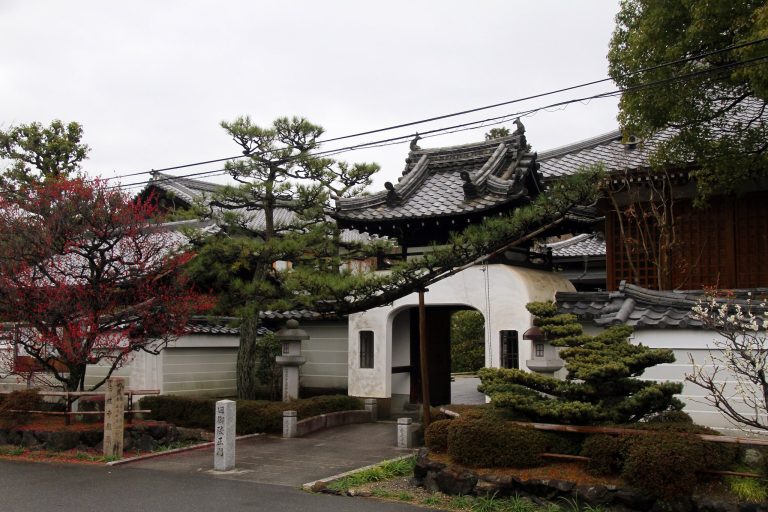
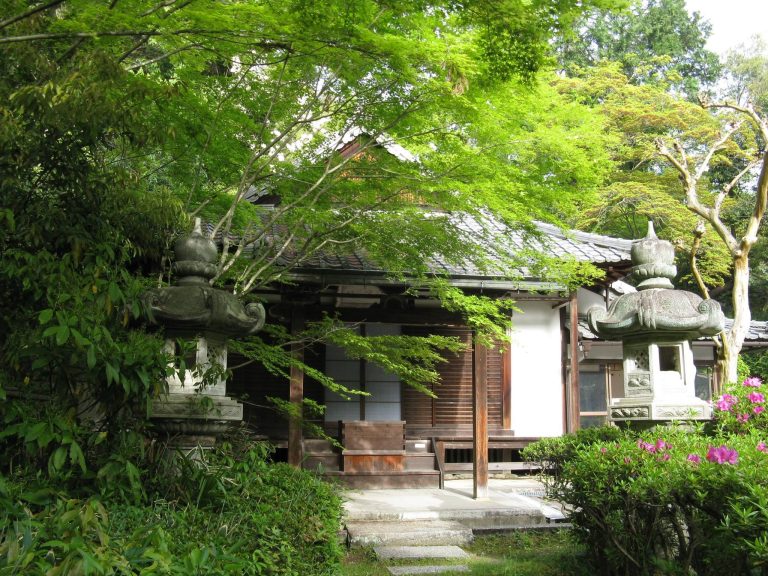
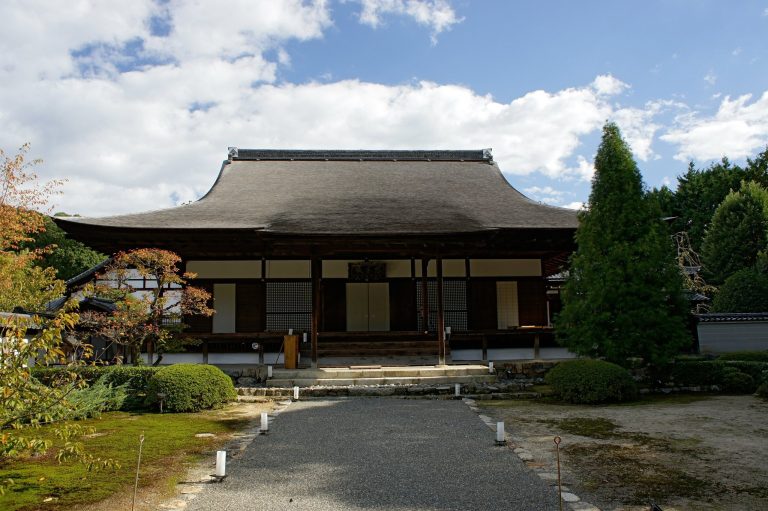
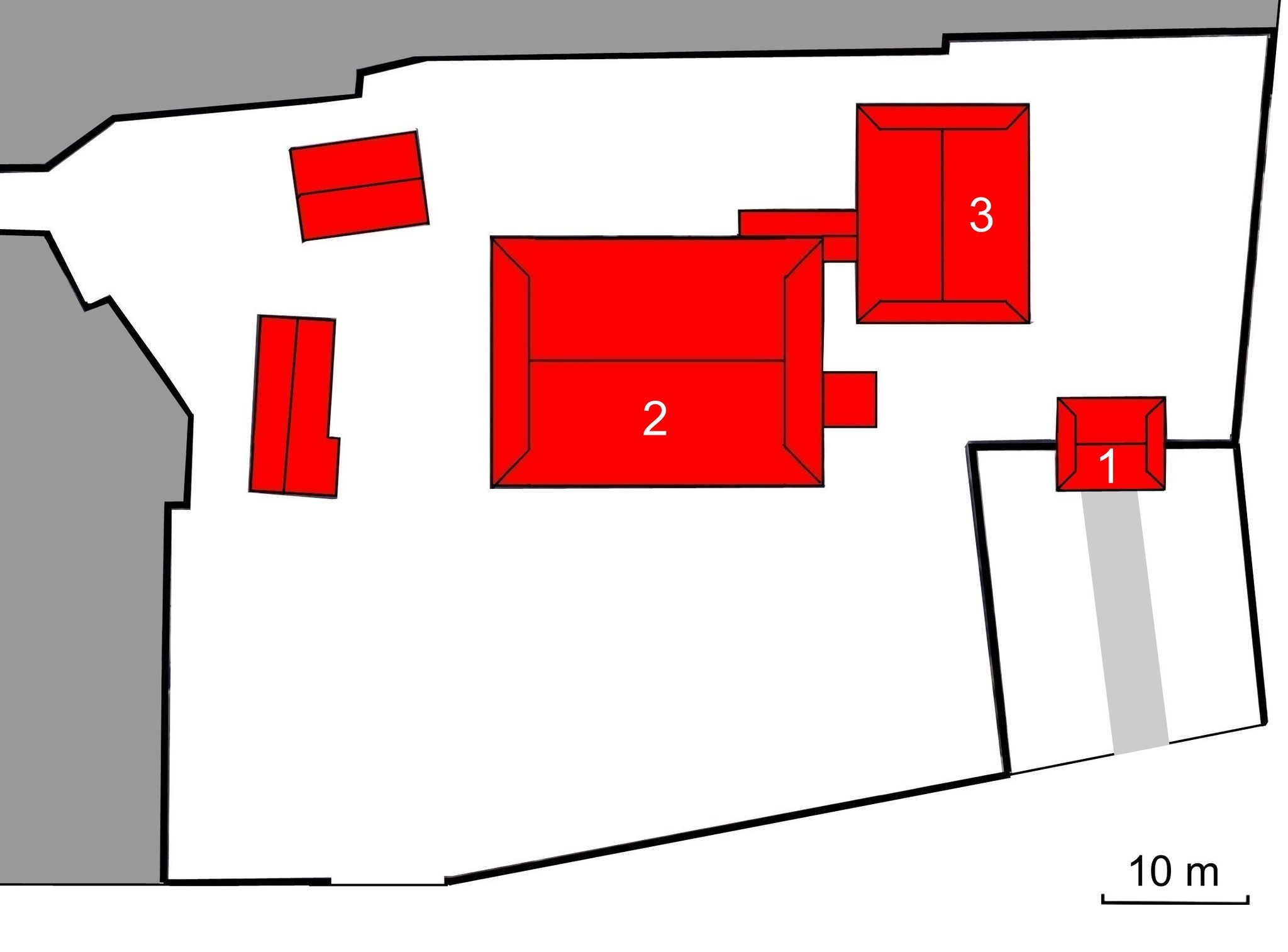
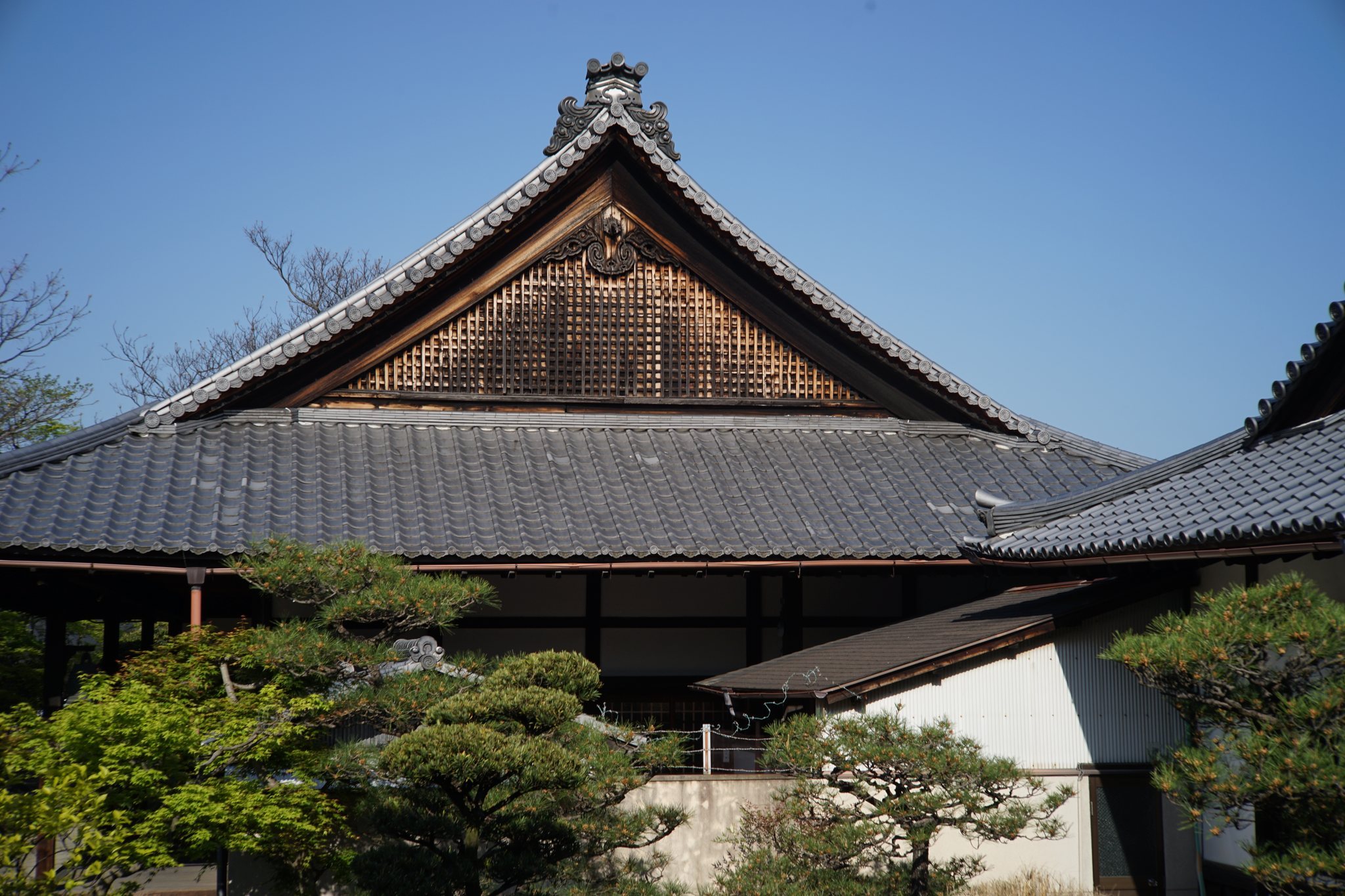
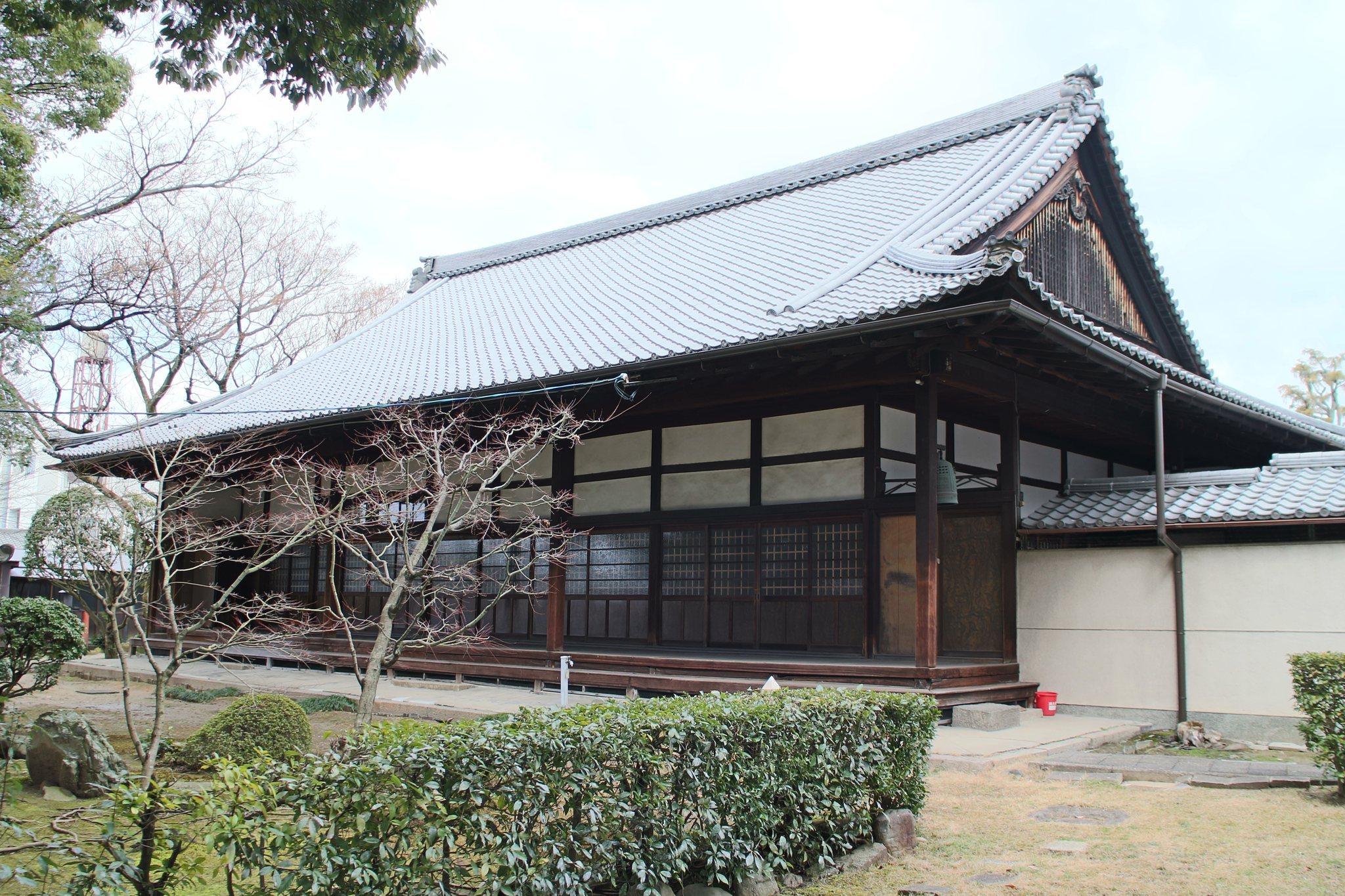
The compound contains a guest hall that also serves as the principal hall. It stands with a kitchen and the bell tower, forming the surviving architectural core of Manju-ji. The hall is designated a tangible cultural property by Kyoto Prefecture.
Bell Tower
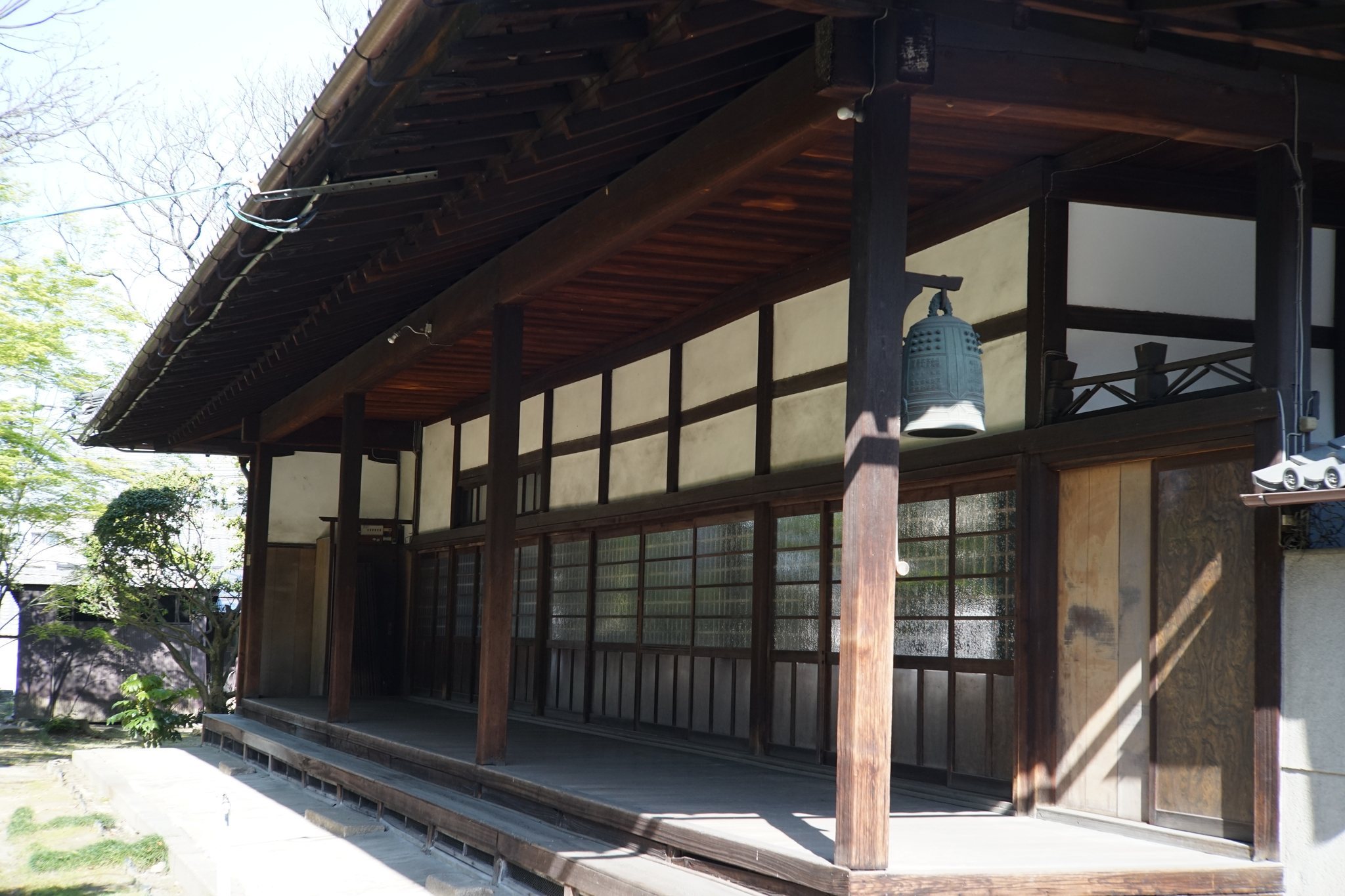
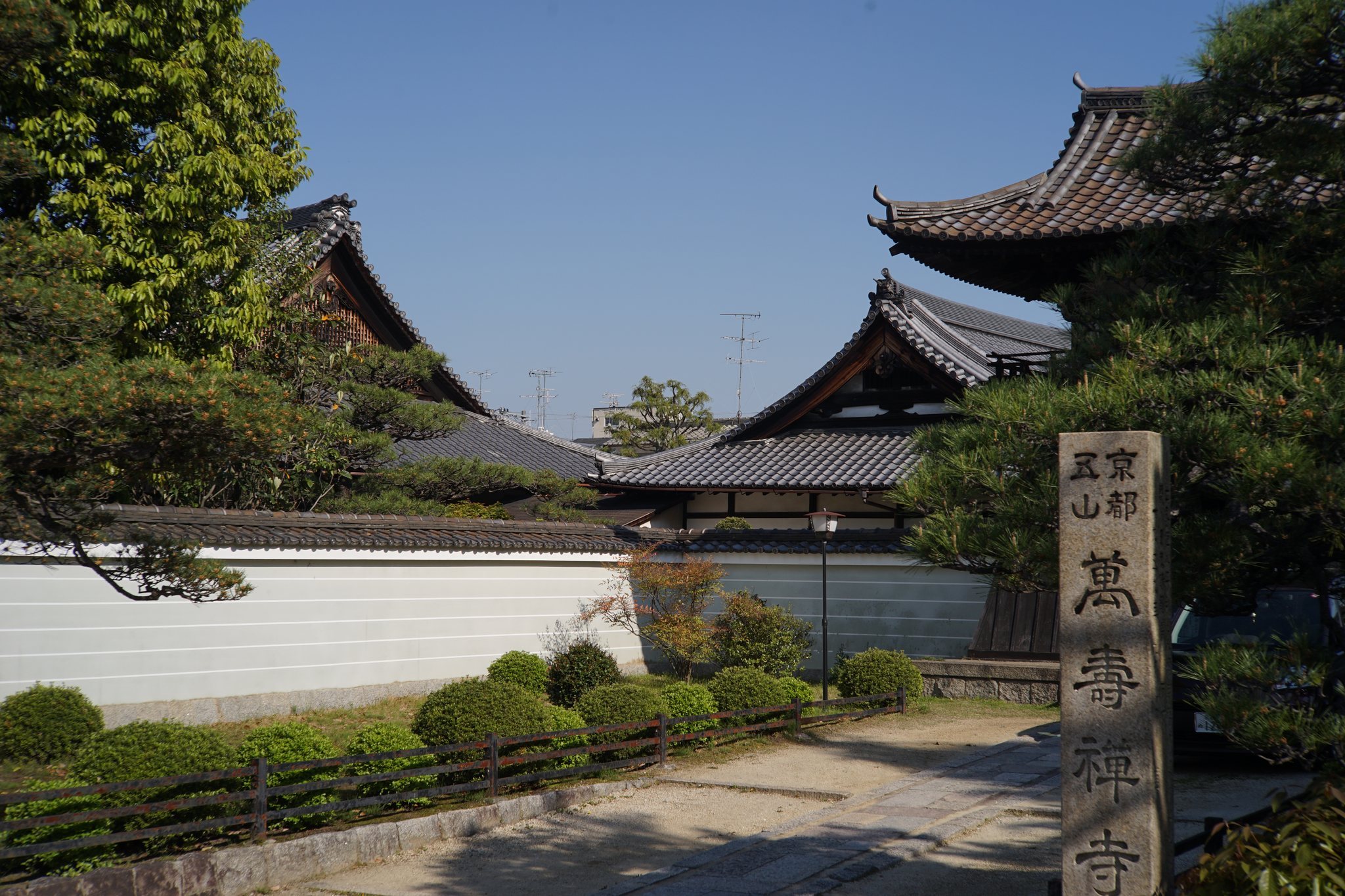
The bell tower dates from the Muromachi period and combines a bell chamber with an entrance gate. The bell hangs in the upper level, while the lower level provides passage into the compound. The structure originally belonged to Sanseiji. It is now owned by Tofuku-ji but stands at the entrance to Manju-ji.
Sculpture and Paintings
Seated Amida
A monumental seated wooden image of Amida Nyorai dates from the later Heian period and measures 281.8 centimeters in height. After being deposited at the Kyoto National Museum for a long period from the Meiji period onward, it is now kept in Tofuku-ji’s Komyo Hoden, which is not open to the public.
Portraits and Buddhist Narratives
The collection includes a silk portrait of Shoichi Kokushi bearing the sitter’s own inscription. It also contains a silk painting of the Eight Phases of the Buddha’s Life and Nirvana, an esoteric Buddhist teaching image presenting major episodes in the life of Gautama Buddha. The Shoichi portrait is deposited at the Kyoto National Museum.
Shaka Triad and Guardian Figures
An ink-and-light-color painting of the Shaka Triad by Gukei is part of the temple’s Important Cultural Property collection and is deposited at the Kyoto National Museum. The Shaka Triad depicts Shakyamuni Buddha with two attendant bodhisattvas. Two wooden standing Kongo guardian statues, protective Buddhist figures traditionally placed at temple entrances, were formerly Buddhist images at Sanseiji and are kept in Tofuku-ji’s Komyo Hoden.
Archaeological Evidence
The former site of a pond associated with Manju-ji was discovered in 2007. This find preserves physical evidence of an earlier phase of the temple’s landscape and complements the surviving buildings and relocated objects connected with its history.