Sugimoto-dera Temple: A Historic Tendai Buddhist Temple in Kamakura


Site at a Glance
- Rating
- 4.4
- Popularity
- Medium
- Country
- Japan
- Primary era
- Early Modern
- External website
- Open
- Eras represented
- Early Modern
- Civilizations
- Tokugawa
- Site type
- Religious
- Remains
- Temple
On this page13 sections
History
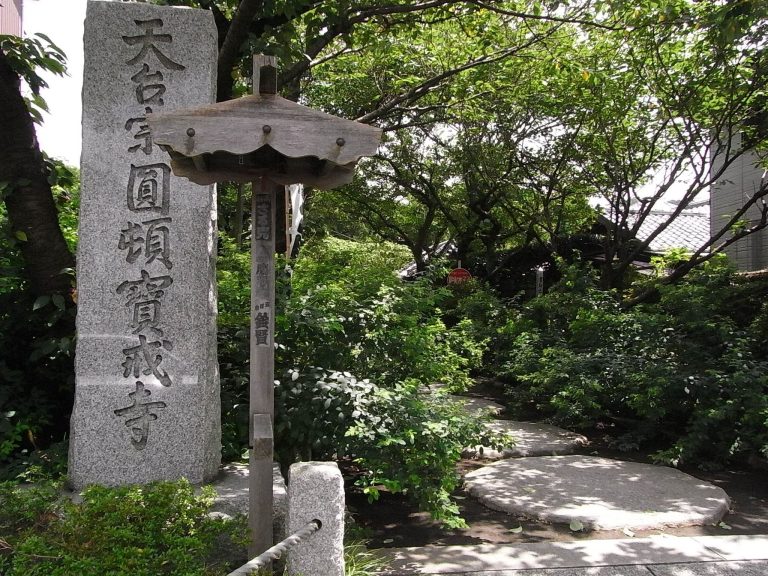
Sugimoto-dera Temple is a Tendai Buddhist temple in Japan, located in Nikaidō, Kamakura. Traditionally founded in 734, it is regarded as one of Kamakura’s oldest temples and is said to predate the Kamakura shogunate by about five centuries. Tendai is a major Japanese Buddhist school based on teachings from the Chinese Tiantai tradition. The temple’s full name is Taizō-zan Kannon-in Sugimoto-dera, and it is a branch temple of Hōkai-ji.
Foundation and devotional traditions
One foundation tradition places the beginning of the sanctuary in 731, when the priest Gyōki travelled through the Kantō region and selected the site for worship of Kannon, the Japanese form of the bodhisattva Avalokiteshvara, associated with compassion and protection. Gyōki is said to have carved an image of Jūichimen Kannon, the Eleven-Headed Kannon, and enshrined it at the location.
The temple’s traditional foundation date is 734. In one account, Empress Kōmyō received a revelation from Kannon and ordered Fujiwara no Fusasaki and Gyōki to construct the main hall and establish worship of Jūichimen Kannon. Another version attributes the order to Emperor Shōmu, who instructed Fujiwara no Fusasaki to carry it out. These traditions associate the temple’s origins with the religious and imperial world of eighth-century Japan.
In 851, the Buddhist monk Ennin visited the temple, carved another Jūichimen Kannon image, and placed it in the sanctuary. In 985, the retired Emperor Kazan ordered the priest Genshin to carve and enshrine a third image. The three figures became the temple’s principal objects of worship, although their surviving forms are now dated differently from the traditional attributions.
Ōkura Kannon and the Kamakura period
The temple was formerly known as Ōkura Kannon-dō, meaning Ōkura Kannon Hall, after the surrounding area. Its present name is traditionally linked to a fire in 1189. Jōdai-bō, the temple’s bettō, an administrator responsible for a Buddhist institution, rescued the three Kannon images and placed them beneath a large cryptomeria tree. A later version of the story says that the images moved from the burning hall and were discovered under the tree. The name Sugimoto Kannon is understood as “Kannon beneath the cryptomeria tree.” The episode was regarded as miraculous and strengthened the temple’s reputation as a pilgrimage destination.
Shogun Minamoto no Yoritomo visited in 1191 and ordered extensive repairs. He is also said to have donated a Jūichimen Kannon image for the front of the sanctuary, while the three older principal images were thereafter treated as hidden images. Yoritomo and his son, Minamoto no Sanetomo, helped establish the Bandō Sanjūsankasho, a circuit of 33 Kannon temples in eastern Japan. Sugimoto-dera became its first temple and also holds the first position in the Kamakura Thirty-Three Kannon pilgrimage.
Sugimoto Castle and later history
The ground behind the temple formerly contained Sugimoto Castle. Shiba Ienaga, a military commander serving the Ashikaga side and an administrative officer of the Kamakura-fu, occupied the castle. During the fourteenth-century Nanboku-chō conflict between the Northern and Southern Imperial Courts, Kitabatake Akiie, a supporter of the Southern Court, attacked the position. Ienaga committed suicide at the temple, and more than 300 samurai died in the fighting. Stone memorial stupas on the grounds commemorate those connected with the conflict.
Sugimoto-dera survived the fall of the Kamakura shogunate, although its history during the Muromachi period, which lasted approximately from 1336 to 1573, is largely unknown. The temple is also traditionally associated with the name Geba Kannon, or “Dismount Kannon.” One legend says that riders who passed without showing proper respect were compelled to dismount or fell from their horses. Another attributes the events to the Zen priest Lanxi Daolong, who covered the Kannon image’s face with his robe, after which the falls ceased.
Religious and heritage status
The temple continues to hold Kannon goma rites, Buddhist consecrated-fire ceremonies in which offerings or prayer sticks are burned before a sacred fire. Its religious calendar also includes New Year and Setsubun fire ceremonies, the April Buddha-bathing ceremony, the Shimanrokusennichi festival associated with the merit of 46,000 days of prayer, recitation of the Thirty-Three Kannon Sutra, and the New Year’s Eve bell. These practices remain connected with the temple’s Bandō Sanjūsankasho and Kamakura Kannon pilgrimage traditions.
Sugimoto-dera was included among the component cultural properties of Japan Heritage on 25 April 2016. Its Kannon-dō is an important tangible cultural property designated by Kanagawa Prefecture. Two Jūichimen Kannon images are National Important Cultural Properties, while additional Kannon and Jizō images hold cultural-property designations from Kamakura City.
Remains
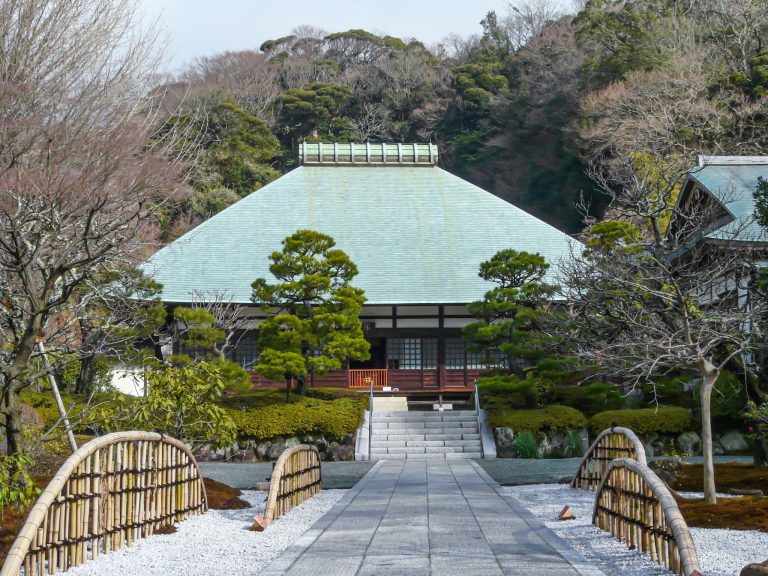
The temple approach rises from the Kanazawa Road by stone steps to the Niōmon, or Deva gate, and continues toward the Kannon-dō, also called the main hall. The original central staircase, built of Kamakura stone, is worn and covered with moss and is closed to passage. A newer staircase on the left provides the route onward. The surviving arrangement therefore presents the entrance, stairways, gate, and hall as a sequence rising along the slope.
Entrance structures
Niōmon
The Niōmon is an eighteenth-century gate from the middle of the Edo period. It has eight supporting legs and a gabled roof covered with thatch. Two Kongōrikishi, or Niō guardian statues, stand inside. The temple attributes the figures to the sculptor Unkei, a major artist of the Kamakura period, although this attribution is not supported by evidence.
Main hall and Buddhist images
Kannon-dō
The Kannon-dō was built in 1678, a date preserved by its ridge plaques. It is a five-bay-by-five-bay Buddhist hall with a hipped, thatched roof. Inside, the building is divided into inner and outer sections following the tradition of medieval esoteric Buddhist main halls. Numerous Buddhist images are enshrined within the structure.
Three principal Kannon images
The three hidden standing images of Jūichimen Kannon form the principal group. The image on the viewer’s right measures 142 centimetres in height. It was made using joined blocks of wood and finished with lacquer and gold leaf. Tradition attributes it to Genshin, but its style places it in the Kamakura period. The central figure is 166.7 centimetres high, also uses joined-block construction, and has a lacquer-and-gold-leaf finish. It is traditionally attributed to Ennin; its drapery retains features associated with the Heian period, which lasted approximately from 794 to 1185, but the sculpture is considered a Kamakura-period work.
The image on the viewer’s left is 153 centimetres tall and is traditionally attributed to Gyōki. It is carved from a single block of unpainted wood and has the most archaic appearance of the three. It is generally dated to the late Heian period. Its simple treatment and surviving chisel marks have led to the estimate that a monk, rather than a professional Buddhist sculptor, may have made it. This figure is also called Geba Kannon, linking the sculpture with the temple’s dismount legend. The viewer-left image is a cultural property designated by Kamakura City, while the central and viewer-right images are National Important Cultural Properties.
Additional enshrined images
A front image of Jūichimen Kannon is traditionally said to have been donated by Minamoto no Yoritomo and is attributed to Unkei. The hall also contains attendant images of Fudō Myōō, a Buddhist Wisdom King associated with immovable resolve and the destruction of spiritual obstacles, and Bishamonten, a guardian deity associated with protection and martial power. The Fudō Myōō is by an unknown artist, while Bishamonten is traditionally attributed to Takuma Hōgen.
Other images include the Thirty-Three Manifestations of Kannon, traditionally attributed to Unkei; a newer Jūichimen Kannon carved by the abbot during the Shōwa period; two standing Jizō Bosatsu images, one traditionally attributed to a sculptor and the other to Unkei; and a Binzuru image by an unknown artist. Jizō is a bodhisattva associated especially with rescuing beings from suffering.
Castle site and memorials
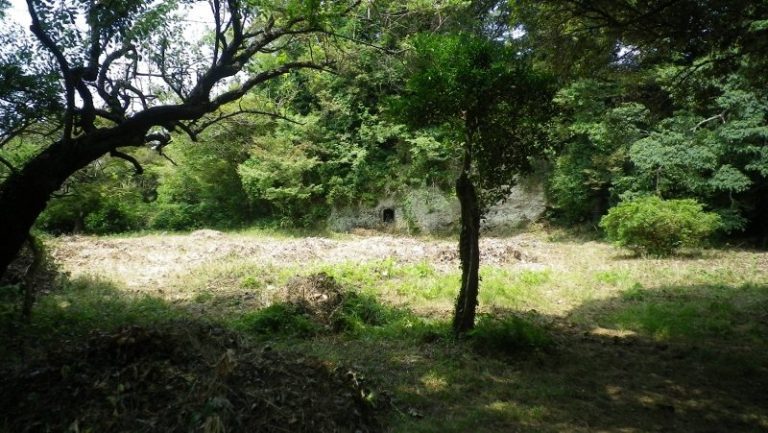
The slope and ground behind the main hall occupy the former Sugimoto Castle site. To the right and in front of the hall stands a group of stone monuments regarded as memorials either to Shiba Ienaga and his family or to those killed during the castle fighting. The grounds also contain a horizontal rock-cut chamber known as a yagura, a type of chamber commonly found in the Kamakura region.
The temple’s name remains physically associated with the tradition of the large cryptomeria tree beneath which the three Kannon images were placed after the 1189 fire. The story gives the site’s name a direct connection with the rescued images and the sanctuary’s devotional identity.