Jingu-ji-yama Kofun: A Kofun-Period Burial Mound in Okayama, Japan
Site at a Glance
- Rating
- 3.9
- Popularity
- Very Low
- Country
- Japan
- Primary era
- Classical
- Eras represented
- Classical
- Civilizations
- Yamato
- Site type
- Burial
- Remains
- Burial Mound
On this page10 sections
History
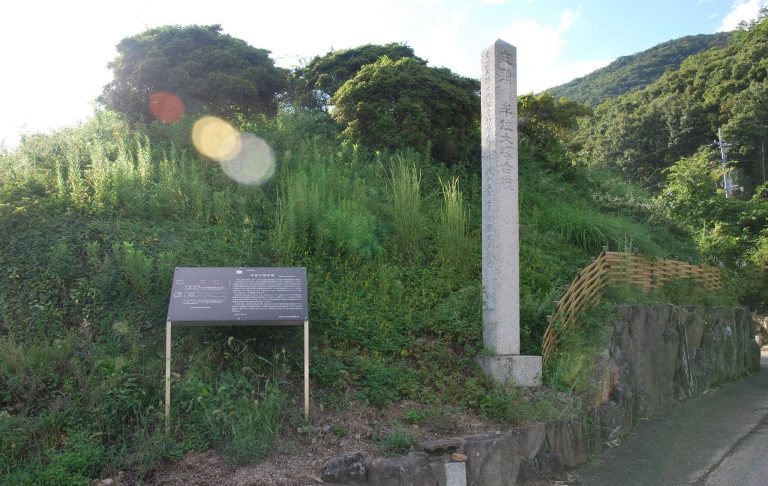
Jingu-ji-yama Kofun is a large Kofun-period burial mound in Okayama, Japan, built by the people of ancient Japan from the latter half of the fourth century to the beginning of the fifth century. A kofun was a monumental burial mound, and this example belongs to the transition between the later Early Kofun period and the beginning of the Middle Kofun period. It stands in Nakai on the alluvial plain west of the Asahi River.
A major mound in the Asahi River basin
During the early Kofun period, the Asahi River basin also contained the large Kinzo-yama Kofun and Minato Chausu-yama Kofun. Large mound construction in the basin ended during the Middle Kofun period, when major burial mounds became concentrated along the Ashimori River, including Tsukuriyama Kofun. Jingu-ji-yama Kofun therefore belongs to an important phase in the changing distribution of large tombs in the region.
The identity of the person buried at Jingu-ji-yama Kofun remains uncertain. One interpretation connects the burial with an ancestor of the Mino no Omi lineage, an ancient local clan designation whose members held the hereditary title omi. The Nihon Shoki, an eighth-century Japanese dynastic chronicle, states that this figure was assigned to Mino in the twenty-second year of Emperor Ojin’s reign. The proposed connection between that account and the mound is interpretive, rather than established.
Temple, shrine, and later transformation
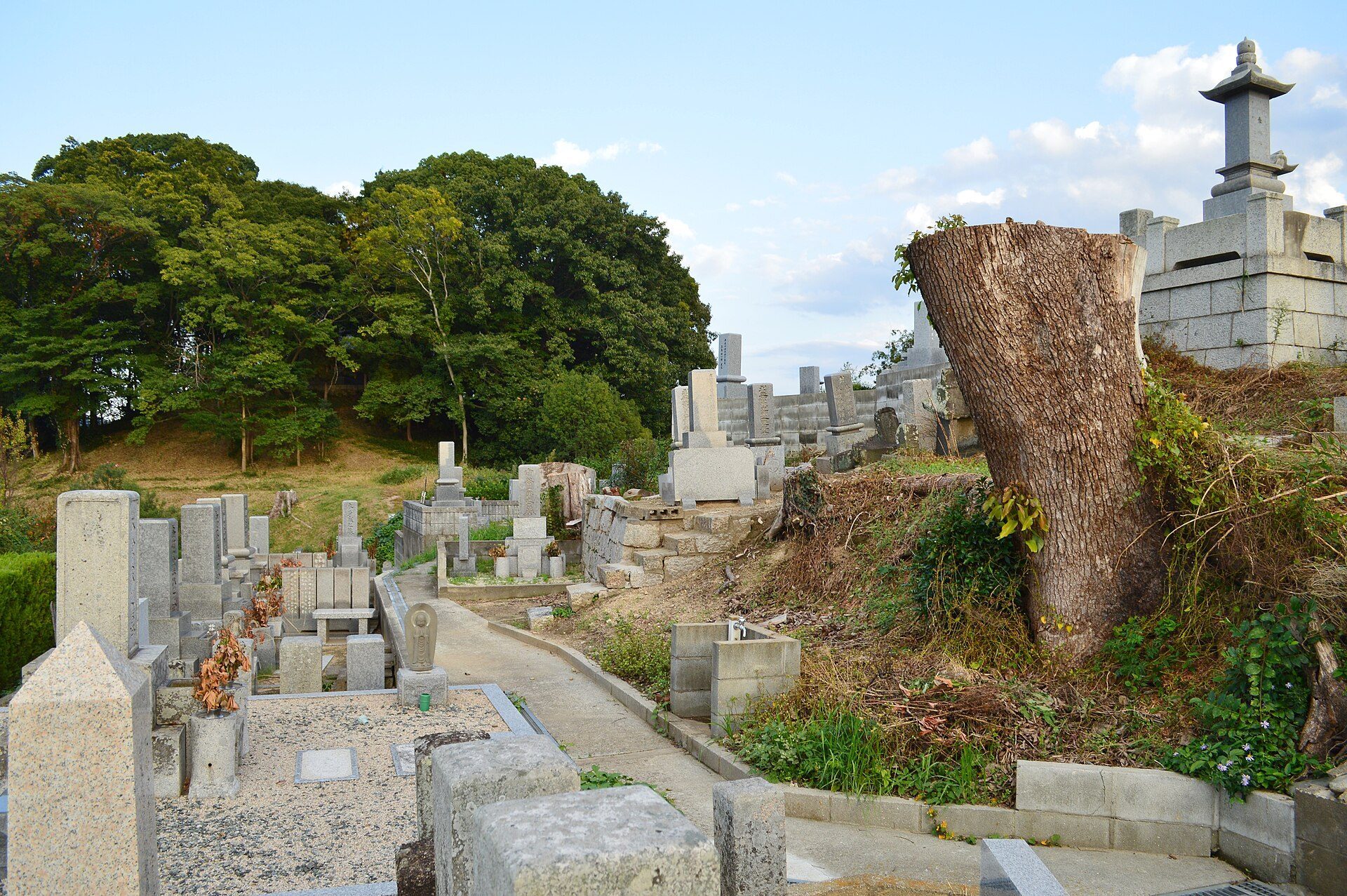
The mound was associated with Myohōzan Jingu-ji, a Buddhist temple abolished during the Kanbun era, from 1661 to 1672. While the temple existed, its anterior section was converted into a cemetery. Shrine and temple construction, surrounding development, and other alterations substantially changed the mound’s original form.
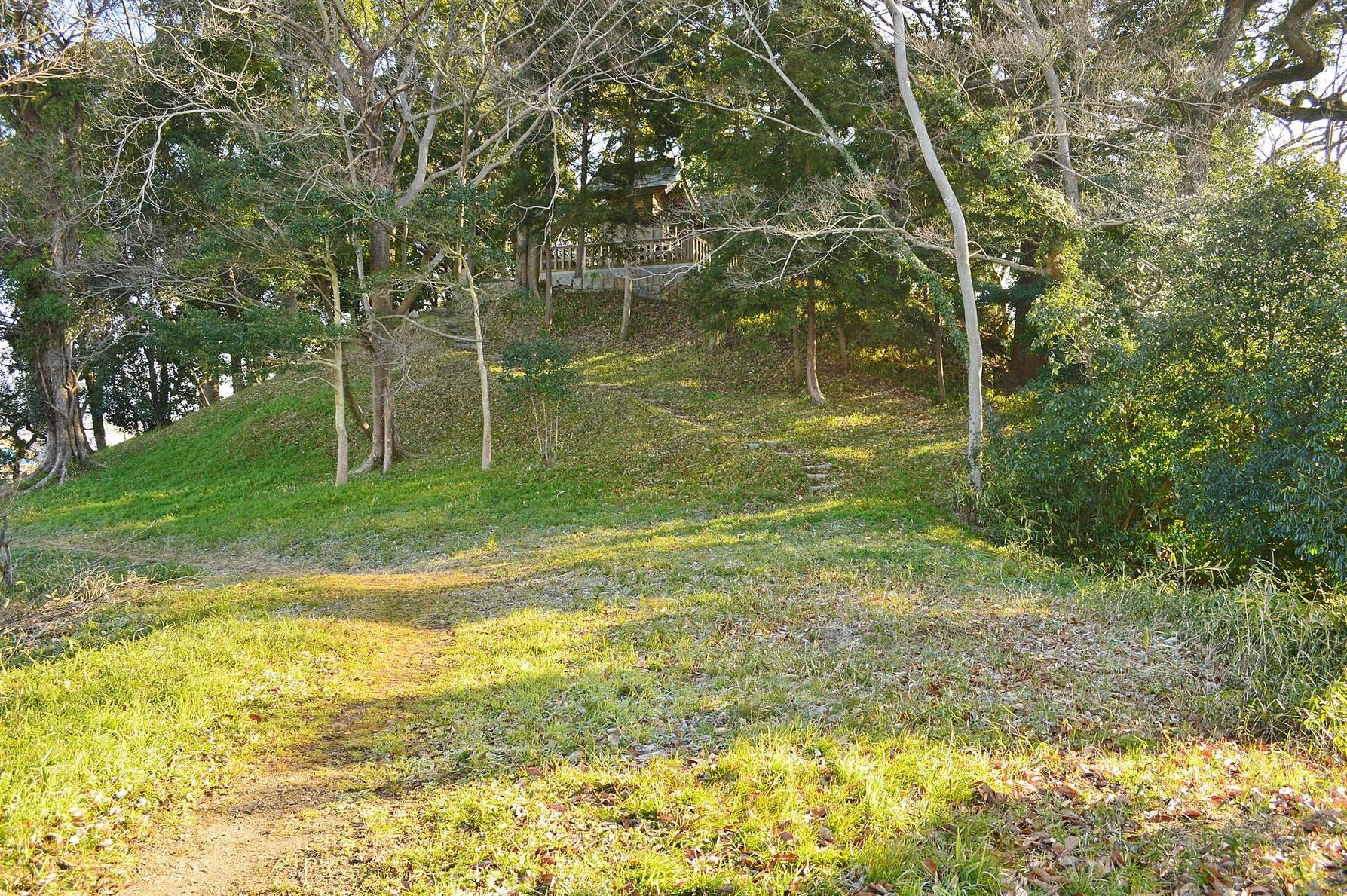
Amahakari Shrine now occupies the summit of the posterior section. This ancient Shinto shrine appears in the early-Heian Engishiki, a compilation of court regulations and ritual procedures that also records shrines. Tradition holds that Kobayakawa Hideaki, lord of Okayama Castle, moved the shrine there from Kitamura during the early-modern period. The mound was also described in Edo-period works, including Kibi no Chiri by Dohi Tsunehira and Tōbi-gun Sonshi by Matsumoto Ryo.
Looting, investigation, and protection
The auxiliary burial chamber was looted in 1961, but more than 100 iron grave goods survived and were recovered. They included weapons and agricultural implements. A test excavation followed in 1983 in connection with the installation of a wastewater-treatment tank at a nearby elementary school, and its report was published in 2007. Jingu-ji-yama Kofun was designated a National Historic Site of Japan on May 13, 1959.
Remains
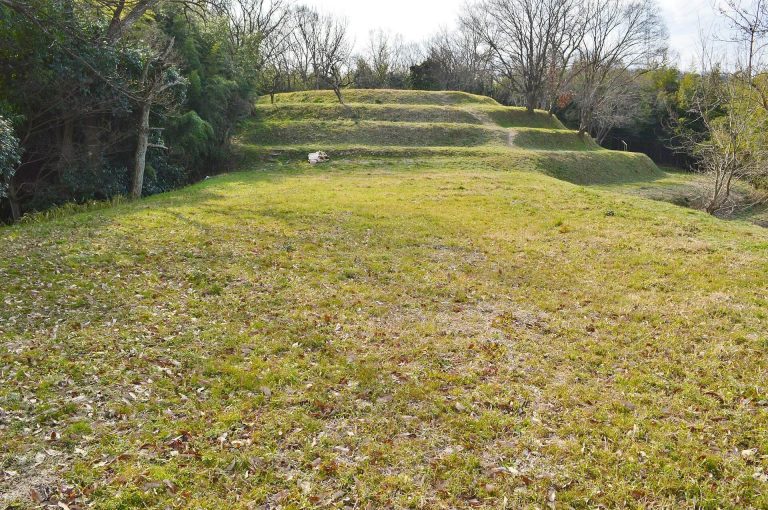
Jingu-ji-yama Kofun is a west-facing keyhole-shaped tumulus, a tomb form combining a rounded rear section with a projecting rectangular front. The mound measures approximately 150 meters overall, while the 1983 investigation estimated a length of about 155 meters. Its earth-filled body was built in three tiers at the rear and two tiers at the front. Later construction and land use have altered the original mound, with Amahakari Shrine on the rear summit and a cemetery occupying the projecting front section.
Mound form and surface features
The posterior circular section is approximately 70 meters in diameter and 13 meters high. The anterior section extends about 75 meters and rises roughly 7 meters. Stones known as fukiishi, laid over a mound’s exterior to protect its earthen surface, have been identified together with fragments of cylindrical haniwa. These clay objects were placed on or around burial mounds, and cylindrical examples commonly formed rows or boundaries. A projecting platform may have stood on the northern side, although the presence of a surrounding moat remains uncertain.
Burial facilities and grave goods
Main stone chamber
The principal burial facility is a vertical pit-style stone chamber at the summit of the posterior section. Its cover stones remain exposed beneath the floor of Amahakari Shrine’s worship hall. The interior details are unknown, while the shrine’s position preserves the relationship between the later building and the mound’s principal burial location.
Auxiliary burial chamber
East of the main chamber is a smaller vertical pit-style chamber intended for grave goods. Its long axis runs parallel to the mound’s principal axis. The chamber measures 1.50 meters in length, 0.50 to 0.60 meters in width, and approximately 0.90 meters in height, with a gravel-covered floor. More than 100 surviving iron objects were recovered after the chamber was looted, including swords and other bladed weapons, along with sickles, axes, chisels, drills, and saws used in agriculture and craft work.
Evidence from the anterior section
Fragments of swords, armor, spears, and halberds were reportedly found in the anterior section. These finds suggest that a separate burial facility may have existed there, although that possibility has not been confirmed. Together with the chambers in the posterior section, the finds indicate the range of weapons and tools once associated with the mound’s burials.