Honsen-ji Temple: A Shingon Buddhist Temple in Tokyo


Site at a Glance
- Rating
- 4
- Popularity
- Low
- Country
- Japan
- Primary era
- Medieval
- External website
- Open
- Eras represented
- Medieval
- Civilizations
- Ashikaga shogunate
- Site type
- Religious
- Remains
- Monastery
On this page10 sections
History
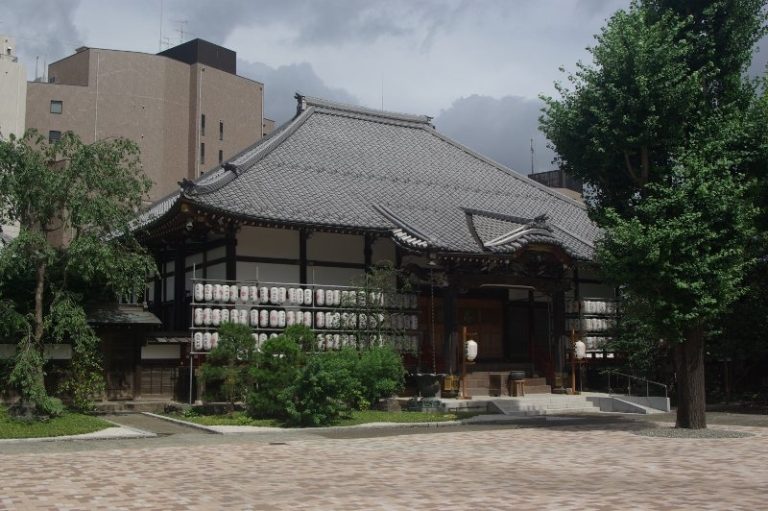
Honsen-ji Temple is a Shingon Buddhist temple in Tokyo, Japan, traditionally founded by Kukai during the Daido era around 806–810. Its formal name is Kaishozan Fumonin Honsenji, and it holds the institutional rank of a special head temple. The temple’s principal images are Suigetsu Kannon and Sho Kannon.
Foundation and Revival
Temple tradition attributes the foundation of Honsen-ji to Kukai, also known as Kobo Daishi, the Buddhist monk associated with the founding of the Shingon school. In 1457, Ota Dokan, the samurai leader known for establishing Edo Castle, built the temple complex. At that time it was called Kinkazan Daienji.
The complex later declined during a period of warfare. In 1652, the monk Kōson revived the temple, which then adopted the name Honsen-ji. This restoration began the temple’s present historical identity.
Pilgrimage Traditions
Honsen-ji occupies the thirty-first position in the Edo Thirty-Three Kannon pilgrimage, a circuit devoted to Kannon, the Buddhist bodhisattva associated with compassion. It is also the first site in the Edo Six Jizo, a pilgrimage circuit dedicated to Jizo, a bodhisattva traditionally connected with the protection of travelers, children, and the dead.
The temple is further associated with the Tokaido Seven Lucky Gods through its Bishamonten image and with a Seven Kannon pilgrimage. These affiliations connect Honsen-ji with several devotional traditions centered on Kannon, Jizo, and Bishamonten, a Buddhist guardian deity associated with protection and military power.
The Bell and Geneva
A temple bell carries an inscription dated 1657 and is traditionally regarded as a gift from Tokugawa Ietsuna, the fourth shogun of the Tokugawa regime during the Edo period. In the final years of the shogunate, the bell was taken overseas. It was reportedly displayed at the Paris Exposition of 1867 and the Vienna World’s Fair of 1873 before its location became unknown.
In 1919, Ishimaru Yūzō, director of the Ministry of Education’s arts department, found that the bell was held by the Ariana Museum in Geneva, Switzerland. Abbot Nakata Junkai pursued its return, supported by Foreign Minister Shidehara Kijūrō and others. Geneva’s city council agreed to send it back, and the bell returned to Honsen-ji in 1930 as a gesture of goodwill. The temple presented the museum with a stone lantern in return, beginning an enduring connection between Honsen-ji and Geneva.
The relationship continued after the Second World War. At Nakata’s invitation, Honsen-ji hosted a welcome party for the Swiss Olympic team during the 1964 Tokyo Olympics. In May 1991, the temple gave Geneva a new temple bell, and in September that year Shinagawa Ward and Geneva became friendship-city partners.
Remains
Honsen-ji’s temple complex includes a main hall and religious images connected with its pilgrimage affiliations. Its material features also preserve the memory of the historic exchange with Geneva through the returned bell, the stone lantern given to the Ariana Museum, and a later bell presented to Geneva.
Temple Buildings and Sacred Images
Main Hall and Religious Images
The main hall forms part of the temple complex. Honsen-ji preserves the Suigetsu Kannon and Sho Kannon images that serve as its principal objects of worship. A Jizo Bosatsu image is associated with the first position in the Edo Six Jizo, while a Bishamonten image represents the temple’s place in the Tokaido Seven Lucky Gods pilgrimage.
Bells and the Geneva Exchange
Historic Temple Bell
The temple bell has six cast images of Kannon arranged on its body. Its inscription is dated 1657, linking the object to the temple’s seventeenth-century history and to the tradition that it was donated by Tokugawa Ietsuna.
Stone Lantern and New Bell
A stone lantern given by Honsen-ji to the Ariana Museum forms part of the material legacy of the historic bell’s return. The temple also sent Geneva a new temple bell in 1991, extending the exchange through another religious monument.