Jūrin-ji Temple: A Tendai Buddhist Temple in Kyoto


Site at a Glance
- Rating
- 4
- Popularity
- Low
- Country
- Japan
- Primary era
- Early Modern
- External website
- Open
- Eras represented
- Early Modern
- Civilizations
- Tokugawa
- Site type
- Religious
- Remains
- Temple
On this page12 sections
History
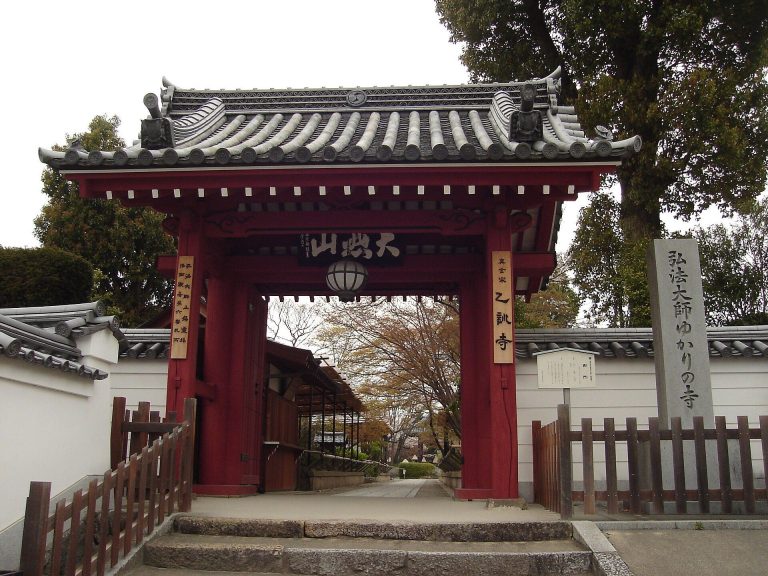
Jūrin-ji Temple is a Tendai Buddhist temple in Kyoto, Japan, founded in 850 during the early Heian period. Tendai is a major Japanese Buddhist school founded by the monk Saicho. The temple’s principal image is Enmei Jizo Bosatsu, a Jizo figure associated with prolonging life, and it is normally kept hidden from public view.
Imperial foundation
Tradition holds that Emperor Montoku ordered a statue of Enmei Jizo, attributed to Saicho, to be installed at the temple as a prayer for the birth of an heir to his consort, Somedono. After Prince Korehito, who later became Emperor Seiwa, was born safely, Jūrin-ji became an imperial prayer temple.
Ariwara no Narihira and pilgrimage traditions
Jūrin-ji is also known as Narihiradera because Ariwara no Narihira, a ninth-century court poet traditionally counted among Japan’s Six Immortal Poets, is said to have retired there in his later years. A related tradition connects the name Oshio with Narihira’s enjoyment of salt-making.
The temple is also linked with Emperor Kazan, who later became a Buddhist religious figure. During the medieval period, he is traditionally said to have deposited there the Kusawake Kannon that he carried on his back when he revived the Saigoku Thirty-three Kannon pilgrimage, a circuit of thirty-three temples in western Japan associated with Kannon worship. The image is consequently known as the Oizuru Kannon and is traditionally regarded as the first Kannon image pilgrims should worship on that circuit.
Destruction and revival
The original buildings were destroyed by fire during the Onin War, a fifteenth-century civil war that caused widespread destruction in Kyoto. The temple then declined before becoming the family temple of the courtly Kazan’in family. Kazan’in Sadayoshi revived it during the Kanbun era, from 1661 to 1673, and Kazan’in Tsunemasa later further organized its buildings. The complex has continued in that form.
Jūrin-ji is the third temple on the Kyoto Rakusai Kannon pilgrimage route. Its main hall and bell tower are designated tangible cultural properties of Kyoto Prefecture. The temple also remains traditionally associated with Narihira through the Narihira-zakura, a weeping cherry tree estimated to be about 200 years old.
Remains
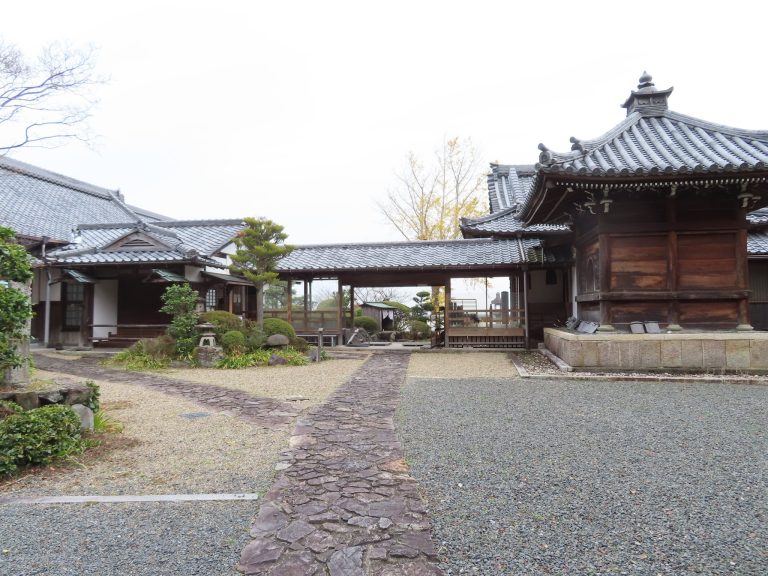
The temple complex includes a main hall and bell tower arranged around a central courtyard. The hidden Enmei Jizo Bosatsu forms the sacred focus of the site, while the courtyard tree and the hill behind the precinct preserve traditions connected with Ariwara no Narihira.
Buildings and grounds
Main hall and bell tower
The main hall houses the temple’s hidden principal image, Enmei Jizo Bosatsu. Alongside it stands the bell tower, and both buildings belong to the surviving architectural complex that was organized after the temple’s seventeenth-century revival.
Central courtyard
The central courtyard contains the Narihira-zakura, an approximately 200-year-old weeping cherry tree. Its presence provides a physical focus for the temple’s continuing association with the poet Narihira.
Former salt-making kiln
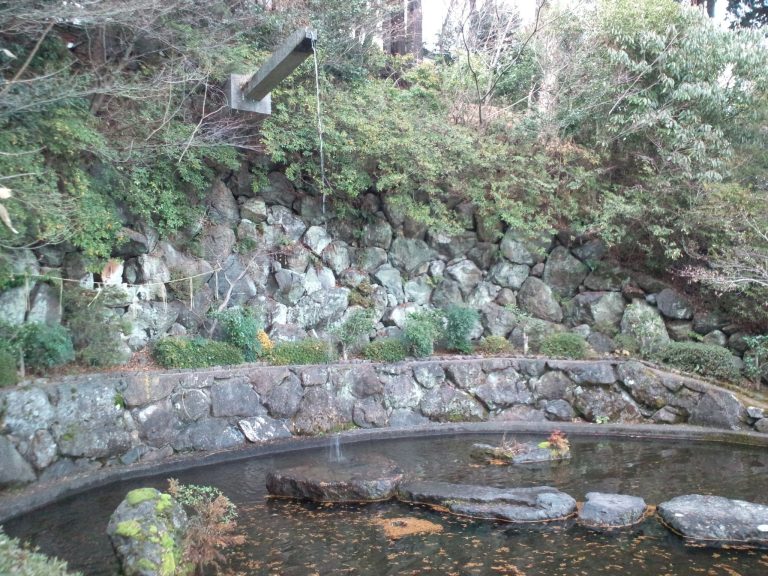
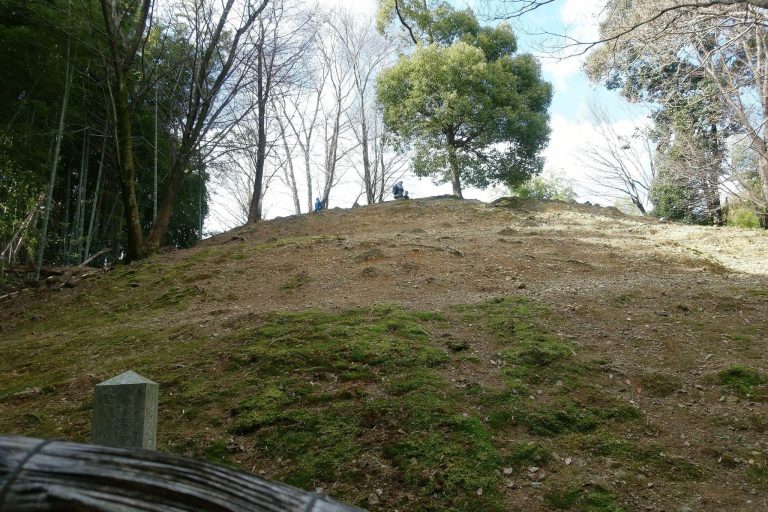
On the hill behind the temple precinct is the site of a former salt-making kiln. Tradition associates this place with Narihira and with the origin of the name Oshio.
Sacred images and preserved works
Kusawake Kannon
The temple preserves the Kusawake Kannon, also called the Oizuru Kannon. Tradition identifies it as the image carried by Emperor Kazan when he revived the Saigoku Thirty-three Kannon pilgrimage. This association explains the image’s place in the pilgrimage tradition and its reputation as the first Kannon image to be worshipped on the circuit.
Other temple treasures
Associated treasures include a wooden piece with a raised carving of Emperor Kazan’s handprint, a bodhisattva processional mask, and restored sliding-door paintings. A bodhisattva processional mask represents a bodhisattva in a Buddhist procession or ritual performance. The mask’s lively treatment of the hair, carved-out eyebrows, and slightly open mouth are characteristic of the Kamakura period, although its maker is unknown.
The restored sliding-door paintings recreate a vividly colored courtly narrative across thirty-two panels. The original paintings were lost during the anti-Buddhist movement, while the restored panels preserve their courtly subject in the temple’s architectural setting.