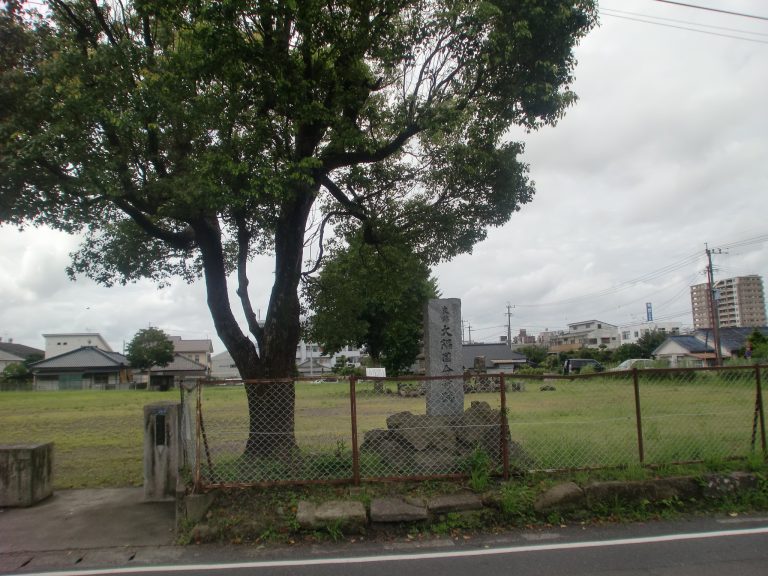
Yokose Kofun: A Fifth-Century Keyhole Burial Mound in Japan

Site at a Glance
- Rating
- 4.1
- Popularity
- Very Low
- Country
- Japan
- Primary era
- Classical
- External website
- Open
- Eras represented
- Classical
- Civilizations
- Unclassified
- Site type
- Burial
- Remains
- Burial Mound
On this page13 sections
History
Yokose Kofun is a Kofun-period burial mound in Japan, at Yokose in Osaki, Kagoshima Prefecture, built during the middle to latter part of the fifth century in the keyhole-shaped tradition of elite tomb construction. The Kofun period, conventionally dated from about the third to the sixth centuries, was an era of large burial mounds for powerful individuals. The occupant of Yokose Kofun is unknown.
A Coastal Tomb in Southern Kyushu
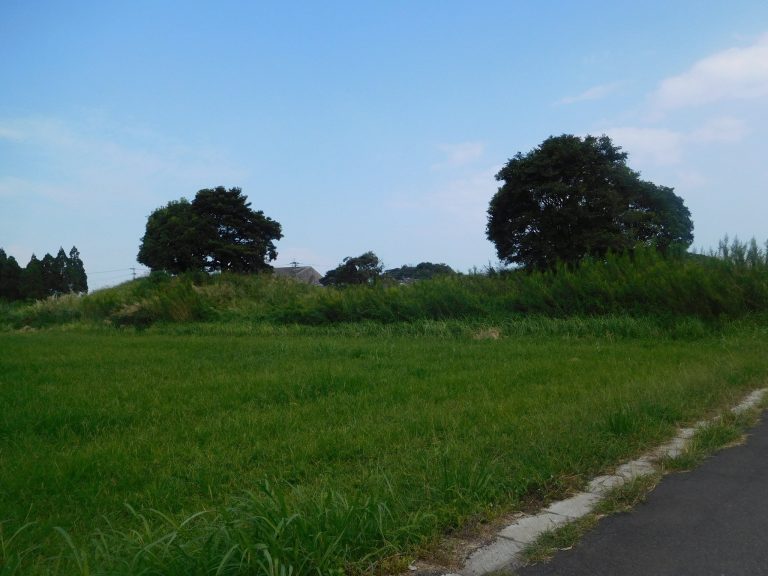
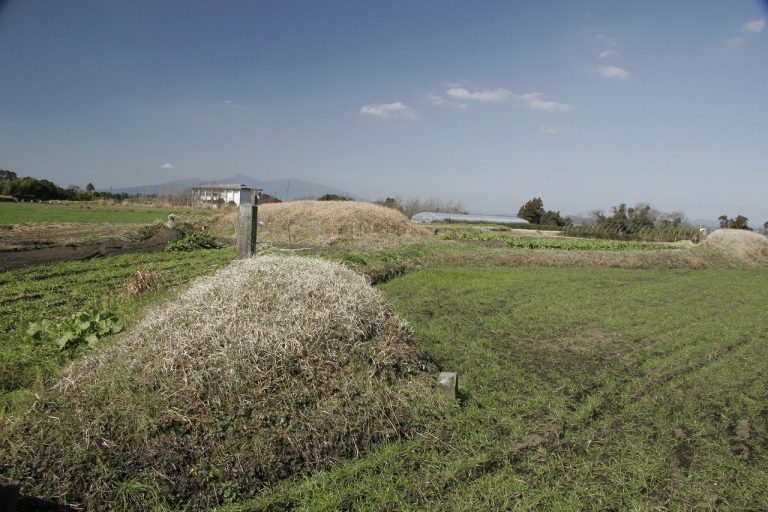
The mound stands in eastern Kagoshima, west of Shibushi Bay, on a low coastal plain about 6 metres above sea level. It occupies a paddy-field area on the right bank of the Mochidome River, within the Kimotsuki Plain behind the coastal dunes. Its position and keyhole plan have led to its classification as a coastal keyhole tomb.
Yokose Kofun has been interpreted as evidence of interaction between the Yamato polity, the southwestern islands, and the Korean Peninsula. The Yamato polity was the powerful political centre that emerged in the Kinai region of central Japan during the Kofun period. In southern Kyushu, the mound is regarded as a leading tomb following the Otokosahozuka and Onnasahozuka mounds in the Saitobaru Kofun Group, a major cluster of Kofun-period burial mounds. It was the second-largest kofun in Kagoshima Prefecture after Tōjin Ōtsuka Kofun.
The surrounding area contained other burial mounds that may have been subsidiary mounds associated with Yokose Kofun. Nearby archaeological groups include the Jinryō Kofun Group and the Tōjin Kofun Group. These remains place the mound within a wider funerary landscape in southern Kyushu.
Early Recognition and Modern Investigation
The mound was known by the Edo period. It was described in the 1824 Ōsaki Meishōshi, and the name Ōtsukayama appeared in the 1843 Sangoku Meishōzu-e. Yokose Ōtsukayama Kofun is another name for the site. A shrine now stands on the anterior section of the mound.
The burial chamber was looted in the modern period, probably around 1902. Iron objects and other materials were reportedly removed during the disturbance. Later investigations sought to establish the mound’s extent and structure. The Kagoshima Prefectural Board of Education conducted a range-confirmation investigation in 1977 and 1978, followed by a topographic survey by Kagoshima University and the University of the Ryukyus in 1988. Archaeological investigations took place in 1997 and 1998, while further range-confirmation surveys were carried out by the Osaki Town Board of Education in fiscal years 2010 and 2011. The latter work was published in 2016.
The kofun precinct received designation as a National Historic Site of Japan in 1943. Finds from the mound, including haniwa, are held or displayed at the Osaki Town Central Community Center’s local-history exhibition room, the Kagoshima Prefectural Museum, the Kagoshima Prefectural Museum of Culture Reimeikan, and the Kagoshima Prefectural Center for Buried Cultural Properties.
Remains
Yokose Kofun is a zenpō-kōen-fun, or keyhole-shaped Japanese burial mound, formed by a circular rear section and a projecting rectangular front section. The anterior section points southwest. The surviving physical complex includes the mound, traces of its surrounding moats, the exposed stone burial chamber at the summit, and the shrine on the anterior section.
Mound and Burial Facility
Keyhole Mound
The tumulus measures approximately 137 metres in length. The circular rear section is about 80 metres in diameter, the constriction is approximately 58 metres wide, and the anterior section reaches a maximum width of 88 metres. Because the mound was built on sloping ground, the rear section was constructed about 1 metre higher than the front. Later levelling exposed the burial chamber at the summit of the rear section, which was probably originally higher than its present form.
Stone Burial Chamber
The burial facility is a pit-style stone chamber within the rear circular section. A pit-style stone burial chamber is a stone-lined burial facility constructed as a pit inside the mound. The chamber is currently exposed at the summit, following the later alteration of the mound and the modern-period looting.
Moats and Boundary Features
Inner and Outer Moats
An inner moat surrounds the mound and is approximately 12 to 23 metres wide and 1.5 metres deep. More detailed measurements record widths of 6 to 8 metres beside the rear section, 12 metres on the western side of the constriction, about 20 metres on its eastern side, and 7 to 11 metres beside the anterior section. Measurements for an outer moat are approximately 2.5 metres along the anterior side and 3.5 metres along the rear side.
Additional Moat Traces
Traces of another moat occur outside the main moat beside the northern side of the rear section and the southern side of the anterior section. Their positions suggest that the tomb may originally have had a double moat. Including the surrounding moat, the complex extends for approximately 192 metres.
Haniwa and Excavated Objects
Clay Figures and Boundary Markers
Cylindrical haniwa and figurine haniwa, including shield-shaped examples, were found on the exterior of the mound. Haniwa are fired-clay objects placed on and around burial mounds. Cylindrical forms commonly marked the mound boundary, while figurine forms could represent people, animals, weapons, shields, or other objects. Yokose Kofun is identified as the southernmost kofun in Japan known to have haniwa. Two cylindrical examples are displayed at the Kagoshima Prefectural Museum.
Ceramics, Armour, and Beads
Excavated material includes Gaya-related ceramic vessels, Sue ware, fragments of armour, and magatama beads. Gaya was a group of polities in the southern Korean Peninsula, while Sue ware was a high-fired ceramic tradition introduced to Japan from the Korean Peninsula and made at specialized kiln centres. Together, these finds contribute to the interpretation of Yokose Kofun as a tomb connected with exchanges involving southern Japan and the Korean Peninsula.