Daishōgun Hachi Shrine: Kyoto’s Shrine of Directional Protection


Site at a Glance
- Rating
- 4.3
- Popularity
- Medium
- Country
- Japan
- Primary era
- Early Modern
- External website
- Open
- Eras represented
- Early Modern
- Civilizations
- Tokugawa
- Site type
- Religious
- Remains
- Sanctuary
On this page10 sections
History
Daishōgun Hachi Shrine in Kyoto, Japan, was founded in 794, when Emperor Kanmu established Heian-kyo, the capital now known as Kyoto. The shrine formed part of the capital’s directional protection, with the deity Daishogun transferred from the foothills of Mount Kasuga in Nara and installed in a newly built hall guarding the northwest, known as the Heavenly Gate, of the imperial palace.
Origins and Directional Worship
Daishogun was originally one of the Eight Generals of Direction, a group of deities associated with the regulation of auspicious and dangerous directions. The deity was linked with the Metal Star, or Venus, and was consulted in matters including construction, moving house, and travel. These practices belonged to a Japanese system of calendrical, cosmological, and divinatory traditions known as Onmyodo.
The earliest surviving documentary reference to the shrine appears in the Sankaiki in 1178. It describes an imperial envoy visiting the shrine during prayers for the safe childbirth of Kenreimon-in, the empress consort of Emperor Takakura. This places the shrine within the religious institutions serving the imperial capital during the late twelfth century.
Medieval Administration and Syncretic Associations
The shrine declined during the Onin War, the fifteenth-century conflict that devastated Kyoto during the Muromachi period, but it was later revived as a shrine. Beginning in 1340, the Daishogun Hall was administered by Gion Shrine, now Yasaka Shrine, for approximately a century. Yasaka Shrine was principally devoted to Susanoo and was associated with the Gion religious tradition.
During the Edo period, the increasing popularity of worship directed toward the Eight Generals of Direction encouraged the identification of Daishogun with Susanoo, who was also known as Gozu Tenno in Buddhist-associated religious practice. The eight directional deities came to be connected with the Hachioji, or Eight Princes, traditionally regarded as eight offspring of Susanoo. Daishogun was consequently understood both as Susanoo and as Amatsu Hikone, one of the eight offspring. This interpretation was linked to the perceived relationship between the deities of Gion Shrine and Daishogun.
Edo-Period Pilgrimage and Meiji Reorganization
The shrine was renamed Daishogun Hachijingu during the Edo period and was also known as Daishogun-sha. Pilgrimage to twelve shrines for protection against directional misfortune and calamity became popular at this time. A stone marker erected in 1840 in connection with this twelve-shrine pilgrimage remains at the shrine’s approach.
During the Meiji period, the government’s separation of Buddhism and Shinto led to a formal redefinition of the shrine’s enshrined deities. The shrine came to enshrine Susanoo and his eight offspring, and it received the name Daishōgun Hachi Shrine. It was classified as a former prefectural shrine. Its principal deity is Susanoo, while the other enshrined figures include Amatsu Hikone, Ame-no-Oshihomimi, Ichikishimahime, Tagorihime, Tagitsuhime, Ame-no-Hohi, Ikutsuhikone, and Kumanokusubi, together with Emperor Shomu and Emperor Kanmu.
Daishogun’s power over directional fortune has continued to shape popular devotion to the shrine. Building, relocation, and travel have remained among the activities associated with seeking protection from harmful directions.
Remains
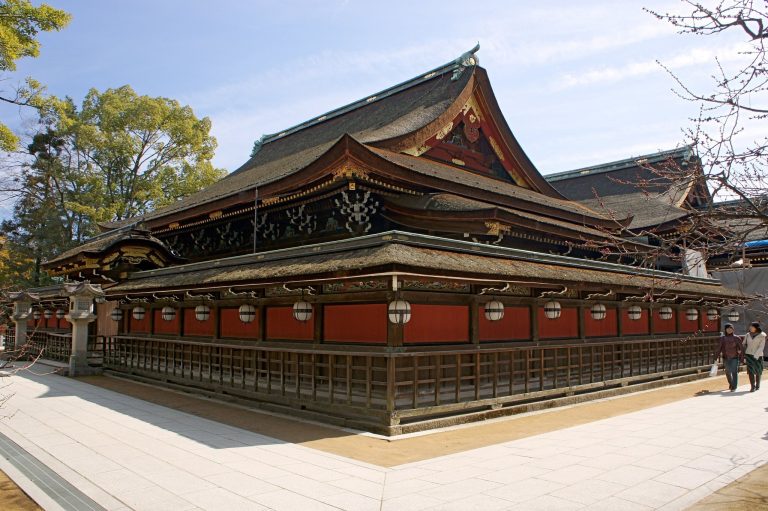
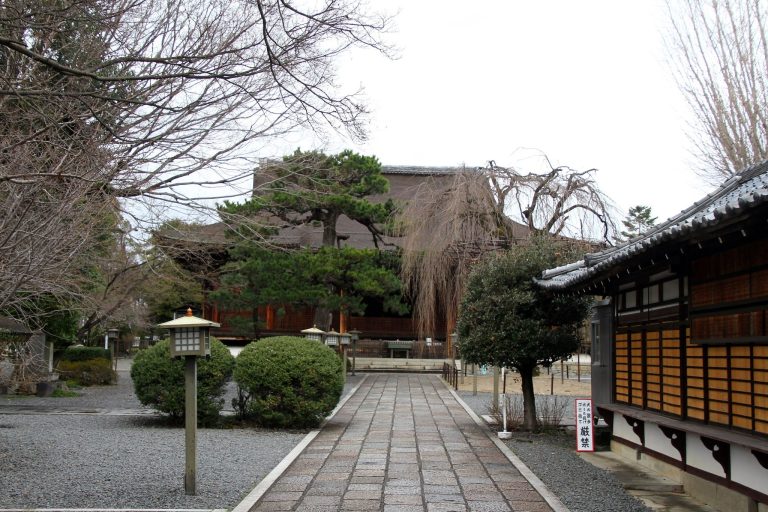
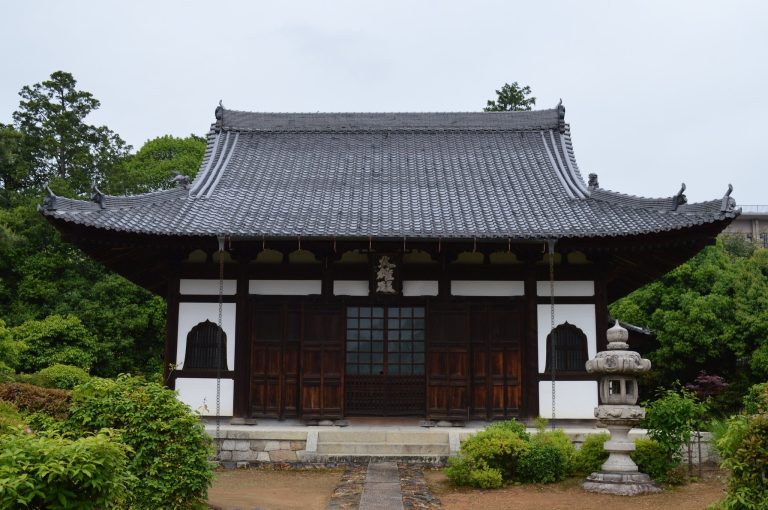
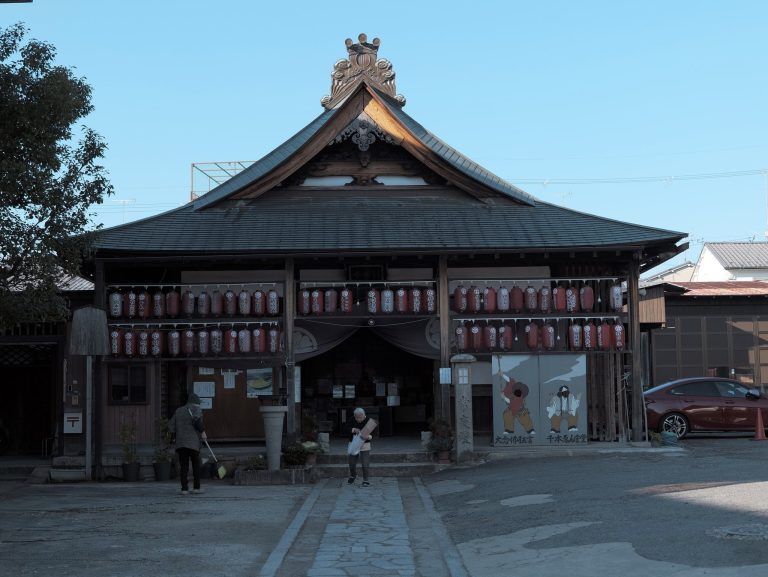
The precinct combines a main sanctuary in Gongen-zukuri, a style in which the worship hall and sanctuary are joined by an intervening structure, with the Hōtokuden treasure hall and other features connected with the shrine’s history of directional worship. The shrine stands east of the Tenjin River and outside Kyoto’s Daishogun district, which lies to its southwest and takes its name from the shrine. The district and the shrine use slightly different readings of “Daishogun.”
Buildings and Pilgrimage Marker
Main Sanctuary
The main sanctuary follows the Gongen-zukuri style. Its worship hall and sanctuary are connected through an intervening structure, creating a joined architectural composition and roof form.
Hōtokuden Treasure Hall
The Hōtokuden treasure hall houses the cultural properties associated with Daishōgun Hachi Shrine. It forms part of the shrine precinct and preserves material connected with the long-standing worship of Daishogun.
Stone Pilgrimage Marker
A stone marker from 1840 stands at the approach to the shrine. It relates to the Edo-period pilgrimage to twelve shrines undertaken for protection from directional misfortune and calamity.
Wooden Images of Daishogun
Eighty wooden images of Daishogun are associated with the shrine. Seventy-nine received designation as Important Cultural Properties in 1972, and one further image discovered within the shrine received the same designation in 2003. Together, the images preserve the material expression of the deity’s role in regulating directional fortune.