Injō-ji Temple: Kyoto’s Temple of Enma and Senbon Enmadō Kyōgen


Site at a Glance
- Rating
- 4.1
- Popularity
- Low
- Country
- Japan
- Primary era
- Medieval
- External website
- Open
- Eras represented
- Medieval
- Civilizations
- Ashikaga shogunate
- Site type
- Religious
- Remains
- Sanctuary
On this page12 sections
History
Injō-ji Temple is a Kōyasan Shingon Buddhist temple in Kyoto, Japan, centered on Enma, the Buddhist judge of the dead. Also known as Senbon Enmadō, it stands at the entrance to Rendaino, one of Kyoto’s three principal medieval burial grounds, and has long used the figure of Enma for moral instruction and Buddhist teaching.
Origins and Revival
Tradition connects the temple’s beginnings with Ono no Takamura, a ninth-century court official, scholar, and poet later associated with journeys between the world of the living and the realm of the dead. He was said to have communicated with Enma, carved an image of him, and established a shrine at the entrance to Rendaino.
In 1017, the monk Jōkaku founded a religious center around Takamura’s shrine with the support of Fujiwara no Michinaga, a powerful Heian-period court aristocrat whose patronage helped establish major Buddhist institutions. Jōkaku was described as a younger disciple of Genshin, a prominent Heian Buddhist thinker known for teachings about salvation and the Pure Land. The institution later declined before being revived in 1273 by the monk Myōzen.
Medieval Temple and Enma Tradition
Injō-ji was described by the Portuguese Jesuit missionary Luís Fróis in 1565. A painting traditionally associated with a 1574 presentation by Oda Nobunaga to Uesugi Kenshin depicts Senbon Enmadō, its ten-tiered stone pagoda, the Fugen-zō cherry tree, and a performance of The Court of Enma. Nobunaga was a military ruler who helped unify much of Japan, while Kenshin was a major warlord based in northern Japan.
The temple’s teaching presents Enma as a judge who examines the moral conduct of the dead. His image is therefore linked with warnings against wrongdoing and falsehood, especially in the traditional admonition that children should neither commit evil nor tell lies.
Performance and Continuing Observances
Senbon Enmadō Nenbutsu kyōgen, a Buddhist form of theater combining religious speech or chanting with masks, gestures, and dramatic action, ceased in 1964 because too few successors remained. A suspicious fire destroyed the kyōgen hall and its costumes in 1974. The surviving masks helped bring about the Senbon Enmadō Kyōgen Preservation Association in 1975, and the hall was rebuilt in temporary form. More than twenty revived plays have since been performed in the precinct each year.
The temple’s continuing observances include the February Setsubun ceremony, when boiled konnyaku is distributed as protection from misfortune. Senbon Enmadō Kyōgen performances take place from May 1 to 4. In August, Rokusai Nenbutsu and the Urabon observance are held, with the welcoming bell for ancestral spirits ringing throughout the day, followed by the Jizō-bon dance on August 24.
The ten-tiered stone pagoda is an Important Cultural Property. The bell is a Kyoto City-designated Tangible Cultural Property, while Senbon Enmadō Kyōgen is recognized as a Kyoto City-designated Intangible Folk Cultural Property.
Remains
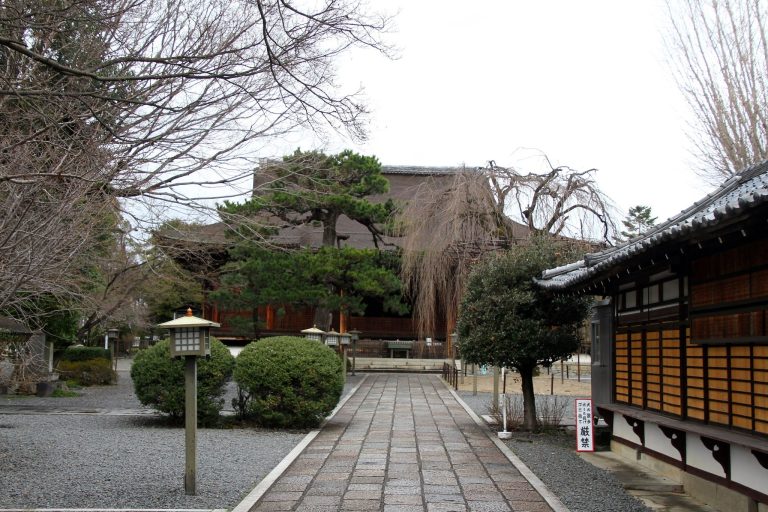
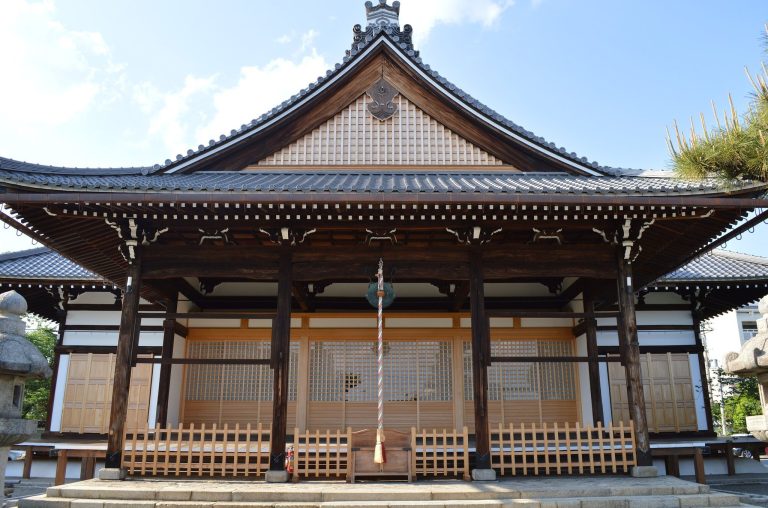
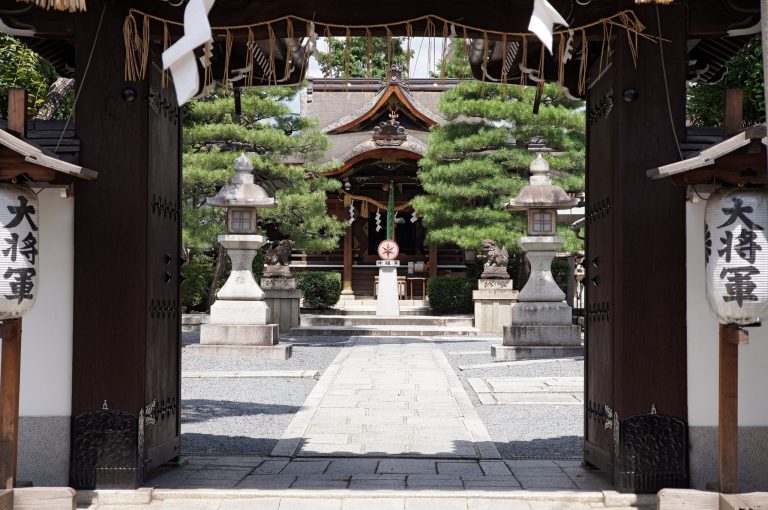
Injō-ji’s precinct occupies the entrance to the former Rendaino burial ground. Its surviving features include the main hall, priests’ quarters, a kyōgen hall, a Kannon hall, a bell tower, the ten-tiered stone pagoda, and the Fugen-zō cherry tree. These elements preserve both the temple’s religious functions and the material setting represented in the surviving painting of Senbon Enmadō.
Temple Buildings
Main Hall
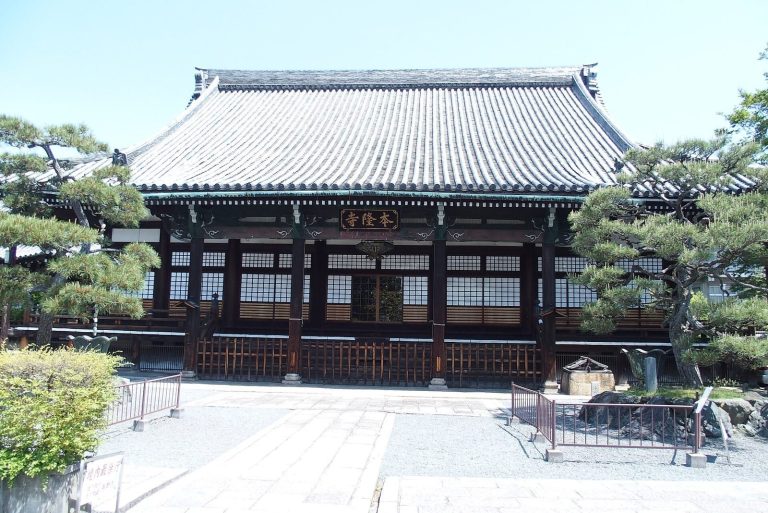
The main hall houses a seated image of Enma dated to 1488. The sculpture was made by Jōsei, and two attendant figures, Shimei and Shiroku, stand to Enma’s left and right. Together, the images form the principal visual focus of the temple’s teaching about judgment after death and the consequences of moral conduct.
Kyōgen and Supporting Buildings
The precinct also contains priests’ quarters, a kyōgen hall, a Kannon hall, and a bell tower. The kyōgen hall rebuilt after the twentieth-century fire began as a temporary structure and serves the temple’s continuing Buddhist theatrical tradition.
Pagoda, Bell, and Fugen-zō
Pagoda and Murasaki Shikibu Memorial
A ten-tiered stone pagoda dedicated to the memory of Murasaki Shikibu was erected in 1386. A statue of the eleventh-century court writer also stands in the precinct. Murasaki Shikibu is traditionally credited with The Tale of Genji, a major work of classical Japanese literature.
Bell Tower
The bell in the bell tower was made in 1379 by the craftsman Fujii Kuniyasu. Its date and maker place it among the precinct’s medieval material remains.
Fugen-zō Cherry Tree
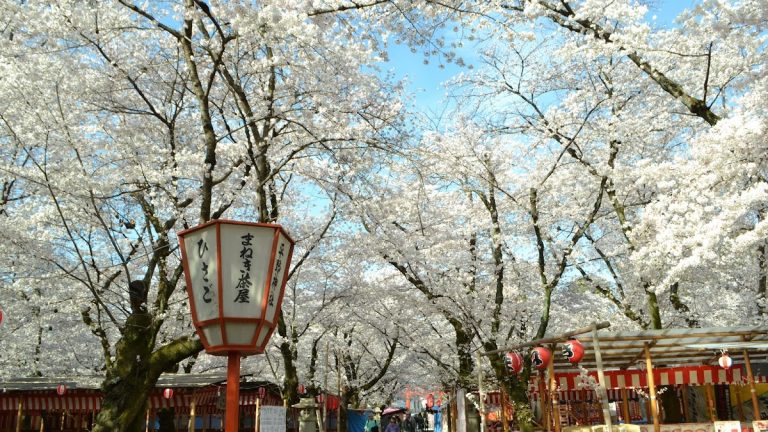
The Fugen-zō is a late-flowering cherry tree with double flowers. Its blossoms fall together with their entire flower heads, giving the tree a distinctive physical feature within the precinct. The pagoda and Fugen-zō are also depicted in the surviving painting of Senbon Enmadō, alongside a performance of The Court of Enma.