Tōji-in Temple: Ashikaga Funeral Temple in Kyoto


Site at a Glance
- Rating
- 4.4
- Popularity
- Low
- Country
- Japan
- Primary era
- Early Modern
- External website
- Open
- Eras represented
- Medieval, Early Modern
- Civilizations
- Ashikaga shogunate, Tokugawa
- Site type
- Religious
- Remains
- Monastery
On this page10 sections
History
Tōji-in Temple is a Rinzai Buddhist temple of the Tenryū branch in Kyoto, Japan, founded in the fourteenth century and associated with Ashikaga Takauji, the first shogun of the Ashikaga shogunate. Its principal object of worship is Shakyamuni, and it became a bodaiji, or family funerary and memorial temple, for the Ashikaga house. The temple is also known for the grave of Takauji, whose military government ruled Japan during the Muromachi period.
Foundation and Northern Branch
Tradition states that Takauji founded Tōji-ji in 1341 after making a religious vow. That original institution stood near the present-day Yanagibaba-Oike area in central Kyoto. A northern branch, called Hokutōji-ji, was established at the site of present-day Tōji-in in 1343 under the direction of Musō Soseki, a leading medieval Zen monk known for teaching, poetry, calligraphy, and garden design.
Another interpretation places the foundation of the original institution around 1338 and connects it with Takauji’s younger brother, Ashikaga Tadayoshi. On this view, the earlier building began as a private Buddhist chapel associated with Tadayoshi’s residence, with the monk Kosen In’gen serving as its founding monk. The institution received the name Tōji-ji when it entered the shozan, a category within the medieval hierarchy of Zen temples, around 1342. Its later identity as a temple of the Musō line developed as successive abbots from that lineage served there, although other Zen lineages also supplied abbots at different times.
Ashikaga Funeral Temple
Takauji died in 1358 and was buried at the northern branch. After his death, Hokutōji-ji was renamed Tōji-in, taking one of his posthumous names. The temple then became the Ashikaga shogunal family’s funerary and memorial institution. Within the medieval Five Mountain System, a ranked network of Zen temples supported by the military government, Tōji-in stood first among Kyoto’s Jissetsu, the temples immediately below the Kyoto Five Mountains.
Tōji-in burned during the Chōroku era, from 1457 to 1460. The original Tōji-ji at Yanagibaba was later destroyed during the Ōnin War, a conflict that devastated Kyoto and weakened the authority of the Muromachi shogunate. The northern branch absorbed the original temple and became the surviving institution. It subsequently declined as the Ashikaga government lost power and the war damaged Kyoto’s religious and urban landscape.
Revival and Edo Reconstruction
Toyotomi Hideyori revived Tōji-in in 1606 and appointed Katagiri Katsumoto as the official responsible for supervising the restoration. The Edo shogunate, the Tokugawa military government, confirmed an endowment of 326 koku of temple land and revenue. This support helped secure the temple’s institutional position during the early Edo period.
A fire in 1808 destroyed many of the temple’s buildings. Reconstruction followed during the Bunsei era, from 1818 to 1831. Several subtemples were later abolished during the Meiji period, which began in 1868 after the Tokugawa regime ended. Because imperial supporters regarded the Ashikaga as having usurped imperial authority, Tōji-in was damaged during the upheaval of the Meiji Restoration.
Political Memory and Modern History
The temple’s Ashikaga associations also shaped a violent episode in 1863, near the end of the Edo period. The heads of wooden images of Takauji, Yoshiakira, and Yoshimitsu were removed from the Reikō-den and displayed beside the Kamo River with placards condemning their alleged crimes against the nation. Kyoto’s military governor, Matsudaira Katamori, ordered an investigation, and some people responsible were arrested and executed later that year.
Tōji-in’s modern history includes the establishment of the Makino Educational Film Production Company and a film studio in 1921 on the former site of one of its subtemples. The studio remained there until 1933. The writer Mizukami Tsutomu also lived at Tōji-in as a novice from the age of thirteen to seventeen, after leaving another temple. In recent years, restoration work has sought to preserve and present the temple complex as a cultural attraction.
The garden is a Kyoto City Place of Scenic Beauty. The temple’s historical plan drawing is an Important Cultural Property, while its wall paintings and portrait of Toyotomi Hideyoshi have Kyoto City cultural-property designations or registration. These protections recognize the complex’s religious history, artistic holdings, and connection with the Ashikaga and early modern political orders.
Remains
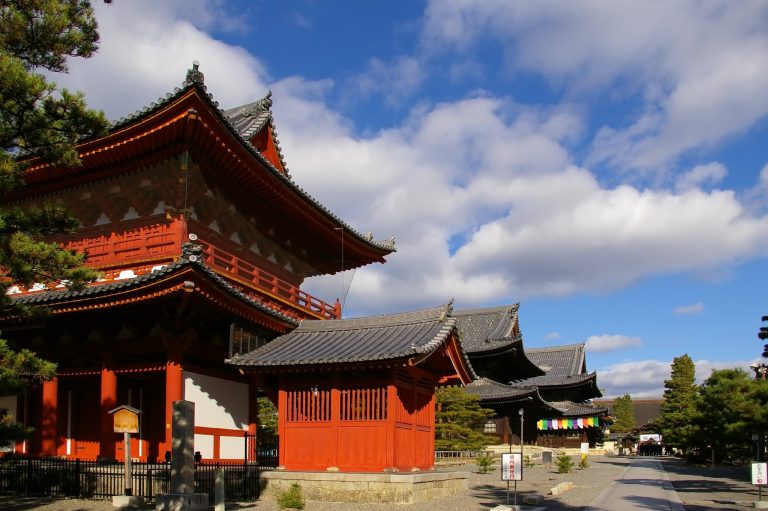
Tōji-in stands in the Tōji-in district of Kyoto’s Kita Ward, at the foot of Mount Kinugasa. The precincts contain a main hall, gardens, ponds, and the Seirentei tearoom. The site combines buildings that originated in different periods with landscape elements associated with Musō Soseki, allowing the temple’s religious and institutional history to be read through its surviving layout and furnishings.
Main Hall and Garden
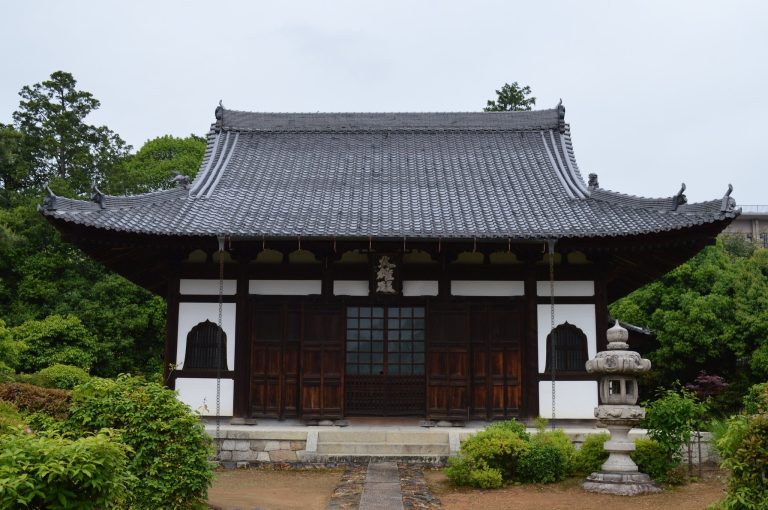
The present main hall was originally a subtemple building of Myōshin-ji, constructed in 1616 on the orders of the samurai Fukushima Masanori. It now serves as Tōji-in’s hondō, or main hall, where Shakyamuni is the principal object of worship. Its history reflects the movement and reuse of temple buildings during the early Edo period.
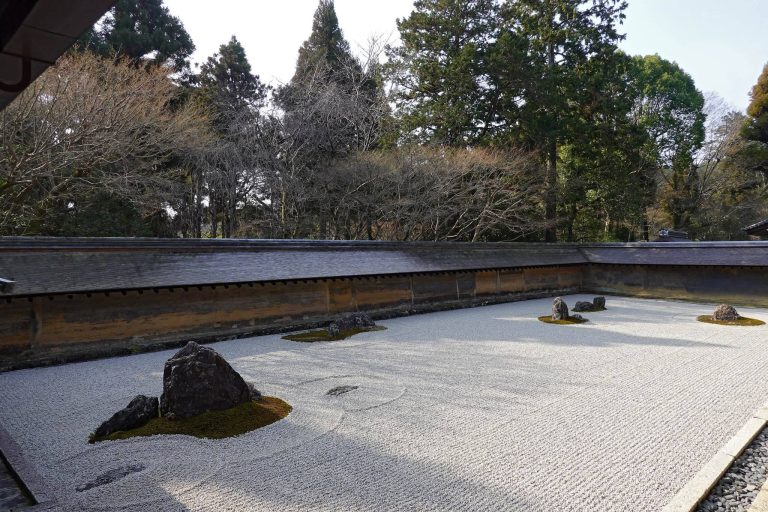
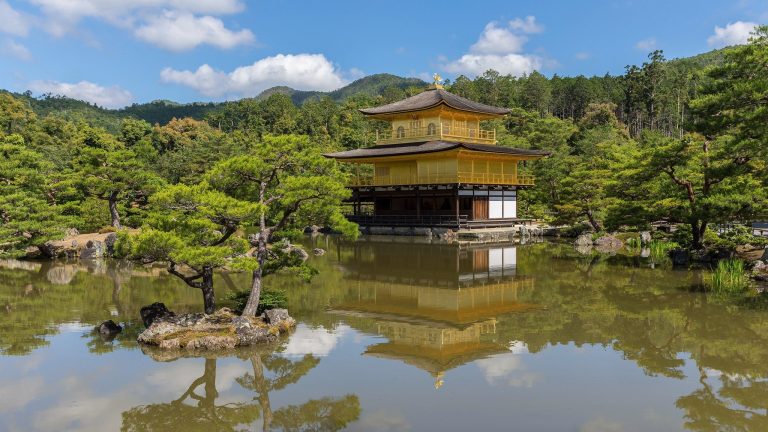
Musō Soseki designed the Zen gardens and ponds, including the garden known as Fuyōchi. These landscape features form part of the temple precincts and are protected as a Kyoto City scenic site. The gardens are closely associated with the northern branch founded under Musō’s direction in the fourteenth century.
Temple Plan and Painted Decoration
The temple treasury preserves a light-coloured drawing on paper that depicts the layout of Tōji-in. As an Important Cultural Property, the drawing provides a visual record of the arrangement of the complex and helps preserve knowledge of its historical plan.
The main hall contains wall paintings attributed to Kanō Kōi. One group comprises 32 Edo-period panels recognized as Kyoto City tangible cultural properties. A related registration covers 34 panels and three hanging scrolls attributed to the same artist, preserving an important body of early modern painted decoration within the temple.
Tōji-in also preserves a coloured portrait of Toyotomi Hideyoshi painted on silk. The work belongs to the Momoyama period, the late sixteenth-century era associated with political unification and distinctive artistic production. An inscription on the painting is dated to the eighth month of 1599, and the portrait is recognized as a Kyoto City tangible cultural property.
Reikō-den and Shogunal Images
The Reikō-den is a small building containing wooden seated images of Tokugawa Ieyasu and the Ashikaga shoguns. Sixteen figures are arranged in two rows along the sides of the room, and each holds a shaku, a formal tablet that signifies shogunal authority in ceremonial representation. The sculptors are unknown, and the group has been tentatively dated to the early seventeenth century.
The image of Ieyasu was commissioned when he was forty-two as protection against ritual misfortune. It was originally kept at Hōzōbō, his prayer facility at Iwashimizu Hachimangū, and was transferred to Tōji-in after Hōzōbō was abolished during the Meiji-period suppression of Buddhism. Together with the Ashikaga figures, it gives the Reikō-den a memorial character spanning the transition from Ashikaga to Tokugawa rule.
Rokushō Shrine
Rokushō Shrine, formerly the temple’s guardian shrine, lies to the southeast of the precincts. Its position records the traditional connection between a Buddhist temple and the protective shrine associated with its religious grounds.