Kanko Shrine: A Historic Shikinaisha Shrine in Tondabayashi, Japan


Site at a Glance
- Rating
- 3.4
- Popularity
- Very Low
- Country
- Japan
- Primary era
- Early Modern
- External website
- Open
- Eras represented
- Early Modern
- Civilizations
- Tokugawa
- Site type
- Religious
- Remains
- Sanctuary
On this page8 sections
History
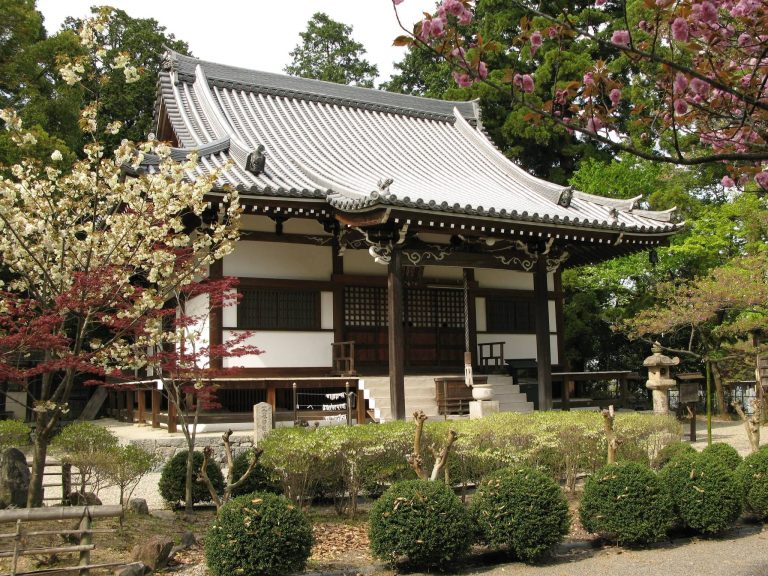
Kanko Shrine is a Shikinaisha shrine in Japan, located in Tondabayashi, Osaka. A Shikinaisha was listed in the ancient Engishiki register of officially recognized shrines, while a shrine of minor rank held a lower position within that classification. Kanko Shrine was formerly a village shrine and served as the guardian shrine of the adjacent Ryusenji temple until the end of the Edo period. Its main sanctuary follows the Kasuga-zukuri style, characterized by a compact building with a steeply pitched gabled roof and a projecting front canopy.
Early traditions and Ryusenji
Kanko Shrine is linked by temple tradition to the religious history of Mount Dakesan, also called Ryusenjiyama. According to the tradition of Ryusenji, an evil dragon once lived in a pond on the mountainside and harmed the villagers. In 594, Soga no Umako, a powerful court leader of the Asuka period, came to the area on an imperial order and performed religious rites. The dragon fled into the sky, and Soga no Umako is traditionally said to have founded Ryusenji. The dragon later retaliated by drying the temple pond and the water veins beneath the mountain.
Another foundation account places the shrine’s origins in the former Konku territory. In this version, the territory’s ruler established a sanctuary for the ruler’s ancestor, Kamuyaimimi no Mikoto, who was traditionally regarded as a son of Emperor Jimmu. Ryusenji later incorporated the sanctuary as its guardian shrine.
A more detailed Ryusenji tradition connects the shrine’s origin with Kukai, the early Heian Buddhist monk who founded the Shingon school. On January 8, 823, Kukai is said to have passed the foot of Mount Dakesan and asked an elderly villager for water. The available supply could not even fill a bowl. The old man described the dragon and urged Kukai to establish a sacred place there. He then identified himself as Gozu Tenno, a Buddhist-Shinto syncretic deity traditionally associated with protection from disease and calamity, before disappearing.
Kukai followed an unusual cloud to a secluded area where he found the dried pond. After praying for ten days, he heard a voice proclaiming the dragon king’s return three times during a night of torrential rain. By morning, the pond was full, a dragon cave could be seen beneath the water, and three islands had appeared. Kukai is said to have built small shrines on the islands for Shoten, Benzaiten, and a third deity, using three bundles of thatch given to him by a woodcutter. He also established a guardian shrine for Gozu Tenno. This shrine is traditionally identified with Kanko Shrine.
Warfare on Mount Dakesan
During the Nanboku-cho period, the conflict between Japan’s Northern and Southern Imperial Courts from 1336 to 1392, Kusunoki Masashige built Ryusenji Castle, also called Dakesan Castle, on the summit of Mount Dakesan. Warfare around the stronghold reached Ryusenji and Kanko Shrine. Most of the temple buildings and many treasures were burned, although the Niomon gate survived.
The temple and shrine were rebuilt after this destruction. Further damage followed when Hatakeyama Yoshinari occupied Dakesan Castle from December 1460 and began the Battle of Dakesan Castle against Hatakeyama Masanaga. In 1507, Hatakeyama Yoshihide’s occupation of the castle led to extensive fires at the foot of the mountain.
Edo and Meiji transformations
Ryusenji was restored during the Edo period, and Kanko Shrine was rebuilt at the same time. From the Edo period onward, Kanko Shrine was identified with Ryusenji’s Gozu Tenno Shrine. This reflected the combined religious practices of Buddhist and Shinto institutions before the modern separation of the two traditions.
During the Meiji separation of Shinto and Buddhism, a nineteenth-century state policy that required formerly combined institutions and religious identities to be administratively separated, Kanko Shrine became independent from Ryusenji. It was identified with the ancient Kanko Shrine, and its principal deity was changed to Kamuyaimimi no Mikoto. This change was partly connected with the identification of the surrounding area as the former Konku territory, whose ruler was associated with Kamuyaimimi as an ancestral deity. The shrine was designated a village shrine in 1872.
The shrine’s religious identity continued to develop. On December 2, 1909, it absorbed a former Shikinaisha shrine that had served as the tutelary deity of its native community in present-day Kannanabi. Ame-no-Futodama no Mikoto, a deity associated with ritual and sacred regalia, was transferred to Kanko Shrine from that shrine. In August 1915, Kanko Shrine was designated as eligible to receive state provisions for ritual offerings. Its annual festival is held on October 17.
Deities and changing identifications
Kanko Shrine currently lists Kamuyaimimi no Mikoto and Ame-no-Futodama no Mikoto among its principal deities. Local historical writings give differing accounts of the shrine’s enshrined gods. Some identify Kamuyaimimi as the principal deity and Ame-no-Koyane no Mikoto as an accompanying deity. Ame-no-Koyane was traditionally associated with ritual recitation and priestly lineage. Another account identifies Ame-no-Koyane as the shrine’s deity.
The identity of the deity at the former shrine in present-day Kannanabi is also variously given as Kamuyaimimi, a deity called Kamusahi, or Toyoki-iri-hiko no Mikoto, who was regarded as the ancestor of the Sami clan. These differing identifications reflect the shrine’s layered history, including its association with Gozu Tenno, its integration with Ryusenji, and its later reclassification under Meiji religious policies.
Remains
Kanko Shrine stands on the middle slope of Mount Dakesan, immediately north of Ryusenji in Ryusen, Tondabayashi. The shrine forms part of a religious landscape that includes the mountain slope, the nearby temple, the pond incorporated into the Ryusenji garden, and the elevated area associated with the shrine’s foundation tradition. Its main sanctuary is built in the compact Kasuga-zukuri form, with a steeply pitched gabled roof and a projecting canopy at the front.
Shrine precinct and guardian site
The foundation tradition places the guardian shrine on an elevated area near the former site of Yakushi Nyorai, the Buddha of healing. A woodcutter directed Kukai to the location, where he found a stone wall and a torii roughly thirty steps away. The woodcutter identified the place as the site of the local land deity, and Kukai is said to have enshrined Gozu Tenno there as the permanent guardian of the area. The tradition identifies this guardian site with Kanko Shrine.
Pond and island shrines
The pond associated with Kanko Shrine is now incorporated into the Ryusenji garden. In the foundation account, it had once dried up before Kukai’s prayers brought rain and refilled it. Three small islands then appeared in the water. Kukai is traditionally said to have built small shrines on them for Shoten, a deity associated with prosperity, Benzaiten, associated with the arts, and a third deity. The story also links the pond with a visible dragon cave beneath the water and with the dragon believed to have caused the earlier drying of the pond and the mountain’s water veins.
Nearby sites