Chihaya Castle: A Japanese Mountain Fortress in Osaka


Site at a Glance
- Rating
- 3.9
- Popularity
- Low
- Country
- Japan
- Primary era
- Medieval
- External website
- Open
- Eras represented
- Medieval, Modern
- Civilizations
- Japanese
- Site type
- Military
- Remains
- Castle
On this page7 sections
History
Chihaya Castle is a Japanese mountain castle in Chihaya, Chihayaakasaka, Osaka, Japan, built by Kusunoki Masashige around 1331–1332 during the late Kamakura and Nanboku-chō periods. It stood on a ridge extending from Mount Kongō, near the border of Kawachi Province and the Yoshino region of Yamato Province, about five kilometers upstream from Akasaka Castle, the principal base of the Kusunoki clan.
Construction during the imperial revolt
The castle arose during Emperor Go-Daigo’s attempt to overthrow the Kamakura shogunate, Japan’s medieval military government ruled by a shogun from Kamakura. Kusunoki Masashige, a samurai lord who supported the emperor, raised forces in the Chihaya-Akasaka area during the Genkō War. After the revolt failed and Go-Daigo was exiled, Masashige escaped into the mountains after pretending to have died at the Siege of Akasaka. He then built Kami-Akasaka Castle and Chihaya Castle.
Chihaya and Akasaka formed the main bases for Kusunoki operations against the Hōjō clan, the regent family that exercised effective control over the Kamakura shogunate for much of its rule. Chihaya’s position on a narrow mountain ridge made it a central defensive point in the campaigns fought on behalf of Emperor Go-Daigo.
The siege of 1333
In 1333, after Kusunoki attacked shogunate positions in Kii Province, Osaka, and Kyoto, Kamakura forces captured Kami-Akasaka Castle following a two-week siege. They then turned against Chihaya Castle. The defenders were greatly outnumbered, but resisted direct assaults and compelled the attackers to begin a prolonged siege.
A well inside the castle and supplies brought by yamabushi, mountain ascetics associated with Japanese religious traditions, helped sustain the defense. These supporters aided Prince Moriyoshi, an imperial prince and military leader who backed the restoration of imperial authority. Kusunoki used guerrilla raids, surprise attacks, and straw dummies to mislead the besieging army.
The shogunate forces were confined within the narrow valley and experienced supply difficulties. Their inability to defeat the much smaller defending force also damaged their prestige. The siege continued while Emperor Go-Daigo escaped from the Oki Islands and raised a new army. Ashikaga Takauji, a leading commander during the collapse of the Kamakura shogunate and the creation of Ashikaga rule, then defected to the imperial side, helping bring about the shogunate’s overthrow.
Later history and protection
After the Kenmu Restoration, Emperor Go-Daigo’s attempt to restore direct imperial rule, Chihaya Castle became the residence of Kusunoki Masashige and his sons Masatsura, Masanori, and Masatoki. Forces associated with the Ashikaga and the Northern Court attacked and conquered the castle around 1390–1392. In 1392, Hatakeyama Motokuni defeated Kusunoki Masakatsu, the son of Masanori, and the castle was subsequently abandoned.
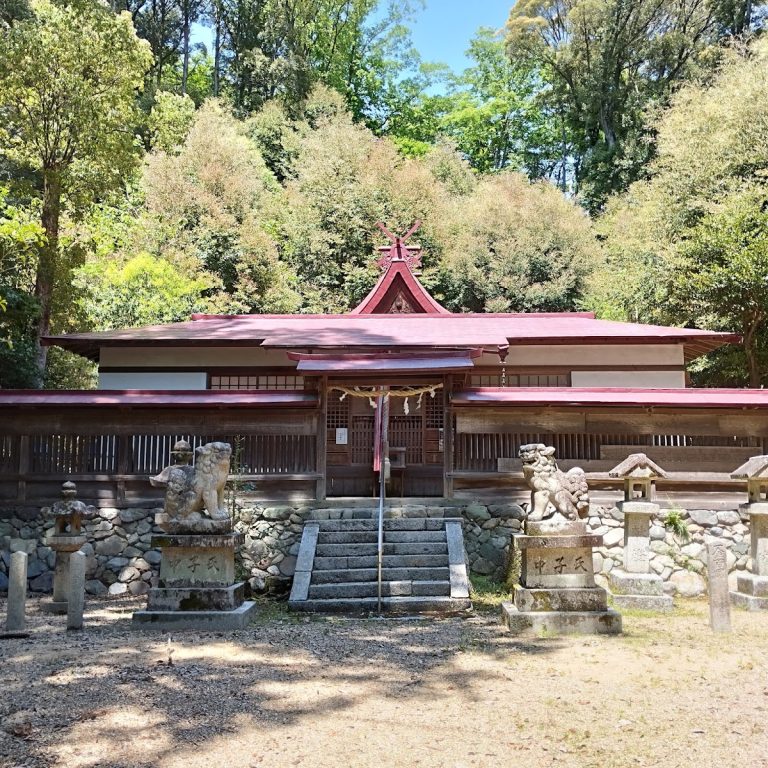
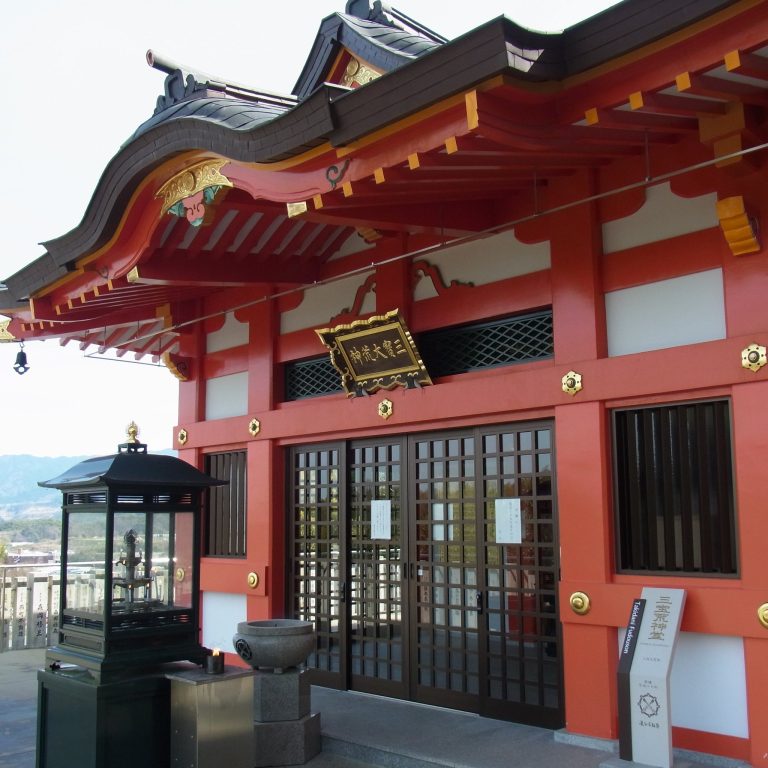
During the Meiji period, a Shinto shrine dedicated to Kusunoki Masashige was established on the former site of the Ni-no-maru, with its offices placed in the San-no-maru. The ruins have been protected as a National Historic Site of Japan since 1934. In 2006, the Japan Castle Foundation included Chihaya Castle among Japan’s Top 100 Castles.
Remains
Mountain setting and defensive layout
Chihaya Castle was a yamajiro, or Japanese mountain castle, designed around a ridge, cliffs, steep approaches, and earthworks rather than large stone walls. It occupied a narrow ridge on Mount Kongō at an elevation of about 150 meters. Steep cliffs and rivers on both sides strengthened the position, while the surrounding terrain made siege operations difficult.
The approach consisted of about 500 steep, narrow stairs. The fortress extended roughly 200 meters along the ridge and contained five enclosures protected by dry moats. Its defenses relied chiefly on wooden walls, earthworks, and stone, supplemented by movable bridges. Trees and boulders felled or placed around the fortress could be rolled down the mountain toward an attacking army, while brush screens helped shield the defenders from arrows.
Enclosures and surviving site features
The main enclosure measured approximately 100 by 20 meters and may have held a yagura, a castle tower or fortified lookout used for observation, defense, storage, or signaling. Although compact, the castle could accommodate several hundred men. A well within the enclosure supported the defenders during the 1333 siege, and supply routes reached the fortress even though the besieging forces could not cut them.
The castle is now in ruins. Because its construction depended mainly on wood and earth, substantial original elements are considered unlikely to survive. The Meiji-period shrine dedicated to Kusunoki Masashige stands on the former Ni-no-maru, while its offices occupy the former San-no-maru.
Nearby sites