Shengavit Settlement: An Early Bronze Age Urban Center in Armenia
Site at a Glance
- Rating
- 4.7
- Popularity
- Very Low
- Country
- Armenia
- Primary era
- Bronze Age
- Eras represented
- Bronze Age
- Civilizations
- Unclassified
- Site type
- City
On this page19 sections
History
Shengavit Settlement is an Early Bronze Age archaeological site in Armenia, located in the Shengavit district of Yerevan beside the Hrazdan River. Built by communities of the Kura–Araxes cultural tradition, it was inhabited through several phases from approximately 3000 to 2500 BC and reused irregularly until about 2200 BC. The Kura–Araxes tradition developed across the South Caucasus and nearby highlands, with distinctive black-burnished pottery, metalworking, agriculture, and pastoralism. Shengavit is a type site, meaning that its remains help define and recognize this cultural tradition.
Settlement and economy
The settlement occupied a substantial hill beside the Hrazdan, near the eastern and southern shores of present-day Yerevan Lake. Its size, monumental fortifications, surplus grain production, metallurgy, and evidence for high-ranking authorities suggest a town-like community that may also have served as a social center for surrounding settlements. Three smaller sites, Moukhannat Tepe, Khorumbulagh, and Tairov, lay beyond its walls.
Shengavit’s inhabitants lived by cereal cultivation and processing, animal husbandry, fishing, and metallurgy. Dams on the Hrazdan created artificial lakes where fish were plentiful, while large stores held wheat and barley. Pottery, stone tools, metal objects, and weapons were produced in an organized manner, possibly by specialized craft groups or guilds. These activities indicate a community with coordinated agricultural and industrial production.
Decline and later use
The settlement was abandoned by the beginning of the second millennium BC, although occupation and other use continued irregularly until about 2200 BC. The reasons for its decline remain debated. Possible factors include environmental change and salinization, economic relations focused inward on the settlement, and movements or invasions by other groups. Communities continued to live elsewhere in the territory of modern Yerevan after Shengavit’s decline. The settlement’s original name is unknown. Its modern name comes from a medieval village that occupied the area and later gave its name to Yerevan’s administrative district.
Archaeological investigation
The site was discovered in 1924–1925, and an accidental find of a broken vessel and clay-hearth remains helped draw further attention to it. Yevgeny Bayburdyan led the first archaeological work in 1936–1938. Sandro Sardaryan resumed excavations in 1958 and investigated the central part of the preserved settlement until 1980, although the exact locations of individual finds were not always recorded.
Extensive investigations began in 2000 under the Armenian archaeologist Hakob Simonyan, who opened stratigraphic trenches beside the earlier excavations. From 2009 he worked with Mitchell S. Rothman of Widener University, with fieldwork in 2009, 2010, and 2012. A sequence reaching bedrock identified eight or nine occupation levels dating approximately from 3200 to 2500 BC, along with evidence for later use until about 2200 BC. Ritual installations were identified particularly during the 2010 and 2012 campaigns.
In July 2010, Simonyan announced the discovery of horse bones. Hans-Peter Uerpmann cautioned that many came from disturbed contexts. The date and interpretation of the Shengavit bones therefore remain uncertain. The earliest securely provenanced horse bones cited in this discussion came from Middle Bronze Age excavations at Nerkin Naver.
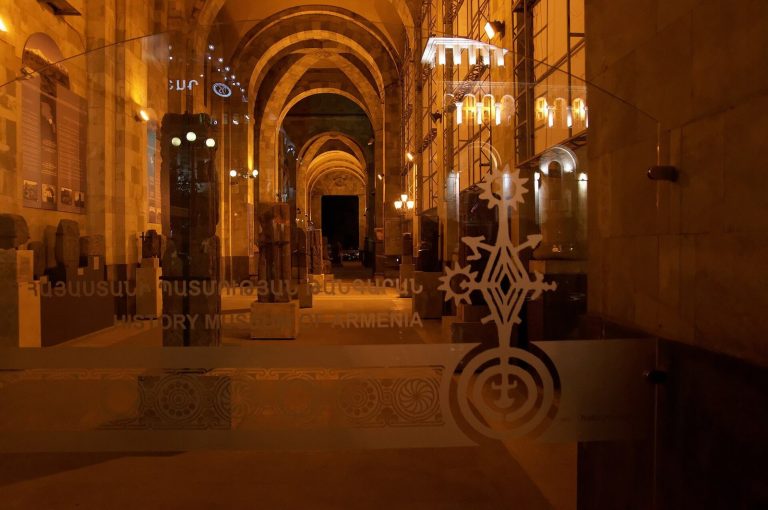
Materials recovered through excavation formed the basis of a museum established on May 24, 1968, as a branch of the Erebuni Historical and Archaeological Museum-Reserve. The institution became the Shengavit Historical and Archaeological Reserve in 2003. Other excavated materials are held by the History Museum of Armenia and museums in Yerevan. Shengavit remains under archaeological investigation and is preserved as a well-known Early Bronze Age archaeological reserve in Armenia.
Remains
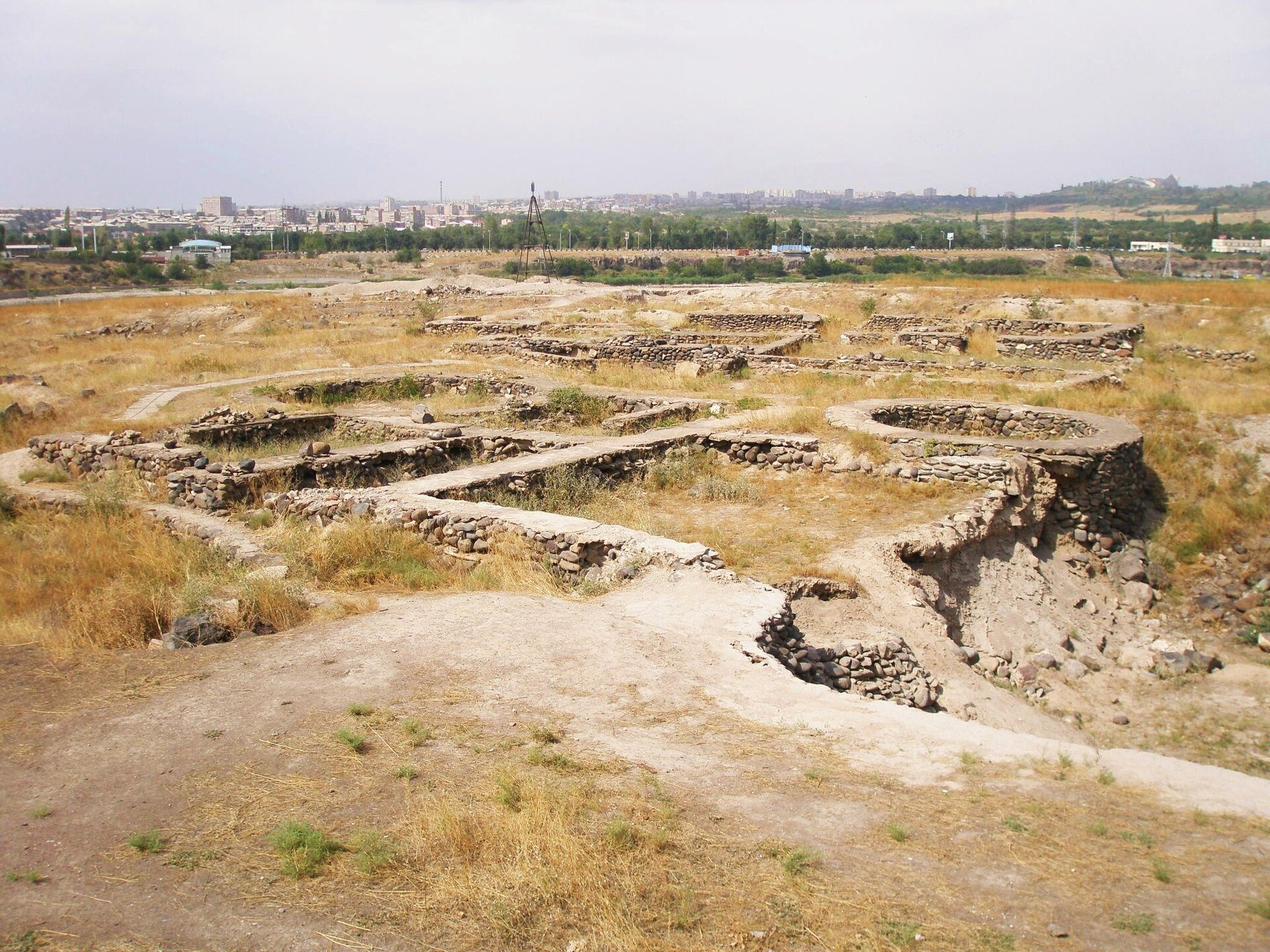
Shengavit occupied approximately 6 hectares on an irregular oval hill or plateau about 30 metres above the Hrazdan River. Much of the ancient area has been built over, while Yerevan Lake covers part of the archaeological zone. The preserved portion consists mainly of a hill with stone foundations and surviving lower walls, together with evidence for adobe-brick upper structures.
Fortifications and settlement layout
Defensive wall
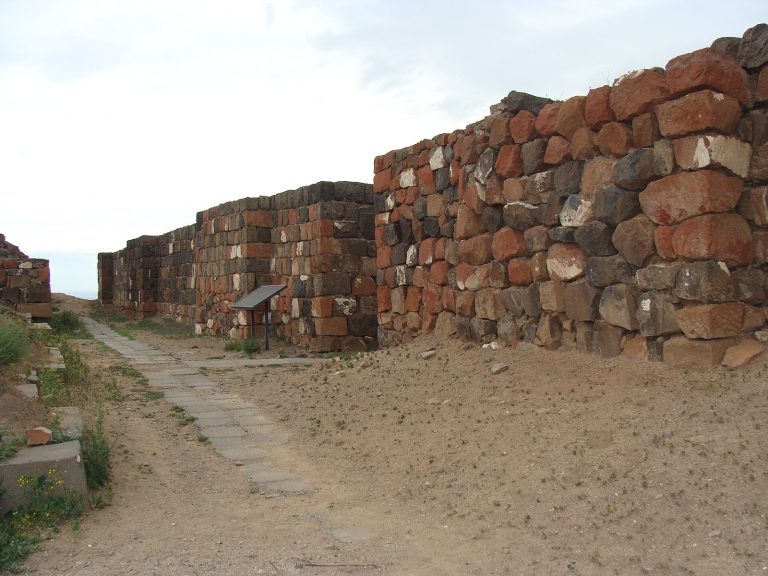
A large defensive wall enclosed the settlement. Built from unworked stones in a cyclopean construction style, meaning a massive wall made from large stones with little regular coursing, it was approximately 4 metres wide. Quadrangular towers reinforced the circuit. A burial ground extended outside the walls, particularly toward the south-east and south-west, and other ancient graves remain nearby.
Underground passage
Under the northern section of the wall, a paved underground passage descended toward the Hrazdan River. Its position beneath the fortification forms part of the surviving evidence for the settlement’s access and defensive construction.
Streets and buildings
Intersecting streets formed a central network, while narrow, winding passageways served the irregularly arranged buildings. The surviving foundations include connected circular and square structures. Residential and domestic buildings used stone foundations and lower walls with adobe brick, or sun-dried mud brick, above them.
Domestic architecture and storage
Houses and communal spaces
Circular houses were generally about 6–7 metres in diameter and commonly had a central hearth. Rectangular rooms or extensions adjoined some of them. Circular buildings carried conical roofs, while the adjoining structures had flat roofs. Entrances generally opened to the east and included stone thresholds and steps. Floors were formed from concentric arrangements of small gravel.
Excavated structures include multi-dwelling circular and square buildings, larger buildings, simple round houses, household pits, and a hall measuring approximately 12–13 metres in length and 8 metres in width. A crypt was also found. Some domestic structures contained ritual hearths and household pits. The hearths varied in form and appear to have carried protective and symbolic associations connected with family or clan continuity and prosperity.
Grain stores
Large silos and grain pits stood near the buildings. One store held approximately four tonnes of cereal products, while other pits were about 3–4 metres deep and approximately 1 metre wide. Burned wheat was found in one grain store, and wheat and barley were stored at the settlement.
Craft production and material culture
Stone and bone tools
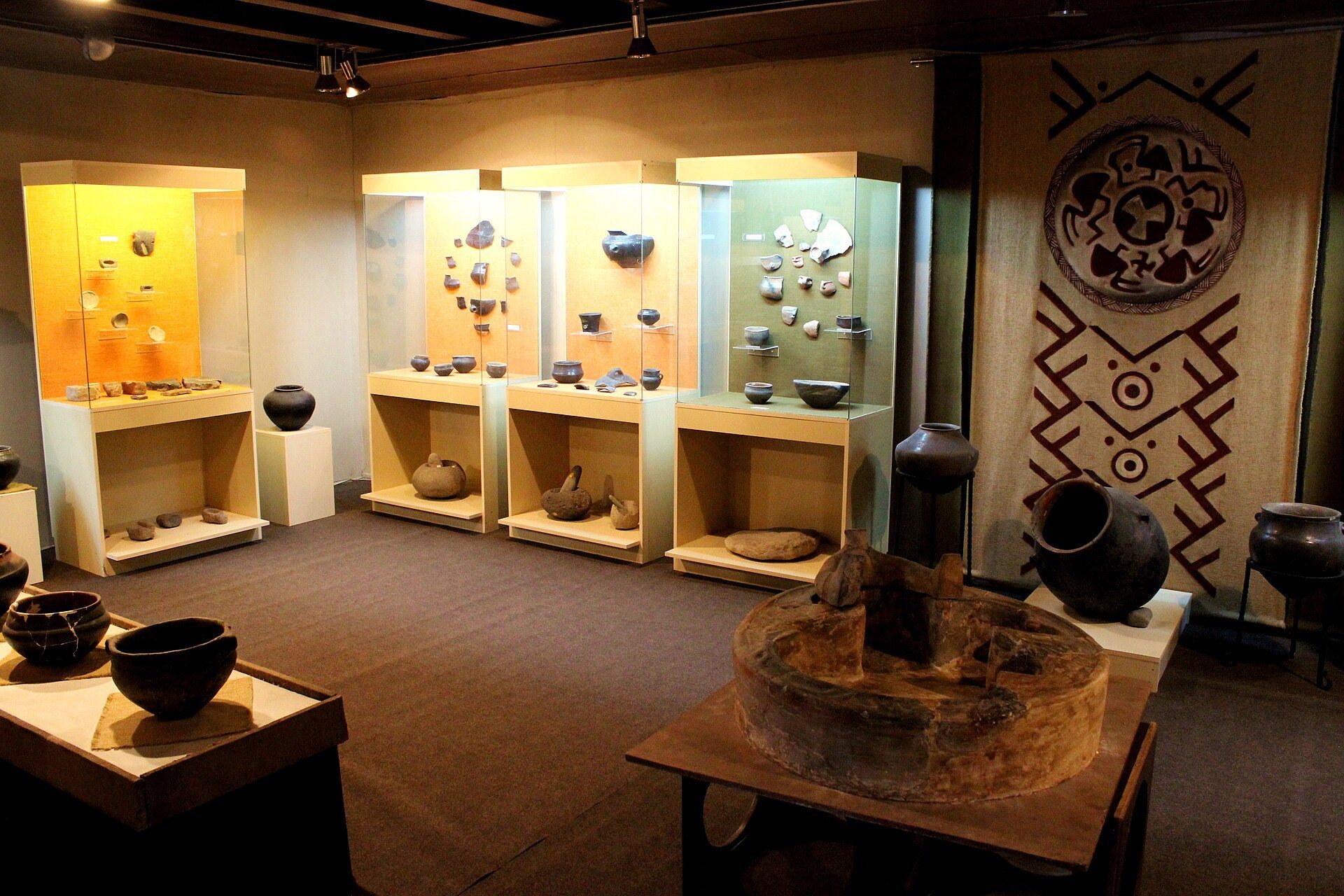
Excavations produced large quantities of stone tools made from chert, obsidian, and other hard stones. The assemblage includes axes, hammers, maces, mortars, grinders, millstones, knives, sickle inserts, stone hoes, flakers, and spearheads. Small grinding stones were used to process seeds and roots. Bone objects include spindle-whorl components, arrowheads, needles, hooks, and hoes made from goat and sheep bones. Thirty-three projectile points were also found.
Metalworking
Bronze and copper objects include mace heads, pins, awls, beads, rings, and bracelets. Gold ornaments came from Early Bronze Age burials. Stone mould fragments were used for casting axes, while crucibles could hold approximately 10 kilograms of smelted metal. Storage containers held quantities of smelted metal that apparently exceeded the settlement’s immediate needs, indicating production on a considerable scale.
Pottery
The pottery assemblage includes storage jars, pots, cups, bowls, goblets, and strainers. Shengavit vessels commonly have black, burnished exteriors and red or grey interiors. Incised or raised geometric decoration includes triangles, lozenges, spirals, and parallel lines. Some vessels carry images of birds, goats, horses, and deer. One large vessel has been tentatively identified as a wine vat, pending residue testing.
Ritual features and burials
Ritual installations
Ritual objects include horseshoe-shaped pedestals with bull heads, clay hearths, altars, supports, and lamps. A large stone obelisk stood within one structure. Numerous clay figurines portray goats, horses, bulls, women, men, birds, rams, and other subjects. Two male figurines have been considered in discussions of gender and social organization. Horses may have helped maintain communication between settlements, while bulls appear to have had a cultic role, although these interpretations remain provisional.
Burials and animal remains
Several burials were excavated outside or around the settlement and have been interpreted as clan-related graves belonging to a large extended family community. Animal remains include horse, dog, bull, boar, hare, roe deer, and other species, as well as fish such as trout and pike-perch. Cherry and cornelian-cherry pits were also recovered.