Vinča-Belo Brdo: A Neolithic Settlement and Type Site of the Vinča Culture
Site at a Glance
- Rating
- 4.5
- Popularity
- Medium
- Country
- Serbia
- Primary era
- Stone Age
- External website
- Open
- Eras represented
- Stone Age, Bronze Age, Iron Age
- Civilizations
- Celtic
- Site type
- City
On this page19 sections
History
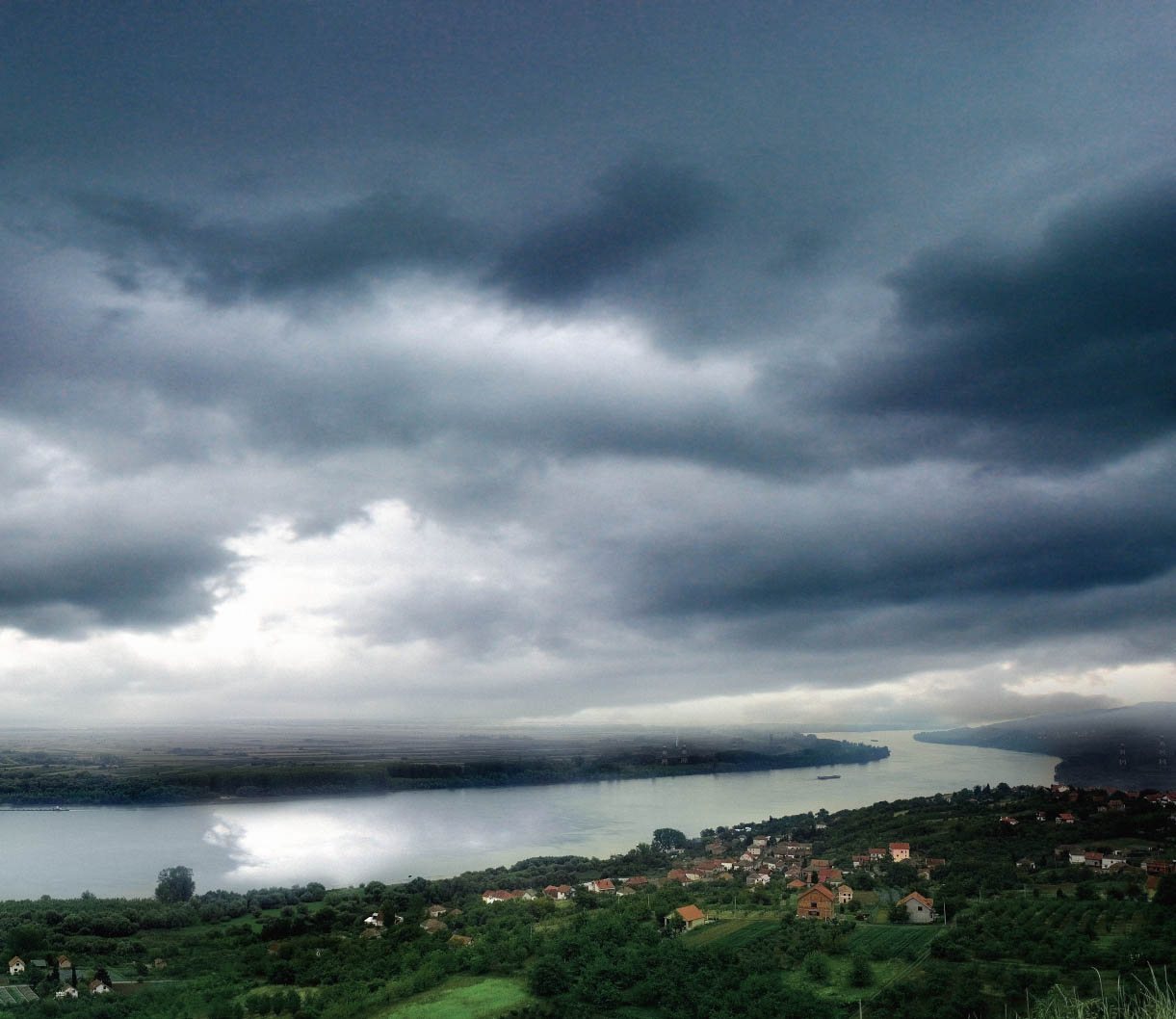
Vinča-Belo Brdo is a prehistoric archaeological site in Serbia, near Belgrade, where communities of the Vinča culture established a large settlement around 5300 BCE during the Late Neolithic. Located on the right bank of the Danube, the site became a major communal, ritual, cultural, commercial, and religious centre in the central and southeastern Balkans. Its name, Belo Brdo, means “White Hill” and refers to the pale loess terrace on which the settlement developed, while specialist literature more often calls the site Vinča.
Early Neolithic occupation
The earliest settlement at Belo Brdo was founded around 5700 BCE by communities of the Starčevo culture, an Early and Middle Neolithic farming tradition named after the site of Starčevo in the central Balkans. This first occupation was small and intermittent. After roughly two centuries, it was abandoned.
Following a period without substantial occupation, people of the Vinča culture settled at Belo Brdo around 5300 BCE. The community remained at the site for approximately a millennium, broadly between about 5300 and 4500 BCE. At its height, the settlement covered about 10 hectares and may have housed approximately 2,500 people, making it a large settlement by Neolithic standards. Belo Brdo became one of the principal centres of the Vinča cultural sphere for approximately 700 to 800 years, although its importance declined during the later Vinča period before the settlement was abandoned.
Life and exchange in the Vinča period
The inhabitants practised settled agriculture, animal husbandry, hunting, fishing, gathering, and craft production. They cultivated grains, pulses, and flax, and kept cattle, pigs, sheep, and goats. Agricultural surpluses, together with access to river and upland resources, supported exchange within the region and over longer distances.
Vinča-Belo Brdo formed part of exchange networks linking communities around the Danube with the Mediterranean and Aegean coasts, the Black Sea, and the Carpathians. Carpathian obsidian, Aegean and Mediterranean shells, and other non-local stones and minerals reached the settlement. Copper working was practised by the later part of the occupation. The presence of copper droplets, minerals, and slag places Belo Brdo among the earliest known metalworking centres in Europe, although the precise date when copper working began remains under investigation.
Later prehistoric occupations
After the Neolithic settlement declined, Belo Brdo was used on a smaller scale by communities associated with the Bodrogkeresztúr, Baden, and Kostolac cultures, archaeological traditions of the Copper Age in the Carpathian-Balkan region. Four Bodrogkeresztúr graves help establish the relative chronology of the post-Neolithic layers. The Baden occupation belongs to an early or pre-classic phase dated approximately 3600 to 3500 BCE, while Kostolac activity is provisionally dated approximately 3200 to 2800 BCE.
After a brief interruption at the end of the Copper Age, the site was reoccupied during the early Bronze Age by people associated with the Vatin culture, a Bronze Age archaeological tradition of the central Balkans. This occupation dates broadly to around the middle of the third millennium BCE. At least one Vatin phase has been identified, although later medieval burials damaged much of its deposit.
Iron Age, Roman-period, and Byzantine-period material occurs in the layers between the prehistoric settlement and the medieval cemetery. These deposits are heavily disturbed, and the Roman and Byzantine material does not form clearly defined residential horizons. Iron Age activity has also been interpreted as including a Celtic hill fort, a fortified settlement associated with Iron Age Celtic communities and defended by earthworks.
Medieval cemetery
The latest substantial historical use of Belo Brdo was a Christian cemetery. Burials took place from approximately the eighth to the fifteenth century in three broad phases: the eighth to tenth, eleventh to twelfth, and thirteenth to fifteenth centuries. This medieval use added grave cuts and human remains to the earlier layers of the settlement.
Excavation and preservation
Vinča was first noted archaeologically in 1893, when Jovan Žujović drew attention to it at a meeting of the Serbian Geological Society. Objects displayed in 1897 helped establish that the location might be a prehistoric site. Miloje Vasić began the first systematic, methodologically controlled excavations in Serbia at Vinča in 1908. The work was interrupted by the First World War and financial difficulties, resumed with outside assistance in 1911, and continued intermittently until 1934. Vasić later published the results in the four-volume monograph Prehistoric Vinča, issued between 1932 and 1936.
Renewed excavations organized by the Belgrade City Museum took place from 1978 to 1986 with the participation of the University of Belgrade and institutes of the Serbian Academy of Sciences and Arts. Nikola Tasić and Gordana Marjanović Vujović directed work on later prehistoric and medieval layers, while Milutin Garašanin and later Dragoslav Srejović directed research into the Neolithic deposits. The programme examined the site’s layers, buildings, settlement organization, and post-Neolithic occupations through broad-area excavation and interdisciplinary research involving archaeozoologists, physicists, chemists, petrographers, anthropologists, and other specialists.
A third major excavation series began in 1998 under Nenad Tasić and continues. It introduced computer-based archaeological methods, specialist laboratories, flotation, archaeozoological and geotomographic analysis, chemical and physical testing, experimental archaeology, and the ArchaeoPack system for storing and displaying three-dimensional excavation data. Fieldwork from 1998 to 2008 improved the interpretation of individual layers and connected the results of the three major excavation series through systematic documentation. Eleven doctoral dissertations on finds from Vinča were completed between 1998 and 2012.
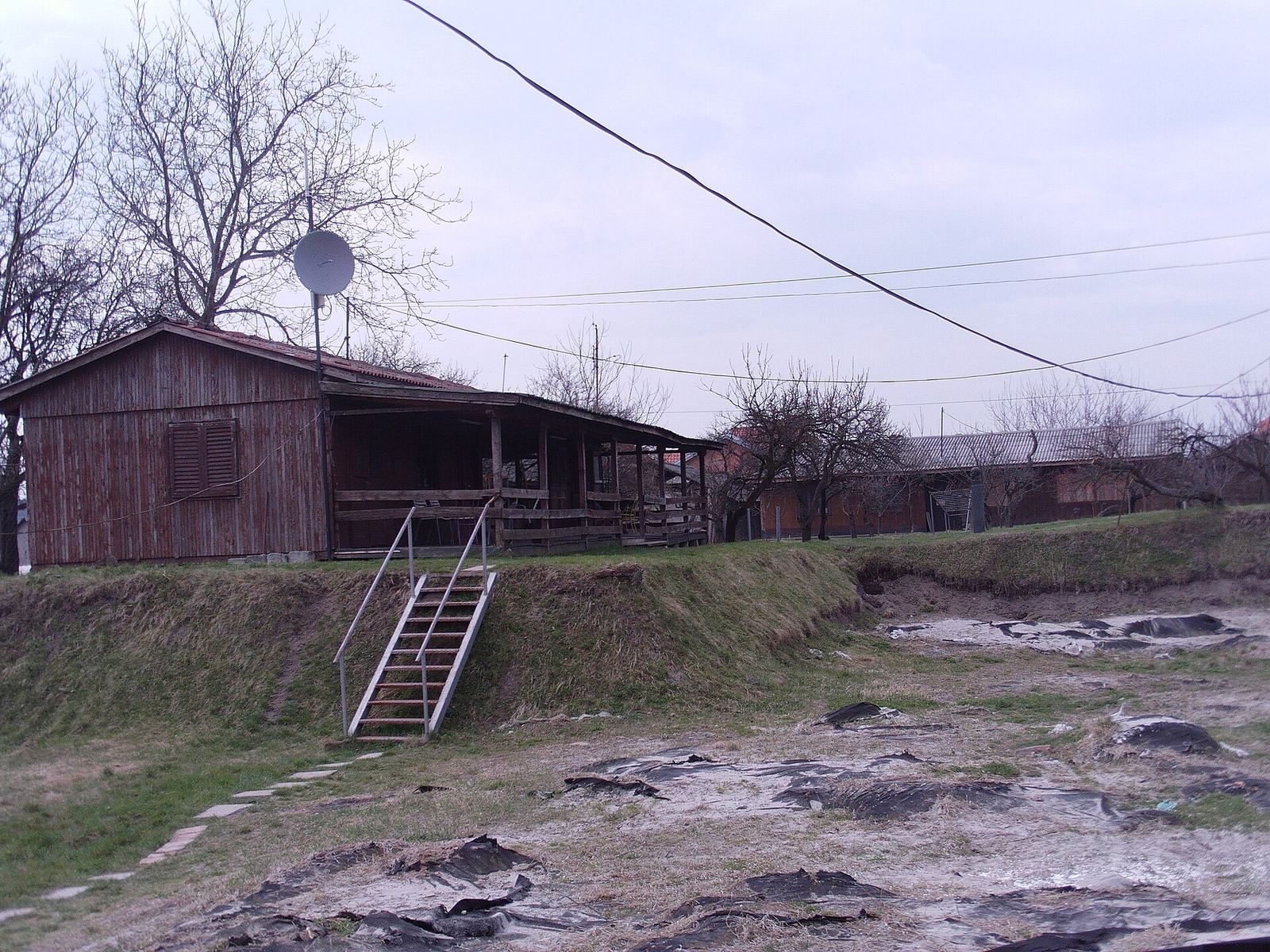
River erosion, landsliding, groundwater movement, unauthorized excavation, looting, and amateur destruction have threatened the mound. Changes in the course of the Danube brought the river closer to the site, and part of the settlement was eroded before an embankment was built in 1982. In 2004, threatened parts of the profile were scanned in three dimensions, followed by protective investigation and backfilling to stabilize the evidence. A site rehabilitation project began in 2022. The Republic of Serbia placed Belo Brdo under protection in 1950, and in 1979 it was declared an archaeological site of exceptional national importance.
Remains
Settlement mound and layers
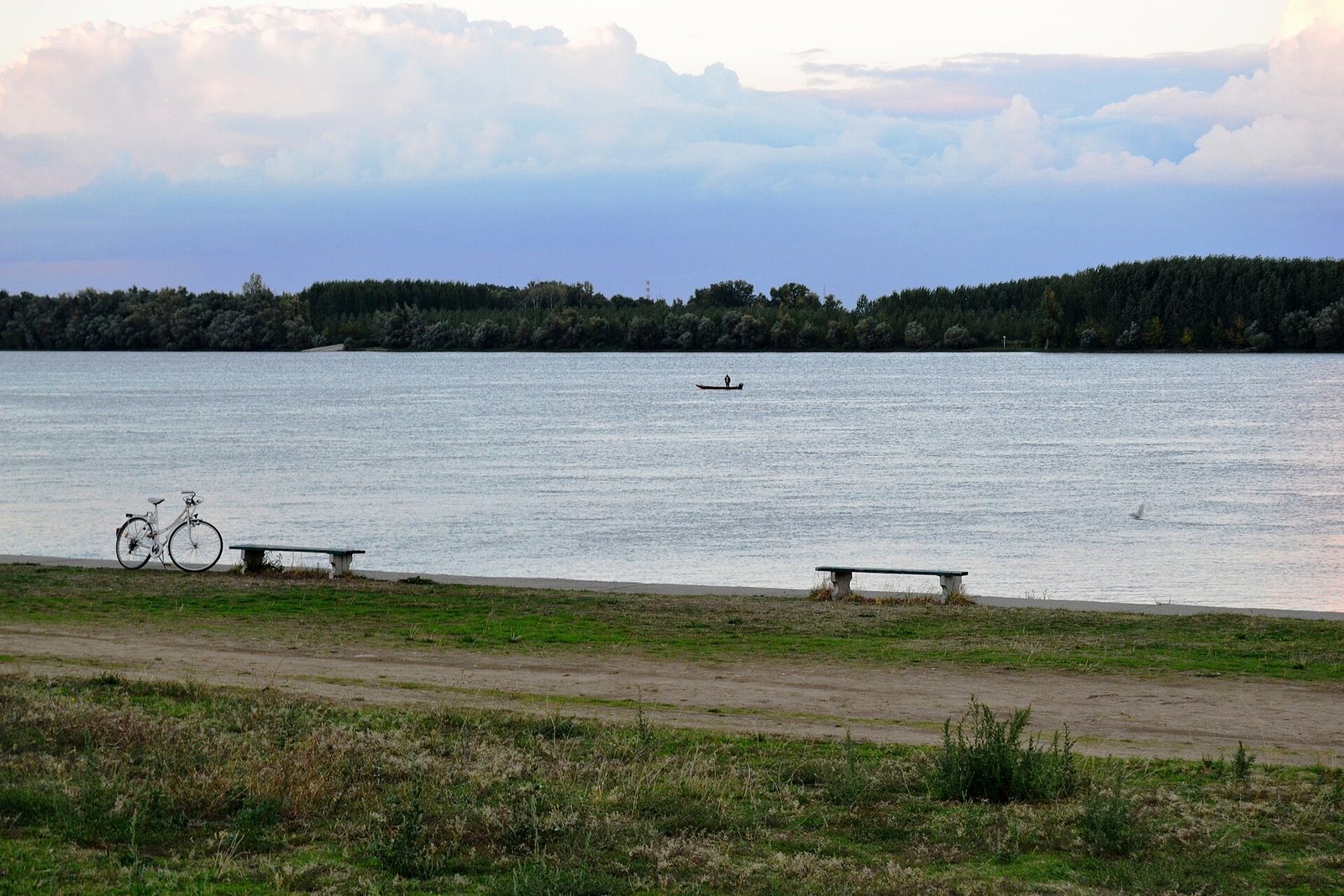
Belo Brdo is a large artificial settlement mound, or tell, formed through repeated occupation, demolition, rebuilding, and the accumulation of settlement debris in one place. It covers approximately 10 hectares, while its cultural deposits reach about 9 to 10.5 metres in thickness and the mound has a total height of approximately 10.5 metres. The site stands on a high loess terrace, a fertile elevation formed from fine wind-deposited sediment, on the Danube’s right bank. Its position protected the settlement from flooding and surface runoff. The nearby Bolečica River supplied fertile soil and drinking water, while the Danube and the Avala area provided fishing, hunting, and raw materials.
The stratigraphy, meaning the sequence of archaeological layers created by successive human activity, extends from approximately the end of the seventh millennium BCE to the present. It includes successive Neolithic occupations, later Copper Age and Bronze Age residential horizons, medieval grave cuts, and a modern settlement. Vinča-Belo Brdo is the type site of the Vinča culture, meaning that the culture’s archaeological definition and chronology are based especially on evidence from this settlement. It is currently the only known site where all phases of the Vinča culture have been documented. Its southern excavation profile and broad-area investigations enabled the chronological position of the Vinča phases to be established in detail.
Neolithic buildings and settlement organization
Thirteen Vinča building horizons have been identified. New structures were repeatedly raised over debris left by periodic fires, producing the mound’s deep sequence of occupation. Neolithic buildings were constructed mainly with wooden frameworks and walls of clay or mud brick. Levelled foundations, insulation, painted surfaces, and wall coverings are also represented, while roofs were generally thatched.
Residential houses
Rectangular houses formed the common residential type. Earlier examples were generally single-roomed and suited to small families. Later buildings included larger rectangular or square structures measuring approximately 40 to 60 square metres, with two or three rooms and an attic. Some houses contained hearths or fire pits for cooking and heating. Later interiors also included functional divisions and fixed furnishings such as benches, braziers, waterwheels, and tables.
The houses stood close together in rows along straight, street-like routes. This arrangement remained broadly stable for centuries. Repeated house fires are visible in the settlement layers, although their causes are uncertain. They may have resulted from accidents, lightning, external attacks, internal conflict, or deliberate ritual burning. Some interpretations connect the fires with purification, transformation, renewal, or communal ceremony.
Communal and storage structures
Other excavated buildings include circular and semicircular structures with elaborate entrances and raised platforms. These were probably associated with communal or ritual activities. Large strong buildings with thick walls and spacious interiors were probably used to store food, tools, and valuable objects. Specialized workshops produced pottery, stone tools, and bone tools, adding craft areas to the settlement’s residential and communal buildings.
Burials and later features
Early Neolithic collective grave
The earliest Starčevo deposits include a large collective grave containing the remains of eleven males. The burial is unusual because individual inhumation was more typical of Starčevo sites. Excavations in the 1980s uncovered more than 800 human skeletons from the site, although only one identified skeleton belonged to the Vinča period. This individual was an adult, probably a woman aged approximately 25 to 30, who died in a fire. Signs of osteoarthritis indicate severe physical conditions and possibly poor nutrition.
Medieval necropolis
The medieval necropolis contained 713 excavated graves, representing a substantial part of the cemetery. The bodies were placed directly in the ground in an extended position, with their heads oriented westward in accordance with Christian burial practice.
Copper Age features
Four Baden figurines from the Baden horizon belong to the headless-idol type. These two-dimensional female figures have hourglass-shaped bodies, and one is almost completely preserved. A pit associated with the Kostolac phase may have been used for funerary practices or an ancestor cult, although its function remains uncertain.
Objects, craft production, and ritual material
Pottery, tools, and ornaments
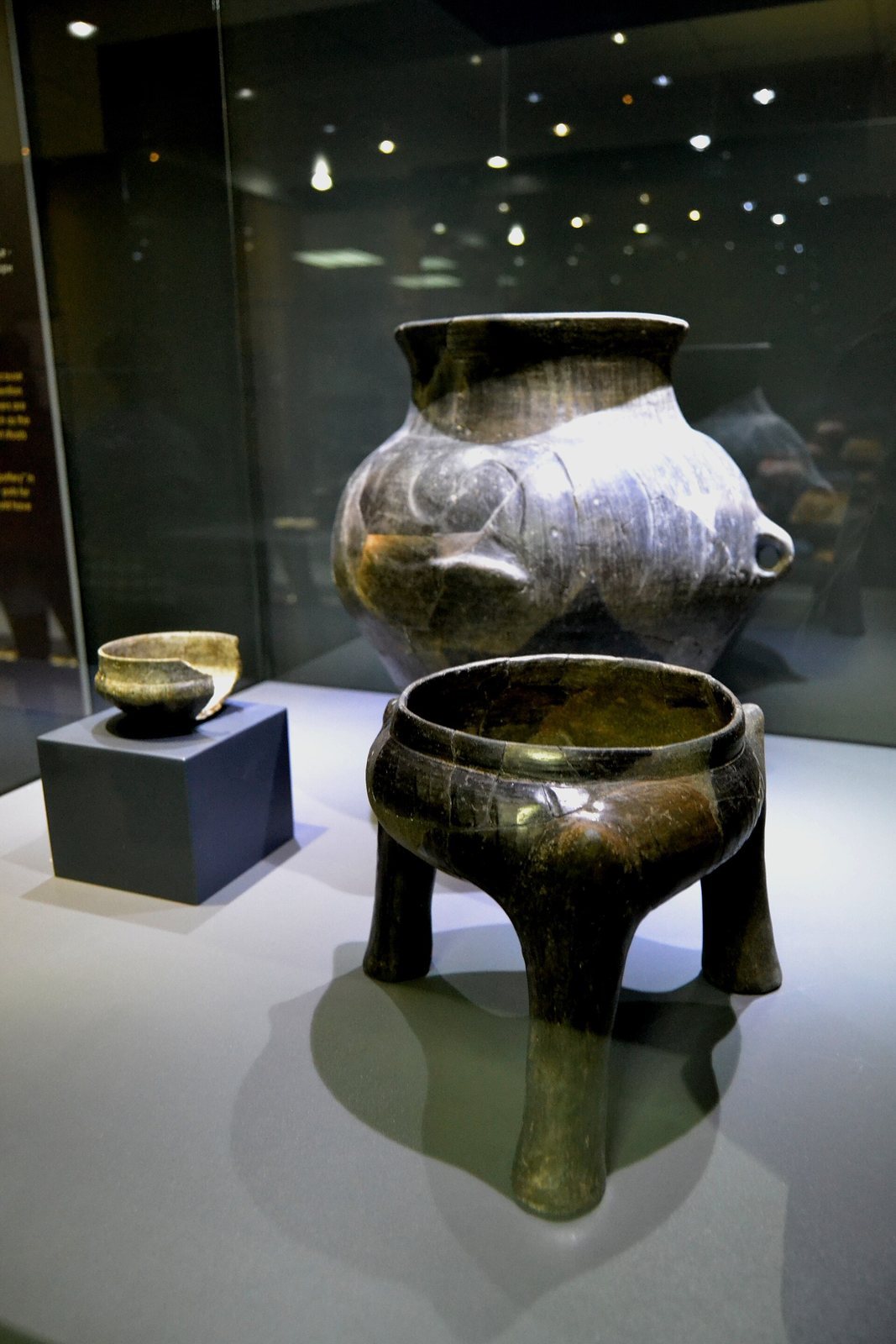
Pottery was usually made by coiling, a method in which clay coils are stacked and smoothed into vessels. The decoration includes geometric patterns, spirals, and anthropomorphic and animal motifs. Stone tools include axes, adzes, chisels, and arrowheads. Bone and antler objects include hooks and harpoons, while loom weights, fishing-net equipment, and other tools relate to pottery making, woodworking, hide working, fibre processing, hunting, fishing, and farming.
Jewellery, beads, pendants, and other decorative objects were made from clay, shells, ochre, and malachite. Carpathian obsidian served both as an ornamental material and for making arrowheads, blades, and scrapers. Spondylus and other shells from the Aegean and Mediterranean coasts were fashioned into prestige jewellery, providing physical evidence for the settlement’s long-distance exchange connections.
Copper working
Copper droplets, copper minerals, and slag occur in the archaeological deposits. Together they provide direct evidence for copper processing, including smelting and casting, within the settlement. These materials belong to the evidence for the community’s early metalworking activities.
Figurines, symbols, and house rituals
The settlement produced many clay figurines of people and animals in different sizes and styles. Some are simple and abstract, while others are more naturalistic. Their uses may have included ritual or religious activities, toys, or ornaments. Early Vinča ritual material also includes “mushroom amulets” and animal-head jewellery made from semiprecious stones.
Painted cattle skulls were fixed to the interiors of some houses. This practice has been interpreted as evidence of a bucranium cult, a ritual tradition involving the representation or skull of an ox or bull. Incised signs appear on pottery, figurines, and other objects. They include pictographic, geometric, animal, and human forms. The signs have been interpreted in different ways, including as workshop or maker marks, ownership symbols, inventory or trade records, social identifiers, ritual signs, decoration, or an early writing system. Their meaning remains undeciphered.
Part of the archaeological profile was scanned in three dimensions in 2004 because erosion and ground instability threatened the layers. Protective backfilling followed, preserving the endangered section of the mound and its sequence of archaeological evidence.