Holy Ascension of the Lord and Saint George: An Orthodox Church in Shumen, Bulgaria
Site at a Glance
- Rating
- 4.7
- Popularity
- Very Low
- Country
- Bulgaria
- Primary era
- Modern
- Eras represented
- Medieval, Modern
- Civilizations
- Ottoman, Second Bulgarian Empire
- Site type
- Religious
- Remains
- Church
On this page8 sections
History
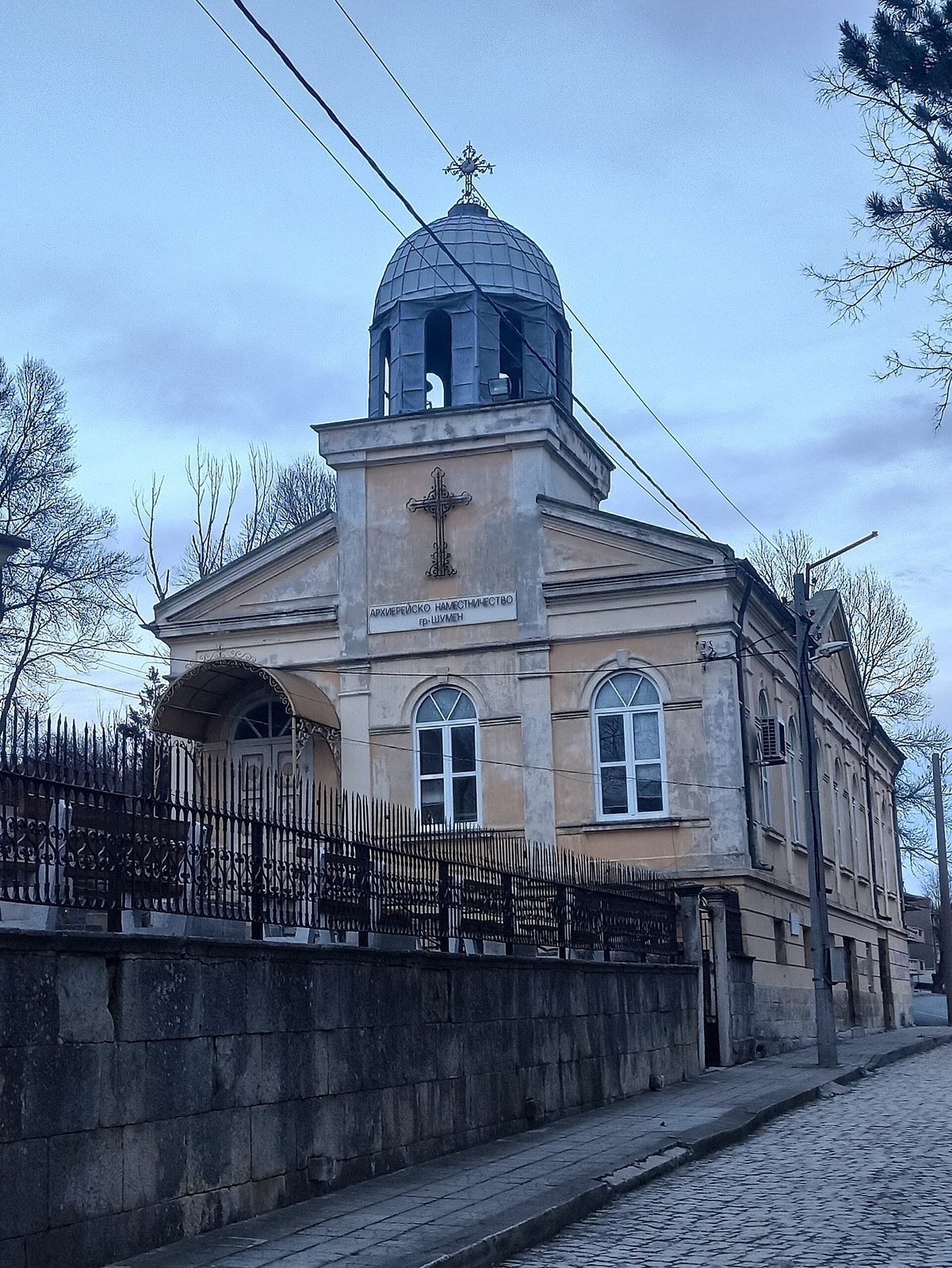
Holy Ascension of the Lord and Saint George is an Orthodox church in Shumen, Bulgaria, regarded as the city’s oldest church of this tradition. Its present form is linked to a renewal begun in 1829, while foundations beneath the floor reveal several earlier medieval churches.
Medieval Origins and Episcopal History
Older researchers associated the church with Shumen’s pre-Ottoman period. Iv. Mollov proposed that its origin might reach back to the Second Bulgarian Empire, the medieval Bulgarian state that existed from the late twelfth century until the Ottoman conquest in the late fourteenth century. He also noted that the building had undergone numerous repairs and alterations.
During the second half of the seventeenth century, political, demographic, and economic changes led to the relocation of the Preslav bishop’s residence to Shumen. Archbishop Francesco Soimirovich placed the residence there permanently in 1666. An encyclical issued by Patriarch Jeremiah III of Constantinople in 1720 also supports Shumen’s role as the bishop’s seat.
Repairs, War, and Renewal
A chronicle by Hadzhi Veliko of Shumen states that the church was repaired for ten days beginning on 19 May 1774. A Divine Liturgy was held on the eleventh day.
During the Russo-Turkish War of 1828, a conflict between the Russian and Ottoman empires, Ottoman forces used the church as a food store. By that time, its predecessor had become very low, partly sunk into the ground, and close to collapse. The building was renewed in 1829, then restored and given new interior paintings. Bishop Gregory consecrated it in 1831.
Modern Institutional Role
Major repair work in 1933 led to the discovery of several medieval church foundations beneath the floor. A complete renovation continued between 1933 and 1940. The church is the seat of the Shumen Archpriestly Vicariate, a local administrative district of an Orthodox diocese overseen by an archpriest on behalf of the bishop, within the Varna and Veliki Preslav Diocese of the Bulgarian Orthodox Church. It remains an active Orthodox church.
Two princes are buried in the churchyard. Dimitar Muruzi was a Grand Dragoman, a senior interpreter and diplomatic official in the Ottoman imperial administration. Valerian Madatov, a Russian military commander and nobleman, died of tuberculosis during the siege of Shumen in 1828.
Remains
The surviving church incorporates the remains of several earlier buildings beneath its floor. These foundations are nested within one another and were dated to the Bulgarian medieval period. The present structure also preserves a stone inscription that identifies its dedication to the Ascension of Jesus Christ, the Christian belief that Jesus rose to heaven after his resurrection, and to Saint George, a widely venerated Christian martyr and saint.
Earlier Foundations and the Present Church
Medieval Foundations
During the substantial repairs of 1933, excavations beneath the floor revealed foundations belonging to several churches built one within another. The predecessor church was described as very low and partly below ground level, a form associated with churches of its period. Its poor condition explains the renewal that followed the events of 1828.
The 1829 Church
A stone inscription preserved in the building records the creation of the church dedicated to the Ascension of Jesus Christ and Saint George on 1 September 1829, during the reign of Sultan Mahmud and the tenure of Archbishop Antim. The renewed building was subsequently restored, its interior was painted, and it was consecrated in 1831.