Shumen Fortress: A Bulgarian Stronghold and Archaeological Site


Site at a Glance
- Rating
- 4.7
- Popularity
- Medium
- Country
- Bulgaria
- Primary era
- Medieval
- External website
- Open
- Eras represented
- Classical, Medieval
- Civilizations
- Byzantine, First Bulgarian Empire, Roman, Second Bulgarian Empire
- Site type
- Military
- Remains
- Citadel
On this page16 sections
History
Shumen Fortress is an archaeological site overlooking Shumen in northeastern Bulgaria, built and successively developed by Thracian, Roman, Byzantine, and Bulgarian communities. Its history began around 1200 BC, and its position at a crossroads linking the Danube near Silistra with Adrianople and Constantinople, as well as the northern Black Sea coast with the western Bulgarian lands, gave it lasting strategic importance.
Thracian and Roman Foundations
The first settlement was established around 1200 BC by Thracians, probably members of the Getae, an ancient Thracian people of the lower Danube region. It was initially unfortified. A defensive wall was probably added in the fifth century BC, after which Thracians controlled the area from the fifth to the second century BC. That early wall has not survived.
Rome took control of the area around AD 15. During the Roman period, the fortress served mainly military purposes and was less economically developed than the nearby centers of Marcianopolis and Abritus. Around AD 250, the Goths destroyed the stronghold, but it was rebuilt afterward.
Byzantine Rule and Early Bulgarian Refortification
After the Roman Empire was divided in AD 395, Shumen came under Byzantine rule. The Byzantine Empire was the eastern continuation of the Roman Empire, centered on Constantinople. During this period, the settlement became an important production and commercial center. Its connections with distant markets are reflected by 158 early Byzantine coins and other evidence of long-distance trade.
From the second half of the fifth century to the middle of the seventh century, repeated barbarian invasions contributed to the destruction and depopulation of the ancient town. After Asparukh’s Bulgars arrived in 680–681, the site became part of the First Bulgarian Empire, the medieval Bulgarian state that lasted from the late seventh century until the early eleventh century. Pit dwellings appeared among the ruins of the late antique fortress during the eighth century, and the settlement was gradually refortified in the ninth and tenth centuries.
In the ninth century, Shumen again became an important center. A citadel, the strongly fortified inner part of a larger settlement, was built as the residence of the town’s governors. The name Shumen probably emerged during this period. The fortress formed part of the defensive system protecting the Bulgarian capitals Pliska and Preslav and the religious center of Madara. Its proximity to these centers gave it an important military role, although it remained economically less important than the capitals.
Byzantine forces conquered the fortress in 1001. Pecheneg incursions in the 1030s or 1040s, carried out by a medieval nomadic Turkic confederation active north of the Byzantine Empire and in the Balkans, destroyed it again. The fortress was later rebuilt.
The Second Bulgarian Empire
After the Asen uprising established the Second Bulgarian Empire in the late twelfth century, Shumen became one of medieval Bulgaria’s most developed cities. The Second Bulgarian Empire was the later major Bulgarian state, lasting from the late twelfth century until the Ottoman conquest. Agriculture, pottery, stoneworking, and metalworking flourished, and a mint operated there during the reign of Tsar John Alexander, a fourteenth-century Bulgarian ruler. The mint indicates the importance of trade, while Tsar Ivan Shishman’s visit reflects the fortress’s continuing importance.
The fortress prospered as a political and economic center in the thirteenth century. When Byzantine forces temporarily captured Preslav during Ivaylo’s uprising in 1278, a revolt that briefly brought its leader to power, Shumen regained importance as an administrative and military center. It continued to prosper in the fourteenth century and was regarded as one of the most developed citadels of that period.
Ottoman Conquest and Abandonment
Ottoman forces captured Shumen in 1388 during the campaign of Grand Vizier Çandarlı Ali Pasha in northeastern Bulgaria. The Ottoman archaeological layer lies directly above that of the Second Bulgarian Empire, without clear traces of destruction, suggesting that the transfer may have taken place without resistance.
In 1444, during the final Crusade, the army of King Władysław III of Poland, also known as Varnenchik, captured the fortress after a three-day siege and fierce resistance from its Ottoman garrison. After the Christian defeat and the king’s death at the Battle of Varna, the fortress was looted, burned, and destroyed. Ottoman authorities subsequently abandoned it permanently.
Excavation and Conservation
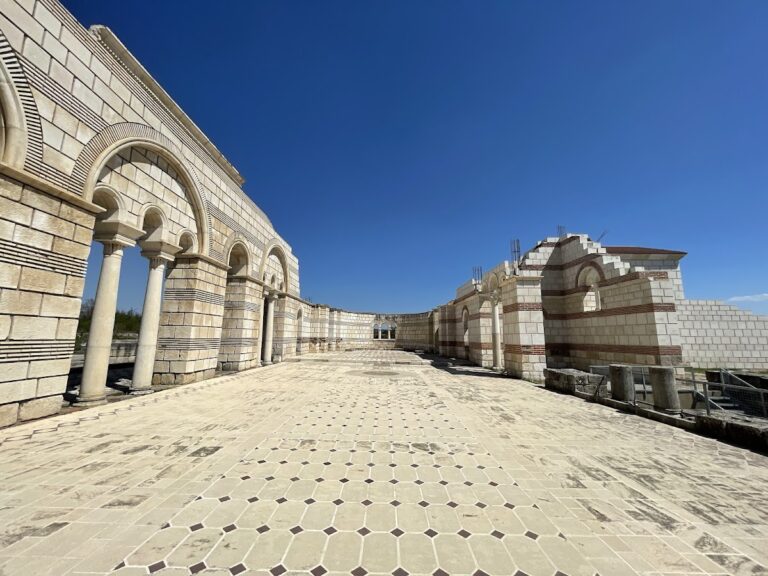
Archaeological excavations began in 1957 and continued until 1987. The most intensive investigations took place from 1974 to 1981 under Vera Antonova of the Shumen historical museum, now the Regional Historical Museum. This work made Shumen Fortress one of the most extensively studied archaeological monuments in Bulgaria. Restoration began in 2012 through the project “Bulgaria Begins Here” and was partially completed in 2015. The site is a historical-archaeological reserve and forms part of Bulgaria’s 100 national tourist sites.
Remains
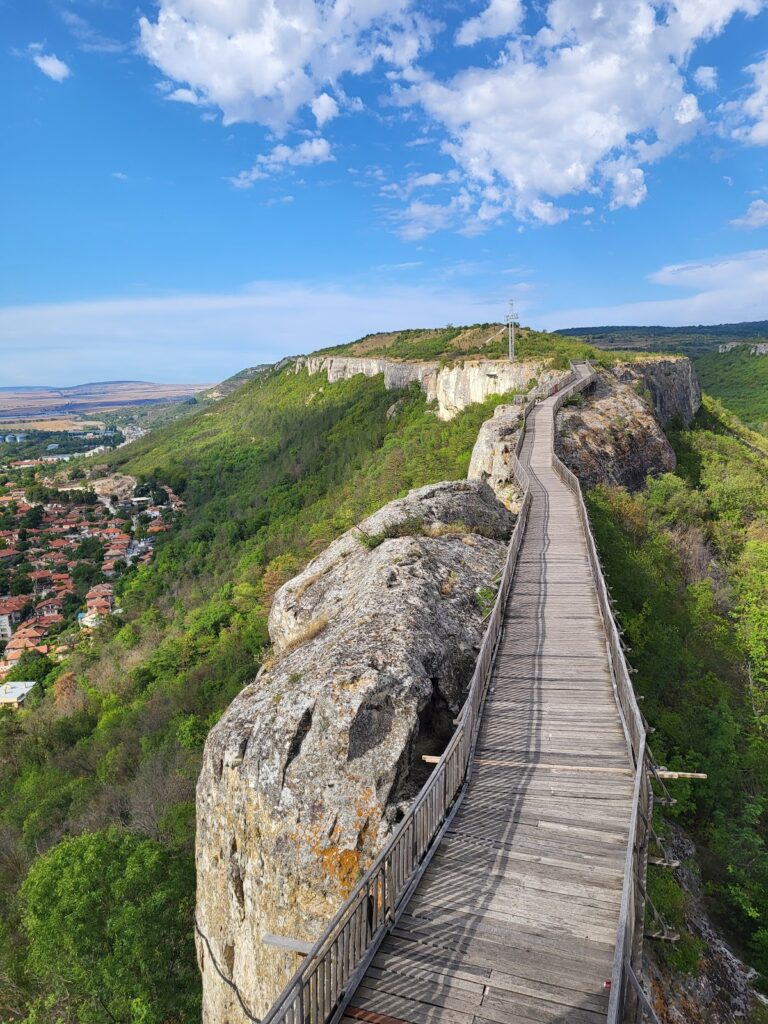
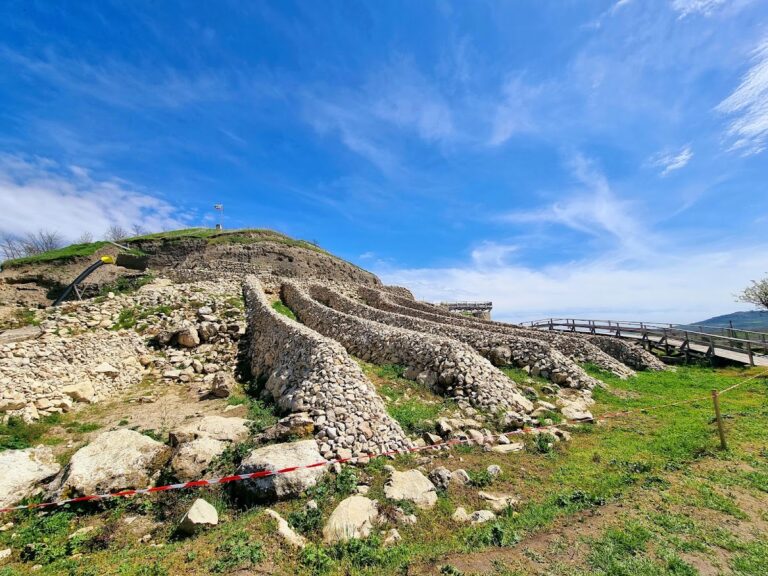
Shumen Fortress occupies a hill within Shumen Plateau Nature Park overlooking the city. The archaeological area covers approximately 3.2 hectares, while a substantial part of the population lived outside the walls in a suburb. Three principal defensive walls define the site’s successive military organization: a Roman wall, an early Byzantine wall later reused by the Bulgarians and Ottomans, and a wall dating from the Second Bulgarian Empire. Towers belonging to each period show changes in defensive design.
Defensive Walls and Towers
Roman Defenses
The Roman defenses were built with mortar and included rectangular and U-shaped towers. During the Bulgarian period, some of these towers were remodeled in triangular form, adapting earlier structures to later defensive needs.
Byzantine Wall
The Byzantines constructed an additional wall with pentagonal towers. Their shape was intended to reduce the vulnerability of the defenses to stone-throwing siege engines, machines used to attack fortified walls.
Citadel and Religious Buildings
Citadel
The ninth-century citadel formed the fortified inner part of the settlement and housed the town’s governors. It belonged to the renewed Bulgarian settlement established among the remains of the late antique fortress.
Bath and Water Installations
Excavations uncovered an early Byzantine bath with a drainage channel and two water reservoirs. These installations formed part of the settlement’s physical infrastructure during the period when the fortress developed as a production and commercial center.
Churches and Cult Center
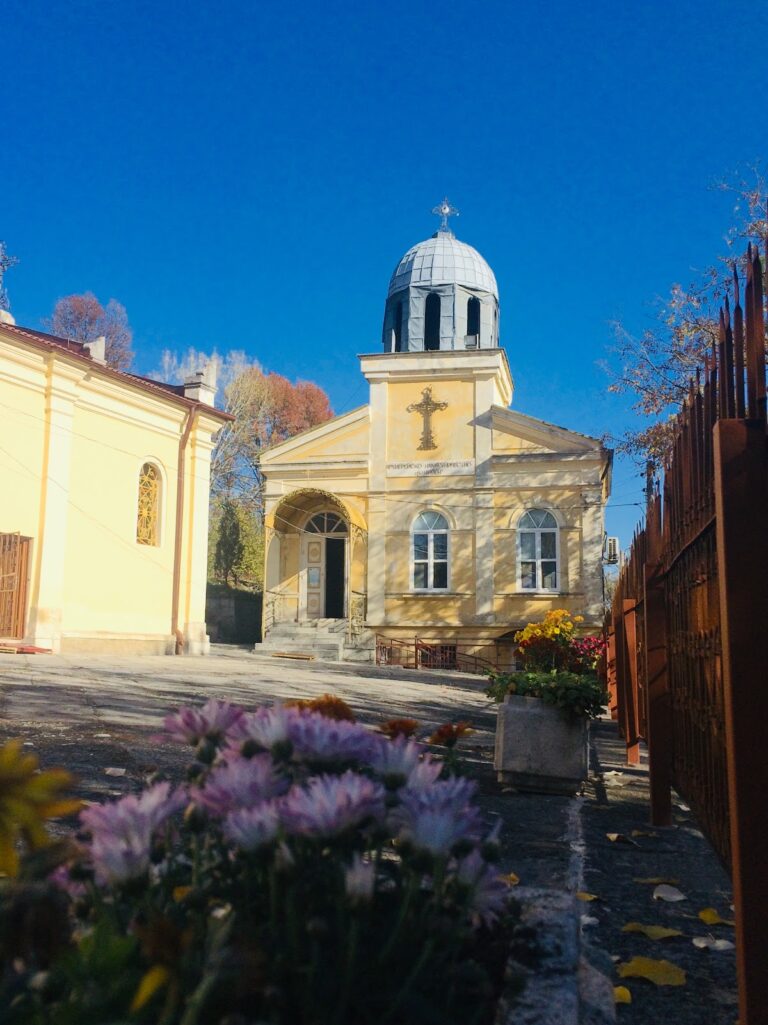
Twelve churches were identified at the fortress, along with monasteries and churches at its foot. Some religious buildings were reconstructed during the 1980s. A feature known as the Cult Center contains the foundations of four churches concentrated in one location.
Church South of the Fortress
In 1970, the archaeologist Karel Skorpil excavated a church south of the fortress measuring 7.3 by 4.5 meters. Its remains contribute to the picture of the religious buildings associated with the settlement.
Inscriptions, Objects, and Archaeological Finds
A thirteenth-century inscription on the fortress wall refers to frequent Mongol attacks. Excavations also revealed a tile showing a dancing man, possibly a Proto-Bulgarian shaman, although that interpretation remains unresolved. A fragmentary Cyrillic inscription was regarded by Vera Antonova as the earliest Cyrillic inscription in Bulgaria.
A circular bronze seal bearing a double-headed eagle has been identified as belonging to Tsar John Alexander. The double-headed eagle, an imperial emblem showing one eagle with two heads, was common on fourteenth-century seals, which were also produced in gold and silver. A limestone projection carries a carving of a double-headed eagle with a three-pointed crown between the heads. It has been interpreted either as a mark made during a Bulgarian ruler’s visit or as a representation of Ivan Shishman, the last emperor ruling from Tarnovo before the Ottoman conquest, but its attribution remains uncertain.
The archaeological material includes sgraffito pottery, made by scratching through a surface coating to reveal a contrasting layer, and Troyan-type bukel pottery associated with settlement during the Hallstatt period of the European Iron Age. Belt fittings, gold liturgical vessels, and large numbers of coins from nearly all periods add evidence for the site’s long occupation.
Jewelry and numerous objects connected with Christian worship were also recovered, including earrings, bracelets, rings, crosses, and church vessels. Most were made of copper or bronze, while others used silver or gold. Together, these finds reflect organized medieval production, including metal casting and jewelry manufacture.
Nearby sites