St. Tiburtius: A Baroque Parish Church in Steinach, Germany
Site at a Glance
- Rating
- 4.8
- Popularity
- Very Low
- Country
- Germany
- Primary era
- Early Modern
- External website
- Open
- Eras represented
- Medieval, Early Modern, Modern
- Civilizations
- Duchy of Bavaria, Electorate of Bavaria, German, Holy Roman Empire
- Site type
- Religious
- Remains
- Church
On this page17 sections
History
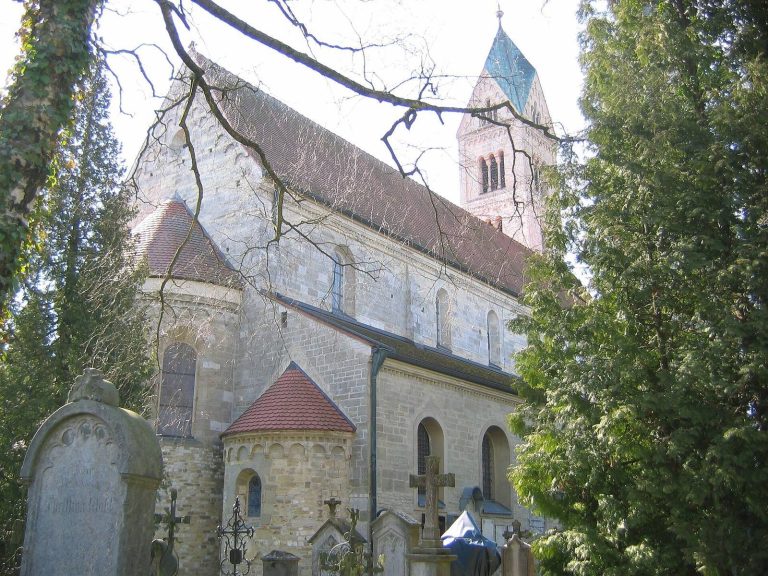
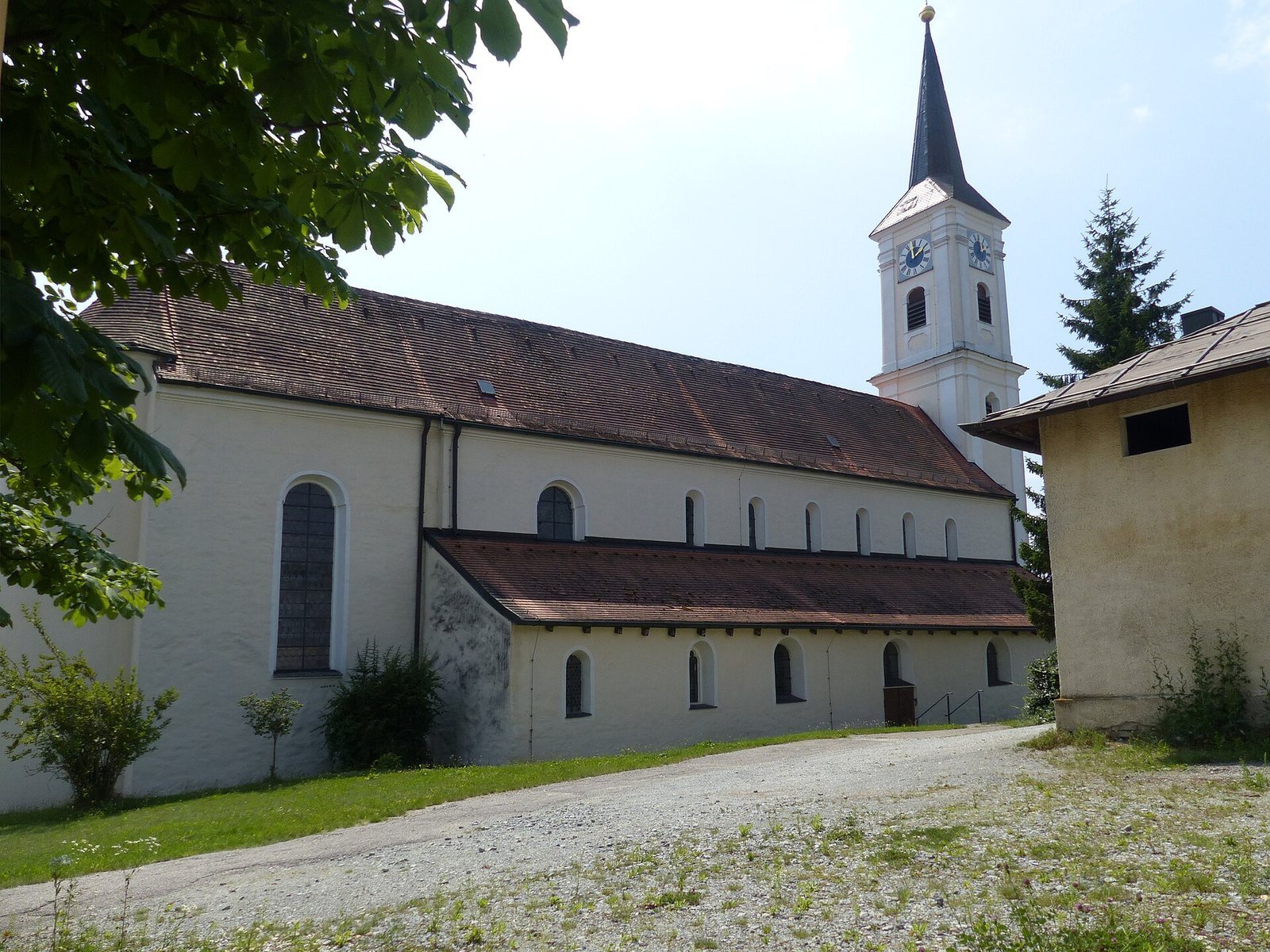
St. Tiburtius is a Roman Catholic parish church in Münster, a constituent locality of Steinach in Germany. It originated as a Late Romanesque basilica and was remodeled in the Baroque style between 1736 and 1738. Formerly the collegiate church of the Pfaffenmünster collegiate foundation, it now belongs to the Kirchroth–Kößnach–Pfaffmünster parish community in the Straubing-Bogen deanery of the Diocese of Regensburg.
From collegiate church to parish church
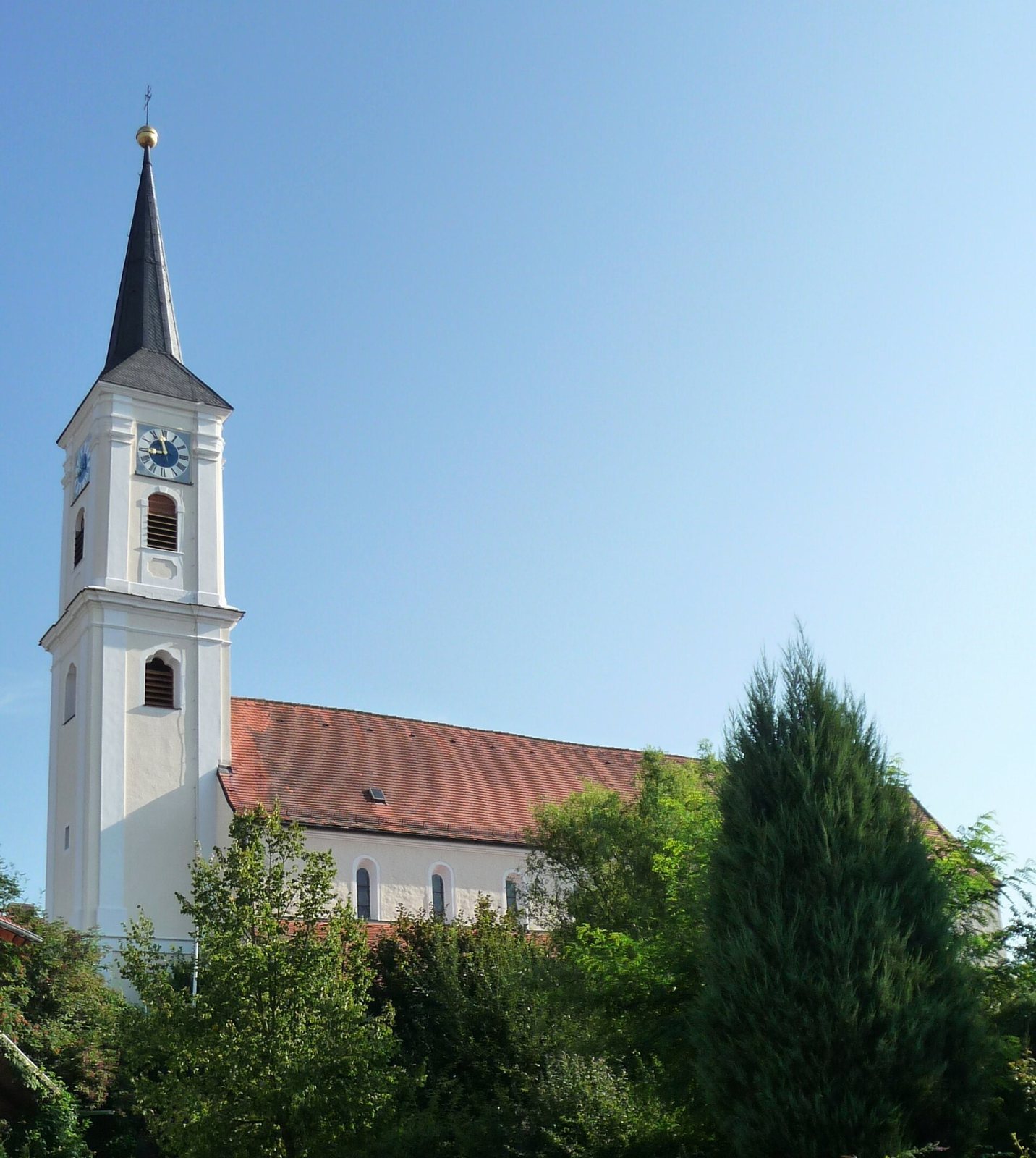
The building’s medieval origin is reflected in its development from a Late Romanesque basilica, a church arranged around a central nave with lower side aisles. Its major transformation took place in the eighteenth century, when the church was remodeled between 1736 and 1738 in the Baroque style. The tower was raised in 1738, and its pointed spire was added in 1865.
The church is dedicated to Saint Tiburtius, a Christian martyr traditionally associated with Rome. Church tradition places his martyrdom there on 11 August 286. The interior’s fresco cycle and high-altarpiece painting present episodes from his conversion, charitable acts, and death, making his life the central subject of the church’s visual program.
The eighteenth-century decoration
Johann Adam Schöpf created the ceiling and wall paintings as well as the high-altarpiece painting. The scenes show Saint Sebastian appearing at the sickbed of Tiburtius’s father, Tiburtius receiving baptism with the later Saint Susanna and other figures, and Tiburtius feeding poor Christians in his father’s palace. Another scene shows him rescuing a workman who has fallen from scaffolding. The final episode presents his decision to remain in Rome during the persecution of Christians associated with the reign of Emperor Diocletian, who ruled the Roman Empire from 284 to 305.
The high altar was installed around 1740, while the side altars at the chancel arch probably belong to the same period. The side-aisle altars were made around 1765 by Mathias Obermayr, an eighteenth-century sculptor associated with several works in the church. In 1999, Christoph Kaps constructed a new organ within the existing eighteenth-century case. The instrument replaced one built by Ludwig Edenhofer in 1908.
Remains
Building layout and painted interior
Nave, aisles, and choir
The church has a central nave flanked by two side aisles, a square choir, and a semicircular apse at the eastern end. A square bell tower stands in front of the west wall of the central nave. The nave has a flat ceiling, while the crossing before the choir is covered by a cloister vault. Five arcades on each side divide the central nave from the aisles, and paintings above them represent the twelve Apostles.
Fresco cycle
Two ceiling paintings and two wall paintings by Johann Adam Schöpf form a cycle devoted to Saint Tiburtius. Together they show his encounter with Saint Sebastian, his baptism, his care for poor Christians, the rescue of a falling workman, and his choice to stay in Rome during the persecution. The paintings connect the church’s architectural interior with the episodes associated with its patron saint.
High altar and chancel-arch altars
High altar
The approximately 1.50-metre-wide and 2.25-metre-high high-altarpiece painting depicts the first part of Tiburtius’s martyrdom. In the associated legend, he chose to walk barefoot across glowing coals instead of burning incense to pagan gods. After surviving unharmed and mocking his persecutors, he was ordered to be beheaded. Schöpf signed the work unusually by placing “J.A. Schöpf” on the collar of a dog in the lower-left part of the scene.
The upper section of the high altar contains the Eye of God within a triangle surrounded by rays and angels. Sculptures of Saint Roch of Montpellier and Saint Wendelin stand on either side of the altar.
Chancel-arch altars
The northern side altar at the chancel arch contains a carved statue of the Virgin Mary dating from the late fifteenth century. The corresponding altar on the right holds a statue of Saint Sebastian.
Side-aisle altars and sculptures
Right side-aisle altar
The right side-aisle altar contains an older Crucifix, a mourning Virgin Mary, and Saint John. These terracotta figures date from the first half of the fifteenth century. They are arranged beneath widely stretched stucco drapery against a recessed background with a canopy. Two putti hold the drapery at either side and catch Christ’s blood in chalices placed beneath the wounds in his hands.
Left side-aisle altar
The left, or northern, side-aisle altar contains a Pietà, a representation of the Virgin Mary mourning over the dead Christ, by Mathias Obermayr. Carved from a single piece of limewood, the group stands on an elaborately decorated pedestal. The dead Christ lies in Mary’s lap, while she raises her left arm and looks upward with a lamenting and questioning expression.
Arcade sculptures
A Madonna and Child in the front-left arcade and a representation of Christ at Rest in the front-right arcade are probably also works by Mathias Obermayr. The Madonna stands in a Rococo-style case, wears a crown and a short silver-colored veil, and carries the infant Jesus on her right arm. Christ at Rest, also known in art as “Christ in Distress,” shows Christ seated on a stone in exhaustion, wearing a crown of thorns and a purple mantle with his head supported by his right hand.
Tower and organ
Bell tower
The square-plan tower stands before the western end of the central nave. It was raised in 1738 and received its pointed spire in 1865. Four bells are housed in the tower, with the notes F, G, B-flat, and C.
Organ
The organ has fourteen stops distributed across two manuals and a pedal. Its case dates from the eighteenth century, while the present instrument was constructed by Christoph Kaps in 1999 during a restoration.