Pfarrkirche Gurnitz: A Baroque Parish Church in Austria
Site at a Glance
- Rating
- 4.7
- Popularity
- Very Low
- Country
- Austria
- Primary era
- Early Modern
- Eras represented
- Medieval, Early Modern
- Civilizations
- Habsburg, Holy Roman Empire
- Site type
- Religious
- Remains
- Church
On this page16 sections
History
Pfarrkirche Gurnitz is a Roman Catholic parish church in Ebenthal, Austria, dedicated to Saint Martin of Tours. The present church is a north-oriented Baroque building dating from 1773, while the dedication at Gurnitz reaches back to 1216 and a parish priest was recorded there in 1219. Its history extends further into the Carolingian period, when Christian institutions expanded across Central Europe.
Early Christian and Medieval Foundations
The church belongs to a tradition associated with the widespread medieval cult of Saint Martin, a fourth-century Christian bishop. The dedication at Gurnitz is regarded as the oldest Saint Martin dedication in Carinthia and originated as a private church during the Carolingian period.
Before 1240, an Augustinian collegiate chapter was established at Gurnitz. This was a community of clergy organized according to the rule associated with Saint Augustine. Its head, the provost, served at Gurnitz from 1240 to 1245. The church was held under the feudal lordship of the Archdiocese of Salzburg.
Later History and Parish Identity
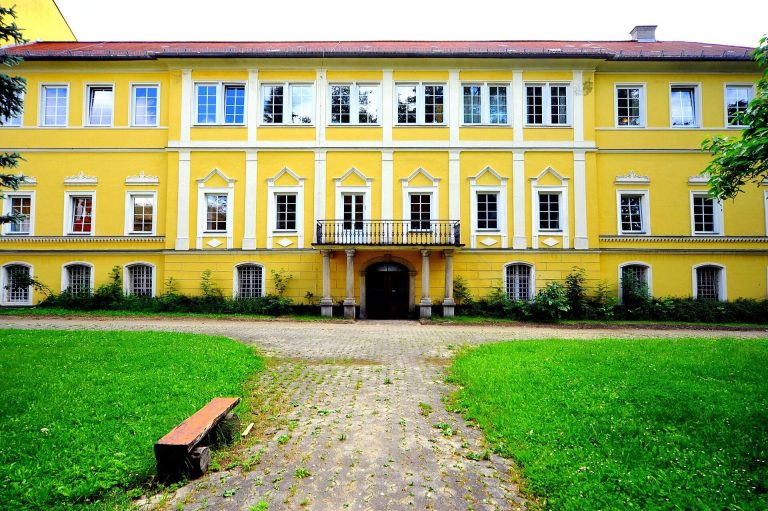
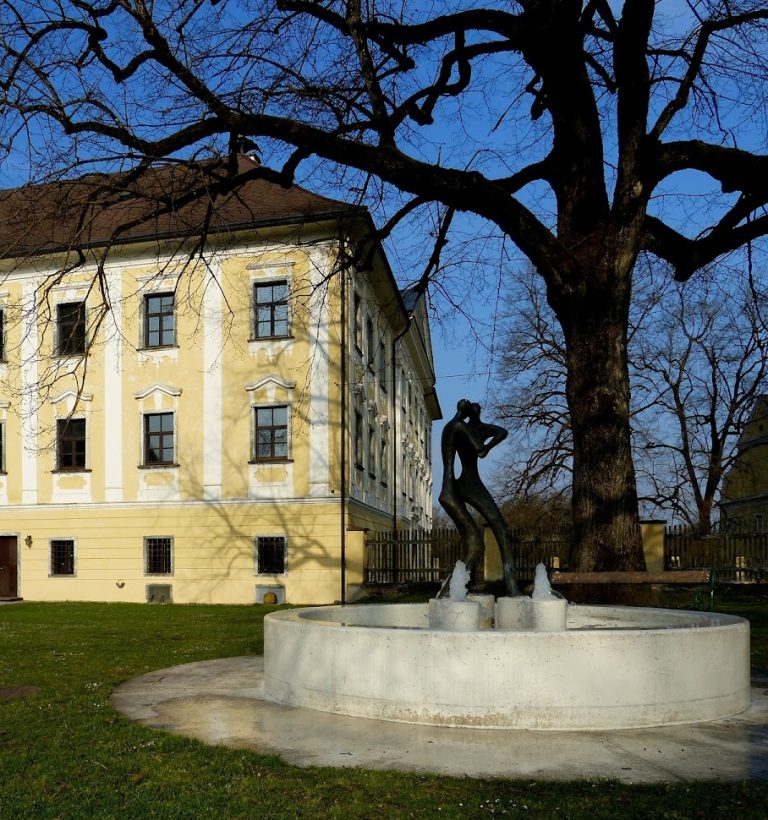
Hungarian forces plundered the church in 1482. Later rebuilding gave the parish church its present Baroque form in 1773. The new building was connected on its eastern side to the former provost’s building, which is now the rectory.
The parish was officially Slovenian until 1938 and is now officially German-speaking. It belongs to the bilingual Deanery of Tainach/Tinje in the Diocese of Gurk-Klagenfurt. A deanery is an administrative grouping of parishes within a diocese, the territorial division of the Roman Catholic Church governed by a bishop.
Twentieth-Century Memory and Conservation
A memorial beside the church, the Slovenian cultural center, and the rectory commemorates 220 families and 1,000 Slovenian victims deported on 14 and 15 April 1942 for forced labor in Nazi Germany. The church exterior was restored in 1986, and the parish church is protected as a monument.
Remains
Church Setting and Medieval Elements
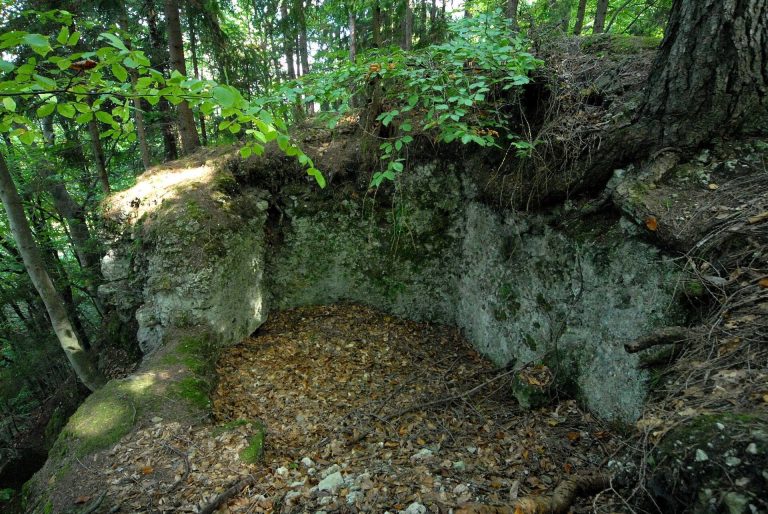
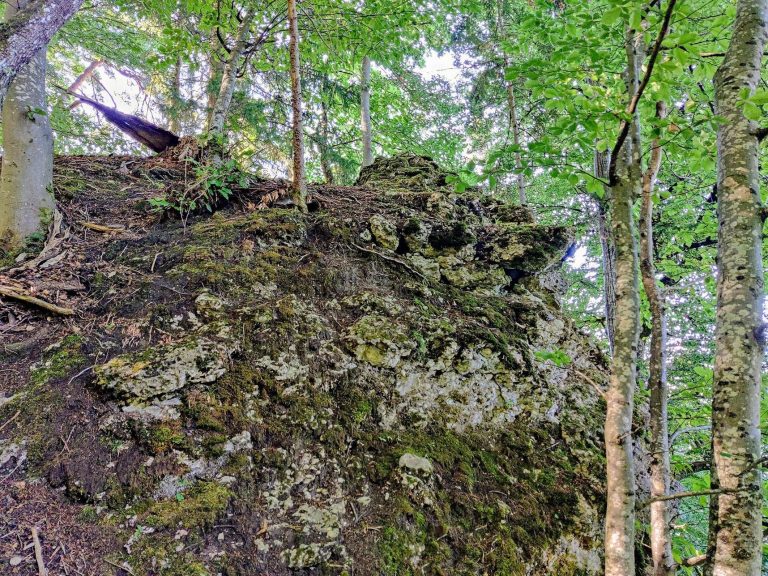
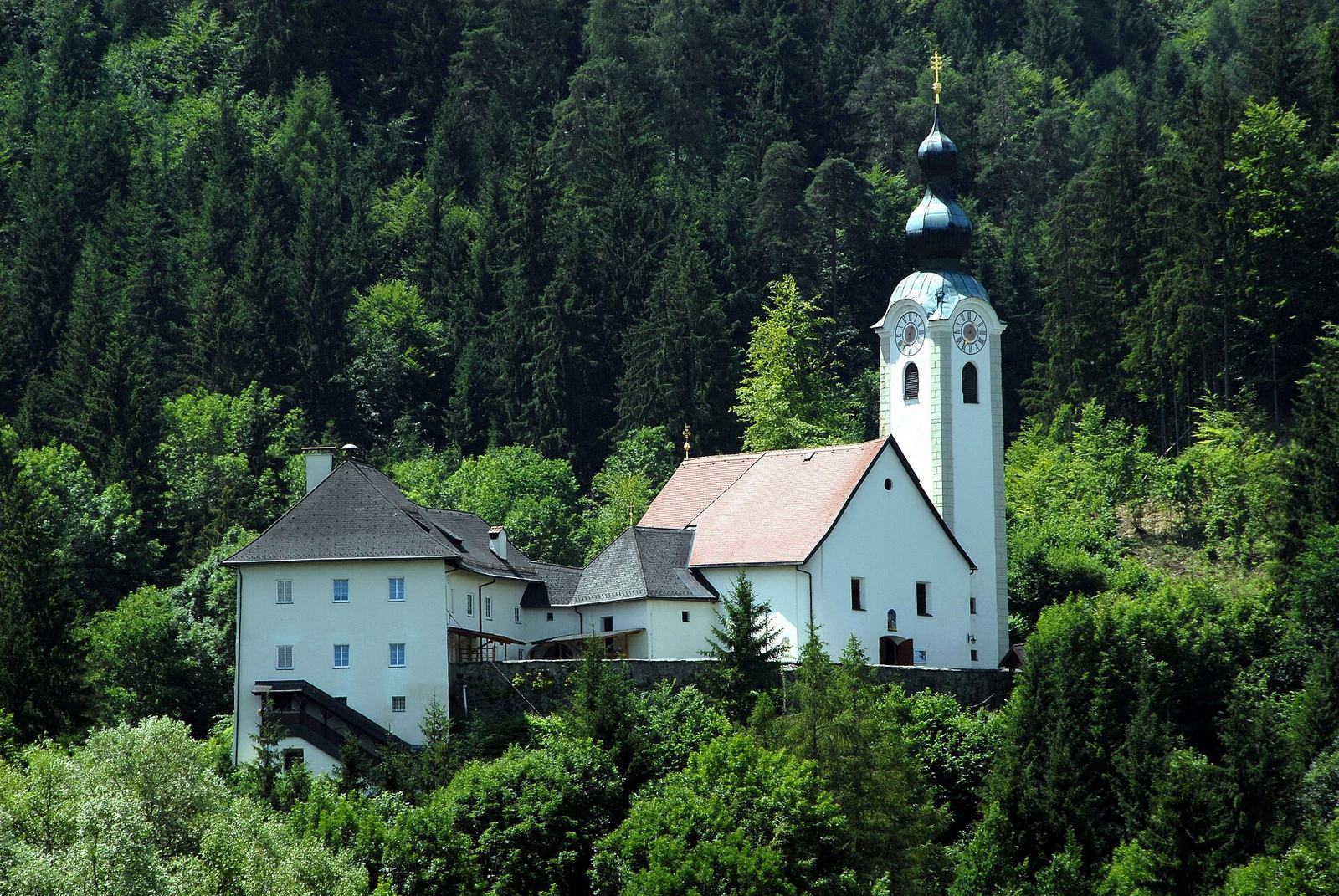
Pfarrkirche Gurnitz stands on a rocky plateau on the northern slope of the Sattnitz, a mountain ridge in Carinthia. The north-oriented church is connected on its east side to the former provost’s building, now the rectory. Its single-nave interior and chancel were arranged to create a unified Baroque spatial effect, while parts of the medieval predecessor survive in the south tower and the Nikolaus Chapel.
South Tower and Nikolaus Chapel
The slender south tower has Baroque rusticated corner blocks and a delicate onion dome. Its lower section belongs to the medieval predecessor church. The Nikolaus Chapel, attached to the south side of the tower, also survives from that earlier building. It contains fourteenth-century bells, including one bearing the name Ignaz Lorenz Röder and the date 1714.
A tall pointed arch in the east wall of the nave probably formed the earlier triumphal arch, the arch separating the nave from the chancel. It indicates that the predecessor church was oriented east and had a gabled roof. The Nikolaus Chapel has an altar from around 1780, with an altarpiece of Saint Nicholas and busts of two Franciscan friars set on reliquary bases, supports for preserving religious relics.
Portal and Exterior Decoration
The west portal retains a Gothic door lock. Above it is a fresco of Saint Martin painted by Karl Bauer in 1947. The exterior was restored in 1986, preserving the visible relationship between the Baroque church and its medieval components.
Baroque Interior
Nave, Chancel, and Gallery
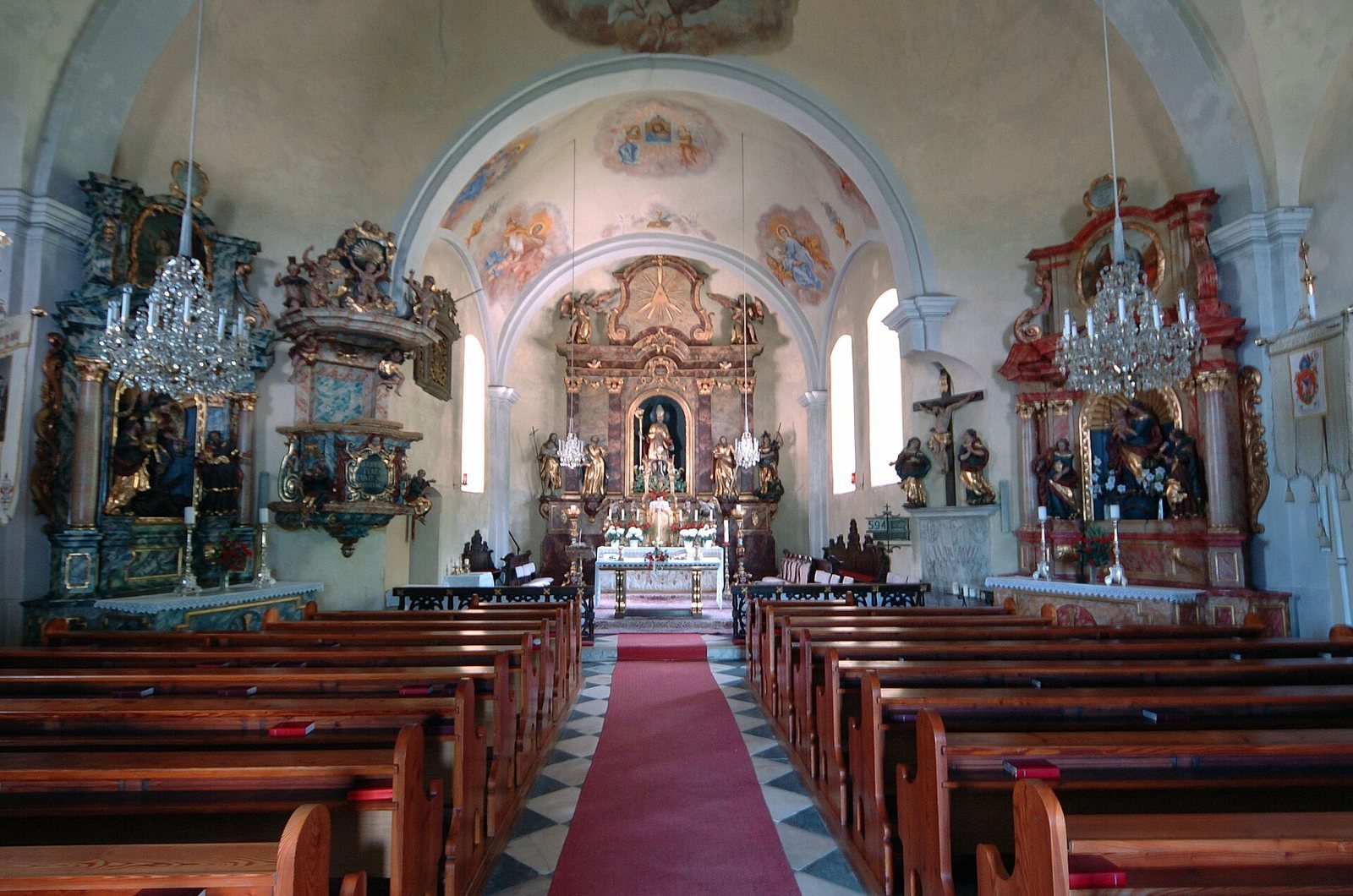
The nave has a barrel vault with cross-ribs and belt arches resting on stepped pilasters. The chancel is closed by a shallow arch and has a cloister vault over a square bay. The triumphal arch has offset cornices. At the west end, the organ gallery rests on two Tuscan columns and has three basket-arch arcades.
Baroque frescoes in the chancel vault show the Holy Head, a devotional representation of Christ’s head or face, surrounded by angels, together with the Four Evangelists. A depiction of the Holy Trinity is placed above the triumphal arch.
High Altar and Side Altars
The flat high altar was made in 1782 and has an architectural superstructure. Its figures represent Saint Martin, John the Baptist, Saints Peter and Paul, and Saint George. Two large late-Baroque wooden standing candelabra flank the altar.
The left side altar dates from 1722. It carries figures of Saint Michael, an apostle, and Saint James, while its upper section depicts the Baptism of Christ. The right side altar dates from 1724 and has a figure of the Immaculate Virgin before a shell-crowned niche, accompanied by Saints Barbara and Catherine. Its upper painting, Saint Anne with the Virgin and Child, was painted by Karl Bauer in 1947.
Pulpit, Crucifixion Group, and Paintings
A Baroque Crucifixion group from around 1740 stands to the left of the right side altar. Beside it is the gravestone of the family of Georg Sigismund von Neuhaus, who died in 1600. Martin Pacobello made the gravestone in 1604.
The pulpit dates from the second quarter of the eighteenth century and is attributed to Christoph Rudolph. Angels on its sounding board, the canopy above a pulpit that projects the speaker’s voice, symbolize the continents. On the west wall of the nave hangs a 1616 painting of the Coronation of the Virgin with a coat of arms.
Carved twentieth-century figures of Saint Joseph and the Virgin Mary stand on consoles on the parapet of the organ gallery. They were made in the style of the Gröden Valley, an Alpine region known for its woodcarving tradition.
Cemetery and Memorial Features
Priests’ Gravestones and Common Grave
The cemetery contains historical gravestones of Slovenian priests and provosts who served at Gurnitz. Several carry Slovenian inscriptions. A common grave at the entrance contains the remains of three Slovenian priests.
The cemetery chapel contains gravestones for Janez Brabenec, Jakob Wang, Tomaž Inzko, and Janez Sirnik, as well as two further Slovenian gravestones. Outside the chapel stands a gravestone for Benedikt Mitterholzer, who died in 1650, with a relief of the Mount of Olives.
Cemetery Chapel
The cemetery chapel is richly decorated with frescoes that are probably Baroque and were renewed in the Neo-Raphaelite style, a nineteenth-century movement inspired by the detailed manner of early Italian Renaissance painting. Its lunettes contain now-faded Slovenian inscriptions, and its walls incorporate the gravestones of several Slovenian priests.
Additional Memorial Stones
The west wall of the nave bears a 1722 gravestone for Count Johann Joseph Inzaghi. On the east wall, a memorial stone honors Provost Joseph Aichwalder as builder of the church and contains a 1773 chronogram, an inscription in which selected letters encode a date. A gravestone for Regina Kulmer dates from 1587.