St Mary and Bodfan: A Medieval Church at Llanaber
Site at a Glance
- Rating
- 4.9
- Popularity
- Very Low
- Country
- United Kingdom
- Primary era
- Medieval
- External website
- Open
- Eras represented
- Medieval, Early Modern, Modern
- Civilizations
- Kingdom of Gwynedd
- Site type
- Religious
- Remains
- Church
On this page8 sections
History
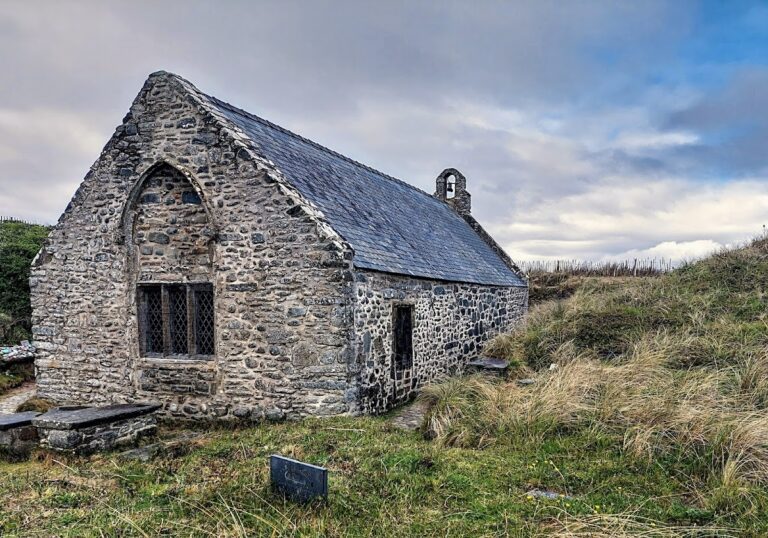
St Mary and Bodfan is a medieval church in the United Kingdom, standing at Llanaber on the coast of Gwynedd. Traditionally associated with the sixth century, it is linked with St Bodfan and his preaching of Christianity. The present building is generally dated to the early thirteenth century and combines Norman architectural character with the Early English style, a medieval form known for pointed arches and narrow lancet windows.
St Bodfan and the early church
Tradition holds that Bodfan founded a wooden church at this site. No part of that building survives, but the dedication preserves the memory of an early Christian foundation. Bodfan was regarded as a son of Helig ap Glannog, who lost his lands when the area now known as Lavan Sands was inundated. Helig and his sons are said to have adopted religious lives afterward. Bodfan was also associated with the foundation of a church at Aber on the Lleyn Peninsula.
The medieval stone church
During the Norman conquest, wooden churches in Wales were replaced by stone buildings. Some churches dedicated to local Welsh saints were also given dedications to Mary or the Apostles, or combined older dedications with these names. Older maps call the church St Bodfan’s, and nearby Bodfan Farm retains the association. The building is now more commonly known as St Mary’s, while its full dedication remains St Mary and Bodfan.
The early thirteenth-century church had an important local benefactor in Hywel ap Meredydd ap Cynan, Lord of Ardudwy. He was a great-grandson of Owain Gwynedd and a near relative of Llewelyn the Great. Ardudwy was a medieval Welsh territorial division known as a commot, smaller than a cantref, and the name remains associated with the regional ecclesiastical organisation around the church.
Restoration and continuing use
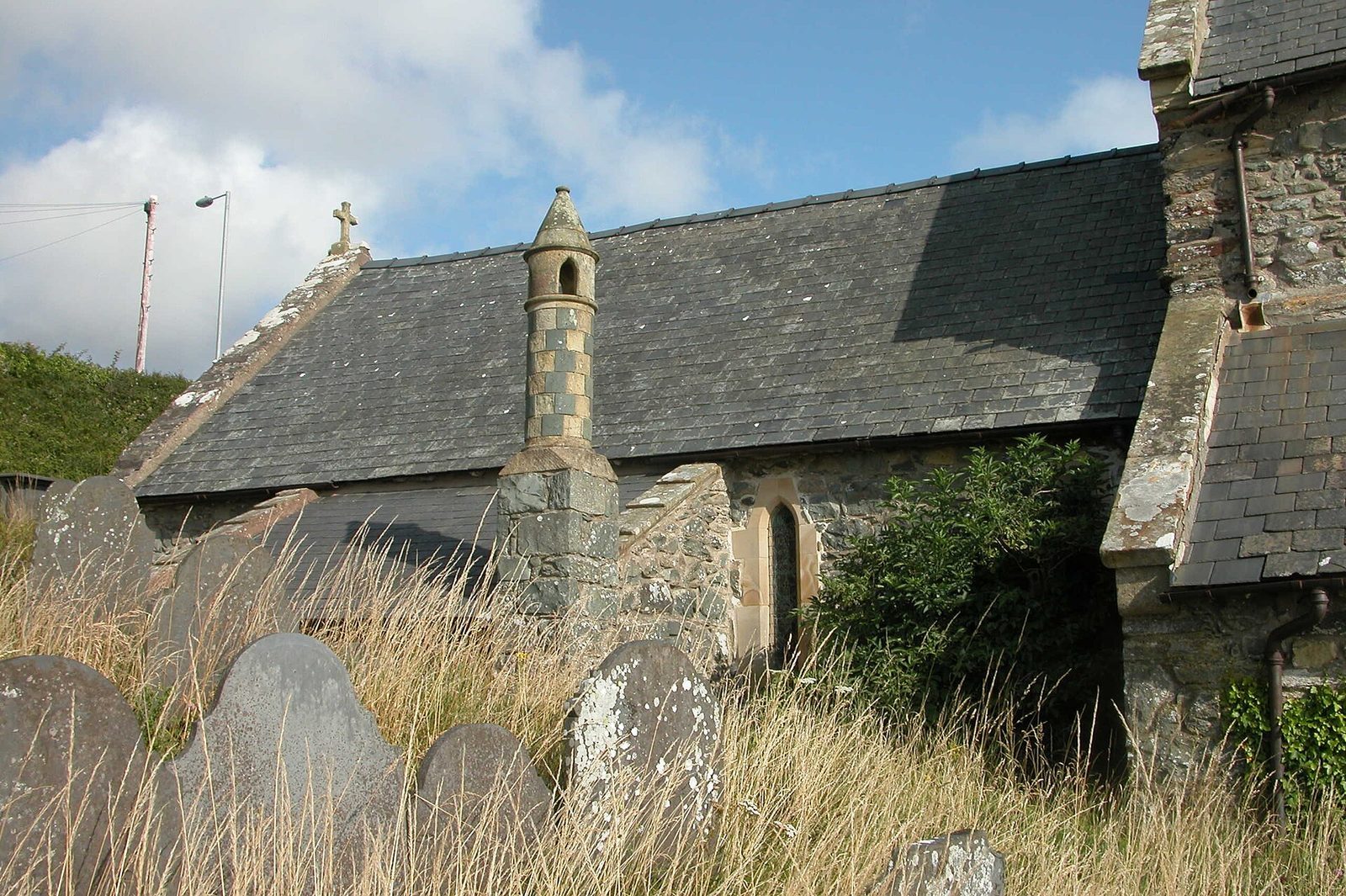
Extensive restoration in 1860 rebuilt the bell turret and most of the west wall, including its heavy buttresses. A small vestry was added on the north side of the chancel, on the site of an earlier building. A second extensive restoration in 1969 treated the roof timbers against woodworm and replaced them where necessary. The seating was renewed and supplemented with surplus pews from St John’s Church, Barmouth.
The Compton two-manual-and-pedal organ was dedicated by the Bishop of Bangor on 1 June 1969, during the re-hallowing of the restored church on the eve of St Bodfan’s feast. The parish registers begin in 1750. St Mary and Bodfan remains an active church of the Church in Wales, within the Diocese of Bangor and the Bro Ardudwy parish, administered in the Meirionydd deanery. Its High Church practice follows a tradition of formal Anglican liturgy, sacramental worship, and continuity with historic church practice.
The churchyard contains twelve Commonwealth war graves, maintained within the commemorative system for Commonwealth service personnel who died in the First or Second World War. They include six First World War Royal Navy seamen, four of them unidentified, three Mercantile Marine seamen, one Royal Welsh Fusiliers officer, one Royal Engineers soldier, and one Second World War Royal Artillery soldier. St Mary and Bodfan was designated a Grade I listed building on 4 March 1951. Grade I is the highest category of listed-building designation in England and Wales.
Remains
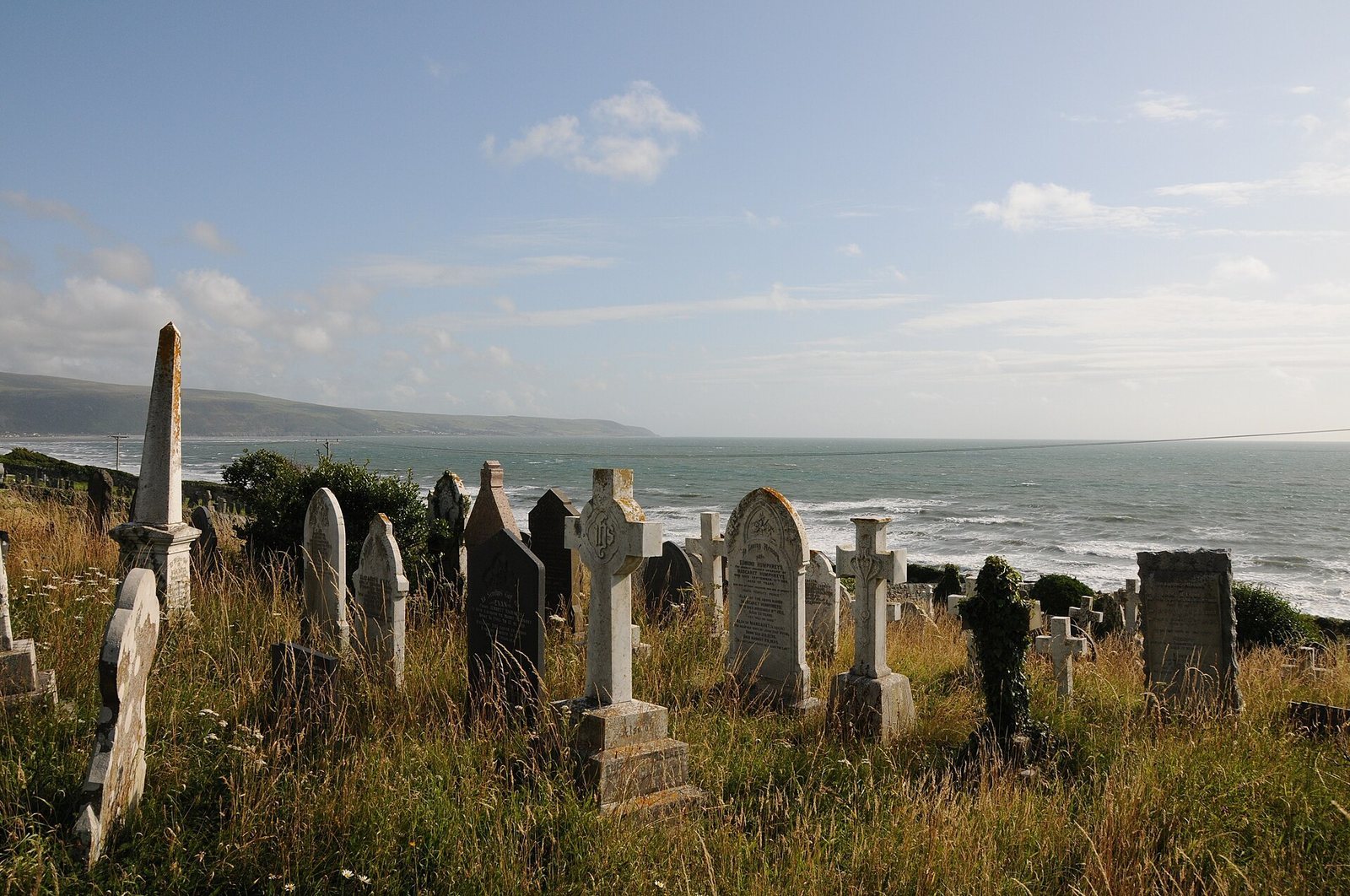
The church stands at the northern edge of Llanaber, directly above the sea, within an overgrown churchyard. Its plan consists of a nave with north and south aisles and a long, narrow chancel. The surviving building brings together heavy Norman masonry and later Early English details, while nineteenth-century restoration forms an important part of its present appearance.
Nave and entrances
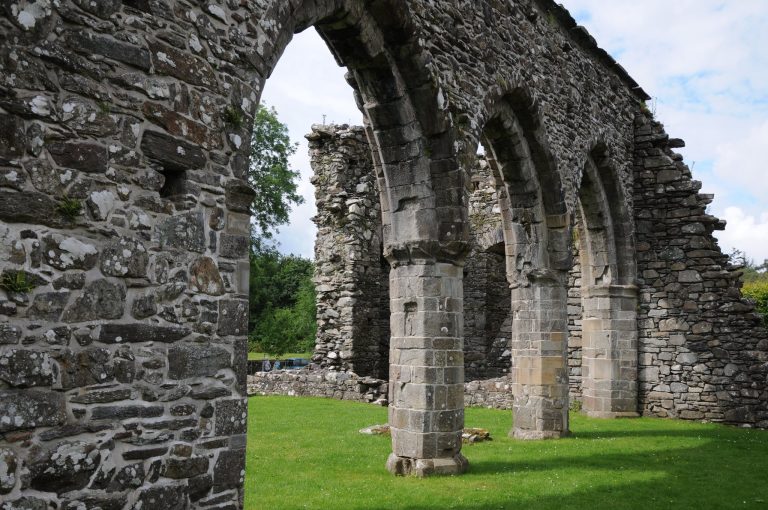
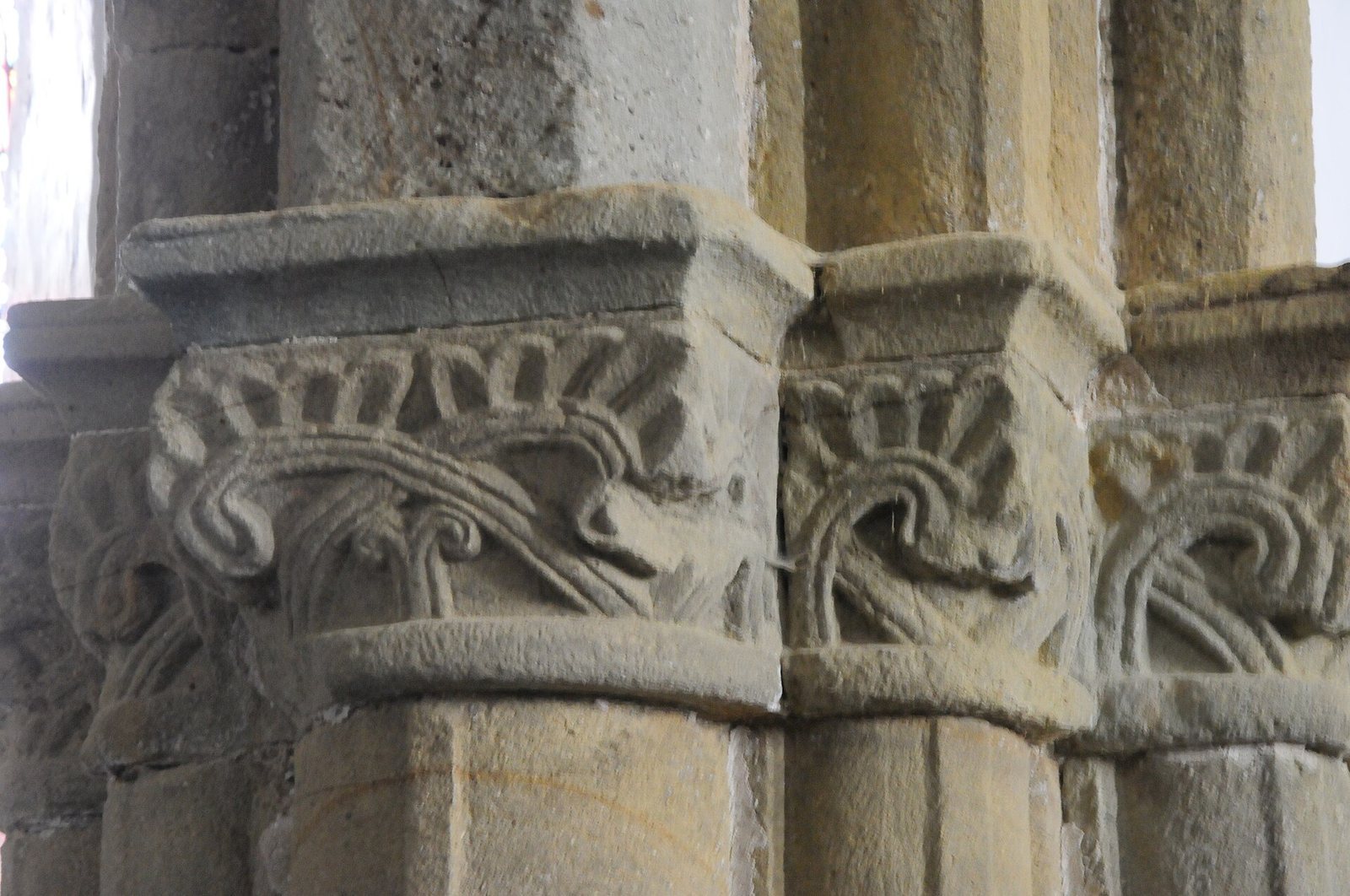
The nave has five arcades on each side. Their piers are Norman in character, with foliated capitals supporting pointed arches. This combination expresses the transition from Norman architecture, the Romanesque style introduced and developed in England and Wales after the Norman conquest, to the Early English manner.
The south porch was rebuilt in the nineteenth century, but its south doorway retains an Early English design in yellow sandstone. The doorway is deeply recessed and has six shafts on each side. The narrower north doorway is simpler. Four Early English lancets, tall narrow pointed windows, pierce each side of the nave’s clerestory, the upper wall above the main arcades. Two long lancets in the west wall belong to the nineteenth-century restoration.
Chancel and roofs
An Early English arch separates the chancel from the nave. Steps rise to the chancel because the church was built on a sloping site. At the east end, a single Early English lancet has very wide splays and shafts within its inner arch.
The principal roof timbers in the nave and chancel date from the sixteenth century. The sanctuary ceiling is panelled and decorated with bosses and carvings picked out in gilt and colour. The chancel roof also has arch-braced collar beams, horizontal or near-horizontal timbers that connect opposing rafters and are supported by curved braces. Most of the window glass and monuments date from the latter part of the nineteenth century. The clerestory glass includes designs of angels playing musical instruments.
Stones and furnishings
Two ancient inscribed stones stand in the north-west corner of the church. They are regarded as fifth-century Christian grave slabs and were placed inside the building during the nineteenth century after being found in the surrounding area. One had previously been used as a footbridge or stepping stone.
One stone carries the inscription “ETERNU(US) ET AETER(NI).” The other, known as the Calixtus Stone, bears “CAELIXTUS MONEDO REGI,” interpreted as “Calixtus, King of Mona.” Mona is the historical name of the island of Anglesey. The inscriptions use Latin with Welsh influence and provide an early Christian connection within the later medieval church.
The font is octagonal. Its bowl is modern and rests on a substantially older shaft. Near the south entrance stands an old churchwarden’s chest carved from a single log. Two wooden collection boxes with handles are dated 1756 and 1774.