Church of Our Lady, Sławno: A Brick Gothic Church in Poland


Site at a Glance
- Rating
- 4.6
- Popularity
- Low
- Country
- Poland
- Primary era
- Medieval
- External website
- Open
- Eras represented
- Medieval
- Civilizations
- Duchy of Pomerania, Holy Roman Empire
- Site type
- Religious
- Remains
- Church
On this page8 sections
History
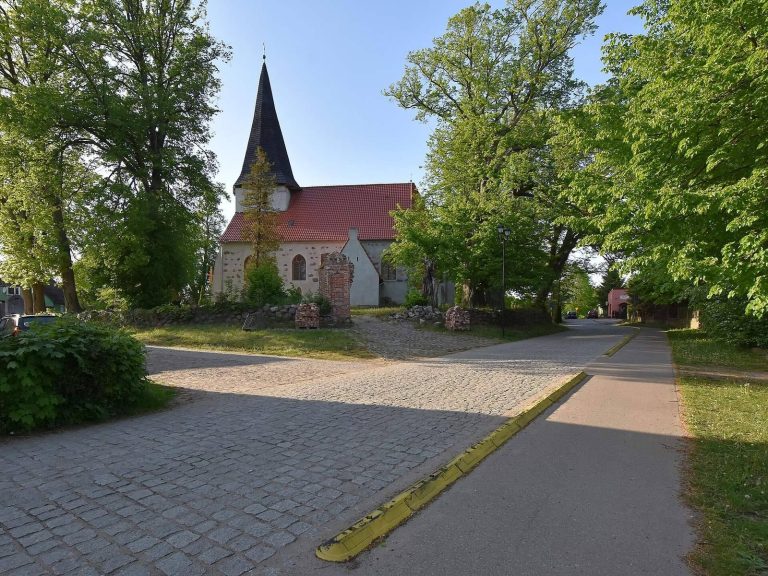
The Church of Our Lady in Sławno, Poland, is the town’s oldest church and largest building. Built in the Brick Gothic style, the northern European form of Gothic architecture using fired brick, it was founded and constructed between 1326 and 1364 by Duchess Zofia, the wife of Barnim IV, Duke of Pomerania. It was initially dedicated to Mary and Saint John the Baptist before receiving its present dedication to the Assumption of the Blessed Virgin Mary, the Catholic doctrine and feast concerning Mary’s bodily taking into heaven.
Foundation and medieval development
The Joannites, also known as the Knights Hospitaller, held patronage over the church during its foundation period. Its furnishings were completed gradually until the second half of the fifteenth century. The church later acquired an early Renaissance altar and altarpiece, a decorated altar structure made during the transition from late medieval Gothic art to Renaissance forms.
Protestant use and wartime destruction
From the sixteenth century, the church served a Protestant congregation. Its history changed violently during the Second World War. After Soviet forces entered Sławno on 7 March 1945, the church was destroyed, and the altar and early Renaissance altarpiece were among the losses.
Postwar reconstruction and Catholic administration
Franciscan friars, members of a Catholic religious order whose ministry includes pastoral work, took responsibility for the church and began its reconstruction in the late 1940s. The rebuilding continued through the postwar period, and the church was consecrated on 16 October 1948. During this work, Father Rafał Rogatti created a Marian-themed triptych, a three-part painted or carved altar composition, while A. Trzeszkowski made the Stations of the Cross. The church returned to Catholic use after the war and is administered by the Catholic parish of the Assumption of the Blessed Virgin Mary, one of two Catholic parishes in Sławno. It was entered in Poland’s heritage register as monument A-127/382 on 13 April 1964.
Remains
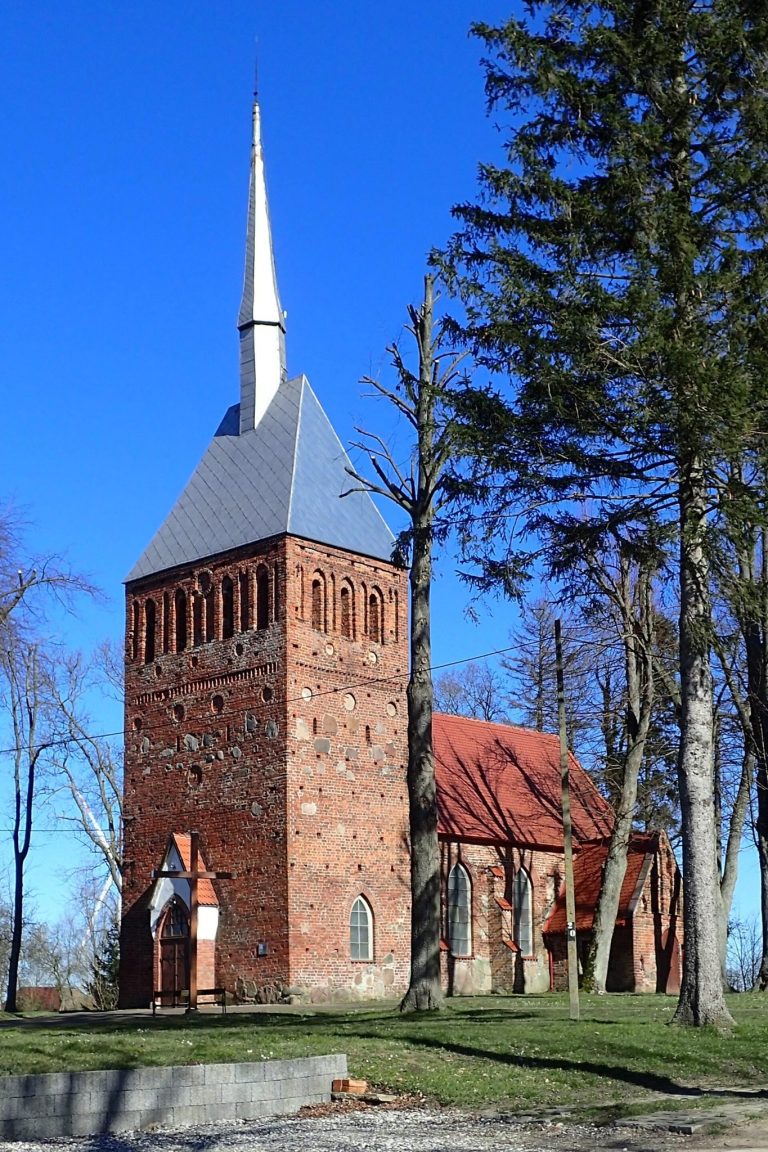
The church follows a rectangular plan with a projecting chancel. A chapel and sacristy were added later, creating a surrounding ring-like arrangement associated with Gothic church architecture. Red brick dominates the building, while stone foundations made from Swedish granite create a contrasting base.
Exterior architecture
The main tower has a hipped roof, a roof with sloping sides rising toward a ridge, and is encircled by a frieze of pointed arches. Its principal decoration consists of blind arcades or panels framed with profiled brick. The northern annex has a divided roof formed by three pointed-arch sections. At the west and south, portals are built from five stepped pointed-arch frames made of specially shaped brick. Beneath the roof, a finely worked ornament incorporates a cross motif. Black elements made from specially fired brick add further contrast to the red-brick facade.
Interior furnishings
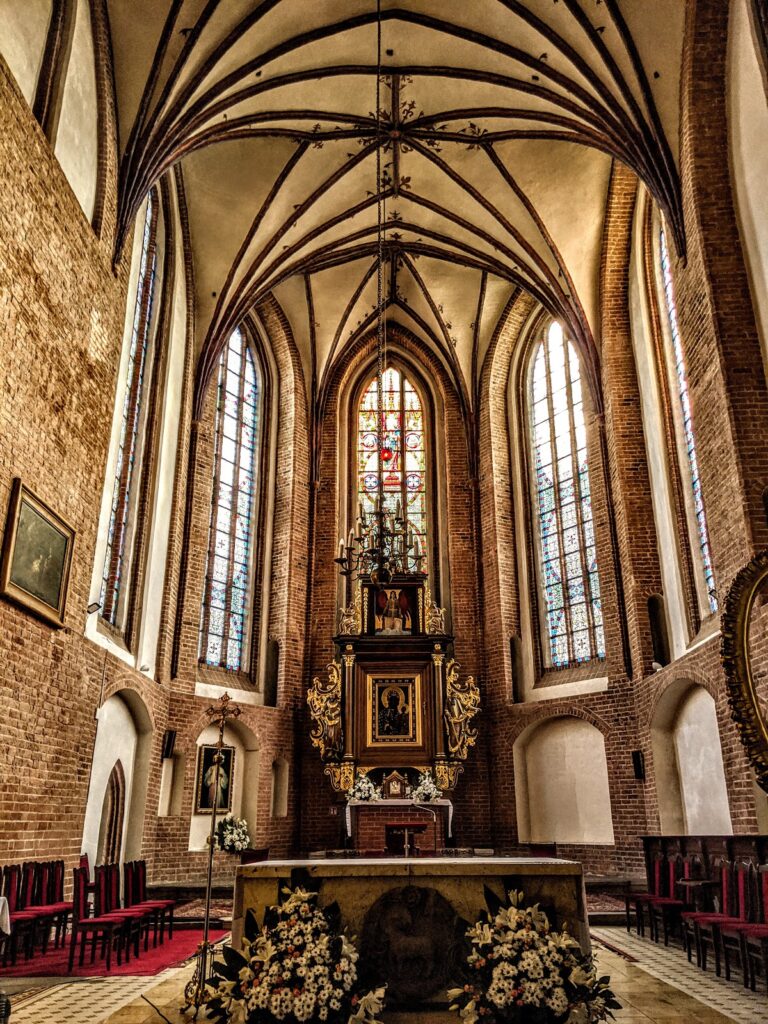
The main altar is a triptych created during the postwar rebuilding, and reliefs form the Stations of the Cross. Other furnishings include a pulpit from the 1950s, an eighteenth-century baptismal font, and a sixteenth-century baptismal basin. The church also contains modern memorial plaques, an organ, three cast-iron bells dating from the 1920s, and an eighteenth-century oil painting of the Circumcision.
Memorials and displaced objects
A monument to Cardinal Stefan Wyszyński, the Polish Catholic cardinal who served as the country’s primate during much of the communist period, stands in front of the church. Two objects from the church are held by the National Museum in Szczecin: an oak wooden crucifix dating from around 1420 and a seventeenth-century epitaph.