Church of the Annunciation in Łącko: A Historic Parish Church in Poland
Site at a Glance
- Rating
- 4.6
- Popularity
- Very Low
- Country
- Poland
- Primary era
- Medieval
- Eras represented
- Medieval, Modern
- Civilizations
- Duchy of Pomerania, Holy Roman Empire, Kingdom of Prussia
- Site type
- Religious
- Remains
- Church
On this page12 sections
History
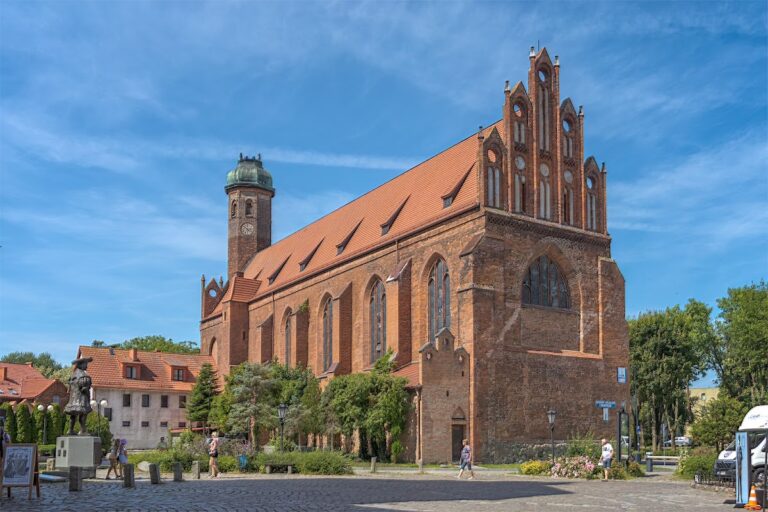
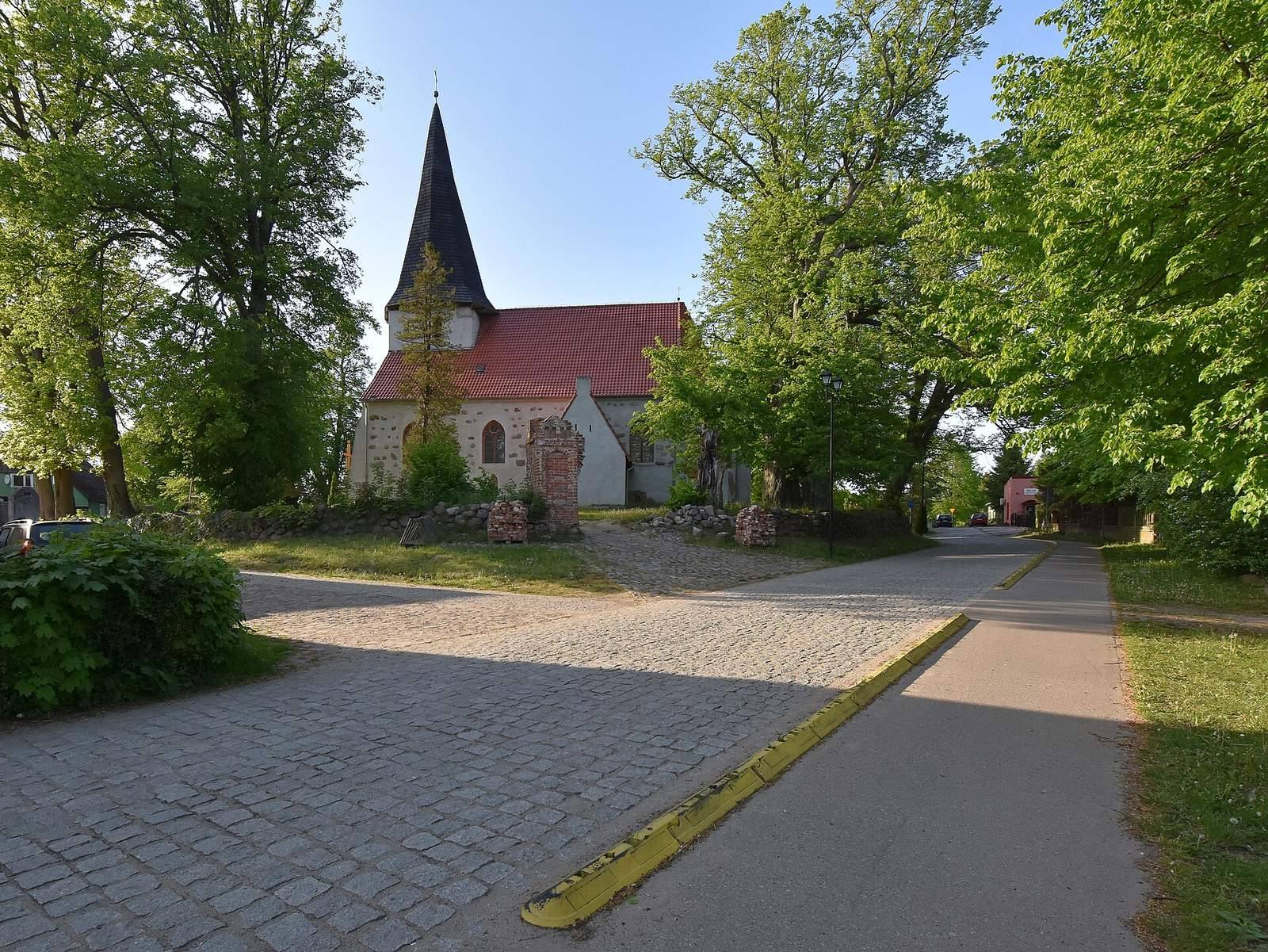
The Church of the Annunciation in Łącko is a village church in Łącko, Poland, probably built in the fifteenth century. It later became the Protestant parish church of Lanzig, serving nine villages around Lake Wicko and forming the religious centre of a substantial local parish.
Medieval origins and Protestant use
The church’s beginnings probably date to the fifteenth century. After the Reformation, it served the Protestant parish of Lanzig, which included Łącko, Korlino, Królewo, Królewice, Naćmierz, Jezierzany, Wszedzień, Wicko, and Wicko Morskie. The parish chronicle, begun after the Reformation, was destroyed by fire in 1945.
Until the end of the Second World War, the parish belonged to the Rügenwalde church district within the Pomeranian church province of the Evangelical Church of the Old Prussian Union. Created in 1817, this Protestant organization united Lutheran and Reformed congregations in the Prussian territories. Evangelical residents of the area are now served by the Koszalin parish in the Pomerania-Greater Poland Diocese of the Evangelical-Augsburg Church in Poland.
Renovation and wartime destruction
A major renovation took place between 1855 and 1860. The church was severely devastated during the Soviet occupation in 1945. After the war, the former Protestant church was transferred to the Roman Catholic Church, and Łącko continued as a parish from 1946. Its later parish included a filial church at Rusinowo, a subordinate church served as part of the larger parish, and later Jarosławiec after that settlement received its own church.
During the postwar years, the building was partly repaired. On 1 June 1951, it was reconsecrated as the Church of the Annunciation of the Blessed Virgin Mary. The altar was restored in the final years of the twentieth century. The parish now belongs to the Ustka deanery of the Koszalin-Kołobrzeg Diocese.
Memorials and older traditions
A bilingual German-Polish plaque commemorating deceased members of the former Evangelical-Lutheran parish of Lanzig was installed and dedicated in October 1998, with former German residents and current Polish residents taking part. A further memorial area in the churchyard commemorates those who died during flight, deportation, and expulsion, the fallen of the war, and earlier generations buried there. Its memorial stone was dedicated during an ecumenical service on 2 October 2002, and its inscription also remembers the 636 families of the former Lanzig parish.
The church formerly held a thorn crown reputedly brought back by Duke Bogislaw X after his pilgrimage to Jerusalem. Bogislaw X was a late-medieval Duke of Pomerania who ruled much of the region in the late fifteenth and early sixteenth centuries. A report on the pilgrimage, written in 1822, was also once kept in the church.
Remains
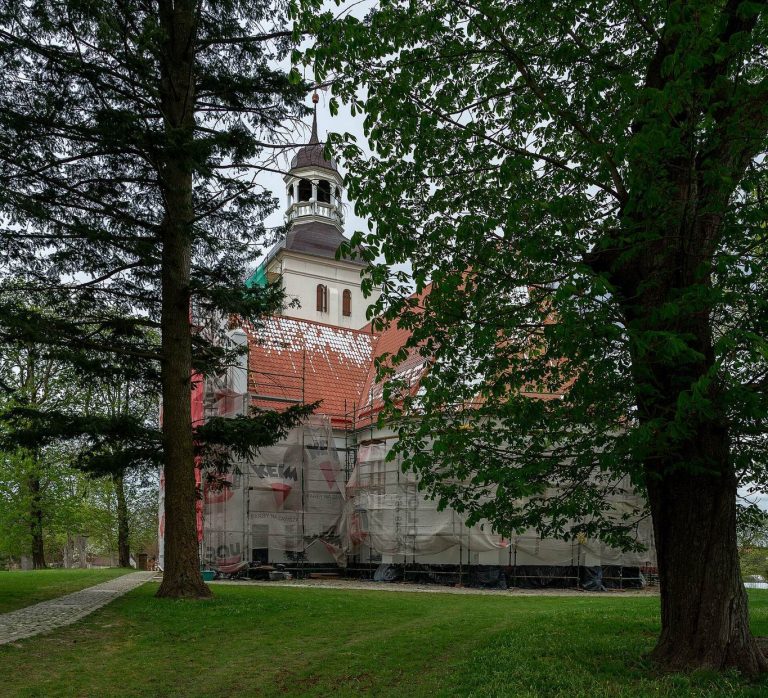
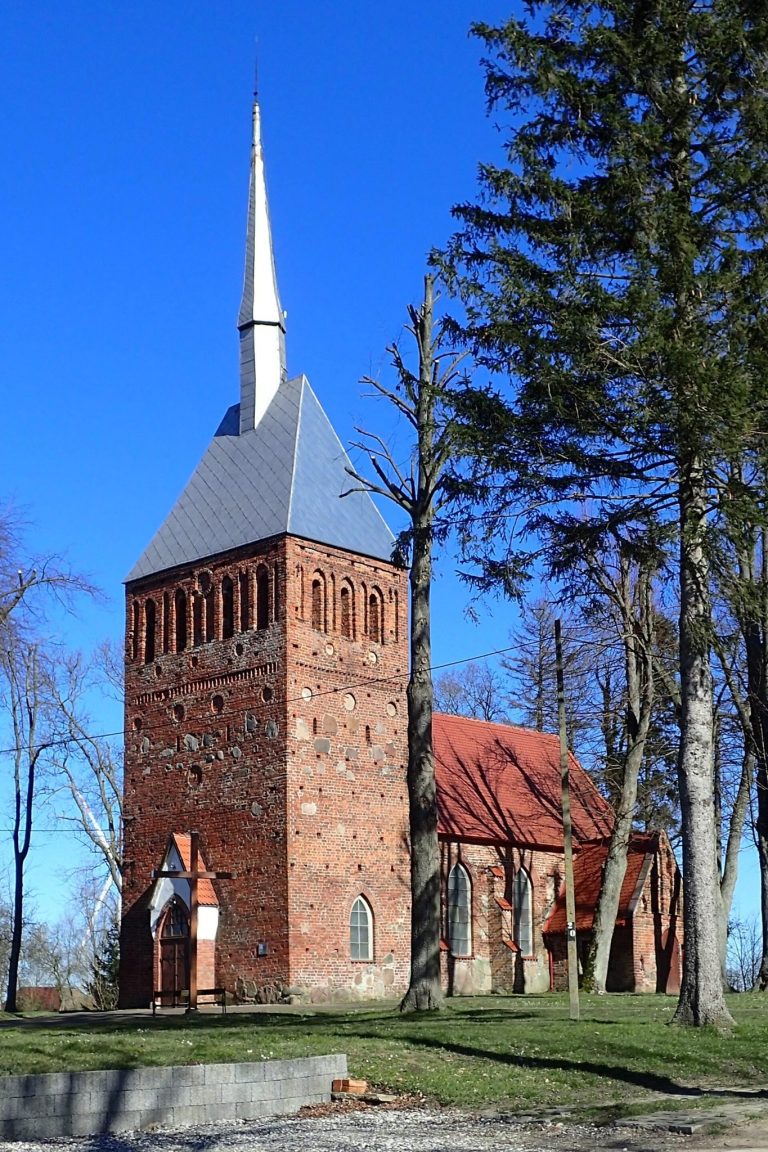
The surviving building is a three-aisled hall church on fieldstone foundations. In a hall church, the nave and side aisles are approximately the same height, rather than having a raised central nave. The church is constructed mainly of brick, with fieldstones incorporated into its exterior walls.
Church building and churchyard
Structure
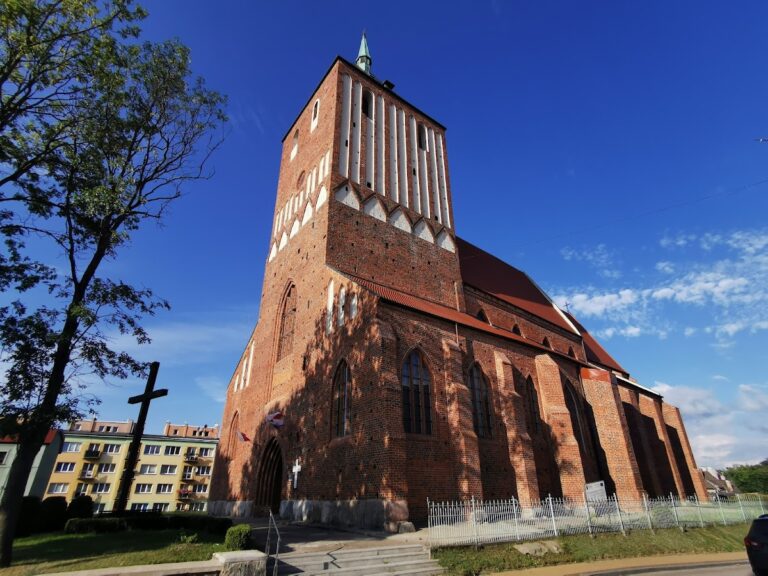
The interior is covered by a timber ceiling, and the supporting pillars have octagonal sections. The tower opens into the church through a large pointed arch and is crowned by an octagonal pointed spire. A south-side extension has a flat-arched barrel vault, a continuous curved vault extending along the length of the space. The windows were remodelled with pointed arches during the renovation of 1855 to 1860.
Entrance and grounds
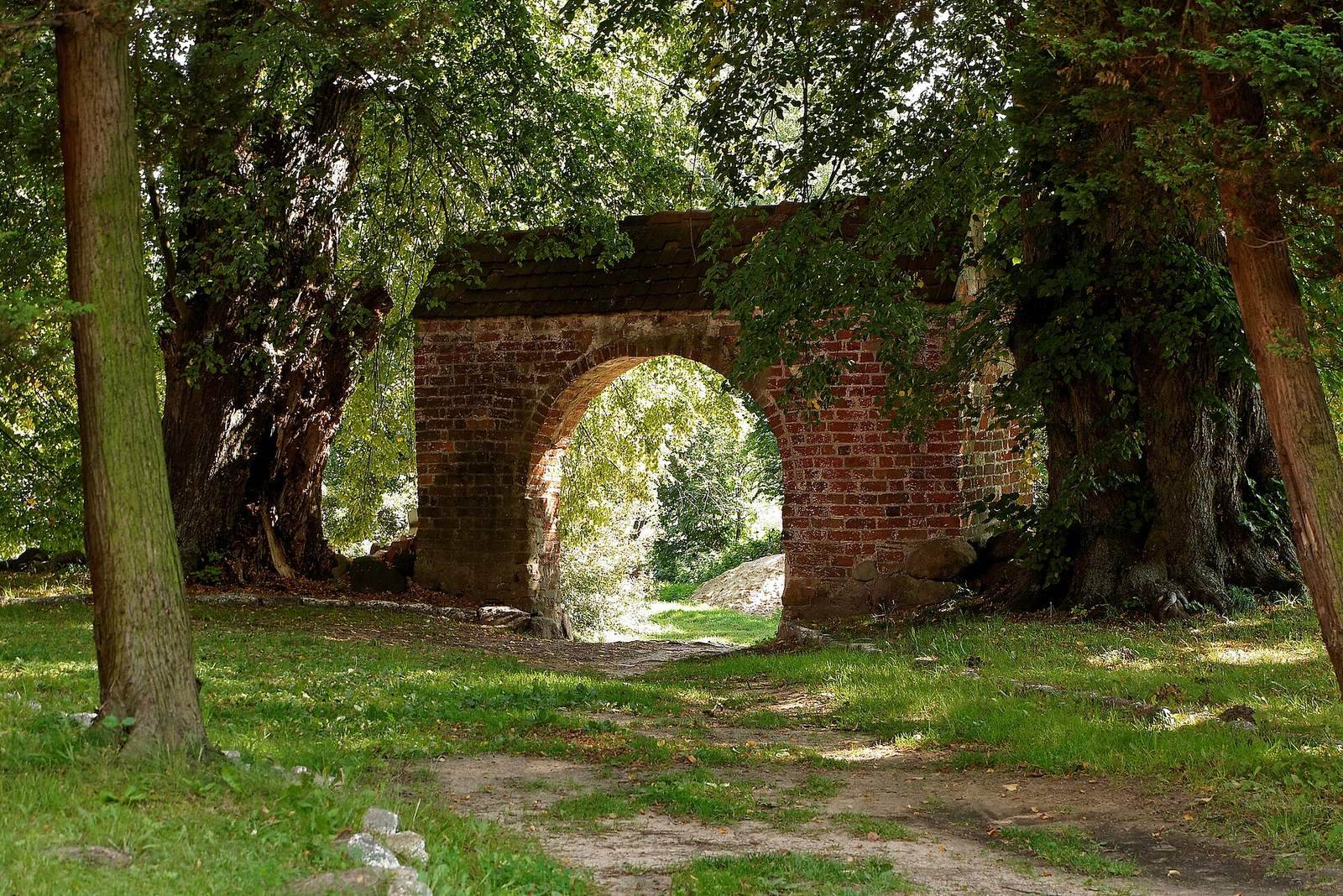
Entry to the churchyard is through a substantial round-arched portal with a circular panel. A spreading lime tree formerly stood over the cemetery. The churchyard also contains the memorial area dedicated to the former parish families, the war dead, those who died during flight, deportation, and expulsion, and earlier generations buried there.
Interior furnishings and objects
Altar
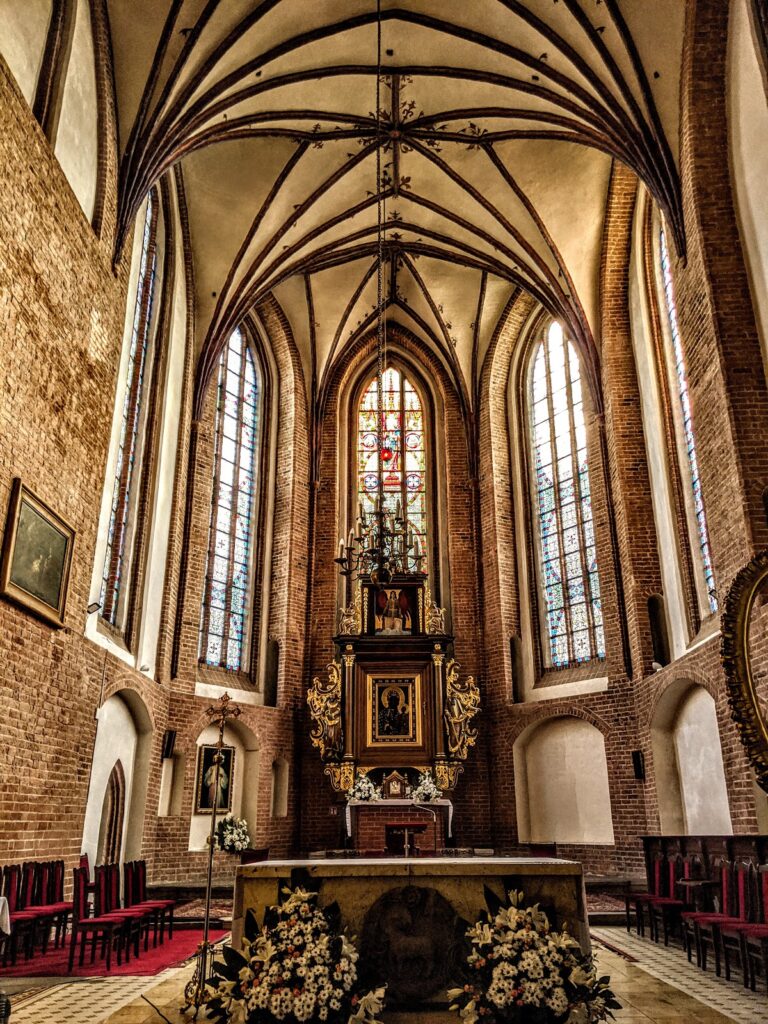
Until 1945, the altar consisted of a masonry table with a vaulted interior. Its Baroque superstructure includes a representation of the Last Supper, with Christ’s head depicted in an oriental manner, an Ecce Homo image showing Christ as “Behold the Man” in reference to the Passion narrative, and a representation of the Annunciation. A ship model formerly hung in front of the altar.
Crucifix
A large crucifix formerly hung on the south wall. Its arms were decorated with crockets, small hooked or leaflike projections used in Gothic ornament, while the four ends of the cross carried the symbols of the Evangelists. The crucifix probably dates from the fifteenth century.
Baptismal font and bells
The baptismal font was made of sand-lime stone. Before 1945, two bells hung in the tower and carried inscriptions in Gothic minuscule, a medieval script. One bell was surrendered during the Second World War but escaped being melted down for ammunition. Since 1952, it has been kept in the church at Heidberg in the Oberbergischer Kreis.