Sint-Joriskerk, Bredevoort: A Late-Gothic Church in the Netherlands


Site at a Glance
- Rating
- 4.7
- Popularity
- Very Low
- Country
- Netherlands
- Primary era
- Early Modern
- External website
- Open
- Eras represented
- Medieval, Early Modern, Modern
- Civilizations
- Dutch, Holy Roman Empire
- Site type
- Religious
- Remains
- Church
On this page15 sections
History
Medieval origins
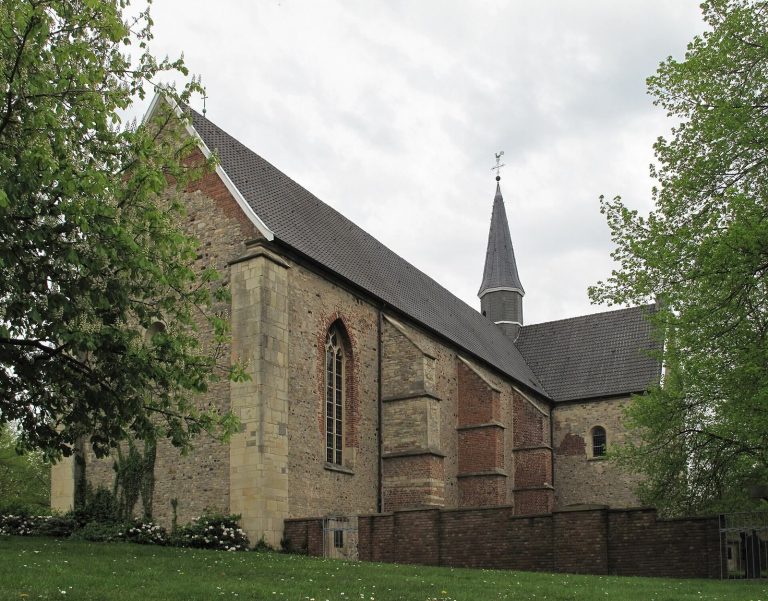
Sint-Joriskerk, also called the Grote Kerk, is a late-Gothic brick church in Bredevoort, Netherlands, whose oldest foundations date from 1316. The building may originally have served as a castle chapel. Its name comes from Saint George, the Christian saint traditionally associated with defeating a dragon and regarded as the patron saint of Bredevoort’s borgmannen, members of the local landed or castle-holding elite.
Siege and rebuilding
During the 1597 Siege of Bredevoort, led by Prince Maurice, the older and larger church burned completely and its vaults collapsed. Prince Maurice was Maurice of Nassau, a Dutch military commander and stadtholder during the Eighty Years’ War, the conflict in which the Dutch provinces fought against Spanish rule. The Reformation, the sixteenth-century religious movement that led to the establishment of Protestant churches in western Europe, began in Bredevoort while the church lay in ruins.
In 1598, the inhabitants petitioned the Classis of Zutphen for help rebuilding their chapel. The Classis was a regional governing body of the Reformed Church. Work on a new, smaller Gothic church began in 1599. The building was substantially enlarged in 1639, when the northern side was opened and the wall was rebuilt several metres farther north with the same bricks. A farmers’ loft and an organ loft were added later.
Seventeenth- and eighteenth-century changes
The church suffered major damage in the 1646 Gunpowder Tower Disaster. Wilhelm van Haersolte to Elsen donated the fire bell made in 1644. He and most of his children died in the disaster, while only Anthony van Haersolte survived. A church organist was recorded in Bredevoort by 1662, and the church later received a Naber organ in 1834.
Captain Satink donated the Rococo pulpit in 1762, together with his family coat of arms. Rococo was an ornate eighteenth-century artistic and architectural style. He also donated a copper lectern bearing the coat of arms of the Holy Roman Empire. Renovations before and during the French period included a wooden vault, a Bentheim-stone floor, new pews, and a raised floor. The French period refers to the era of French political and military influence in the Netherlands around the turn of the nineteenth century. The pews were painted white in 1832.
Nineteenth-century alterations
The church continued to change during the nineteenth century. The organ loft received new panelling in 1834, and a catechism room was added in 1858 with a donation of 200 guilders from King Willem III. An annex extended the catechism room in 1889. Maintenance followed in 1894, and a thorough renovation took place in 1896.
The walls were found to be in poor condition in 1868 and were replastered. The plaster was removed during the 1949 restoration. The tower was repaired in 1869, while its spire was renewed in 1920. Other changes included the replacement of five earlier stained-glass windows with cast-iron windows in 1882 and the installation of two additional cast-iron windows in the farmers’ loft in 1885. The roof slate was also replaced in 1885, and the tower’s Saint George weather vane was regilded with gold leaf.
Restoration and protection
After the Second World War, the church underwent a major restoration because it was in danger of collapse. It returned to use in 1967, the year in which clock faces with night lighting were installed. A further restoration in 2006 repaired the gravestones and the natural-stone floor.
The 2006 work also removed and sieved approximately 10 centimetres of upper sand layer. Coins, human remains, stained glass, and a stone associated with the Republic of the Seven United Netherlands were found. Research into the gravestones established that two stones turned face down in the past, probably during the French period, belonged to Bredevoort’s bailiff Wilhelm van Haersolte and his family.
Sint-Joriskerk has been a protected national monument in the Netherlands since 24 January 1967, under monument number 6869. A protected national monument, or Rijksmonument, is a structure officially designated for its cultural or historical significance. The church is owned by the local congregation of the Protestant Church in the Netherlands.
Remains
Building and layout
Sint-Joriskerk survives as a late-Gothic brick building with a 38.30-metre-high tower. Its present form reflects the rebuilding after the 1597 fire, the enlargement of 1639, and later alterations. The interior includes a wooden vault, a Bentheim-stone floor, raised flooring, successive generations of pews, a catechism room, and its later annex. The farmers’ loft and organ loft remain distinctive interior galleries associated with the church’s changing use.
Facade and interior fittings
Front facade
The front facade was remodelled in 1896. The work provided new doors, a rose window, two small facade windows, and an iron cross. The earlier stained-glass windows had already been replaced by cast-iron windows in 1882, while two more cast-iron windows were placed in the farmers’ loft in 1885. The organ loft retains timber panelling dating from the nineteenth-century alterations, and a commemorative stone is now set into its inside wall.
Pulpit and lectern
The Rococo pulpit donated by Captain Satink in 1762 remains part of the interior, bearing his family coat of arms. The copper lectern also survives with the coat of arms of the Holy Roman Empire. Together with the wooden vault, stone floor, raised flooring, and pews, these fittings preserve elements from the church’s successive renovation phases.
Tower, bells, and clock
Saint George weather vane
The tower carries a weather vane depicting Saint George overcoming the dragon rather than the customary weathercock. A weather vane is a device mounted on a building to show wind direction. The Saint George vane expresses the dedication of the church and was regilded with gold leaf in 1885.
Bells and clock mechanism
A monumental bell made in 1454 was lent to the church by Schaer Monastery in 1596. The monastery was destroyed during the 1597 siege, so the bell remained at Sint-Joriskerk. The fire bell dates from 1644, and the ringing bell from 1731. The ringing bell is traditionally sounded daily at 8:00, 12:00, and 21:00. These times formerly marked the opening of the town gates, mealtime, and the closing of the gates.
The church received a new clock mechanism in 1942. The earlier mechanism, made in 1666 and also lent by Schaer Monastery in 1596 to replace a defective mechanism, is displayed at Frerikshuus Museum in Aalten. A small carillon, a set of tuned bells arranged for musical performance, was reinstalled in 1980 and consists of three bells.
Gravestones and archaeological finds
The 2006 restoration repaired the gravestones and natural-stone floor. Sieving the upper sand layer produced coins, human remains, stained glass, and a stone associated with the Republic of the Seven United Netherlands. Two gravestones that had been turned face down, probably during the French period, were identified as those of bailiff Wilhelm van Haersolte and his family.