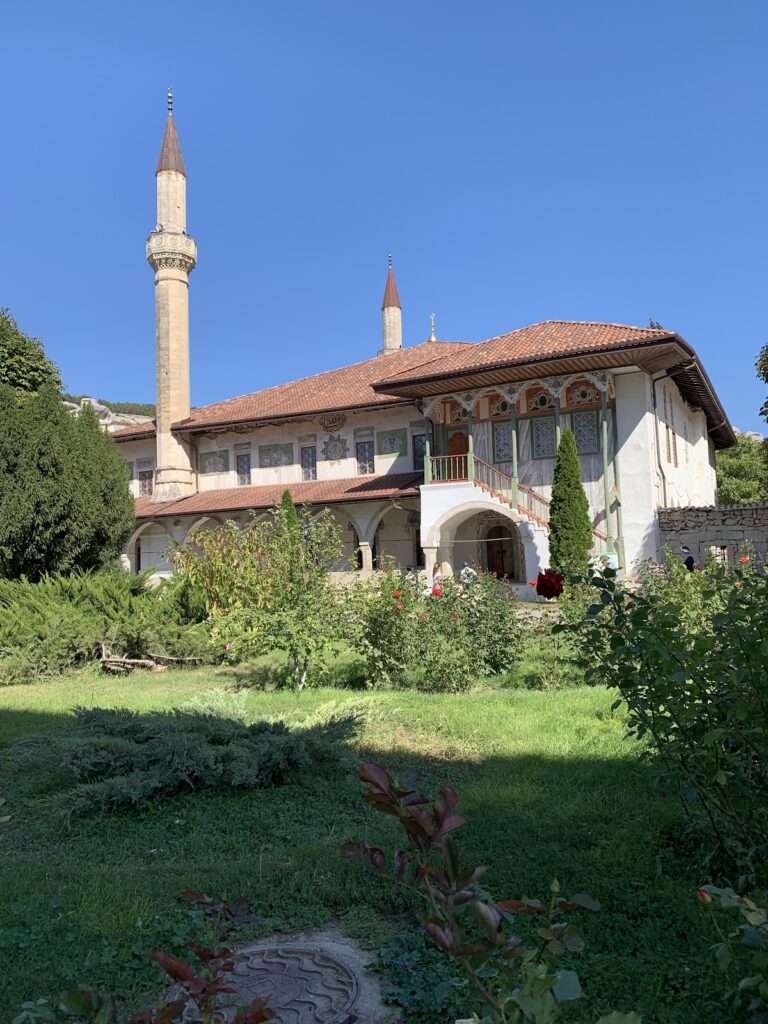
Kebir-Jami Mosque, Simferopol: Crimea’s Principal Friday Mosque


Site at a Glance
- Rating
- 4.7
- Popularity
- Low
- Country
- Ukraine
- Primary era
- Early Modern
- Eras represented
- Early Modern, Modern
- Civilizations
- Crimean Khanate, Ottoman
- Site type
- Religious
- Remains
- Mosque
On this page8 sections
History
Kebir-Jami Mosque is the oldest surviving building in Simferopol, Ukraine, and the principal Friday mosque of Crimea. A Friday mosque is the main mosque for communal Friday prayer. Built under the Crimean Khanate, the Crimean Tatar state that existed from the fifteenth to the late eighteenth century, it follows Turkish Islamic, or Ottoman, architectural traditions. Its foundation is traditionally dated to 1508, although a construction board found during restoration gives the dedication date as 1502.
Foundation under the Crimean Khanate
The mosque was built on land granted by Mengli I Giray, a ruler of the Crimean Khanate. Construction is associated with Abdurakhman-bek-Ali. An Arabic inscription commemorates the building as having been erected for the glory of Mengli I Giray and mentions Muharram, the first month of the Islamic lunar calendar.
The mosque’s white appearance is traditionally linked with the name Aqmescit, meaning “White Mosque.” This name was used for the medieval settlement that later became Simferopol after Russia annexed Crimea in 1783.
Burning, rebuilding, and enlargement
Russian troops under Burkhard Christoph Münnich burned the mosque in 1736. It was rebuilt in 1740, then renovated and enlarged northward in 1772 as the Muslim community grew. Fighting in 1776 between the forces of Shahin Giray and Tatars who had rebelled against him caused further damage.
A major rebuilding and enlargement took place in 1907. After this work, Kebir-Jami became Simferopol’s principal Friday mosque. It is affiliated with Sunni Islam and serves as the residence of the Mufti of Crimea. A mufti is a senior Islamic religious authority traditionally qualified to issue interpretations of Islamic law. The mosque also houses the headquarters of the Spiritual Administration of the Muslims of Crimea.
Soviet-era disruption and revival
The mosque’s fate during the Soviet period is uncertain. It may have remained open until shortly before the Second World War, or it may have been confiscated and converted to secular use during the 1930s. After the war and the deportation of the Crimean Tatars, the building was abandoned and used for several years as a bookbinding workshop.
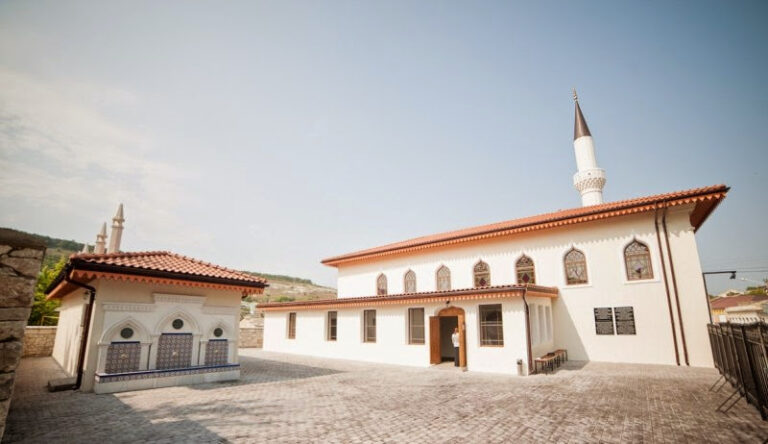
The workshop severely harmed the structure. Machinery vibrations damaged the walls, while chemicals used in bookbinding deteriorated the limestone cladding. The mosque was returned to the Muslim community in 1989, and reconstruction began in late October 1991. The work extensively renovated the building, or possibly rebuilt it from scratch. The minaret was reconstructed, and the prayer niche, or mihrab, was recreated using sixteenth-century examples as models.
On 12 July 1994, the restored mosque hosted a conference of Muslims of Crimea attended by delegates from 42 Muslim communities. The meeting legitimized the position of the Mufti of Crimea. The complex includes a madrasa, an institution for Islamic religious education, and a Crimean Tatar library. Kebir-Jami is an active mosque with a stated capacity of 200 worshippers. In Ukraine it is recognized as an immovable monument of local significance, while in Russia it is classified as a regional cultural-heritage property.
Remains
Main mosque
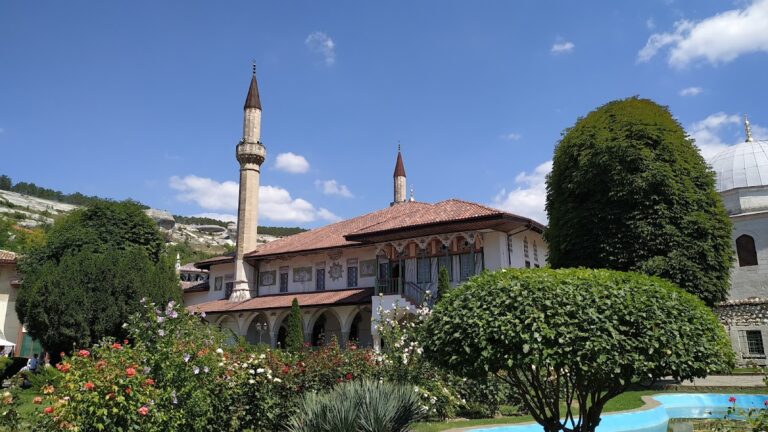
Kebir-Jami is a rectangular building measuring 18 by 14 metres. Its exterior is clad in limestone, and its form reflects Turkish Islamic, or Ottoman, architecture. Two rows of windows organize the walls: the upper openings have pointed arches, while the lower ones are rectangular. A single minaret rises from the mosque and was reconstructed during the modern restoration.
Prayer hall and interior features
The original prayer hall measured 7 by 7 metres and was covered by a dome. During the reconstruction of the 1990s, that dome was replaced by a false dome visible from outside. A flat ceiling separates the external dome form from the interior. The mihrab, the prayer niche indicating the direction of Mecca, was recreated from sixteenth-century models.
Associated complex
The mosque grounds contain a madrasa and a Crimean Tatar library. These buildings form part of the wider religious and educational complex associated with Kebir-Jami.