Eski Dürbe: A Tomb in Bakhchysarai, Russia
Site at a Glance
- Popularity
- Low
- Country
- Russia
- Primary era
- Early Modern
- Eras represented
- Medieval, Early Modern, Modern
- Civilizations
- Crimean Khanate, Golden Horde, Ottoman
- Site type
- Burial
- Remains
- Tomb
On this page9 sections
History
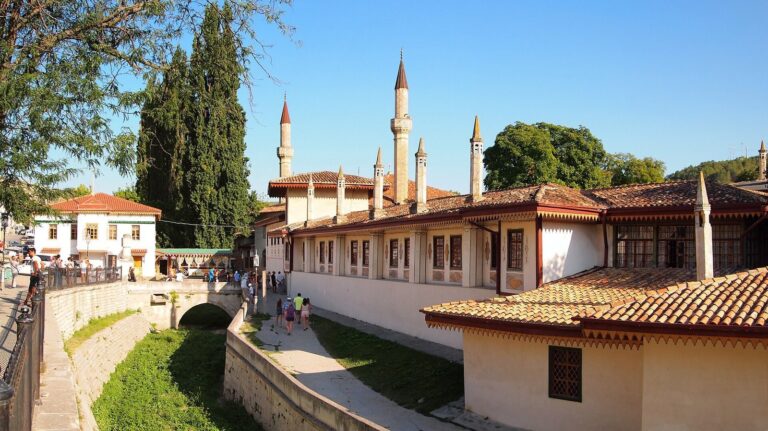
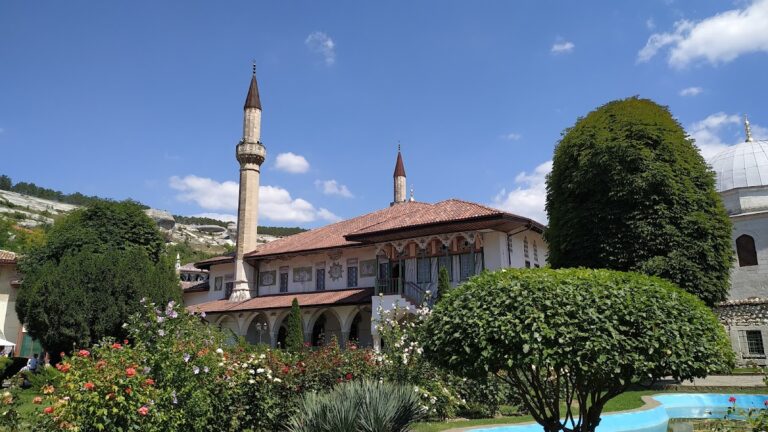
Eski Dürbe is a tomb in Bakhchysarai, Crimea, Russia, commonly dated to the 14th century and associated with the Golden Horde, a Mongol- and Turkic-led state that ruled much of the Eurasian steppe, including Crimea, during the medieval period. If this dating is correct, the tomb predates the Khan’s Palace, the residence of the Crimean khans in Bakhchysarai, by more than a century. Archaeological observations made in 2013 have raised the possibility of a later construction date.
Burial tradition and cemetery
The identity of the person buried in the tomb is unknown. Oral tradition holds that a bey who owned the valley before Bakhchysarai was founded was laid to rest here. He is remembered as “Dere-bey,” meaning “prince of the valley,” but no written record names a person by that title.
A cemetery once surrounded the tomb. Its tombstones are depicted in 19th-century drawings and photographs from the beginning of the 20th century.
Repairs and archaeological investigation
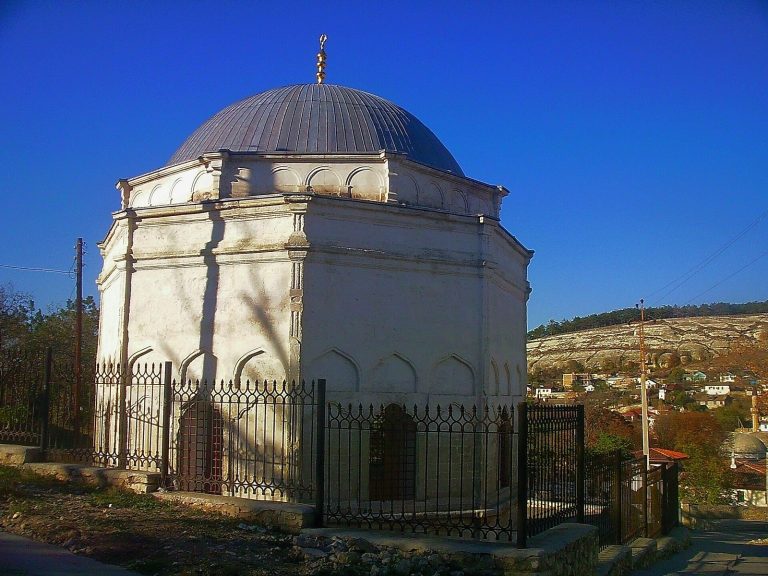
Üsein Bodaninskiy, who directed the Bakhchysarai Palace Museum, attributed severe damage to the dome to a lightning strike in the 1880s. In 1927, restoration under his leadership repaired the dome, reinstated lost parts of the tomb and courtyard, and added iron doors. Work in 1965 restored sections of the courtyard walls and coated the dome with cement. Galvanized iron sheeting was placed over the dome in the mid-1990s.
An archaeological expedition led by Emil Seidaliev examined the tomb in 2013, digging test pits beside the walls and inside the building. The soil layers observed there prompted the proposal that it may date to the 17th century, rather than the commonly assigned 14th century. Eski Dürbe is designated a monument of national significance in Ukraine and a federal cultural heritage site in Russia.
Remains
Plan and architecture
The tomb stands on a slope on the left bank of the Çürük Suv River, about 180 metres southeast of the Khan’s Palace. Its asymmetrical plan joins the tomb to a lower courtyard along the building’s southern side.
Tomb chamber
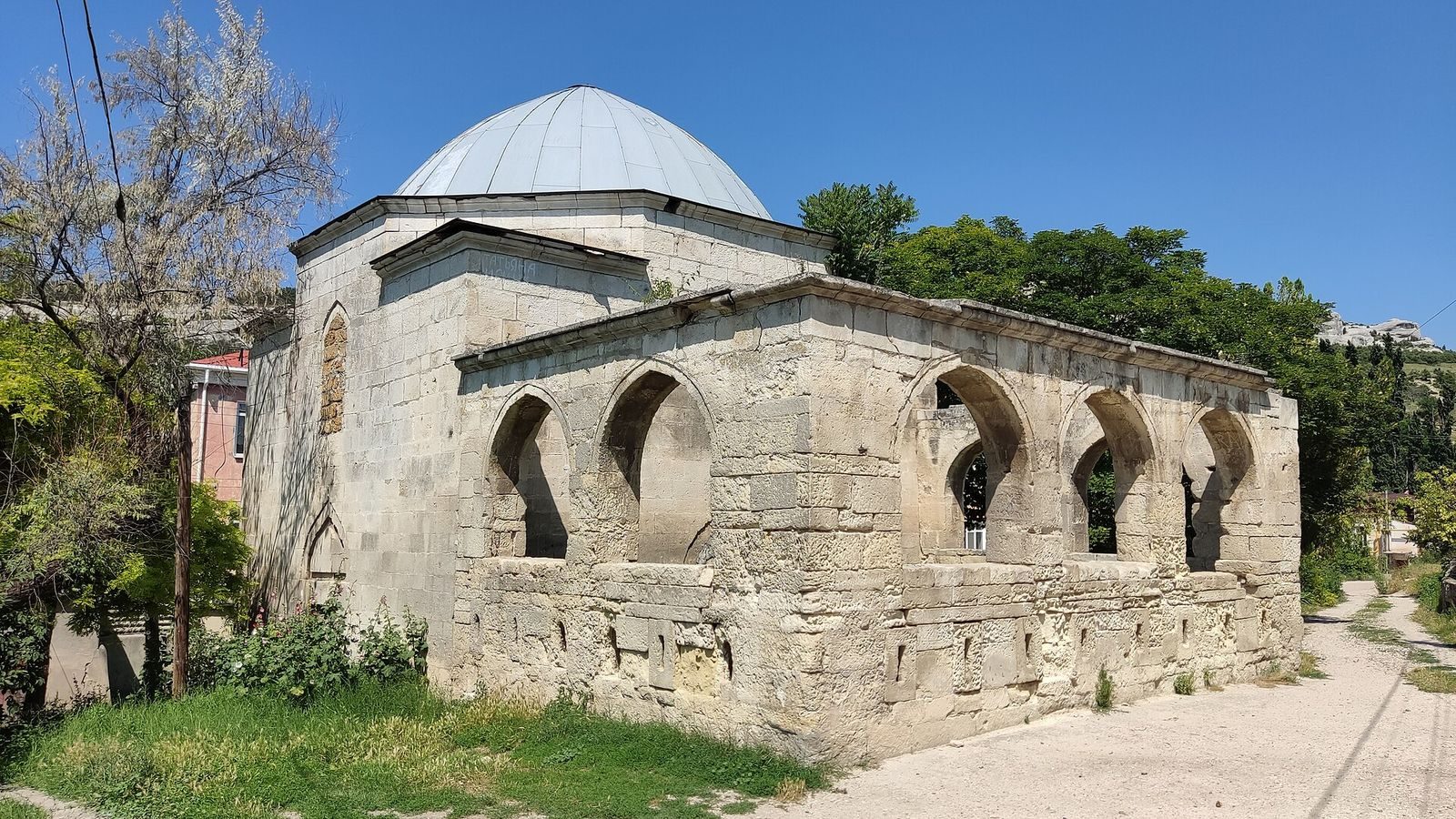
The tomb is square in plan and capped by a dome resting on an eight-sided base. Corner supports called squinches carry the dome above the square room. Two levels of arched windows pierce the walls. Ceramic vessels embedded in the masonry beneath the dome could have improved the sound within the building, reduced the structure’s weight, especially in the vaults, or helped absorb outside noise.
The dome is now covered with galvanized iron. Its original covering may have been lead, and its shape may have been pyramidal. The building is constructed from carefully dressed local yellow stone, with precise stonework and finely worked cornices and window surrounds. Among ten surviving mausoleums, Eski Dürbe is the only one built from local yellow stone rather than white limestone. Its overall design is restrained, with carefully proportioned forms and selected ornamental details.
East entrance
The main entrance faces east and sits within a deep rectangular recess. Its two supports carry a tall pointed arch, framed by a recessed ornamental border. A carved cornice decorated with stylized stalactite shapes crosses the border where the arch begins to rise. The entrance is built in courses of smoothly dressed stone. Small columns, with roughly three-quarters of their shafts projecting from the wall, decorate the edges of the supports but stop short of the cornice. Three carved circular rosettes bearing geometric and plant patterns adorn the arch.
Southern courtyard
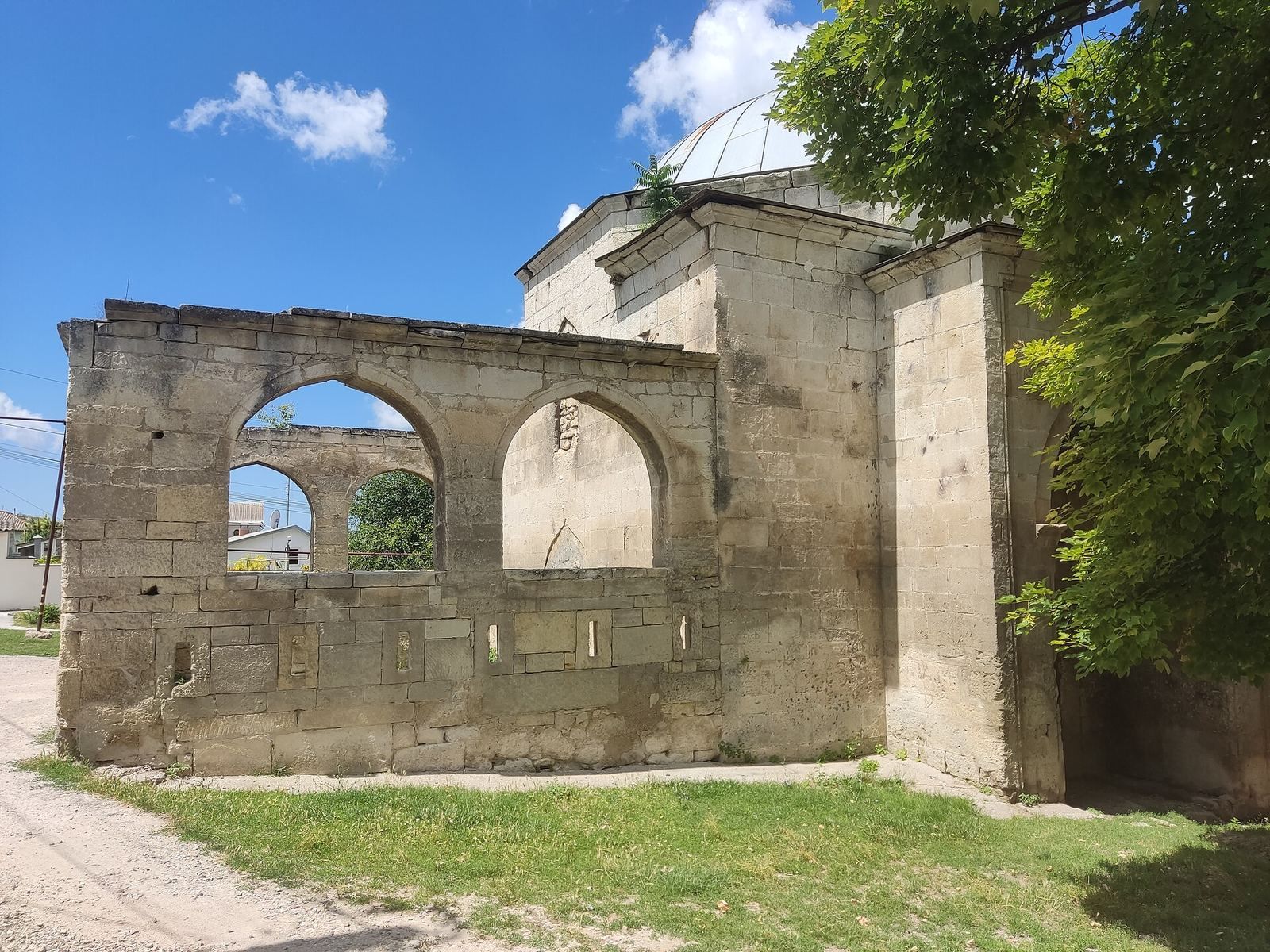
The courtyard adjoins the tomb’s southern side, and access to it is possible only through the tomb. Its wall has seven slightly pointed arches above a row of 20 decorative narrow openings. A fountain formerly stood inside. The courtyard may have been intended as a family burial ground or as a place for people to rest while paying their respects.
Architectural interpretations
The Armenian scholar and Orientalist I. A. Orbeli considered the tomb’s architectural style to have been borrowed from Armenian architecture. Builders of the Khan’s Palace may later have drawn inspiration from Eski Dürbe.