Monasterio de San Clemente: A Cistercian Royal Monastery in Seville


Site at a Glance
- Rating
- 4.5
- Popularity
- Low
- Country
- Spain
- Primary era
- Early Modern
- External website
- Open
- Eras represented
- Early Modern
- Civilizations
- Crown of Castile, Spanish
- Site type
- Religious
- Remains
- Monastery
On this page9 sections
History
Monasterio de San Clemente is a Cistercian nunnery in Seville, Spain, founded in 1248 by Ferdinand III of Castile. The Cistercians are a branch of Western Christian monasticism that emphasizes communal religious life, liturgical observance, and a disciplined monastic rule. The monastery was dedicated to Pope Clement after Ferdinand’s troops entered Seville on 23 November, the pope’s feast day. Its connection with the royal family probably influenced the choice of a women’s Cistercian community, and the monastery remained linked to the Crown and the archbishopric throughout its history.
Foundation and royal connections
Monasterio de San Clemente has occupied the same site since its foundation. Gontrueda Ruiz de León is the earliest documented abbess and may have begun the community’s monastic life. During the medieval centuries, the monastery received important women from Sevillian society and developed into a royal pantheon for members of the Castilian royal family.
The monastery’s archive preserves royal privileges and property records that helped define its medieval legal and economic position. Alfonso X, Sancho IV, Ferdinand IV, and Alfonso XI issued or confirmed documents between 1261 and 1327 concerning exemptions, privileges, territorial properties, donated estates, and the exchange of an olive grove for property at Torre de Guadiamar.
Expansion and later history
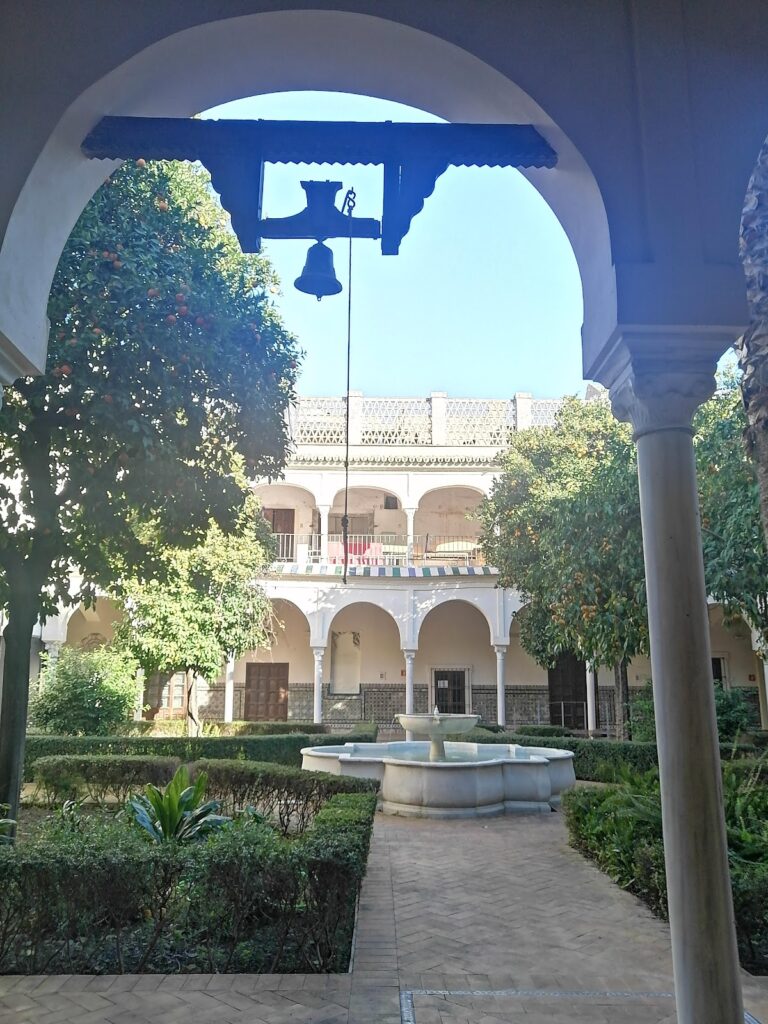
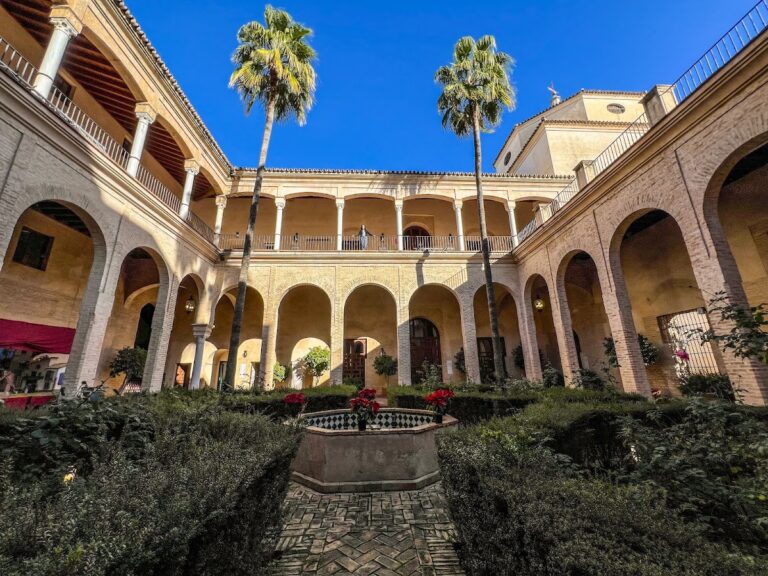
At the end of the sixteenth century, the growing number of nuns required a larger church, prompting a major expansion of the monastery. The present complex is heterogeneous, with buildings constructed in different periods and styles, especially during the sixteenth and seventeenth centuries.
The community belongs to the Cistercian Congregation of San Bernardo, an organizational grouping of Cistercian women’s monasteries. It lost all its properties during the disentailments of the eighteenth and nineteenth centuries. Royal burials in the church include María of Portugal, queen of Castile and wife of Alfonso XI; their son Fernando of Castile; Berenguela of Castile, daughter of Alfonso X and Violante of Aragon; and Beatriz of Castile, daughter of Henry II of Castile and Beatriz Ponce de León y Jérica. Berenguela is buried in the church choir.
Under Abbess Purificación Ballesteros, who had held office since 1977, the monastery underwent extensive restoration and historical study in connection with Seville’s Expo ’92, the world fair held in the city in 1992. Catalogues of its archival holdings and library were later published. Monasterio de San Clemente is protected as a Spanish Bien de Interés Cultural, Spain’s formal designation for a protected cultural property of recognized heritage value, and forms part of the Historic Centre of Seville.
Remains
Church and entrance court
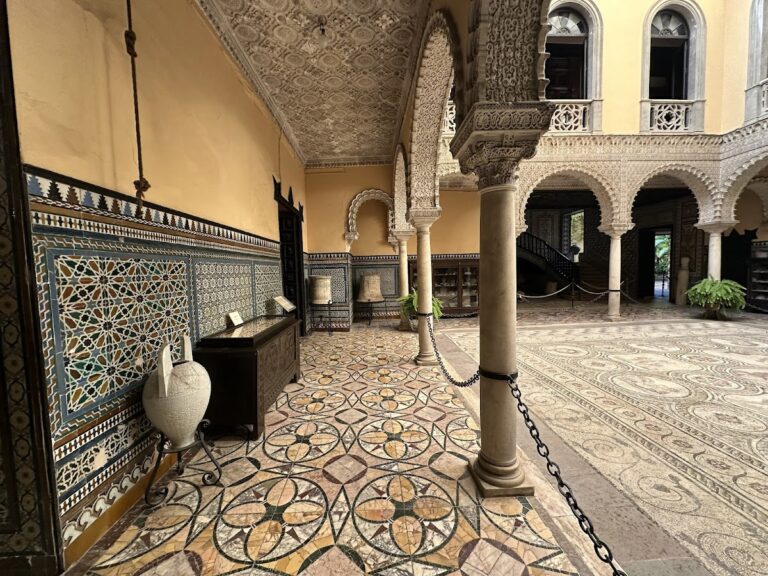
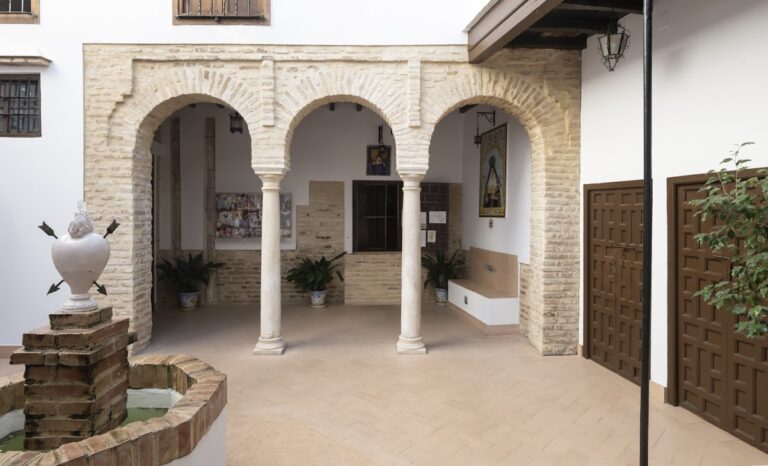
The church is reached through an extensive double neoclassical entrance court, or compás, with a porticoed atrium and a passage planted with orange trees, night-blooming jasmine, and jasmine. Inside, the nave has a Mudéjar artesonado, a decorated coffered timber ceiling reflecting the strong Islamic influence found in Christian Iberian art and architecture. Painted ceramic tilework covers the lower sections of the walls.
High altar and retables
The high altar retable, a richly decorated architectural structure behind the altar, is formed by a sotobanco, or lowest supporting section, a banco immediately above it, two tiers divided into three vertical sections, and an attic as its upper crowning section. Felipe and Gaspar de Ribas made the work, which is regarded as a major example of Sevillian Baroque art.
Most of the church’s other retables date from the seventeenth century, with one eighteenth-century exception. The retable of Saint John the Baptist on the Epistle side, the right side when facing the high altar, was made by Francisco de Ocampo y Felguera between 1606 and 1610. Gaspar Núñez Delgado carved its sculptures, including the figure of Saint John, while Francisco Pacheco provided the paintings and polychromy, the application of multiple colors to a surface.
Royal tombs
A simple stone tomb beneath an arch on the Gospel side, the left side when facing the high altar, contains the remains of María of Portugal. The fifteenth-century bronze and brass lamp hangs above the tomb of Beatriz of Castile.
Liturgical metalwork
The monastery preserves liturgical and decorative metalwork from several periods. These objects include a fourteenth-century ciborium of gilded silver, a silver and gilded-silver viaticum vessel dated 1829, and a monstrance of gold, gilded silver, and pearls made by Miguel María Palomino between 1813 and 1825. An eighteenth-century gilded-silver heart of Saint Gertrude forms part of the same body of work.
Artistic decoration and rooms
The monastery’s artistic decoration includes reliefs, canvases, paintings, sculptures, and ornamental motifs from different periods. Artists associated with these works include Juan Martínez Montañés, Gaspar Núñez Delgado, Francisco de Ocampo y Felguera, Francisco Pacheco, Valdés Leal, Lucas Valdés, Francisco de Paula Escribano, and Lorenzo Barba Figueroa. The principal architectural components also include exhibition rooms, which form part of the complex’s varied arrangement of buildings and spaces.
Nearby sites