Cuartel del Carmen: Former Carmelite Convent and Military Barracks in Seville
Site at a Glance
- Rating
- 4.6
- Popularity
- Very Low
- Country
- Spain
- Primary era
- Early Modern
- External website
- Open
- Eras represented
- Medieval, Early Modern
- Civilizations
- Crown of Castile, Spanish
- Site type
- Religious
- Remains
- Monastery
On this page9 sections
History
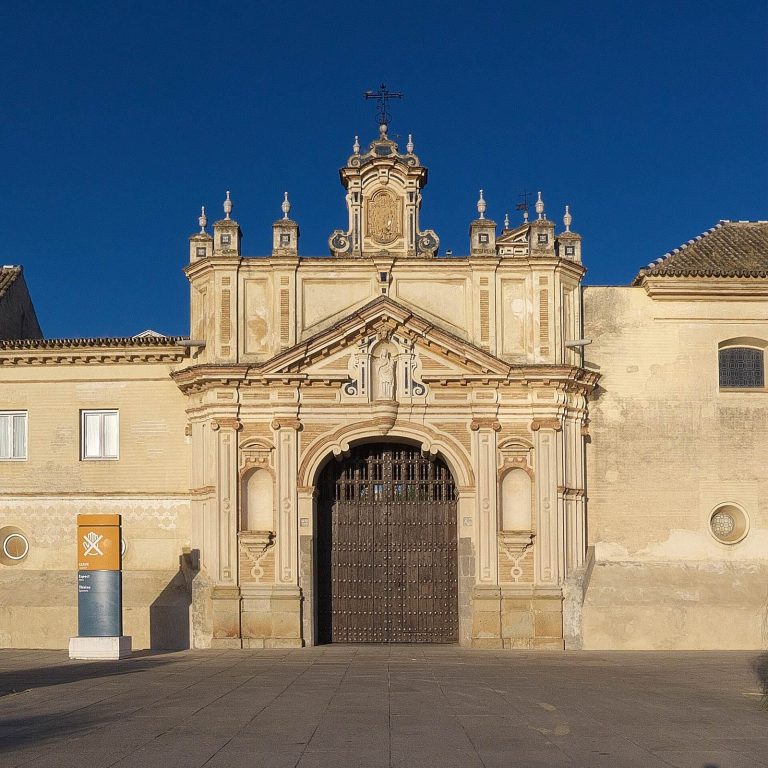
Cuartel del Carmen is a former Carmelite convent in Seville, Spain, founded in 1358 as the principal establishment of the Carmelite Order in the city. The complex developed through major rebuilding between the fifteenth and seventeenth centuries and later became a military barracks before its adaptation for higher education.
Foundation and medieval rebuilding
At the request of Pedro I, the fourteenth-century king of Castile, the knight Álvaro Suárez de Illescas ceded houses in Seville’s San Vicente district to establish the convent. A devotee of the Carmelites, he and his descendants received a burial chapel in the convent church. In the same year, Mencía Tello donated an adjoining plot and also obtained a burial chapel. The convent occupied a city block bounded by Baños, San Vicente, Pascual de Gayangos, and Goles streets. Before its foundation, the area contained the intramural Selim orchard, which stood there at the beginning of the thirteenth century.
The convent was rebuilt in 1428, when a larger church was constructed. During the laying of its foundations in 1434, workers discovered a buried stone image of a Virgin wearing a habit resembling that of the Carmelites, together with a bell. After the church was completed, the image was identified as the Virgin of Carmen and placed on the high altar.
Early modern expansion and religious associations
A substantial reform of the convent began in 1583 and continued until 1630. Vermondo Resta, an architect who served as master builder of the Archdiocese of Seville from approximately 1587 to 1610, probably took part in the work. By 1664, the convent housed one hundred religious.
The complex also became a center for several confraternities, which were formally organized religious associations supporting shared devotions and ceremonies. The Brotherhood of the Sacred Descent of Our Lord Jesus Christ and the Fifth Anguish of the Most Holy Mary was founded there in 1540. The Brotherhood of the Virgin of the Head followed in 1561 and took the name Brotherhood of Our Lady of the Head and Saint Zoilus in 1598. Another confraternity, founded at the Church of San Vicente during the middle of the sixteenth century, had moved to the convent by 1595. It united with the Brotherhood of Our Lady of the Head and Saint Zoilus during the seventeenth century, with the union formally approved by new rules in 1778. The resulting association was known as the Brotherhood of the Seven Words and the Virgin of the Head.
The Brotherhood of Our Lady of Solitude settled on land beside the convent in 1575 and built a chapel, sacristy, and chapter room. The chapel was affiliated with Rome’s Archbasilica of Saint John Lateran in 1594. During the French invasion of Seville, the brotherhood left the chapel and moved its titular image to the Church of San Miguel. Its processional platforms were destroyed, and the chapel was converted into a stable.
Military conversion and later institutional use
The Carmelites were expelled in 1810 during the French invasion, a military occupation that disrupted the convent’s religious life. The church was turned into stables, and the former convent housed troops. About thirty friars returned in 1814, after which restoration work allowed the church to reopen for worship in 1815. The Brotherhood of the Sacred Descent left during the 1810 exclaustration, meaning the departure of a religious community from its convent. It moved to the Church of San Vicente, returned to the Carmen in 1815, moved out again between 1841 and 1844, and transferred permanently to the Church of La Magdalena in 1851.
In 1835, the convent underwent desamortization, the confiscation and secular transfer or sale of church and monastic property in nineteenth-century Spain. The complex passed to the War Department in 1841, and the church and chaplain’s house were transferred to the same authority in 1874. Military use continued under the name Cuartel del Carmen until 1978.
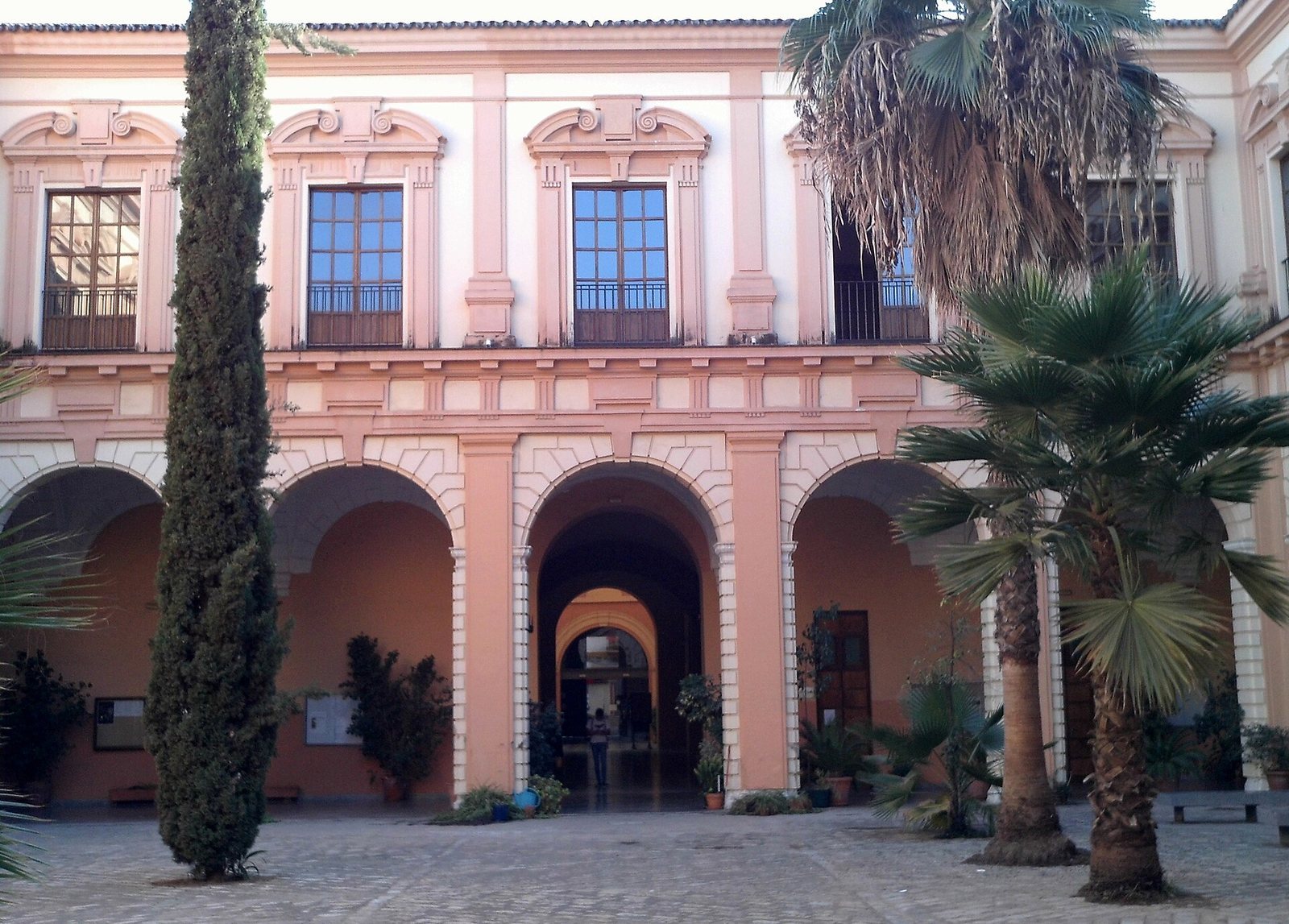
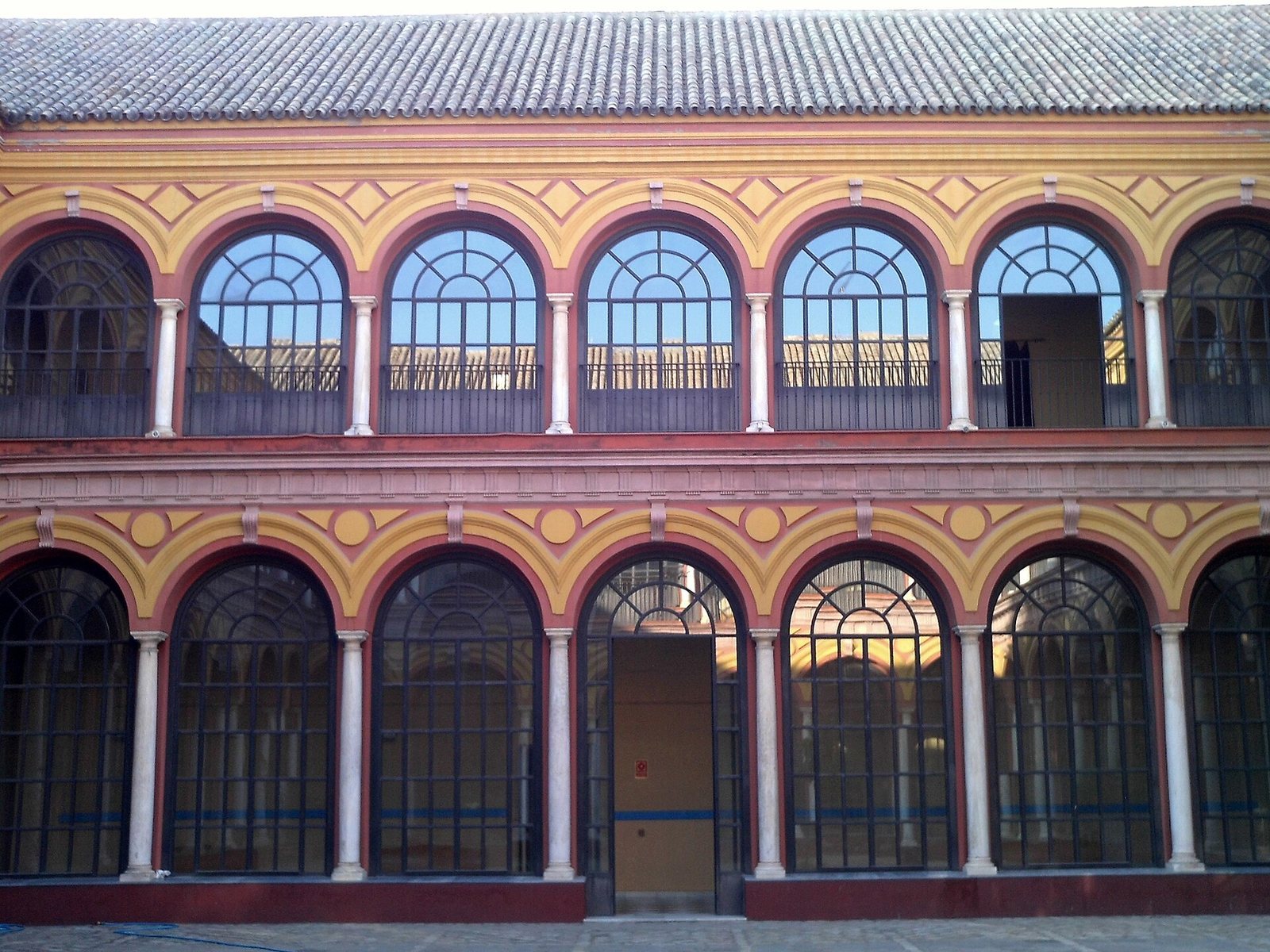
Seville City Council purchased the building in 1984 and considered using it for the municipal Urban Planning Agency, but that project was abandoned. The Regional Government of Andalusia acquired the complex in 1990 and rehabilitated it. Since 2002, it has housed the Higher Conservatory of Music and the Higher School of Dramatic Art. Cuartel del Carmen, identified as the former convent of the Calced, or shod, Carmelites, was declared a monument of cultural interest in 1993. Its construction is dated broadly from the fifteenth to the seventeenth century.
Remains
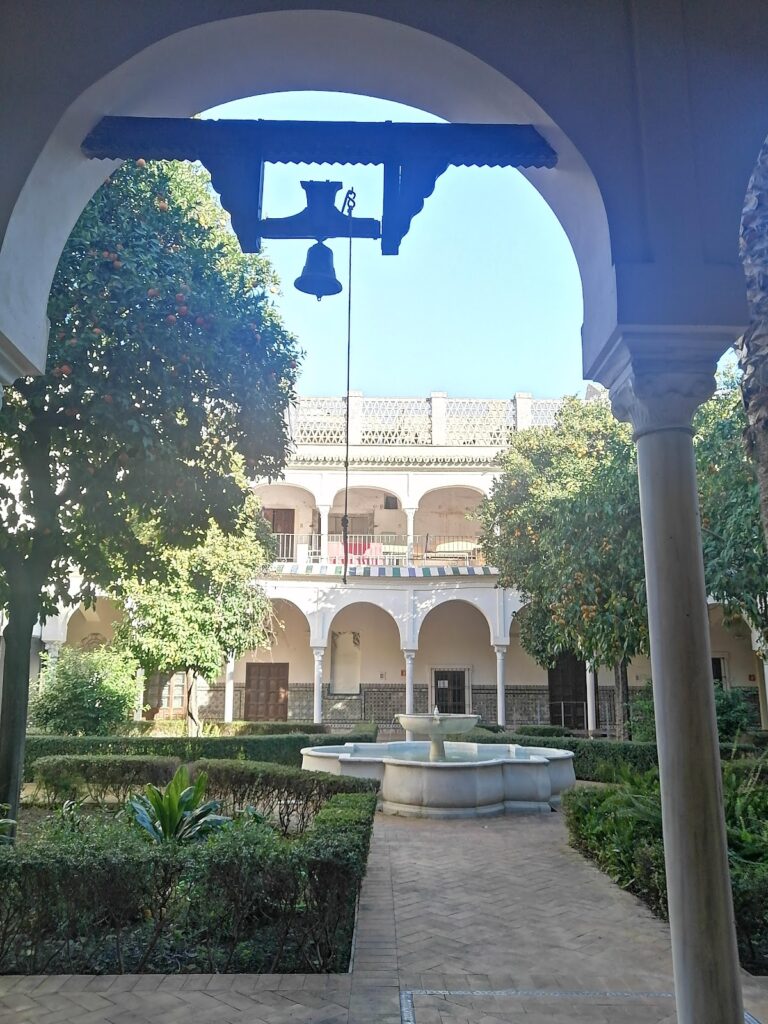
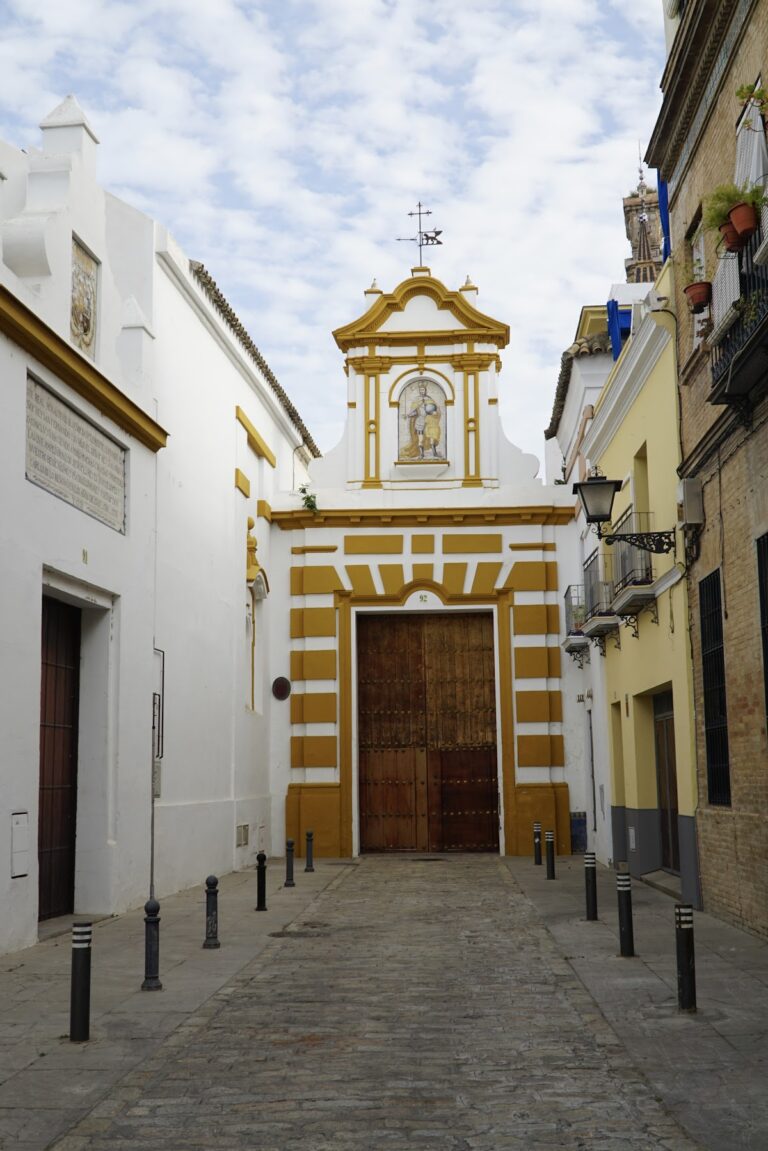
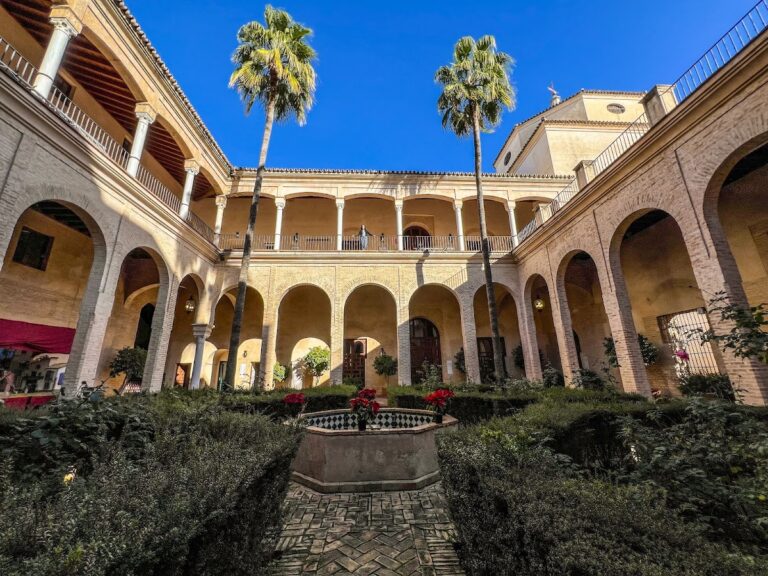
The former convent occupied a complete urban block and included a principal cloister, the convent church, the Chapel of King Don Pedro, and the adjoining Chapel of Our Lady of Solitude. The principal cloister survives as a space used by the conservatory. The complex retains the physical record of its religious foundation, its later military conversion, and its rehabilitation for present institutional use.
Church and convent spaces
Principal cloister
The principal cloister forms one of the surviving central spaces of the former convent and is currently used by the Higher Conservatory of Music. It belongs to a complex whose construction developed broadly between the fifteenth and seventeenth centuries.
Convent church
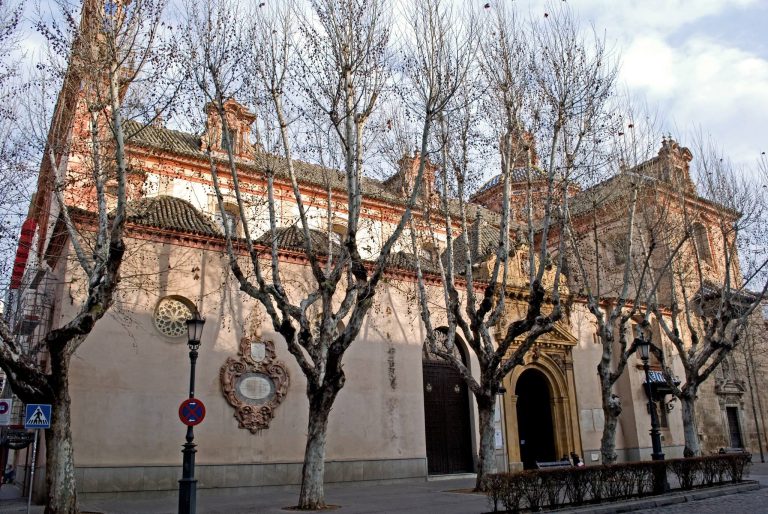
The larger church built during the 1428 rebuilding contained the stone Virgin of Carmen discovered during foundation work in 1434. The image was placed on the high altar after completion of the church. The complex also included the Chapel of King Don Pedro.
Chapel of Our Lady of Solitude
The chapel beside the convent had a high-altar staircase of 28 steps, associated with the indulgences of Rome’s Holy Stairs. In 1684, the sculptor Simón de Pineda covered the steps and added a mahogany balustrade decorated with ebony and ivory.
The military conversion of 1810 altered the chapel and the neighboring church. The chapel became a stable, while the church’s blue-and-white Genoa floor tiles and the marble from the staircase were removed. Walls were demolished and watering troughs were installed in the church. The former convent complex was later rehabilitated and adapted for the Higher Conservatory of Music and the Higher School of Dramatic Art from 2002.