St.-Marien-Kirche: A Romanesque Fieldstone Church in Esgrus, Germany


Site at a Glance
- Rating
- 4.9
- Popularity
- Very Low
- Country
- Germany
- Primary era
- Medieval
- External website
- Open
- Eras represented
- Medieval, Early Modern, Modern
- Civilizations
- Danish, German
- Site type
- Religious
- Remains
- Church
On this page18 sections
History
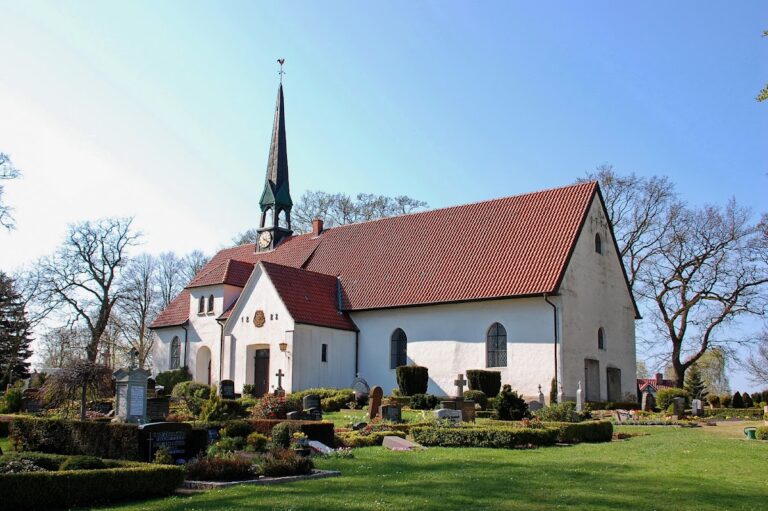
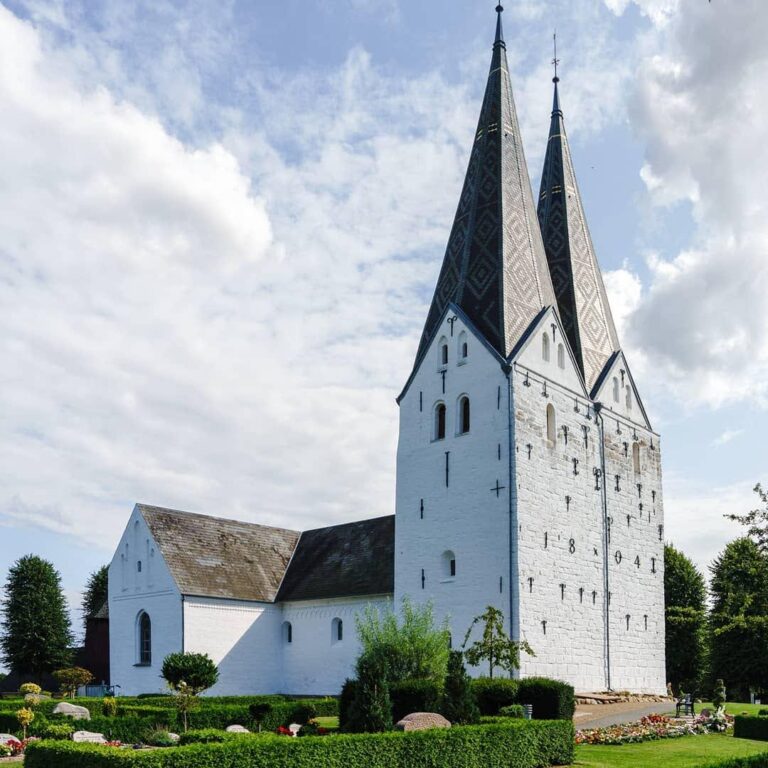
St.-Marien-Kirche is a protected historic monument in Esgrus, Germany, built by medieval Christians as a Romanesque fieldstone church in the twelfth century. It is regarded as one of the oldest churches in Angeln, the historic region of northern Schleswig-Holstein between the Flensburg Fjord and the Schlei.
Foundation and the original parish
The church was completed before 1200, after St.-Marien-Kirche in Sörup, and became the second church of the Nieharde. It served as the center of the original parish, placing the church at the heart of an early ecclesiastical district. Around 1230, the parish was divided following the construction of St.-Laurentius-Kirche in Sterup. St.-Marien-Kirche then stood at the edge of the reduced parish district, without a church village of its own.
The dedication is to Mary, the mother of God. Before the sixteenth-century Reformation established Protestant churches across much of northern Europe, the choir was reserved for the clergy within a Catholic ecclesiastical arrangement. The later history of the building reflects the continuing influence of local landowners as well as the transformation of its religious institutions.
Estates, burial places, and parish life
The parish formerly included Rundhof estate and Brunsholm estate, which was first recorded in 1292. Around 1600, the estate owners installed privileged seats for the nobility and their families in the choir. These seigneurial seats had previously been reserved for the clergy, but some remained in use by estate owners into the twentieth century.
The owners of Brunsholm had a burial chapel attached to the north side of the church, probably built at about the same time as the tower. The chapel had fallen into disrepair by the nineteenth century and was demolished during the twentieth century. Around 1794, the lords von Rumohr of Rundhof established their burial place in the tower hall after their earlier burial site, at the predecessor of the present St.-Nikolai-Kirche in Kappeln, had been demolished.
Alterations and modern conservation
Galleries were installed along the north and west sides of the nave in 1725. The church was substantially improved in 1824 and received its first organ. The large pointed-arch windows in the south wall belong either to this renovation or to the Late Gothic period, although their date remains uncertain.
A renovation in 1966 and 1967 restored the Romanesque windows in the north wall. Later work also addressed the historic furnishings. In the late 1960s, nineteenth-century brown varnish was removed from the aristocratic box pews. Between 1969 and 1974, Barbara Rendtorff uncovered the eighteenth-century polychromy of the altar retable, restoring evidence of its earlier color scheme. The organ underwent extensive restoration in 2009 by the Mike Zuber organ workshop.
On 1 October 2021, the Esgrus parish joined the parishes of Steinbergkirche, Quern-Neukirchen, Sörup, and Sterup to form the Evangelical Lutheran Nieharde parish within the Schleswig-Flensburg church district of the Evangelical Lutheran Church in Northern Germany. In 2022, the parish received a stained-glass window donated by the artist Uwe Appold. Made by Appold in 1966 during his training, it was installed above the south portal and is illuminated during funeral ceremonies when a coffin or urn passes through that entrance.
Remains
St.-Marien-Kirche stands on a hill outside the settlement. Its earliest form consisted of a single-nave fieldstone church with a narrower choir. Dressed stone blocks were used at the corners, while later work introduced brick into the eastern choir and tower. The surviving interior combines the plain structure of the medieval building with Gothic, Renaissance, Baroque, Neoclassical, and modern elements.
Medieval building fabric
Nave and entrances
The fieldstone nave retains its flat wooden ceiling and two portals, one in the south wall and another in the north wall. A porch was later constructed in front of the north portal. Galleries extend along the north and west sides of the nave, where they were installed in 1725. The south portal is surmounted by a stained-glass window showing Jesus entering Jerusalem. Uwe Appold created the window in 1966, although it was installed in the church decades later.
Choir and eastern termination
An apse may originally have extended east from the choir. By the fifteenth century at the latest, the apse had disappeared, and the choir had been given a Gothic five-eighths termination, a polygonal ending formed by five sides of an eight-sided figure. The new eastern section is made of brick and has a vaulted ceiling. Remains of painted decoration survive on the vault.
Tower hall and burial chapel site
A massive brick tower was added later, probably around 1500. Its hall contains the burial place established for the von Rumohr family around 1794. The former Brunsholm burial chapel stood beside the north side of the choir, linking the church’s surviving medieval fabric with the burial practices of the local estates.
Altar and medieval sculpture
Altar retable
The altar retable dates from shortly after 1450. Originally a winged altarpiece, it was altered repeatedly between the seventeenth and nineteenth centuries, with the dates 1650, 1750, and 1824 marking important changes. Its central shrine contains a Crucifixion scene with ten carved figures cut from two oak blocks. The figures wear contemporary clothing, while larger images of the apostles Peter and Paul frame the scene. The side wings contain the twelve apostles, identified by names painted on the base boards.
In 1750, the lost Gothic tracery was replaced with Baroque acanthus scrollwork. Above the crucified Jesus, two putti hold a star bearing JHWH, the Latin-letter form of the Hebrew divine name commonly rendered in English as Yahweh. The upper section, shaped like a small temple facade, and the curved elements surrounding the Gothic shrine were added in 1650. Paintings of the Resurrection and the Ascension occupy the upper structure.
In 1824, the retable’s colorful and heavily gilded surface was covered with Neoclassical white paint. A Last Supper painting by the Flensburg painter Heinrich Friede was placed in front of the central relief, concealing it. The badly damaged predella, the lower section of an altarpiece, showed the Veil of Veronica, a Christian devotional image associated with the cloth believed to have borne an impression of Jesus’s face, and was also replaced.
The predella was transferred to the Thaulow Museum in Kiel in 1903 and is now held at the State Museum of Art and Cultural History at Gottorf Castle. The Last Supper painting had been removed by 1882. The retable was painted over again in 1882 and in 1923 and 1924, before its earlier polychromy was uncovered between 1969 and 1974.
Triumph Crucifixion
The Triumph Crucifixion group dates from 1490 and has hung again in its original position in the chancel arch since 1966. The accompanying figures of Mary and John survive. The group has been reconnected on an old oak beam, but its original painted finish cannot be determined because the figures were repainted in the nineteenth century.
Madonna and Saint Anne group
A seated Madonna from the mid-thirteenth century is displayed in a blind niche, a shallow recess without an opening, in the southern part of the choir. The original Romanesque head was broken off above the chest and lost. In the fifteenth century, a Late Gothic head with separately attached locks was made and fixed to the torso with dowels. The crown is missing, and the present surface finish is Baroque.
An oak sculpture of Saint Anne with the Virgin and Child dates from about 1510, based on the clothing shown in the carving. It stands in a blind window in the north choir wall. Saint Anne holds the naked Christ Child in her right hand, while the crowned Virgin, represented as a child, sits on her mother’s left knee, wrapped in her mantle, and offers Jesus a bunch of grapes. The Virgin’s left arm is missing. Much of the original finish survives, including extensive gilding and silvering.
Choir furnishings and baptismal equipment
Sacrament cabinets
Three Gothic sacrament cabinets are set into the choir wall. These wall cupboards held consecrated Eucharistic elements. The smallest, 91 centimeters high, is the most elaborate and dates from the last quarter of the fifteenth century. Five iron bands with trefoil centers secure its door, while an oil painting of the Man of Sorrows, a devotional image of the suffering Christ, appears inside. When the door is open, the figure’s gaze turns toward the altar, the place of the Eucharist.
Baptismal font and crown
The bronze baptismal font was cast in 1619 by Marcus Dibler, son of Michel Dibler. Four figures of the Evangelists support the basin. Beneath eight clearly visible arcades decorated with floral ornament are representations of saints. The Rumohr family probably donated the font.
A richly carved wooden baptismal crown was made at the same time to cover and protect the baptismal water. It now hangs above the font and rises 1.90 meters to the vault. Made by the Flensburg woodcarver Hans Jakobs, who worked within the circle of the Ringerink workshop, it has a high lantern containing a seated Man of Sorrows surrounded by five freestanding figures of Christian virtues.
The canopy is supported by herm pilasters, ornamental pilasters modeled on human figures or ending in bust-like forms. It terminates in a hoop crown bearing a globe, above which a dove hangs from a rod chain. The brass baptismal basin, 56 centimeters in diameter, was donated in 1681.
Later furnishings
Pulpit and organ
The pulpit is dated to 1681 and is decorated with paintings of the Passion. Its ornament appears to have been removed, leaving a plainer structure than the original. Its construction and painted decoration have also led to the possibility that it is older than the stated date.
The organ was made by Marcussen & Søn in 1911 and 1912. Its case follows a Neoclassical design with a pedimented upper section. The church’s peal consists of three bells: the Lord’s Prayer Bell, tuned to F and cast in 1936 by M & O Ohlsson of Lübeck; the Prayer Bell, tuned to A-flat and recast in 1954 by the Rincker Brothers of Sinn; and the Baptismal Bell, also recast by the Rincker Brothers in 1954 and tuned to B-flat.