Zurmala Stupa: A Kushan Buddhist Monument in Uzbekistan
Site at a Glance
- Popularity
- Low
- Country
- Uzbekistan
- Primary era
- Classical
- Eras represented
- Classical
- Civilizations
- Kushan
- Site type
- Religious
- Remains
- Stupa
On this page7 sections
History
Zurmala Stupa is a Buddhist monument southeast of Old Termez in Uzbekistan, built during the first or second century CE under the Kushan Empire, a Central Asian empire that included Bactria. A stupa is a Buddhist monument associated with religious veneration and often the enshrinement of relics. Zurmala is regarded as the oldest surviving construction in Uzbekistan and the first Buddhist structure discovered in Central Asia.
Kushan-period Buddhist site
The Chinese Buddhist pilgrim Xuanzang visited Termez in 629–630. His account describes more than ten monasteries, over 1,000 monks, and numerous stupas in the area. Archaeologist Alexander Strelkov later noted similarities between Xuanzang’s description and the Buddhist remains around Termez. Whether Zurmala belonged to a temple complex or stood by itself remains uncertain.
Archaeological identification and later study
Strelkov investigated Zurmala during an expedition from 1926 to 1928 and proposed in 1927 that it was a Buddhist stupa. Excavations led by archaeologist Galina Pugachenkova about half a century later confirmed the identification. Archaeologist M. E. Masson subsequently organized a project to study the characteristics of Termez’s monuments.
Three stone sculptures were found in the area in 2012, two by local residents and one by a French archaeological mission in Uzbekistan. Zurmala is included on Uzbekistan’s list of material cultural heritage of republican significance.
Remains
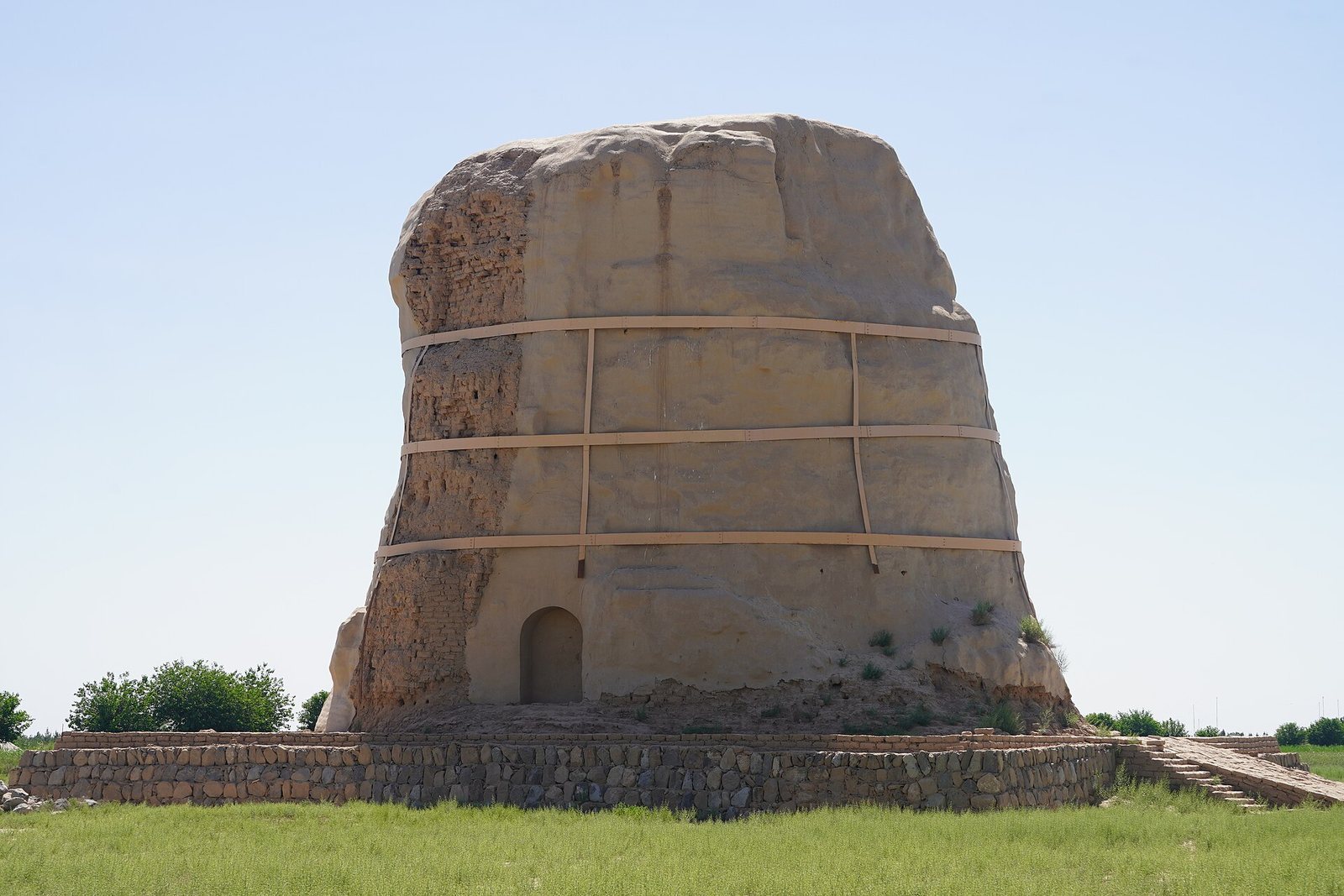
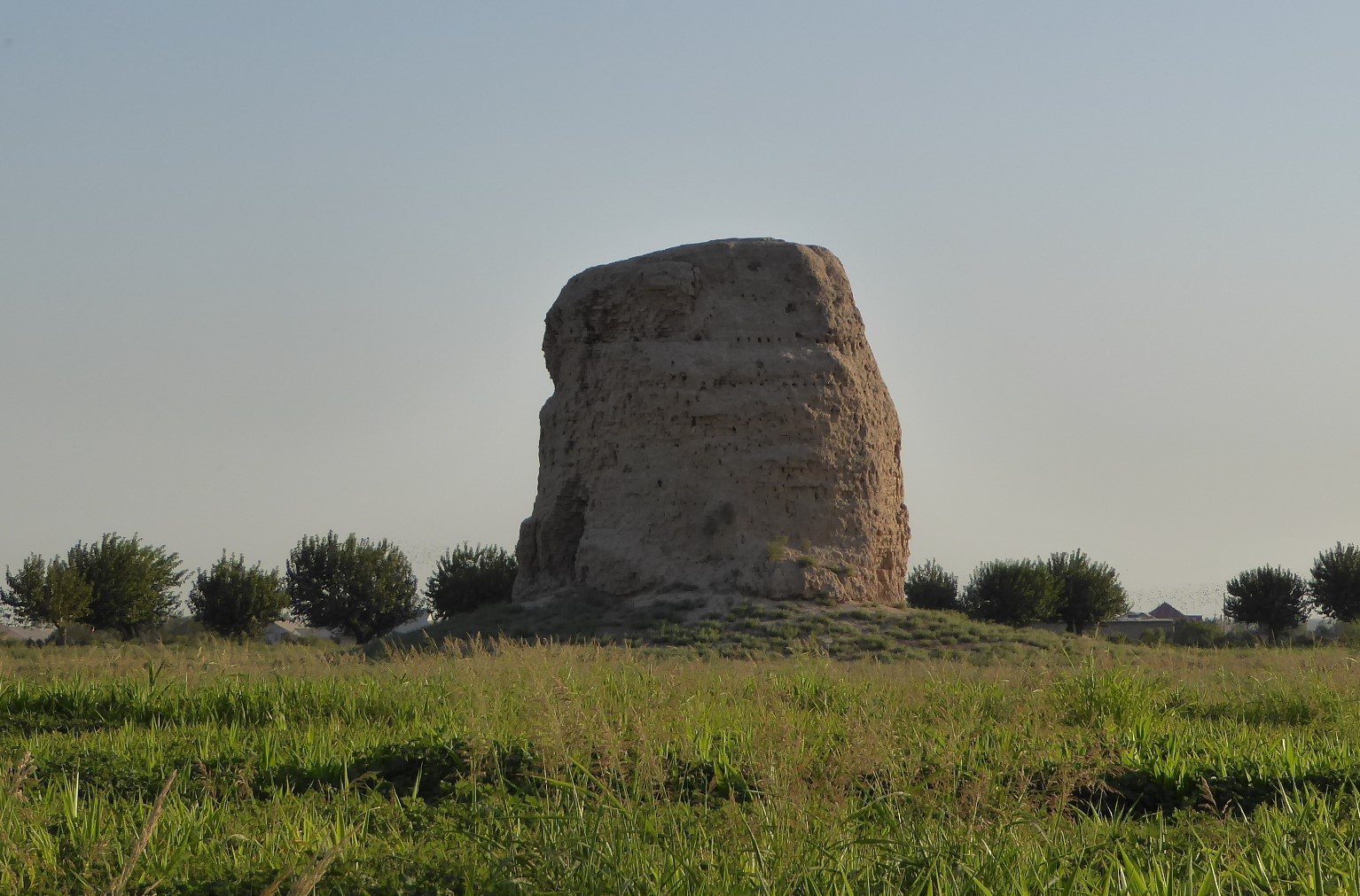
The surviving structure is the largest Buddhist stupa in Termez district. Its rectangular ground plan is aligned with the four cardinal directions, and its brick-built body rises from a platform to a rounded upper section.
Base and brick structure
The rectangular plan measures 22 by 16 metres. A cylindrical body, about 13 metres high and 14.5 metres in diameter, stood above it; the original total height is estimated to have exceeded 16 metres. The platform was faced with limestone derived from marl. Stone blocks and shaped projecting supports that reinforced the base have been found there, alongside fragments of fired brick. Excavations also uncovered numerous planks, some as long as three metres. The main structure used unfired square bricks about 33 centimetres wide, each marked with a line and two indentations. This brick type was used in Bactria during the Kushan period before rectangular bricks replaced it. Construction is estimated to have required nearly 1.2 million bricks. Large cracks mark the monument’s substantial damage over time.
Upper form and decoration
The cylindrical brickwork transitioned into a domed, rounded top. The exterior is thought to have been red. One proposed reconstruction suggests a facing of red-fired bricks and stone blocks bearing scenes from Buddhist mythology, while bas-relief sculptures, figures projecting from a flat surface, adorned the dome. The upper part is also thought to have contained a small chamber for relics, perhaps sacred texts, statuettes, or Buddha relics. A staff carrying ceremonial parasols, umbrella-like emblems of honor that can also signify enlightenment in Buddhist imagery, is understood to have risen above it. Analysis of the stupa’s proportions, together with murals in the Buddhist cave temple at nearby Qoratepa, has informed a reconstruction of a stepped tower in three tiers beneath the dome. The form symbolizes parinirvana, the Buddha’s final passing into nirvana.
Stone sculptures
The three sculptures comprise a bas-relief showing worshippers, a relief depicting Buddha in procession, and a composition of two figures in Buddhist iconography. They are held at the Museum of Archaeology in Termez.