Polkstin: A Fortified Frontier Town in Ukraine
Site at a Glance
- Popularity
- Medium
- Country
- Ukraine
- Primary era
- Medieval
- Eras represented
- Medieval
- Civilizations
- Unclassified
- Site type
- Military
- Remains
- Wall
On this page10 sections
History
Polkstin was a fortified frontier town of the medieval East Slavic Principality of Pereiaslav in present-day Ukraine, built in the 10th century. A settlement of the Polians, an East Slavic tribal group, may have occupied the site before the fortress was constructed.
Recorded in the 12th century
In 1125, the Kyiv Chronicle, a medieval history of Rus’, recorded a victory by Prince Yaropolk Vladimirovich near Polkstin. Yaropolk ruled Pereiaslav, and his opponents were the Cumans, a Turkic-speaking steppe people who came into conflict with Rus’ principalities.
Decline and destruction
Polkstin declined and was destroyed in the 13th century. Its decline may have been connected with the effects of Batu’s invasion, the Mongol conquest of Rus’ led by the Mongol ruler and commander Batu.
Later disturbance and archaeological study
Saltpeter production in the 17th and 18th centuries damaged the site’s archaeological deposits. Archaeologists examined Polkstin in the late 19th century, in 1971, and again in 1981 and 1988.
Remains
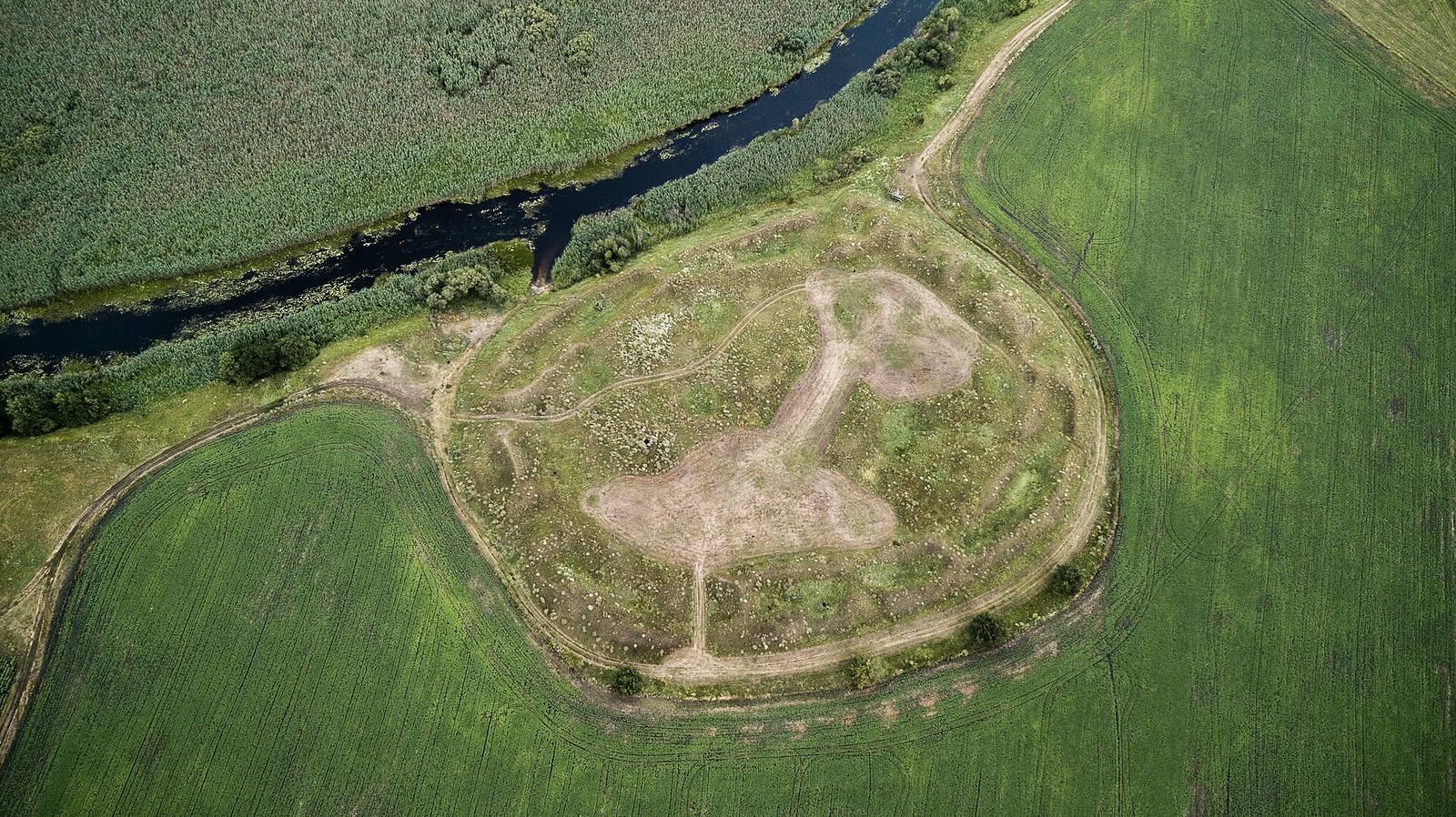
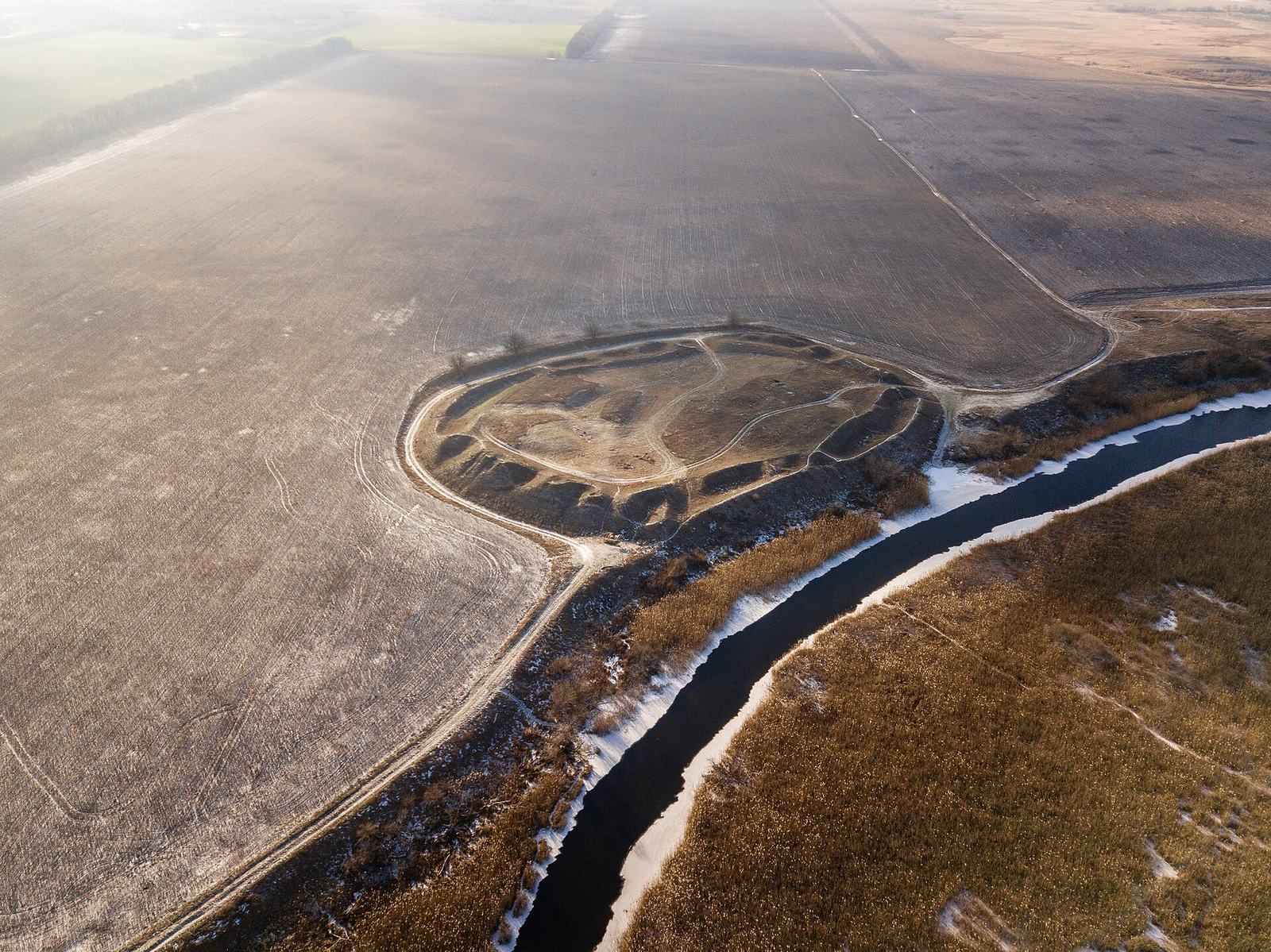
In the Burty tract on the right bank of the Uday River, the site consists of a fortified center and a larger open settlement beside it. It lies about 2 km northeast of the village of Povstyn.
Fortified center and settlement
Fortified platform
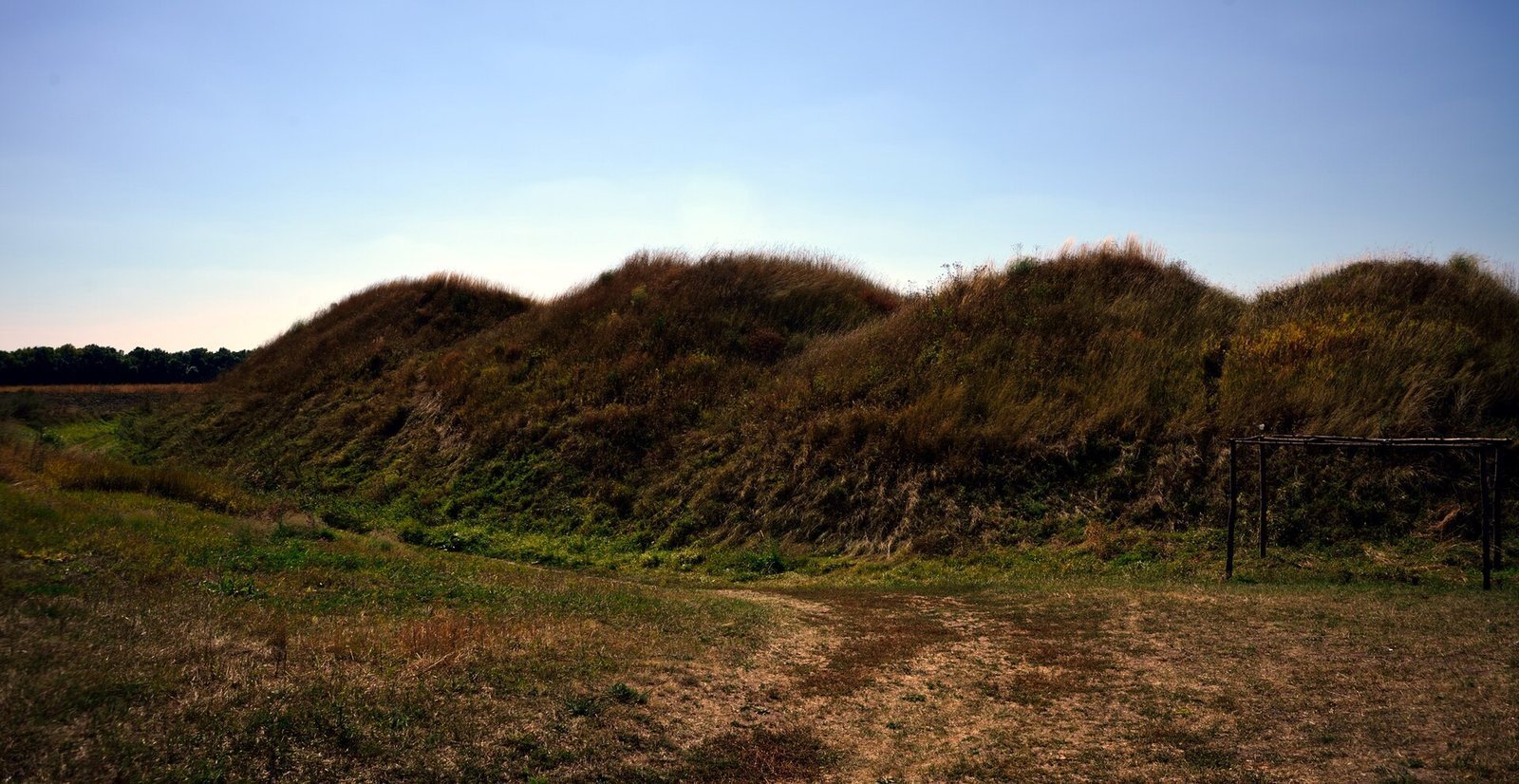
The fortified area is a roughly semicircular platform measuring about 110 by 120 m and covering approximately 1 hectare. A rampart and ditch defended three sides, while the northern edge faced the river. The rampart stood 6 m high; the ditch measured 6 m across at its bottom and 2 m deep. Deposits within the fortified area reached 1.2 m in thickness and date from the late 11th to the 13th century.
Open settlement
The open settlement beside the fortifications covered about 13 hectares. Its archaeological deposits reached 0.8 m in thickness.
Domestic remains
Semi-subterranean dwelling
Excavation revealed a semi-subterranean dwelling dating to the 12th or 13th century, with an oven built of clay. Finds from Polkstin are held at the Poltava Regional Museum of Local Lore.