Shirageyama Kofun: An Early Keyhole-Shaped Burial Mound in Japan
Site at a Glance
- Rating
- 3
- Popularity
- Very Low
- Country
- Japan
- Primary era
- Classical
- External website
- Open
- Eras represented
- Classical
- Civilizations
- Yamato
- Site type
- Burial
- Remains
- Burial Mound
On this page9 sections
History
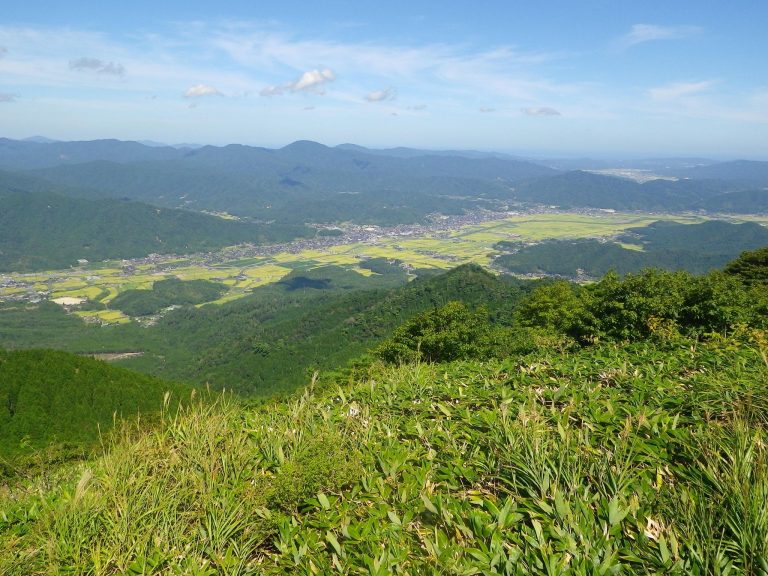
Shirageyama Kofun is a Kofun-period burial mound in Yosano, Japan, built around the middle of the early Kofun period, probably in the early fourth century. The Kofun period was an ancient Japanese era, roughly spanning the mid-third to late sixth centuries, when powerful individuals and their communities were buried in large earth mounds. Shirageyama Kofun was built on the eastern edge of the Kaye Valley at the base of the Tango Peninsula. At the time of its construction, it was the largest burial mound in the Tango region and was nationally large in scale.
An Early Tomb in Tango
Tango was a historical region corresponding broadly to northern Kyoto Prefecture. Shirageyama Kofun is regarded as one of the oldest keyhole-shaped burial mounds on the Sea of Japan coast. A keyhole-shaped mound combines a square front section with a circular rear section when viewed from above. Its early date makes the mound important for understanding how this form spread into Tango.
Several nearby burial mounds are interpreted as part of a shared cemetery for the same social group as the person placed in Shirageyama Kofun. The Shirageyama West Kofun Group lies on the hill behind the mound’s rear circular section, while Shirageyama North Kofun is west of the front section and Shirageyama East Kofun is east of it. In the wider Tango region, three later large keyhole-shaped mounds, Ebisuyama No. 1 Kofun, Shinmeiyama Kofun, and Amino Choshiyama Kofun, were built from the latter part of the early Kofun period onward. Shirageyama Kofun predates that later phase.
Investigation and Protection
The mound was known by the early twentieth century and has remained well preserved. It was designated a Kyoto Prefectural Historic Site on April 15, 1987, and became a National Historic Site of Japan on March 19, 2002.
Archaeological work around the mound developed through several investigations. Shirageyama North Kofun was excavated in 1993, range-confirmation surveys were carried out at Shirageyama Kofun from 1996 to 1999, and the Shirageyama West Kofun Group was excavated in 1998. These investigations were partly connected with planned construction of a bypass for Japan National Route 176. Pottery fragments recovered in association with the mound support its placement in the early fourth century.
Remains
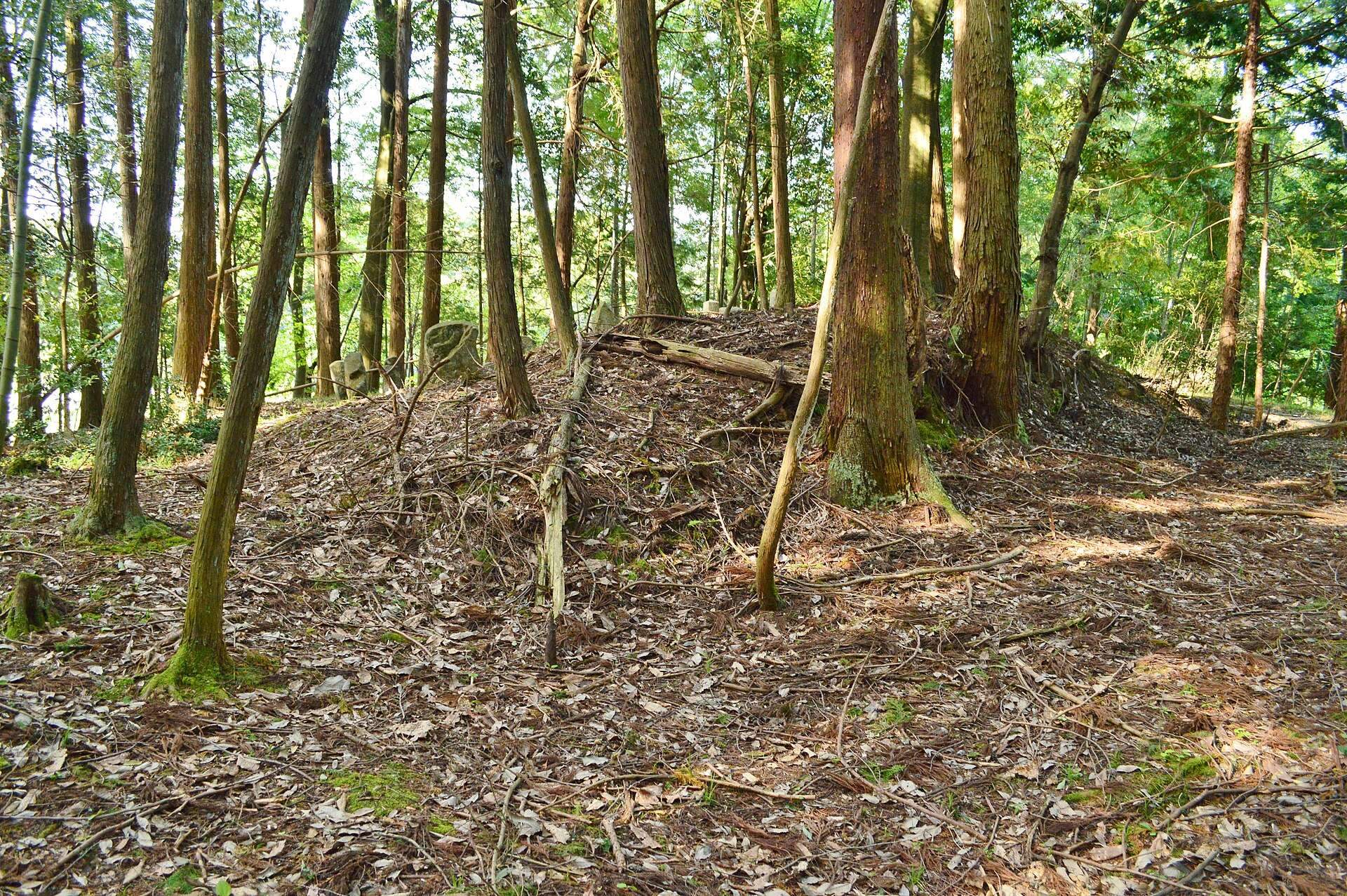
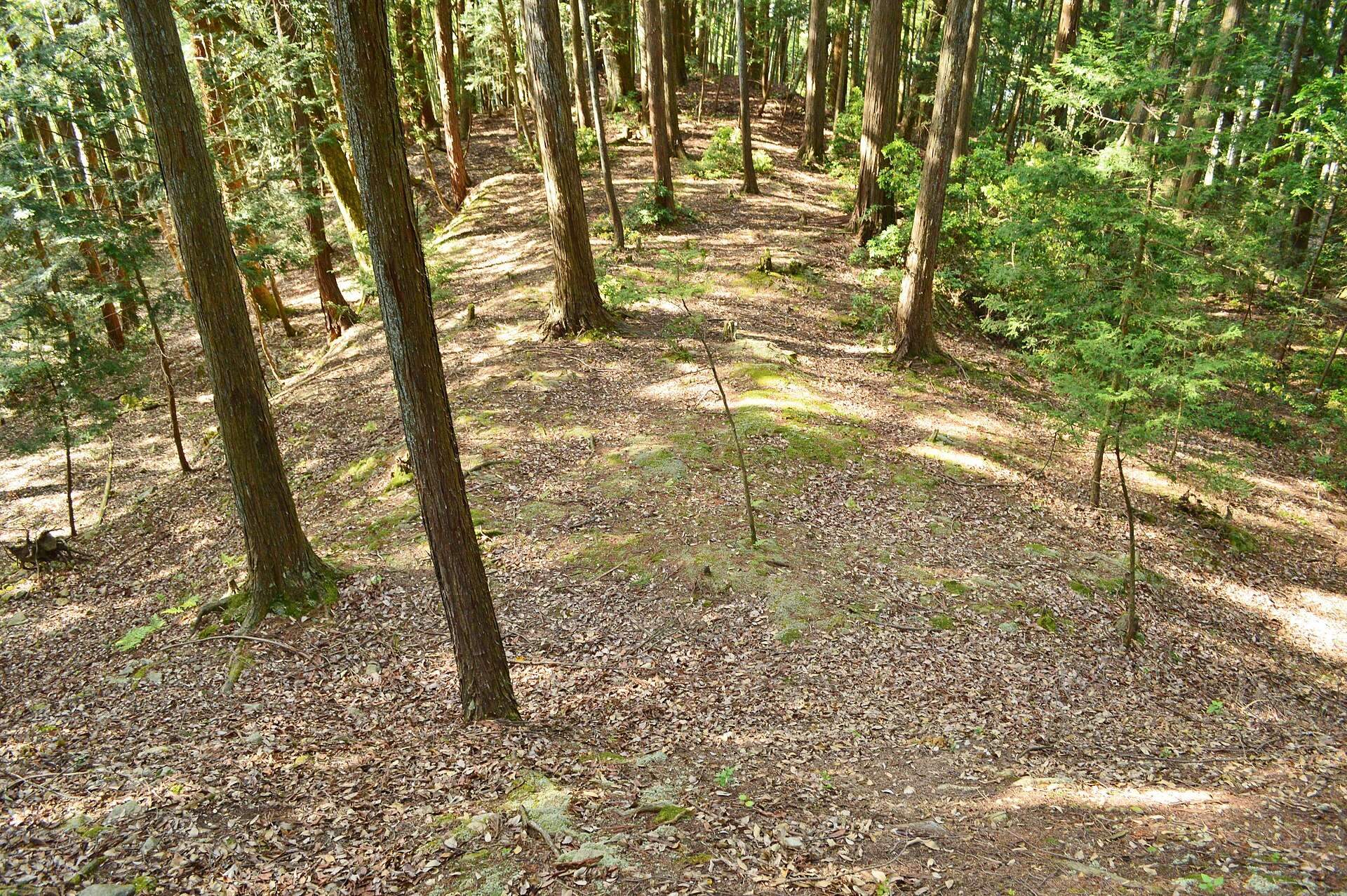
Shirageyama Kofun occupies a hill projecting into the Kaye Valley. From this position, the mound overlooks the middle reaches of the Noda River and the surrounding lowland toward Miyazu Bay. The surviving earthwork has a north-facing square front section and a circular rear section to the south, forming a keyhole-shaped plan.
Mound Structure
The tumulus is approximately 90 meters long and was constructed in two terraces. The rear circular section measures about 54 meters across and rises 7.5 meters, while the front section is about 32 meters wide and 5 meters high. The first terrace was shaped from the natural ground, and the second was formed with added earth. Sloping surfaces were covered with stone revetment, while rounded gravel covered the terrace surfaces. Portions of the revetment survive in place.
Burial Facilities
Principal Burial Area
The center of the rear circular section contains a pit-type stone chamber, two earthen graves, and a direct burial of a wooden coffin. A pit-type stone chamber is a burial chamber built below ground or within the mound with stone walls and roof slabs. The principal chamber runs east-west, across the mound’s main north-south axis, and is estimated to be about 4 meters long. Six ceiling stones have been identified, and rows of stakes and postholes were found around the chamber.
Terrace and Surrounding Burials
Two small pit-type stone cists and a direct burial of a stone coffin were placed in the terrace area. Other surrounding burials included two square graves enclosed by ditches, one of which contained a knife; a direct burial in a split-bamboo-shaped wooden coffin, which contained a metal tool; a wooden-lid earthen grave; and three further earthen graves. Together, these facilities show that burial activity extended beyond the principal chamber and into the wider mound area.
Shirageyama West Kofun Group
The Shirageyama West Kofun Group consists of four nearby mounds on the western hill behind Shirageyama Kofun’s rear circular section. No. 1 is a small square mound with a direct burial in a split-bamboo-shaped wooden coffin and an iron axe. Nos. 2, 3, and 4 are semicircular platform graves, each containing a direct burial in a split-bamboo-shaped wooden coffin.
Pottery fragments are among the finds associated with Shirageyama Kofun. The surviving earthwork, stone revetment, gravel-covered terraces, and related burial features form the principal visible remains of this early tomb complex.