Niizawa-Senzuka Kofun Cluster: A Major Burial-Mound Complex in Japan


Site at a Glance
- Rating
- 4.3
- Popularity
- Low
- Country
- Japan
- Primary era
- Medieval
- External website
- Open
- Eras represented
- Classical, Medieval
- Civilizations
- Yamato
- Site type
- Burial
- Remains
- Necropolis
On this page13 sections
History
Niizawa-Senzuka Kofun Cluster is a group of more than 600 burial mounds in Japan, near Kashihara in Nara Prefecture, formed during the Kofun period, the era from around the third to the seventh century when burial mounds were widely constructed. The mounds date from the end of the fourth century through the seventh century, with particularly intensive construction from the middle of the fifth century to the end of the sixth. The clan or individuals buried within the cluster remain unidentified.
Formation and archaeological investigation
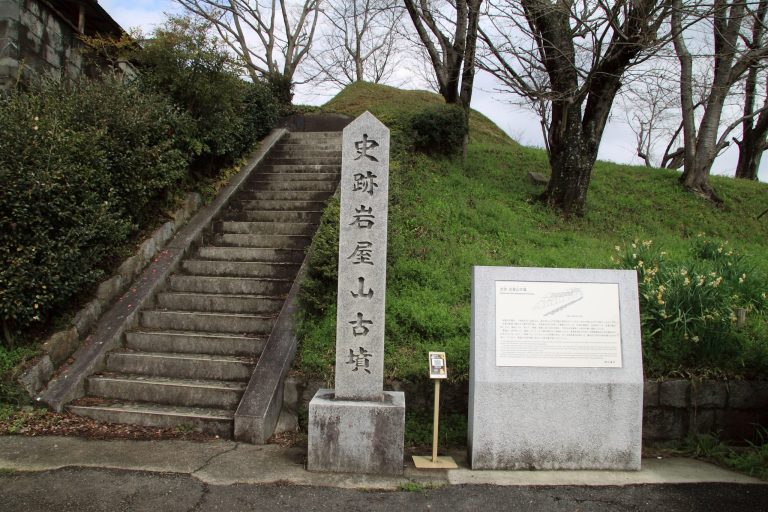
The cluster extends across the Kita-Ochi and Kawanishi neighborhoods, south of Mount Unebi in the southern Nara Basin. It was also called the Toriya Senzuka or Kawanishi Senzuka Kofun Cluster. Archaeological excavation began in 1947, followed by a full-scale investigation in 1962 that examined 23 mounds, including Kofun No. 500.
Kofun No. 500 contained a clay burial chamber and grave goods resembling those associated with the early Kofun period. Among them was a rare bronze hanging mirror. Investigations by Doshisha University and other organizations during the 1960s examined approximately 130 mounds and recovered abundant weapons, horse equipment, and other grave goods. These investigations helped establish the cluster as a National Historic Site, a designation it received in 1976.
Kofun No. 126 and long-distance exchange
Kofun No. 126, dating to the latter half of the fifth century, drew nationwide attention because of its exceptional collection of gold, silver, glass, jade, and other objects. The assemblage included a fire iron, a portable charcoal vessel used to heat and press clothing, which was the first example of this type excavated in Japan. It also contained Roman glass products thought to have reached Japan through long-distance exchange involving the Western Regions, the lands west of China, and Silla, a Korean kingdom connected to exchange networks across the Korean Peninsula and beyond.
In 2014, X-ray fluorescence analysis by researchers including Yoshiya Abe of Tokyo University of Science found that the chemical composition of a glass dish from Kofun No. 126 was almost identical to Roman glass excavated within the Roman Empire. This was the first chemical confirmation in Japan that a glass vessel from a kofun originated in the Roman imperial world. The objects from Kofun No. 126 were designated collectively as an Important Cultural Property in 1979 and are held by the Tokyo National Museum.
Preservation and park development
Development of Niizawa Senzuka Kofun Cluster Park began in 2012. The preserved area was arranged in northern and southern zones, and the project was still in progress in 2018. The designation and preservation work have maintained the cluster as an archaeological landscape while supporting continued interpretation of its burial mounds and excavated objects.
Remains
Hillside layout and mound forms
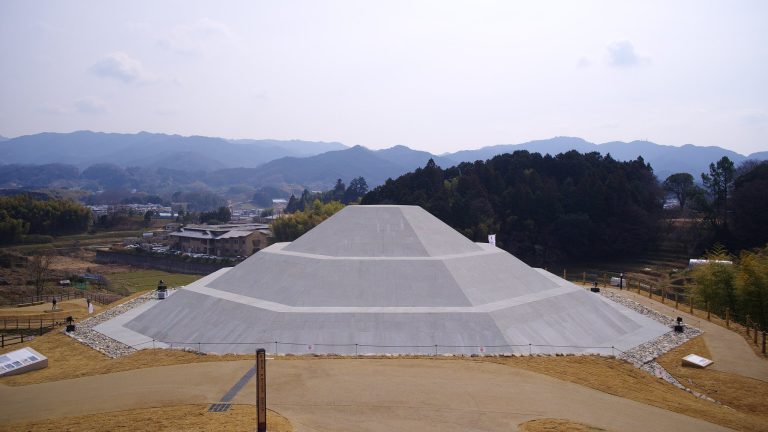
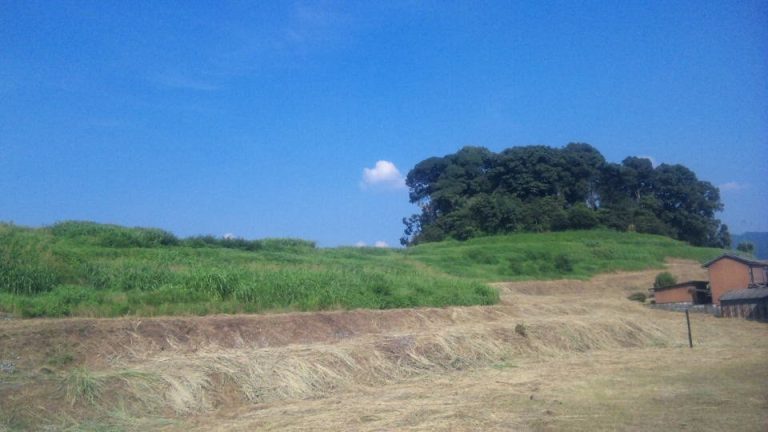
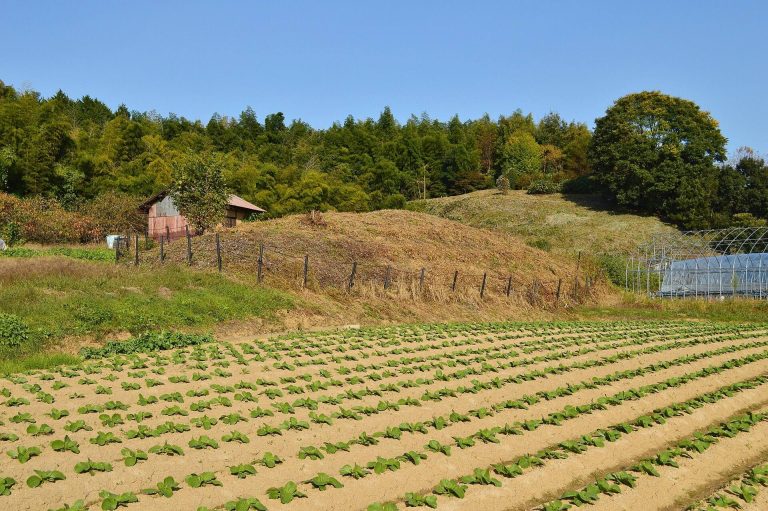
The cluster occupies the Ochioka Hills at an elevation of approximately 150 meters. It extends about 2 kilometers from east to west and slightly more than 2 kilometers from north to south, across hills north and south of the Toge-Kume Prefectural Road. More than 600 mounds occupy this area. Most are circular enpun, or circular burial mounds, generally about 10 to 30 meters in diameter, with another description giving a typical diameter of about 10 to 15 meters.
The group also includes nine keyhole-shaped mounds, a form combining a circular rear section with a rectangular projection, one mound made from two joined rectangles, and twelve rectangular mounds. Together, these forms show the varied organization of the burial landscape from the late fourth through the seventh century.
Burial installations
Most burials used wooden coffins placed directly in the ground. Other graves contained clay coffins, gravel coffins, or stone burial chambers entered horizontally. The different installations provide evidence of varied burial practices within the cluster over its several centuries of use.
Kofun No. 500
Kofun No. 500 is a keyhole-shaped mound containing a clay burial chamber. Its grave goods included a rare bronze hanging mirror and objects associated with the early Kofun period.
Kofun No. 126
Kofun No. 126 was externally a small rectangular mound, measuring approximately 22 meters from east to west and 18 meters from north to south. Inside was a directly buried wooden coffin shaped like split bamboo and approximately 3.1 meters long.
Grave goods and imported glass
Burial ornaments
The burial assemblage from Kofun No. 126 included a lacquer plate, a copper-handled dish, a mirror, jade ornaments, a gold square plate with dragon-shaped openwork, a silver hollow bead, a gold pendant earring, a glass dish, a glass jar, gold rings, belt fittings, and other ornaments made of gold, silver, glass, and jade. The gold plate lay near the head. Three-strand chain earrings, coiled-gold hair ornaments, and a necklace with jade curved beads and gold, silver, and glass beads were also present. Gold and silver bracelets were placed on the arms, together with five gold and three silver finger rings. A belt carried gilt decorative plates, while glass beads associated with footwear lay near the feet and gold pendants were scattered through the coffin.
Foreign objects and the fire iron
The glass dish from Kofun No. 126 has a chemical composition almost identical to Roman glass found within the Roman Empire. Other Roman glass products from the mound are regarded as having arrived through exchange involving the Western Regions and Silla. The cluster’s fire iron, a metal vessel designed to hold charcoal and function like an iron, represents the first excavated Japanese example of this type. The excavated objects, including the gold plate, pendant earrings, jade ornaments, and other items, are preserved at the Tokyo National Museum.
Preserved landscape
The site is maintained as a park divided into northern and southern zones. Its physical arrangement includes paths, open spaces, observation platforms, playground equipment, a biotope, and a café, alongside the preserved burial-mound landscape.