Shuzen-ji Temple: A Historic Sōtō Zen Buddhist Temple in Japan


Site at a Glance
- Rating
- 4.1
- Popularity
- Medium
- Country
- Japan
- Primary era
- Modern
- External website
- Open
- Eras represented
- Modern
- Civilizations
- Japanese
- Site type
- Religious
- Remains
- Monastery
On this page13 sections
History
Shuzen-ji Temple is a Sōtō Zen Buddhist temple in Shuzenji, Japan, traditionally founded in 807 during the early Heian period by Kūkai, the monk associated with the foundation of Shingon esoteric Buddhism. For about 470 years after its foundation, the temple followed the Shingon tradition. Its formal name is Fukuchizan Shuzen Bannan Zenji, and Fukuchizan is its mountain name.
Foundation and the Kamakura Period
The temple was first known as the Temple of Katsura Valley, a name connected with the former regional name. By the early Kamakura period, Shuzen-ji had become the established name. One explanation holds that the character meaning “Zen” replaced the character 善 when the temple changed to the Rinzai school during the middle of the Kamakura period.
In the early Kamakura period, the temple’s name also came to designate its estate. Minamoto no Noriyori, the younger brother of Minamoto no Yoritomo, and Minamoto no Yoriie, Yoritomo’s son and the second shogun of the Kamakura shogunate, were confined there. Both are traditionally said to have been killed at the temple. The killing of Noriyori is not supported by surviving historical evidence, and his survival has therefore been proposed.
During the Kenchō era, from 1249 to 1255, Lanxi Daolong came to Shuzen-ji while seeking refuge because he was suspected of being a Yuan spy. Lanxi Daolong was a Chinese Chan monk who later became an influential Buddhist teacher in Japan. The temple subsequently adopted the Rinzai tradition. Emperor Lizong of the Southern Song gave Lanxi Daolong a plaque bearing an inscription that referred to Shuzen-ji, helping to spread the temple’s name in China.
Conflict, Fire, and Sōtō Revival
Shuzen-ji was damaged in the 1361 conflict between Hatakeyama Kunikiyo and Ashikaga Motouji. Its entire monastic complex burned in a major fire in 1409, after which the temple entered a period of decline.
Ise Shinkuro Nagauji, later known as Hōjō Sōun, ruled Izu Province and supported the temple’s revival. Through his uncle, Ryūkēi Hanshō, Shuzen-ji was restored as a Sōtō institution. Sōtō is a Zen school that places particular emphasis on seated meditation, while Rinzai is associated with koan practice and demanding monastic training.
Modern Preservation
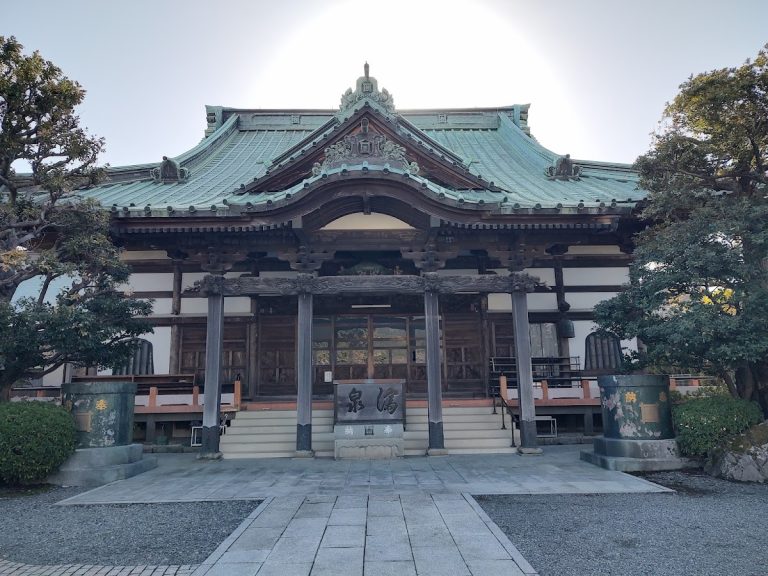
A fire in 1863 destroyed the plaque associated with Lanxi Daolong. The present main hall belongs to the rebuilding of 1883. Shuzen-ji held a 1,200th-foundation anniversary observance in 2007, and repairs to the temple gate were completed in 2014.
The temple’s cultural and natural heritage includes a seated wooden Dainichi Nyorai, designated a National Important Cultural Property in the sculpture category in 1993. The Song-printed Hōkō Hannya Sutra, fascicle 23, received prefectural tangible cultural property status in 1958, while a wooden seated Shaka Nyorai received the same status in the sculpture category in 1979. The temple’s katsura tree was designated a Shizuoka Prefectural Natural Monument in 1956.
Remains
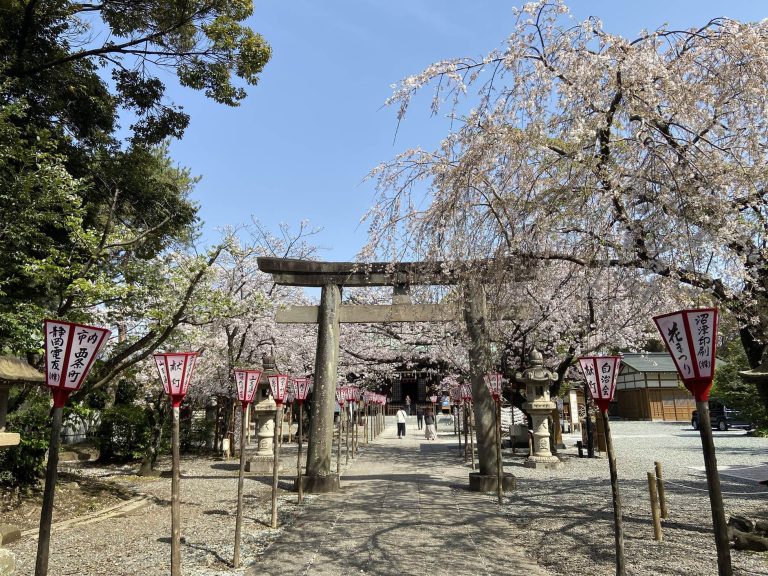
The surviving features of Shuzen-ji combine rebuilt temple architecture, Buddhist sculpture, a medieval printed scripture, and an old katsura tree. The main hall and temple gate represent the later architectural fabric, while the sculptures and scripture preserve material evidence connected with the Kamakura period and the temple’s religious history.
Temple Buildings
Main Hall
The present main hall was rebuilt in 1883. It forms part of the temple’s surviving religious complex and represents the building fabric created after the earlier monastic buildings had been destroyed by fire.
Temple Gate
The temple gate is a surviving architectural feature of Shuzen-ji. Repairs completed in 2014 helped preserve its present fabric.
Sculpture and Textual Heritage
Dainichi Nyorai
The principal image is a seated wooden Dainichi Nyorai, the Japanese name for Mahavairocana Buddha, the central Buddha of Shingon esoteric Buddhism. The image is 100.5 centimetres high, with a knee width of 74.0 centimetres. It was made using joined-block construction, a technique in which a large wooden figure is assembled from several separately carved blocks, and its eyes contain inlaid crystal.
An ink inscription inside the statue states that Jitsukei made it in 1210. Jitsukei was a Buddhist sculptor of the Kamakura period. The interior also contained a brocade cloth wrapped around three bundles of a woman’s hair, adding a further material element to the image’s history.
Hōkō Hannya Sutra
The Song-printed Hōkō Hannya Sutra, fascicle 23, preserves an ink inscription in the margin at its end. The inscription dedicates the scripture to the spiritual benefit of Minamoto no Yoriie and states that a nun placed it at the temple. It is traditionally attributed to Hōjō Masako, Yoriie’s grandmother and the wife of Minamoto no Yoritomo.
Shaka Nyorai
A wooden seated image of Shaka Nyorai is also associated with Shuzen-ji. Shaka Nyorai is the Japanese name for Shakyamuni, the historical Buddha. The sculpture belongs to the temple’s surviving Buddhist artistic heritage.
Katsura Tree
The temple’s katsura tree is an associated natural feature and a designated prefectural natural monument. It forms part of the historic environment preserved with the temple.