Yamashina Hongan-ji: A Fortified Jōdo Shinshū Headquarters in Japan


Site at a Glance
- Rating
- 4
- Popularity
- Low
- Country
- Japan
- Primary era
- Medieval
- External website
- Open
- Eras represented
- Medieval
- Civilizations
- Ashikaga shogunate
- Site type
- Military
- Remains
- Fortified Town
On this page14 sections
History
Yamashina Hongan-ji was a fortified Jōdo Shinshū Buddhist temple complex in Japan, near Kyoto, built between 1478 and 1483 during the late fifteenth century. Jōdo Shinshū is a major Japanese Buddhist tradition centered on devotion to Amida Buddha and recitation of the nembutsu. The temple became the tradition’s central headquarters and the political and religious center of the Ikkō-ikki, leagues of monks, local armed groups, and lay followers that sometimes developed into powerful forces during Japan’s Sengoku period of prolonged warfare and political fragmentation.
From Ōtani to Yamashina
The Hongan-ji institution had originally been based at Shinran’s tomb in Ōtani. In 1465, monks from Enryaku-ji destroyed the Kyoto Hongan-ji during the Kanshō Persecution, an attack that forced Rennyo, the eighth Hongan-ji head priest, to seek a new base. He first moved to Yoshizaki Gobō in Echizen and later selected Yamashina, near Kyoto, for a new headquarters.
Construction began in 1478 and was completed in 1483. The central Gohonji complex was built in stages. The Mukai-dokoro, Shinden, and Founder’s Hall came first, followed by the Amida Hall in 1481. The Uchijinai and Sotojinai were completed by 1483. Kōshō-ji, then under Hongan-ji authority, was established south of the Gohonji.
Rennyo and the expanding complex
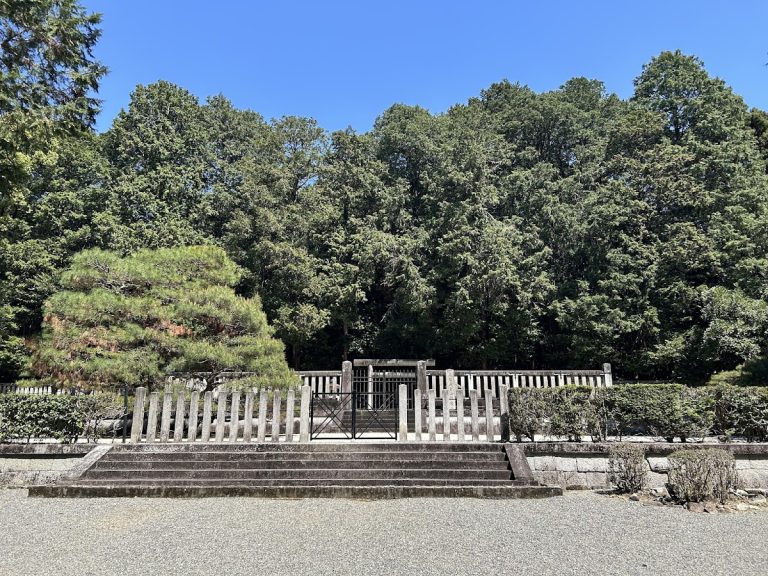
Rennyo directed the foundation and development of Yamashina Hongan-ji. In 1489 he established the Southern Hall as his retirement residence. He died there at the age of 85 in 1499, after which a mausoleum was established in the Sotojinai.
During the leadership of the ninth and tenth head priests, Jitsunyo and Shonyo, the temple increasingly took on the character of a military stronghold. Earthworks were probably added around the Uchijinai in the early Eishō era, during Jitsunyo’s tenure, and around the Sotojinai around 1513. The complex may have reached its full castle-like form during their period of leadership, shortly before its destruction.
Yamashina remained the sect’s central headquarters even as Ishiyama Hongan-ji and Osaka became larger and more influential. Its surrounding temple town housed the Hongan-ji leadership, lay followers, merchants, and craftsmen. The settlement was therefore both a religious center and an organized community tied to the Ikkō-ikki.
Destruction and the transfer to Ishiyama
Conflict between the Ikkō-ikki and followers of Nichiren Buddhism contributed to an attack in 1532. Hosokawa Harumoto and Rokkaku Sadayori led samurai and townspeople against the complex. The attacking force surrounded Yamashina Hongan-ji on August 23 and began its assault early on August 24. After entering through the area known as Mizuochi, the attackers set fire to the temple town, including Kōshō-ji and the central Gohonji, and destroyed the headquarters.
Shonyo had already gone to Ishiyama Hongan-ji in Osaka, where he directed the defense and escaped the destruction. Jitsuju, Rennyo’s thirteenth son, rescued Shinran’s sacred image and other temple treasures. He moved them through Daigo-ji’s Hōon-in and Ujitawara before depositing them at Ishiyama Hongan-ji on July 15, 1533. The transfer of the image helped establish Ishiyama Hongan-ji as the sect’s new headquarters.
Archaeology and later status
More than twenty archaeological investigations have taken place at the former site. Excavations have revealed remains and artifacts that predate Yamashina Hongan-ji, showing that the area had long been an important location. Such evidence becomes much less common after the Kamakura period. A change in the terrain has been proposed as one explanation. The Shinomiya and Yamashina rivers may have formed an alluvial fan, a fan-shaped deposit created where a stream spreads sediment onto flatter ground, making rice cultivation more difficult.
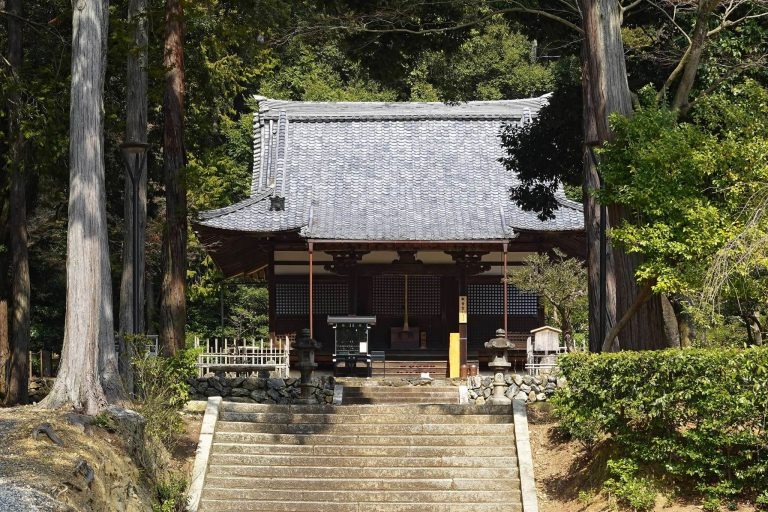
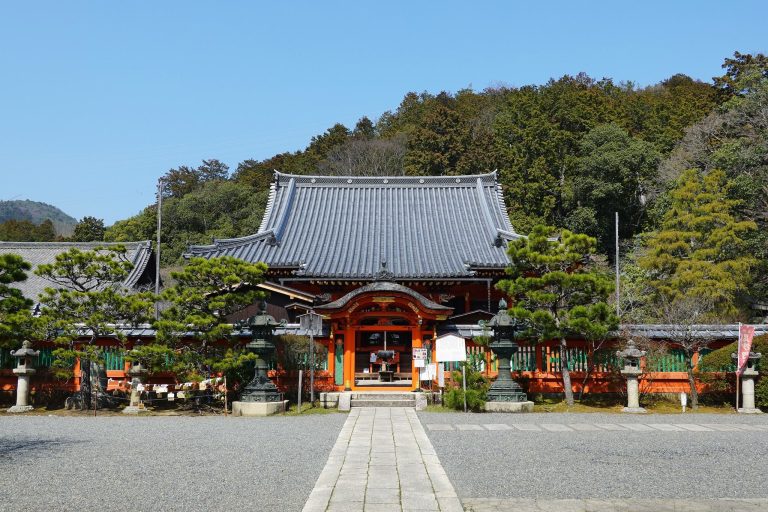
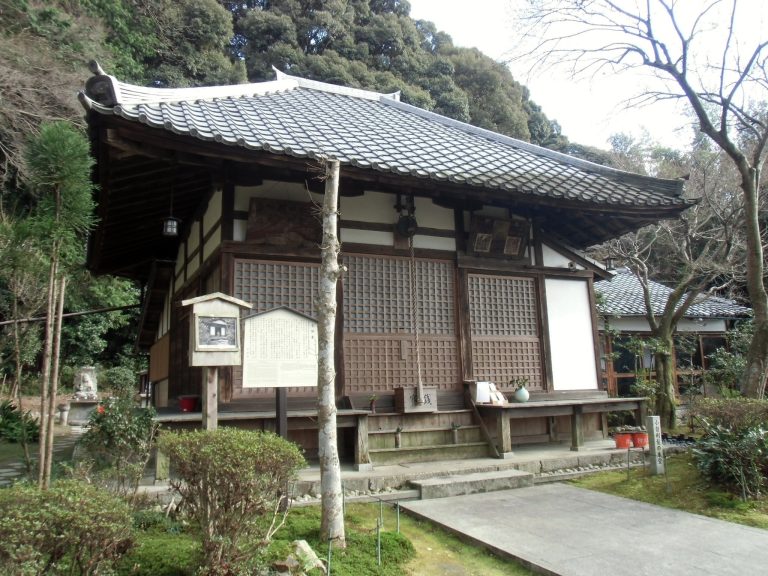
The former grounds are now occupied by branch temples of the Hongan-ji school and the Shinshū Ōtani school. The Southern Hall and surviving earthworks were designated together as a National Historic Site of Japan in 2002.
Remains
Yamashina Hongan-ji occupied an estimated area about 1 kilometer from north to south and 0.8 kilometers from east to west, west of the center of the Yamashina Basin at the confluence of the Shinomiya River and the Yamashina River, formerly called the Otowa River. The site stood where the Tōkaidō route met the road to Uji and where river routes converged. Moats and packed-earth embankments enclosed the settlement, creating a fortified temple town on level ground.
Nested temple enclosures
Gohonji
The Gohonji formed the innermost enclosure, comparable to an inner castle bailey, and contained the principal religious buildings. These included the Founder’s Hall, the Mukai-dokoro, the Shinden, and the Amida Hall. The Founder’s Hall was the largest building in the complex. The former area is now built over and crossed by National Route 1 and the Tōkaidō Shinkansen, while part of its eastern defensive earthworks survives.
Uchijinai
The Uchijinai formed the second enclosure and contained the residences of the Hongan-ji family and principal lay followers. Its main entrance lay at the boundary between the Gohonji and Uchijinai, in the area called Mizuochi. A substantial earthwork in Yamashina Central Park belonged to the northeastern part of this enclosure and preserves part of its defensive perimeter.
Sotojinai
The Sotojinai formed the third enclosure and contained houses for resident merchants and craftsmen. Its commercial population included painters, confectioners, salt merchants, sake merchants, and fish sellers. Together with the inner enclosures, it made the temple town a settlement with religious, residential, and commercial functions.
Southern Hall and defensive works
Southern Hall
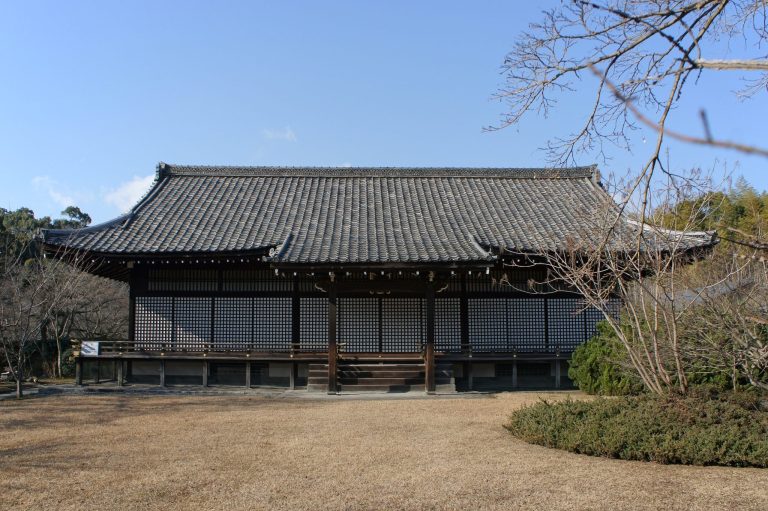
The Southern Hall was probably built as Rennyo’s retirement facility, although its remains indicate a more strongly defensive complex than a simple residence. Excavation in 2001 identified two concentric moats, earthworks, a line of fences, ditches, and the remains of a watchtower-like building. The interior included a garden, a Buddhist hall, and a moat. Surviving remains lie in the area south of Kōshō-ji.
Moats and embankments
The earthworks were formed from alternating layers of cohesive clay, soil, gravel, and stone, packed inward to create high embankments. Excavation identified the Great Moat, approximately 12 meters wide and 4 meters deep, with a stone-lined covered drain along its front side.
Yamashina Central Park earthwork
The surviving earthwork in Yamashina Central Park measures approximately 75 meters from east to west, 60 meters from north to south, and 7 meters high. It represents a section of the northeastern defenses of the Uchijinai. Historical drawings show drum-tower-like structures at entrances and corners, arranged to provide flanking fire. These installations may have served both offensive and defensive purposes.