Bylazora: An Ancient Paeonian City in North Macedonia
Site at a Glance
- Popularity
- Medium
- Country
- North Macedonia
- Primary era
- Classical
- Eras represented
- Iron Age, Classical
- Civilizations
- Kingdom of Macedon
- Site type
- Settlement
- Remains
- City
On this page16 sections
History
Paeonian center
Bylazora was an ancient Paeonian city at the Gradishte site near Knezhje in North Macedonia. The Paeonians were an ancient people and kingdom north of Macedonia. Probably their principal city and royal seat, Bylazora later ceded that role to Stobi. The Greek historian Polybius and the Roman historian Livy described it as Paeonia’s largest or most important city.
Its position gave the city control of a strategic passage between Dardania, the territory of another ancient Balkan people, and Macedonia. Routes connected it north to south and east to west. Southwest routes led toward Pelagonia through the Babuna Valley, or toward Styberra and the Macedonian interior by way of the Raec Valley. The city stood among territories associated with the Dardanians, Paeonians, Illyrians, Thracians, and Macedonians.
Archaeological research distinguishes four phases of occupation and organization: the seventh to fifth centuries BC, the second half of the fifth to the middle of the fourth century BC, the second half of the fourth century to 279 BC, and 279 to 168 BC.
Macedonian control and military campaigns
In 219 BC, the Dardanians assembled forces for a raid into Macedonia, and Bylazora was probably then under their control. Philip V of Macedonia captured the city in 217 BC and rebuilt its fortifications. Taking Bylazora secured the passage and helped bring Dardanian raids to an end.
In 168 BC, as he prepared for the Third Macedonian War, the conflict between Perseus’s Macedonia and Rome, Perseus sought military support from Gauls campaigning at Desudaba in Maedica. He asked them to move their camp to Bylazora and for their commanders to join him at Almana on the Vardar River.
Identification and archaeological investigation
In 1976, archaeologist Ivan Mikulčić proposed that Bylazora lay at Gradishte near Knezhje. Some earlier researchers had placed the city at Veleshko Kale. Surveys and test excavations at Gradishte found settlement layers, mainly from early antiquity, and scattered finds, but the evidence available from the 1990 investigations was not then considered sufficient to confirm the identification. Those investigations established the site’s boundaries and terraces; finds indicated occupation from the Iron Age until shortly before Rome conquered Macedonia and pointed to a large, economically powerful settlement.
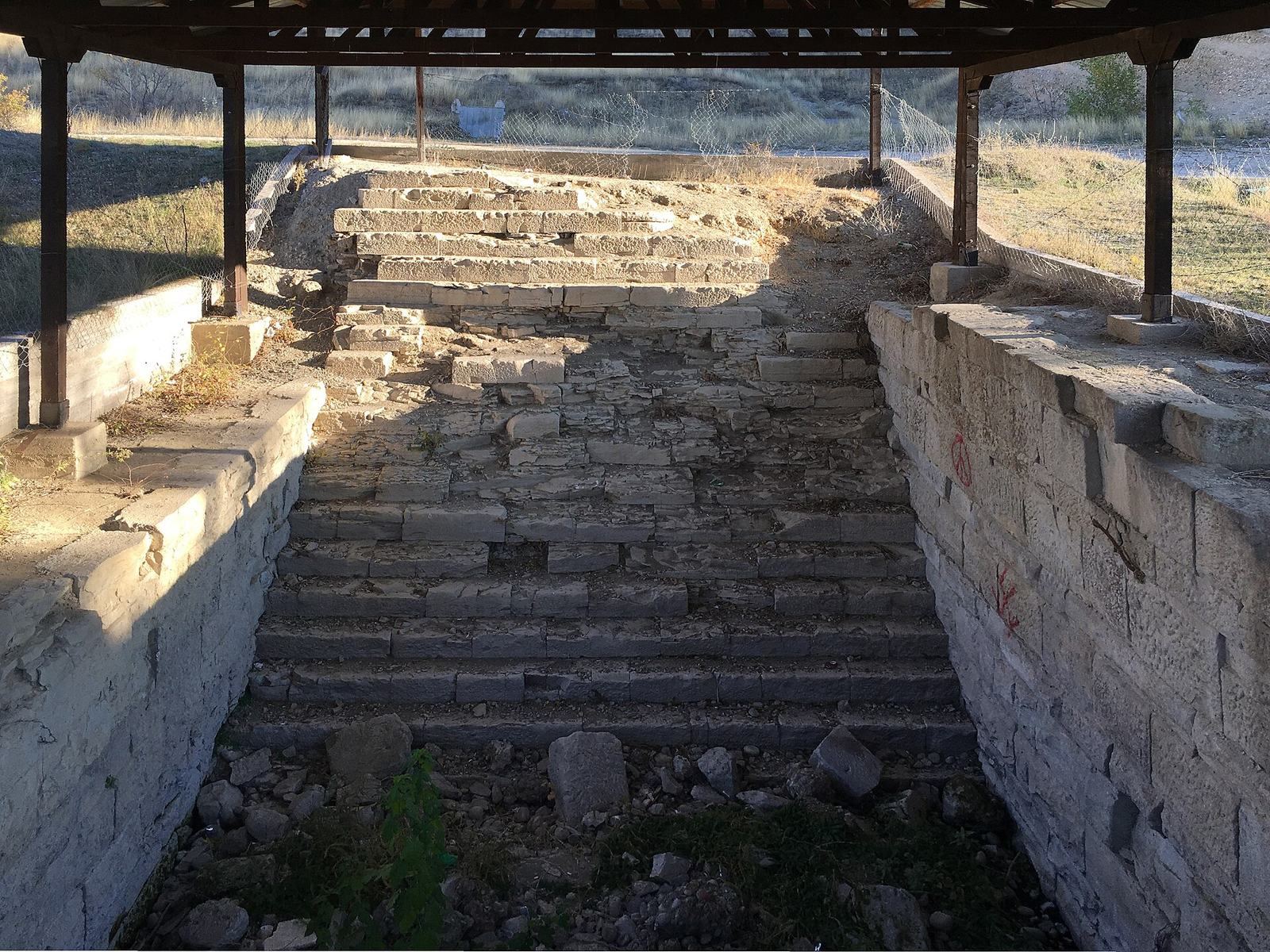
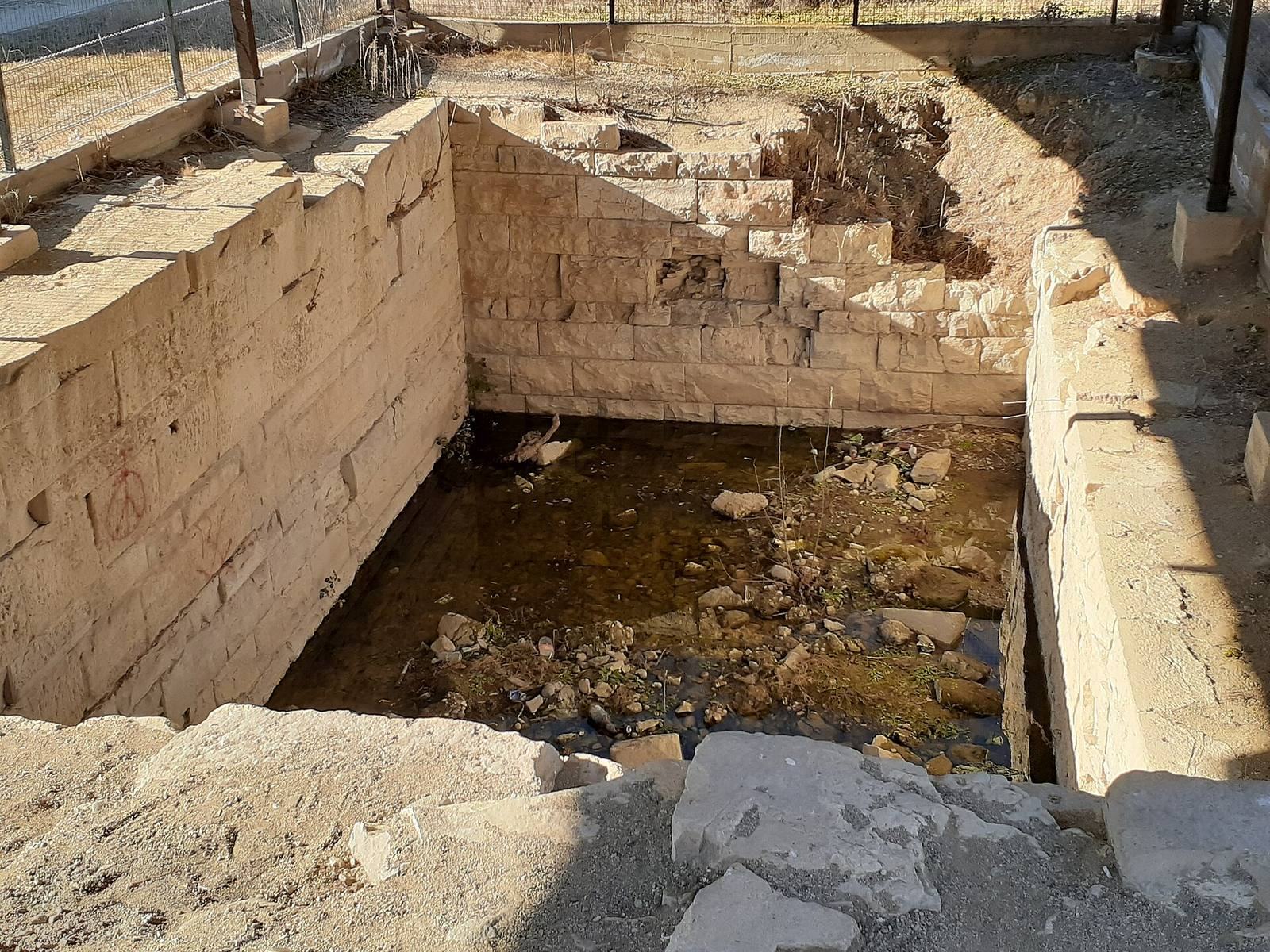
Sand extraction at the site’s northern foot in the early 1990s exposed a monumental stone structure and permanently destroyed more than a fifth of the ancient city’s area. Work stopped so the structure could be exposed and examined; it was identified as a cistern that may have been associated with the destroyed northern city wall. Extensive excavations began in August 2008. Macedonian-American work on the acropolis continued from 2008 to 2012 under archaeologists Stefan Danev and William Heidinger. Investigations continued in 2013 as a project of the National Museum in Sveti Nikole and the Institute of Archaeology at the Faculty of Philosophy in Skopje.
Remains
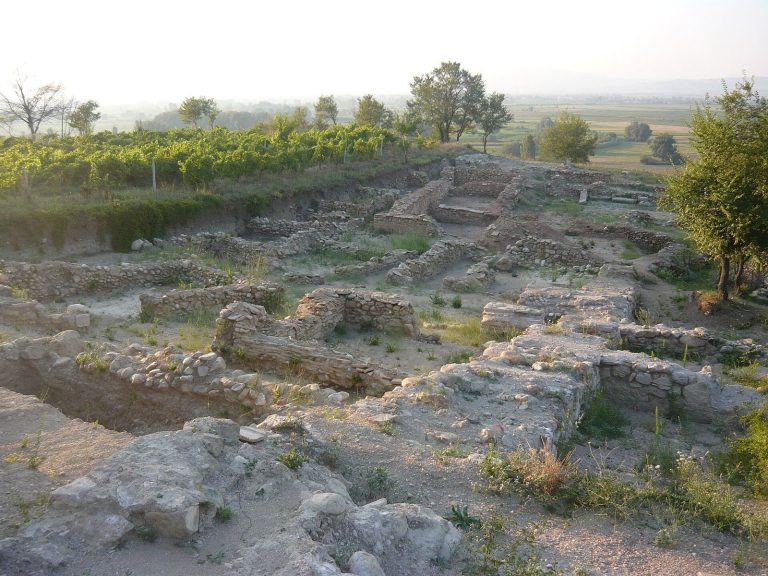
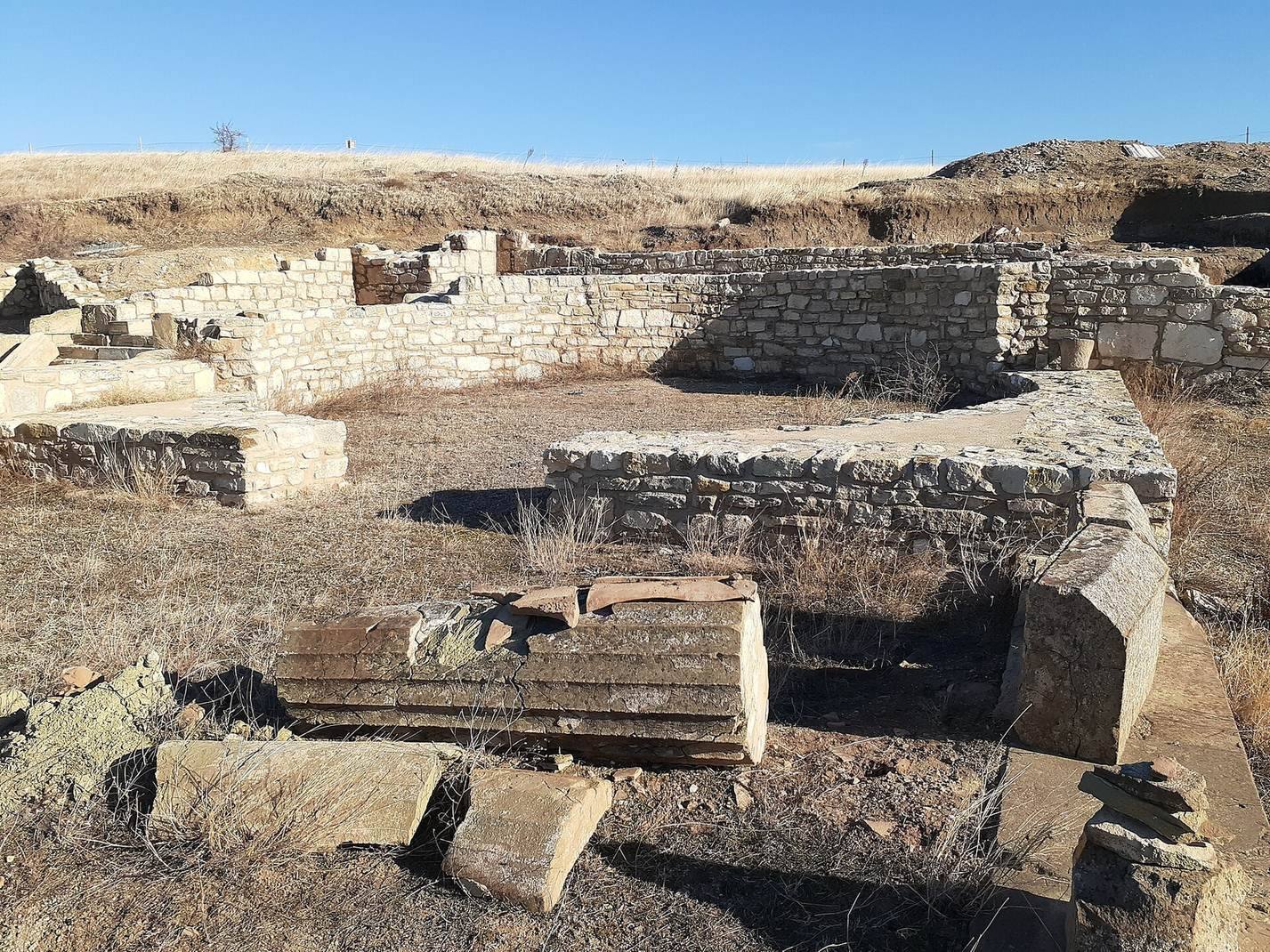
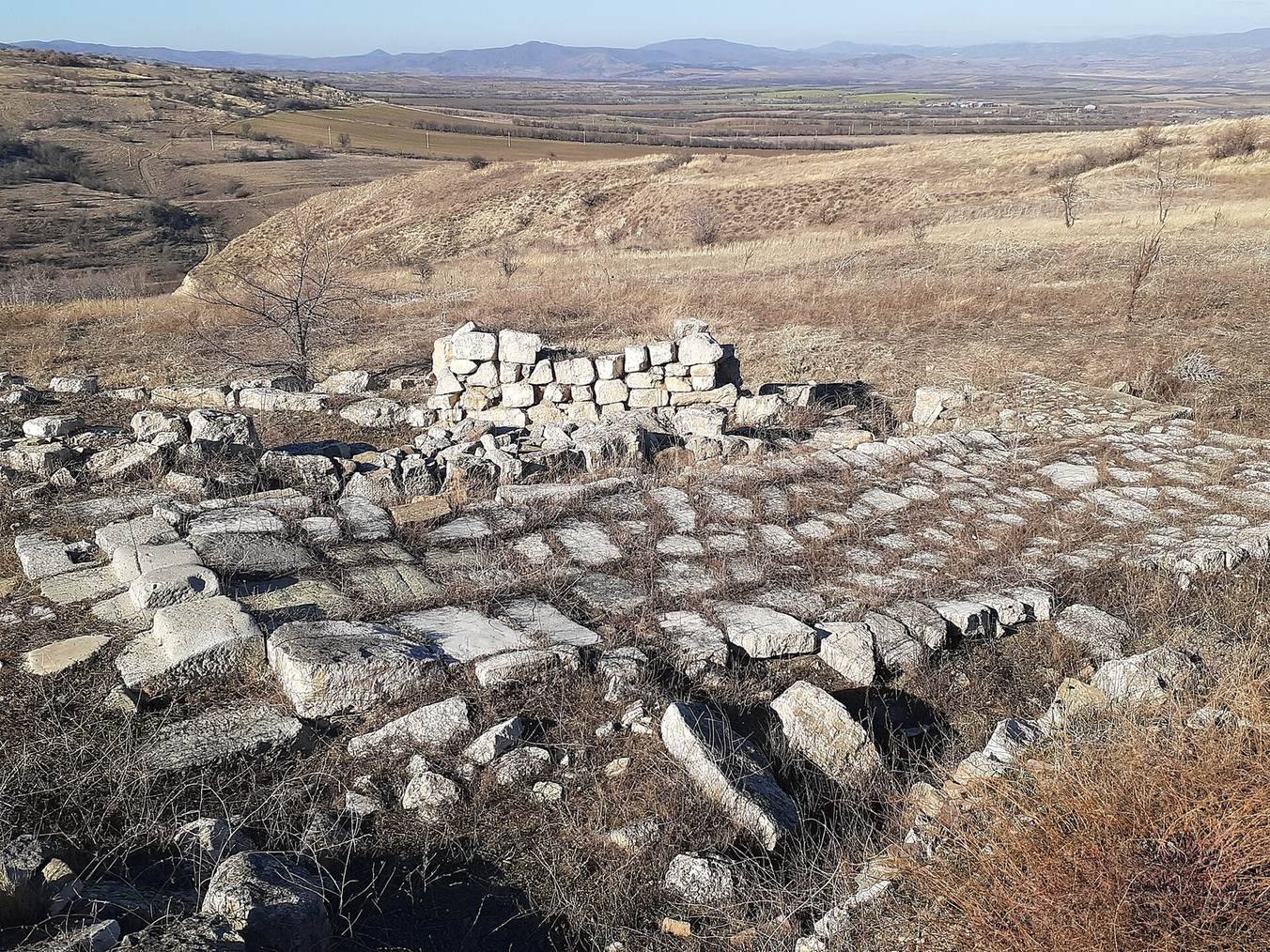
The fortified settlement covered about 20 hectares, including its suburb, and extended across a series of terraces. Residential remains occur across these levels, with the elevated, fortified acropolis forming part of the site. Major defensive structures were built from massive, dressed limestone blocks.
Terraced settlement
Residential areas
Excavations have uncovered residential buildings and other settlement remains on the terraces, which were used as living areas. The site’s settlement layers and scattered finds include stone sculpture and large storage jars.
Reused building material
Worked blocks and unworked stone taken from ancient structures were reused in newer buildings in nearby Knezhje. This reused material forms part of the archaeological evidence associated with the settlement.
Acropolis and fortifications
Northern defenses
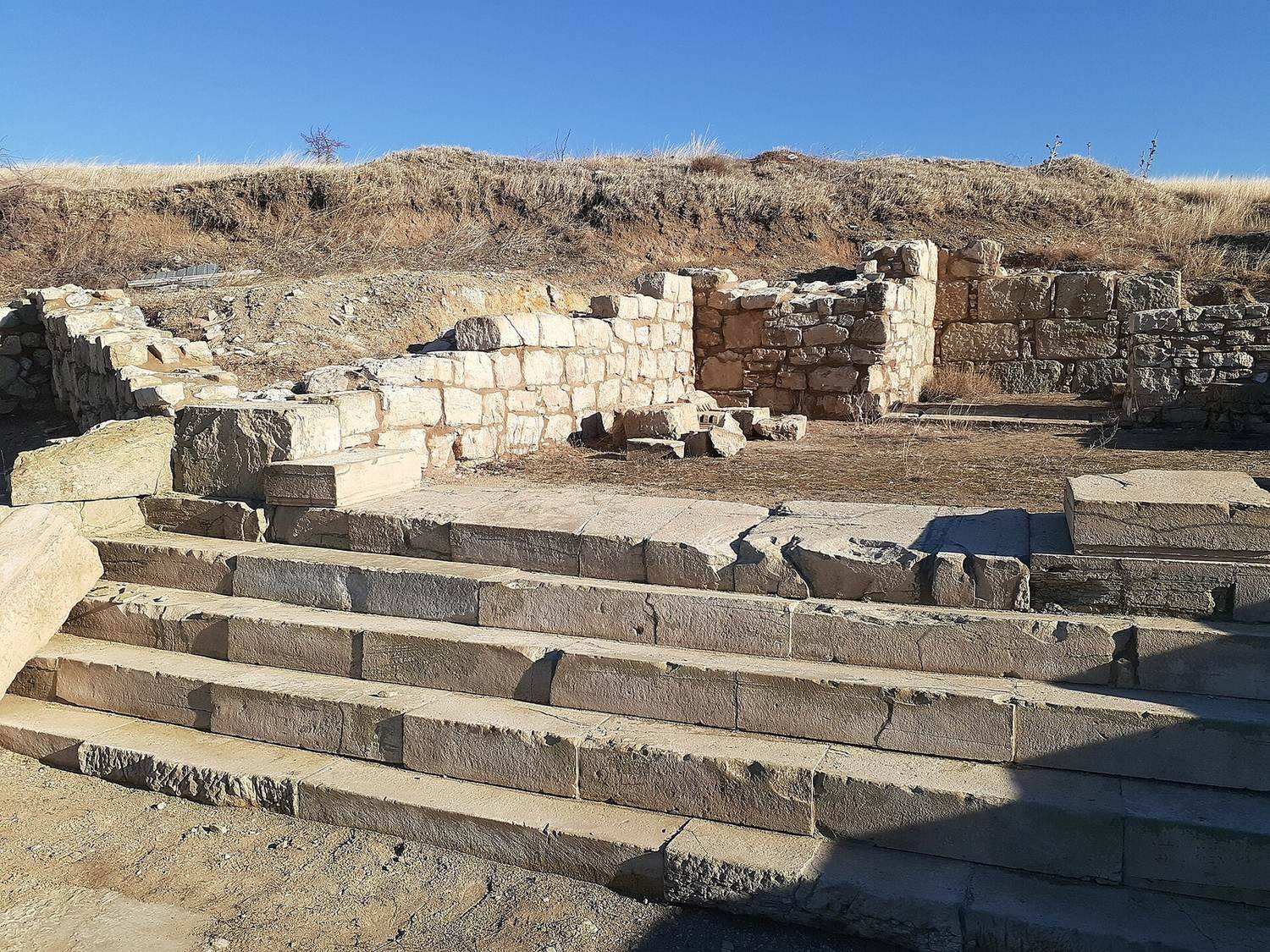
A section of the northern fortification line has been uncovered on the acropolis. Built from massive, dressed limestone blocks, the defenses date from the late fifth through the fourth centuries BC. Their scale and skilled stonework have been interpreted as evidence of the city’s wealth, status, and powerful patrons.
Acropolis entrance
Excavation in 2008 uncovered a stone threshold block belonging to the inner acropolis gate, at a depth of about two metres. The main entrance was exposed, connected to the inner gate by a concave stone ramp measuring 14 metres in length. The gate and fortification structures belong to the late fifth through fourth centuries BC.
Palace and other buildings
Systematic excavation has exposed much of the acropolis, including its southern half. A major building discovered there in 2013 has been identified as the ruler’s palace. Investigations have also focused on buildings in the western and southern parts of the site.
Cistern and burials
Northern cistern
A monumental cistern, or water-storage structure, at the northern foot of the site dates to the sixth or fifth century BC. It may have formed part of the northern city wall, which was later destroyed.
Stone-slab tombs
On the rise immediately south of the settlement, a group of tomb structures was built from stone slabs. They may be Iron Age graves or a cemetery connected with the settlement’s earliest phase, in the seventh or sixth century BC.
Movable finds
Many ceramic vessels have been recovered, with preliminary dates ranging from the sixth to the third centuries BC. They have been associated with a prosperous phase of Paeonian history, perhaps during the reign of Lycceius, Patraus, or Audoleon.