Yadani Kofun: A Yayoi-Period Burial Mound in Japan
Site at a Glance
- Rating
- 3.6
- Popularity
- Very Low
- Country
- Japan
- Primary era
- Classical
- External website
- Open
- Eras represented
- Classical, Medieval
- Civilizations
- Yayoi
- Site type
- Burial
- Remains
- Burial Mound
On this page6 sections
History
Yadani Kofun is a Yayoi-period burial mound in Miyoshi, Hiroshima, Japan, built in the late Yayoi period or around the beginning of the Kofun period, broadly in the third century AD. It stands on a low hill at the southern edge of the Miyoshi Basin and forms part of the Matsugasako-Yadani archaeological site group, occupied from the Jomon period, associated with hunter-gatherer communities and early pottery traditions, through the Kofun period.
A Yayoi-period burial tradition
Although its popular name includes the word Kofun, meaning a burial mound of the later Kofun period, Yadani Kofun predates that period and differs substantially from its typical tumuli. Its four-cornered projecting design connects it with traditions concentrated along the Japan Sea coast and influenced by Izumo, while its distinctive vessel stands and jars point toward the southern Kibi region. The mound therefore reflects interaction between the San’in and San’yo areas through the Miyoshi Basin.
Two square tombs west of the mound form part of the same archaeological setting. A Sue-ware kiln, a facility for producing high-fired, wheel-made pottery during the Kofun period, was also established west of the mound. Together, these remains show that the designated area continued to contain burial and craft activity after the mound was built.
Excavation and protection
The mound was discovered and excavated between 1977 and 1979 during construction of the Miyoshi Industrial Park. The Hiroshima Prefectural Board of Education conducted the excavation and published its results in 1981. The mound, the two square tombs, and the Sue-ware kiln were designated a National Historic Site in 1979 under the name Yadani Kofun. The excavated artifacts received designation as a National Important Cultural Property in 1994 and are displayed or preserved at the Hiroshima Prefectural Museum of History and Folklore.
Remains
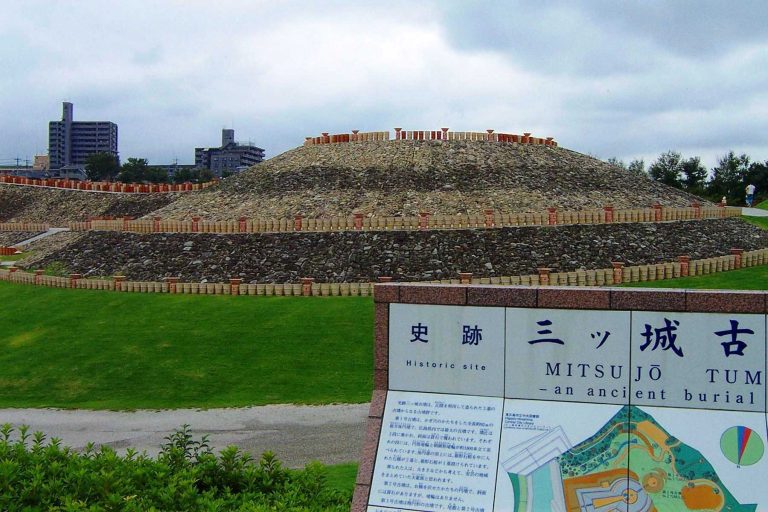
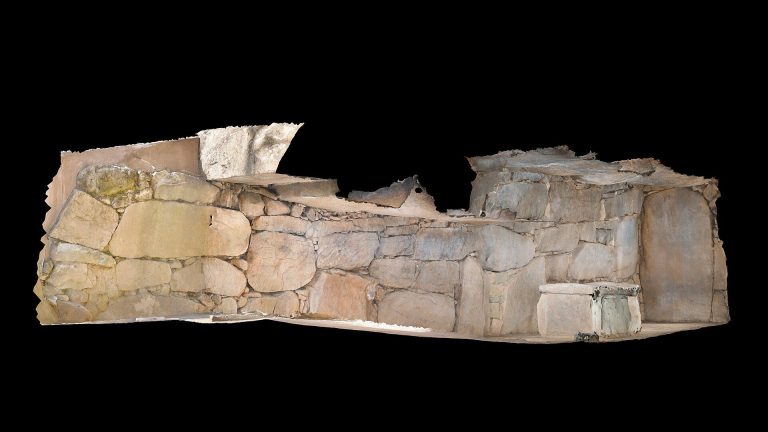
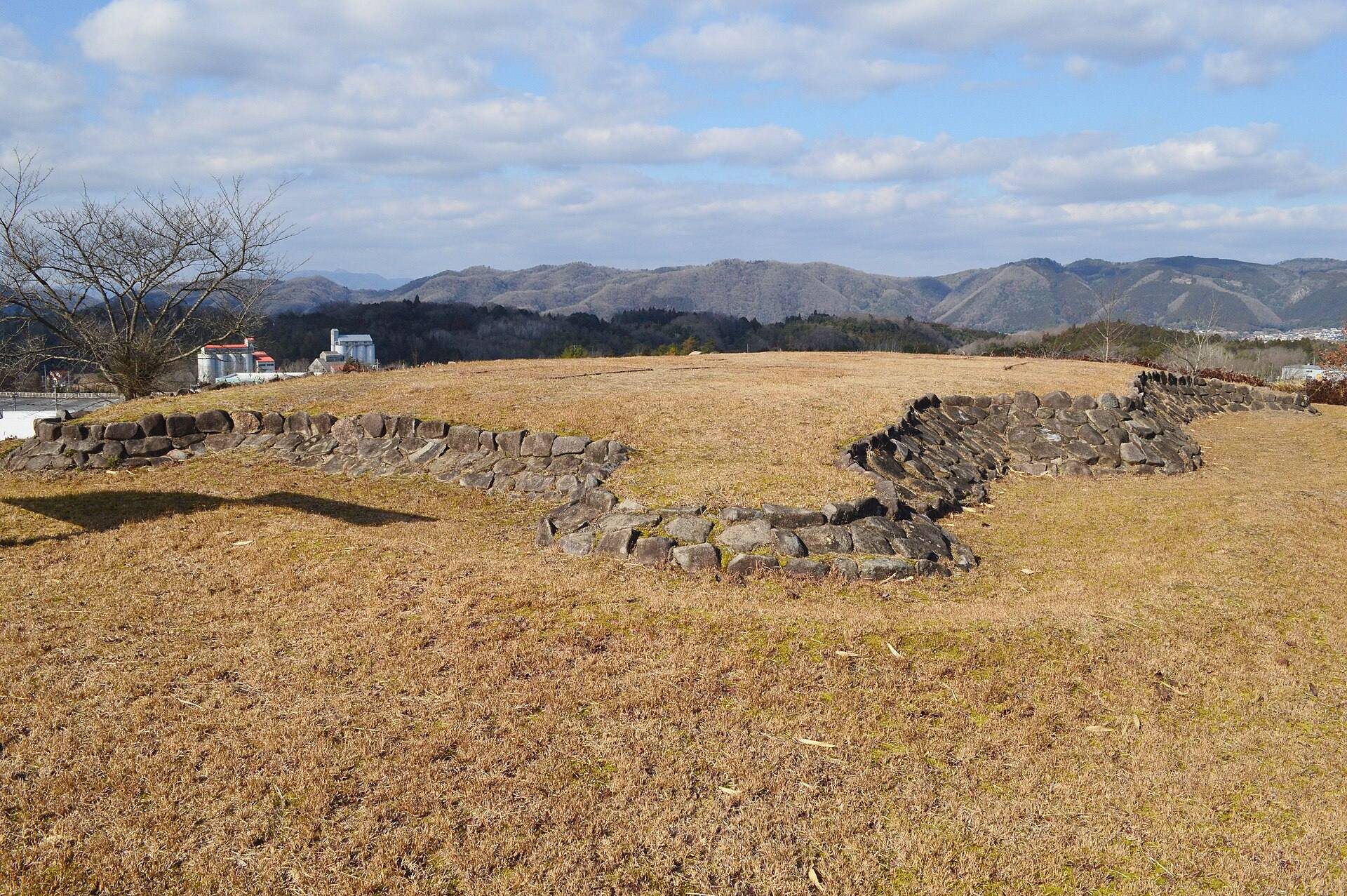
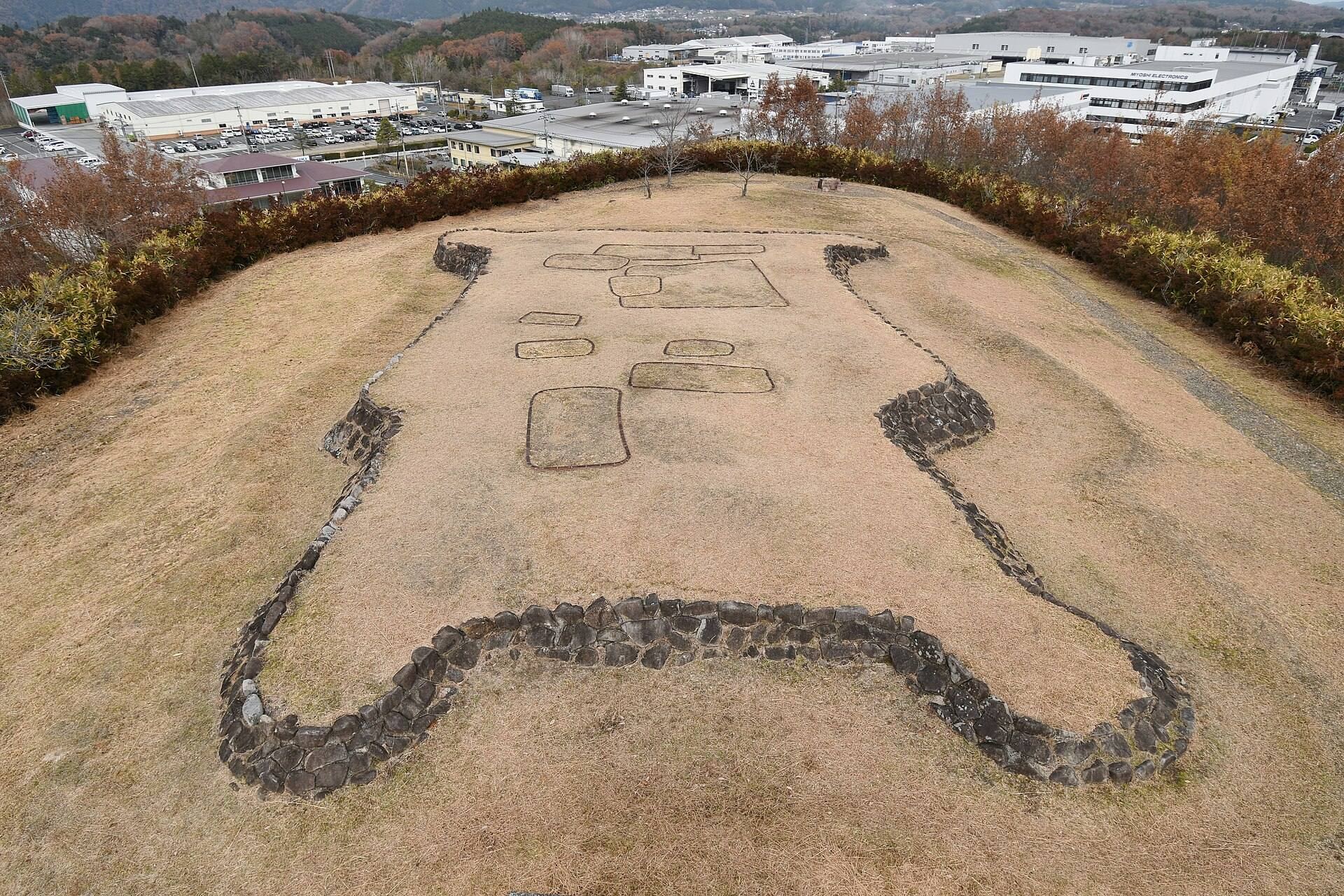
Yadani Kofun is an 18.5-metre-long mound standing 1.2 metres high. Its plan has projections at all four corners, a form associated especially with western Japan and the Izumo cultural sphere. A constriction along the eastern side gives the mound an outline resembling a front-and-rear-square-shaped burial mound, whose front and rear sections are both square. Stone facing covers the slopes, a line of stones marks the base, and a moat approximately 2 metres wide surrounds the mound.
Burials and excavated objects
Eleven burial facilities were identified within the mound. They include earthen pits, wooden coffins, and stone coffins. The principal burial lay toward the northern side and is considered to have held a wooden coffin. It contained jasper tubular beads and small glass beads, while iron arrowheads, iron knives, special vessel stands, special jars, and Yayoi pottery were recovered from the mound.
The eastern part of the mound and the surrounding moat yielded a large quantity of red-lacquered vessel stands and Yayoi pottery. The special stands and jars from the moat were made with clay matching that of the southern Kibi region. These ceremonial or funerary ceramic forms provide physical evidence of the connections expressed in the mound’s distinctive plan.
Square tombs and kiln
Two square tombs lie west of the main mound. Their wooden-coffin burials contained glass beads with natron, a naturally occurring salt composed chiefly of sodium compounds. In 2012, the natron in these beads helped identify them as products of the ancient Roman Empire.
A Kofun-period Sue-ware kiln is also located west of Yadani Kofun within the historic-site boundaries. Its remains represent the later manufacture of high-fired pottery at the archaeological group and form part of the physical evidence preserved alongside the earlier burials.