Kotachi Kofun: A Keyhole-Shaped Burial Mound in Japan
Site at a Glance
- Rating
- 3.4
- Popularity
- Very Low
- Country
- Japan
- Primary era
- Classical
- External website
- Open
- Eras represented
- Classical
- Civilizations
- Yamato
- Site type
- Burial
- Remains
- Burial Mound
On this page8 sections
History
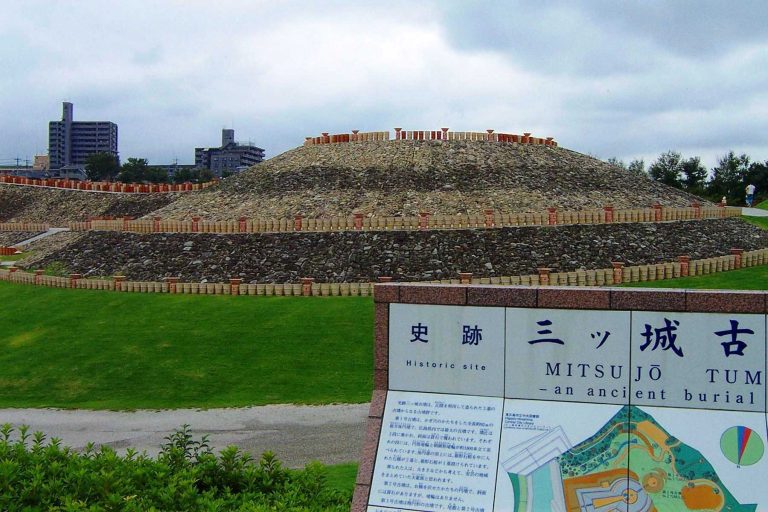
Kotachi Kofun is a Kofun-period burial mound in Akitakata, Hiroshima, Japan, built during the latter half of the fourth century, at the end of the early Kofun period. A kofun is a large earthen burial mound constructed in Japan chiefly between the third and seventh centuries. Kotachi Kofun is the second-largest kofun in Hiroshima Prefecture, after Mitsujo No. 1 Kofun, whose mound measures 92 meters in length.
Recognition and historical interpretation
Before 2008, the mound was understood as one enclosure of Yanagigajo, a mountain castle. Its identification as a kofun changed the interpretation of the ridge site and placed it within the development of early monumental burial practices in the region. The mound’s balanced form, carefully executed stone revetment, and finely made house-shaped haniwa have a strong Kinai regional character. The Kinai was the central region of ancient Japan around the later capitals of Nara and Kyoto. These characteristics have been interpreted as evidence that the Yamato kingdom, the early political power based in the Kinai, regarded the area as an important inland transportation junction linking the Seto Inland Sea with the Sea of Japan.
Related mound and archaeological investigations
Kotachi No. 2 Kofun was identified about 150 meters north of Kotachi Kofun. It is a square mound dating from the end of the third century to the beginning of the fourth century, providing evidence of an earlier phase of mound construction in the surrounding area. Excavations at Kotachi Kofun took place from fiscal years 2010 to 2013, followed by surveys confirming archaeological features in fiscal years 2018 and 2019. The Akitakata Municipal Board of Education carried out the investigations, with reports issued between 2015 and 2024.
Akitakata City designated Kotachi Kofun a Historic Site on January 20, 2010. Japan designated it a National Historic Site on March 1, 2016. Artifacts from the mound are displayed at the Akitakata Museum of History and Folklore.
Remains
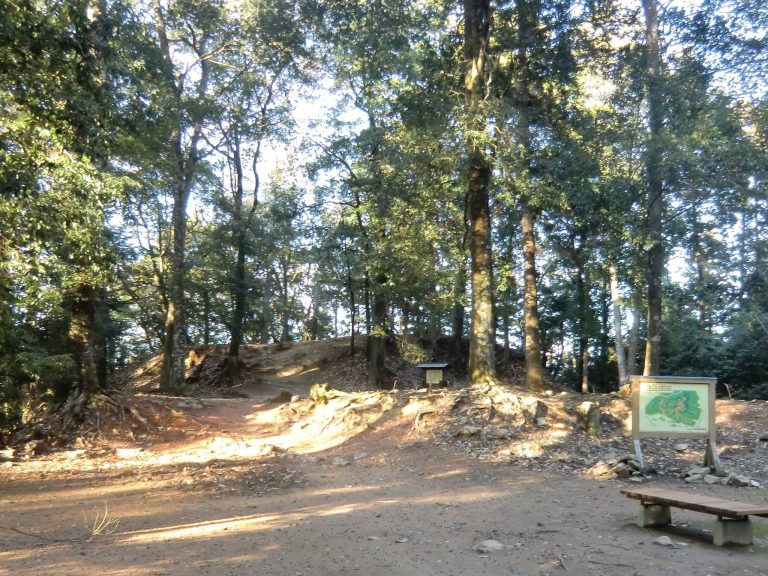
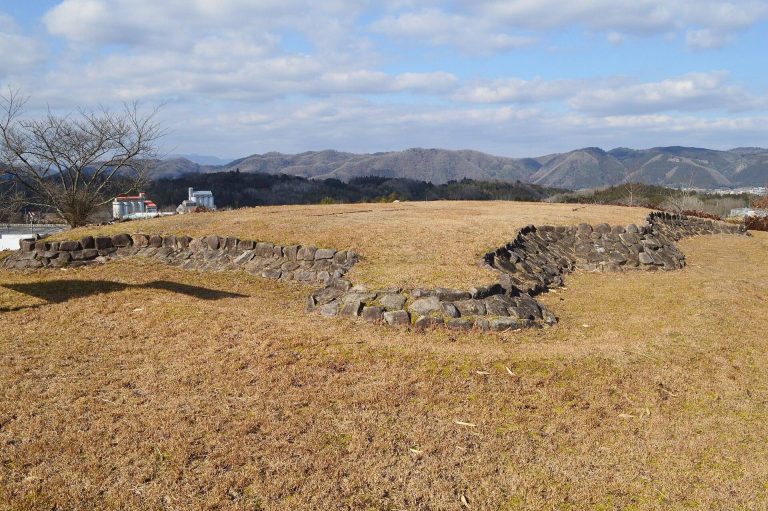
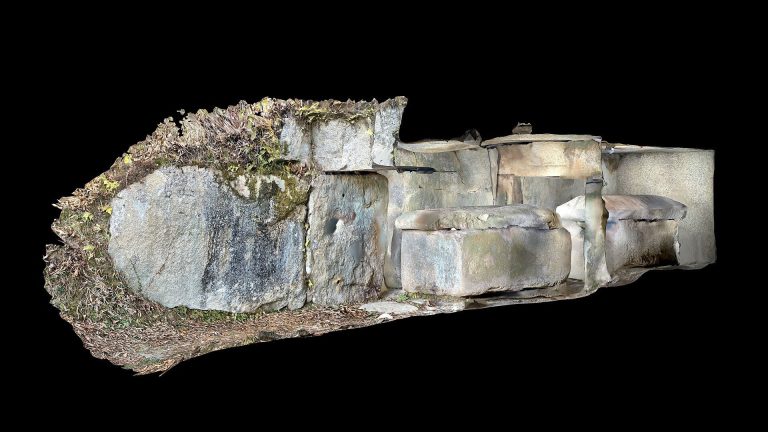
Kotachi Kofun stands on a ridge near the former center of Koda Town, at the southeastern foot of Mount Kikuyama. Viewed from above, it has the keyhole form known in Japanese as zenpo-koen-fun, combining a rectangular front section with a circular rear section. Its main axis runs north to south, with the rectangular section facing south. The mound is 77.5 meters long and has three tiers in the circular rear section and two tiers in the rectangular front section. The rear section is about 55 meters in diameter and 7 to 8 meters high, with a summit about 13 meters across. The front section measures 29 meters in length and 30.5 meters in width. Stone revetment covers the entire exterior, while a surrounding moat has not been identified.
Mound and burial facility
A long burial pit lies at the center of the circular rear section. It measures 7.5 meters by 2.8 meters, but the pit itself has not been excavated, leaving the form of its burial facility uncertain. Electrical investigation indicates a stone-built feature, such as a pit-style stone chamber or a gravel burial chamber. No grave goods have been identified because the burial facility remains unexcavated.
Haniwa arrangements
House-shaped haniwa
A paved-stone area slightly southeast of the rear section’s center contained five house-shaped haniwa arranged in a line. The group includes two raised-floor buildings with gabled roofs, one enclosure-shaped example, and two small examples. Another house-shaped haniwa, made with subsidiary houses, came from a shallow depression near the center of the rear section. This is regarded as an exceptionally rare example in Japan. Haniwa are clay funerary figures and cylinders placed on or around burial mounds, where they could mark boundaries or represent buildings, people, animals, armor, boats, and other objects.
Haniwa along the upper tier
A row of haniwa follows the outer edge of the uppermost tier of the circular rear section. It contains cylindrical, morning-glory-shaped, elliptical tubular, and lid-shaped examples. Excavation indicates that the pieces were deliberately installed at matching heights. Other figurative haniwa include boat-shaped and armor-shaped examples, adding further forms to the surviving evidence of the mound’s funerary display.