Chasuriyama Kofun: A Fifth-Century Chiefly Burial Mound in Japan
Site at a Glance
- Rating
- 3.9
- Popularity
- Low
- Country
- Japan
- Primary era
- Classical
- Eras represented
- Classical
- Civilizations
- Yamato
- Site type
- Burial
- Remains
- Burial Mound
On this page11 sections
History
Chasuriyama Kofun is a large Japanese burial mound in Asago, Japan, built during the first half of the fifth century in the Kofun period. The Kofun period was an era when powerful rulers and local elites were buried in monumental mounds as regional chiefly institutions and an early state developed. Chasuriyama is regarded as a local chiefly tomb, and its exceptionally rich first burial points to an occupant who was probably a warrior.
A Strategic Setting in Tajima
The mound was raised at the end of a ridge between the Wadayama and Santo basins, overlooking the Wadayama basin. This area connected Harima and Tajima, historical provinces corresponding broadly to southern and northern Hyogo. It also lay on the estimated route of the ancient San-in highway, which linked the Kinai region, the historical core around the ancient capitals of Nara and Kyoto, with the Sea of Japan coast and the San-in region.
Chasuriyama formed part of a sequence of large chiefly tombs built in the Wadayama and Santo basins. Around 1,400 burial mounds of different sizes were constructed across the area. The quality and quantity of Chasuriyama’s grave goods were comparable to those of large tombs in the Kinai region, while its burial customs and some construction methods retained strong local Tajima characteristics. The combination indicates connections between local leaders and the central regime, without erasing regional traditions.
Burials and Political Connections
The mound contained two burial facilities beneath its summit. The first held weapons, armor, mirrors, ornaments, and other objects in a particularly rich assemblage. Some items, especially the collared cuirass and bronze mirrors, are considered gifts from the central regime. The burial customs and parts of the mound’s construction nevertheless differed from those of contemporary tombs in the Kinai region.
These finds make Chasuriyama important for tracing the succession of chiefly tombs in Tajima and for examining relationships between regional authorities and the emerging central government. The weapons and protective equipment associated with the first burial also support the interpretation of its occupant as a person of military status.
Damage and Preservation
A fortification built on the mound during the sixteenth century caused heavy damage. Much of the original stone facing and many of the clay haniwa were lost. Haniwa were funerary clay figures and cylinders placed on or around burial mounds. Archaeological excavation by Hyogo Prefecture in 2001, undertaken in connection with construction of the Kitakinki-Toyooka Expressway, revealed the two burial facilities and a large quantity of grave goods.
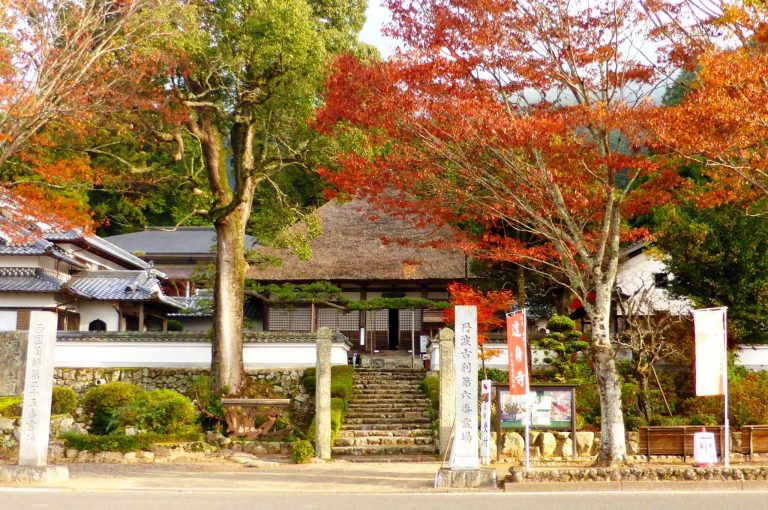
Chasuriyama was designated a National Historic Site in 2004, and its excavated artifacts became Important Cultural Properties in 2013. The mound has been preserved as Chasuriyama Kofun Park. A learning center at its western foot presents the site through video and panel displays, while the Asago City Buried Cultural Properties Center stores and exhibits additional finds.
Remains
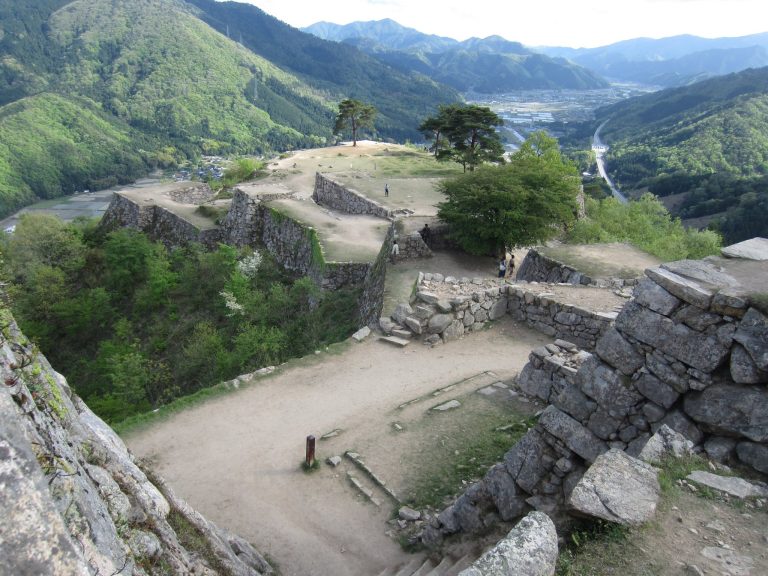
Chasuriyama is an elliptical circular mound, approximately 90 metres along its major axis, 78 metres along its minor axis, and 18 metres high. Other measurements give its diameter as about 86 metres. It is among the largest circular burial mounds in the Kinki region. Built in two stages, the mound has a flat summit measuring about 35 metres from east to west and 30 metres from north to south. The surviving remains combine the broad raised form of the burial mound with traces of its original stone and clay installations and the excavated structures beneath the summit.
Mound Construction and Haniwa
The mound originally had stone facing made from angular stones gathered from the underlying ground. A surviving section remains in the northeastern part. This construction differs from the river stones commonly used for facing other kofun. The evidence preserves a local approach to building the mound even though its scale and grave goods connected Chasuriyama with wider political networks.
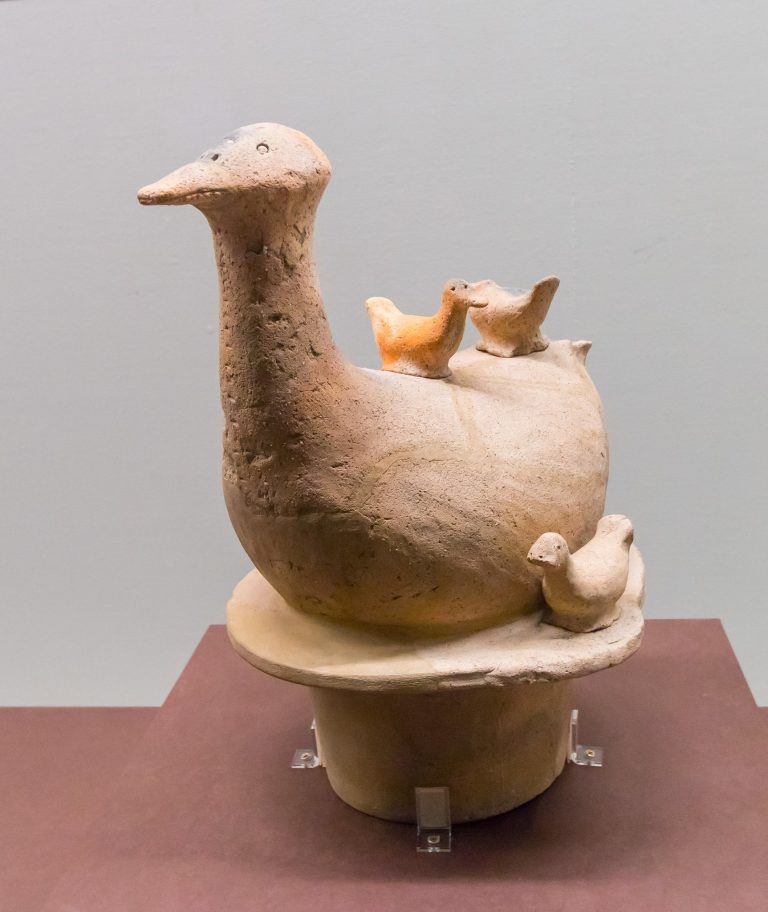
Cylindrical and morning-glory-shaped haniwa stood around the summit’s edge and along the mound’s flat terrace. Morning-glory-shaped haniwa had a distinctive vessel-like form. Bases survive at approximately ten locations on the summit and at one location on the northern terrace. Most of the haniwa collapsed or fell down the mound, although some fallen pieces can be restored to complete examples.
Burial Facilities
First Burial Facility
The larger First Burial Facility had a burial pit 13.6 metres long and 10.1 metres wide. Inside it was an assembled wooden coffin about 8.5 metres long and one metre wide, with the deceased’s head facing east. Its side boards were about 80 centimetres high. The coffin had no bottom board. Instead, its central chamber rested on gravel, where the body was placed. Clay surviving around the lid and side boards shows that the wooden coffin was enclosed in a substantial clay covering.
Red pigment covered the inner surfaces, and vermilion was detected near the head. Partitions divided the coffin into three or four sections, including a central chamber for the body and eastern and western side chambers. The western chamber appears to have been divided into two smaller rooms, giving separate areas for different groups of grave goods.
Three bronze mirrors lay east of the head in the central chamber. They measured 16.2, 15.7, and 16.5 centimetres across. The first was a panlong mirror, the second showed paired deities and animals, and the third had linked-arc decoration, also called an inner-floral design. The linked-arc mirror was a Chinese mirror of the Wei-Jin period, while the other two were Japanese imitations of Chinese mirrors.
Nineteen swords and other bladed weapons were arranged in a U-shaped formation beside the body and east of the head. Four ritual combs and numerous beads were also placed east of the head. House-shaped and umbrella-shaped figurative haniwa had fallen into the burial pit. Their position indicates that they had been placed directly above the pit, probably as part of the burial ceremony.
Eastern Side Chamber
The eastern side chamber held two suits of armor, weapons, an iron axe, and a hand axe with an iron handle. The armor included a triangular-plate, leather-laced cuirass with a collar and a rectangular-plate, leather-laced cuirass, together with two helmets fitted with neck guards. Other fittings included finial pieces for attaching decorative mountain-bird feathers, shoulder guards, neck armor, and part of a defense for the lower body.
Six of the ten ritual combs associated with the First Burial Facility were placed on the fragmentary lower-body armor in this chamber. Shield remains also occurred here. Additional shield remains came from the central chamber and the eastern smaller room of the western chamber. The surviving evidence shows that equipment for protection and ceremony was distributed among several compartments rather than placed in a single group.
Western Side Chamber
The western side chamber contained further swords and iron arrowheads. Its eastern smaller room held these weapons, while its western room contained two shields. One sword had a ring-shaped fitting at the end of its handle, a form associated with Korea, and the iron-handled hand axe was also a rare Korean-related object.
Approximately 370 iron arrowheads probably represent the surviving metal points of bundles whose organic shafts and bindings decayed. The shields were probably covered with leather and coated in red lacquer. Only lacquer films survive, carrying feather-like, diamond, and sawtooth patterns. The shields appear to have been placed over other grave goods.
Second Burial Facility
The Second Burial Facility had a burial pit 7.5 metres long and 3.7 metres wide. It contained an assembled wooden coffin about four metres long, divided like the first coffin into a central chamber and eastern and western side chambers. The central chamber had a gravel floor, but this coffin had no clay covering.
Its contents included a 14.8-centimetre beast-band bronze mirror, two iron swords, beads, and more than fifty small agricultural implements. The mirror lay near the deceased’s chest. Near the neck was a necklace of a magatama, a curved comma-shaped bead used as an ornament and ritual object, together with tubular beads. One sword lay beside each side of the body, and two combs were positioned near the pillow stone.
The eastern side chamber contained more than fifty small iron sickles, hand sickles, axes, and related agricultural implements. Their small dimensions indicate ritual use rather than practical work. The western chamber held fourteen iron arrowheads. Together, the two burial facilities preserve contrasting groups of military, ceremonial, ornamental, and agricultural objects within the mound’s divided coffin arrangements.