Xlapak: A Maya Archaeological Site in the Puuc Region of Yucatán
Site at a Glance
- Rating
- 4.4
- Popularity
- Low
- Country
- Mexico
- Primary era
- Medieval
- Eras represented
- Medieval
- Civilizations
- Maya
- Site type
- City
On this page9 sections
History
Xlapak is a Maya archaeological site in Oxkutzcab Municipality, Yucatán, Mexico, developed in the Puuc architectural tradition between approximately AD 600 and 800. Its period of greatest activity continued from about AD 800 to 1000, during the later phases of the Maya Classic period. The name is also rendered Xlapac or Xlabpak and is translated as “old walls.”
Settlement and Regional Development
Xlapak grew in an agriculturally suitable valley within the Puuc Hills. Maize fields surrounded the settlement, while chultúns, bottle-shaped underground chambers used to collect and store water, supported farming. Dogs and turkeys contributed to the food supply, as did hunting in the surrounding forest.
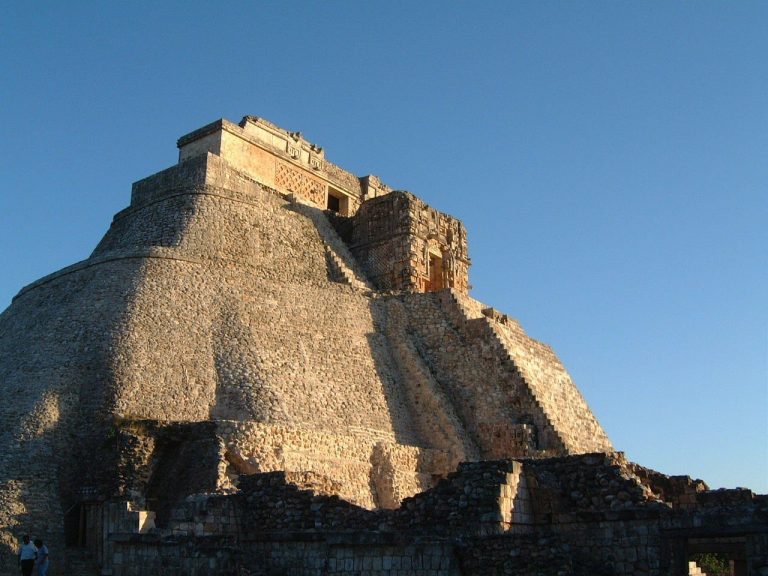
During Xlapak’s peak, the wider area was densely settled and connected to long-distance exchange. Salt, honey, feathers, wax, and cotton formed part of this regional trade. Xlapak was not the dominant center of the area. It stood under a larger center that was itself subordinate to Uxmal, a major Maya urban center known for its monumental Puuc architecture.
The settlement occupied a valley between Labná and Sayil, each approximately 4 kilometres away. Its central buildings stood on the flat valley floor, while remains of perishable structures have been found in the surrounding hills. Xlapak formed part of a closely connected Puuc landscape that also included Uxmal, about 37 kilometres by road to the northwest, and Oxkutzcab, approximately 30 kilometres to the southwest.
Archaeological Investigation
Archaeological research cleared Xlapak during the early twentieth century. Mexico’s National Institute of Anthropology and History, the federal institution responsible for archaeological research and conservation, restored Xlapak and other nearby Puuc sites during the first half of that century. The principal building was partly restored or reconstructed around the middle of the century. Further investigation took place in 1965 under the direction of César A. Sáenz.
The character of Xlapak’s religious life near the end of the Classic period remains debated. One interpretation proposes that beliefs helping to define community identity had weakened during this later phase, although the broader meaning of the site’s religious organization remains unresolved.
Remains
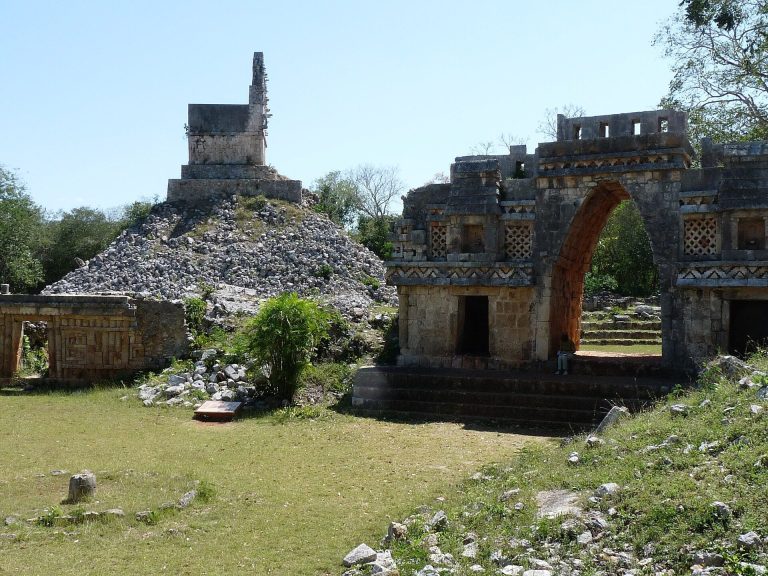
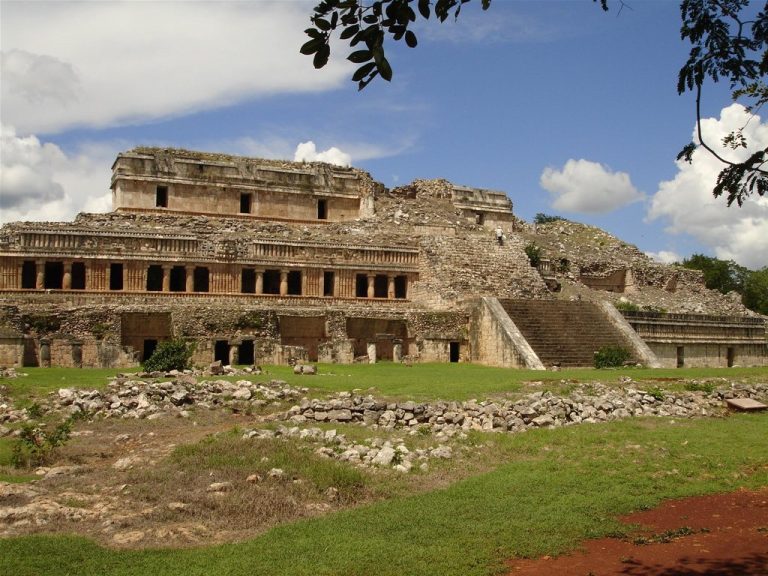
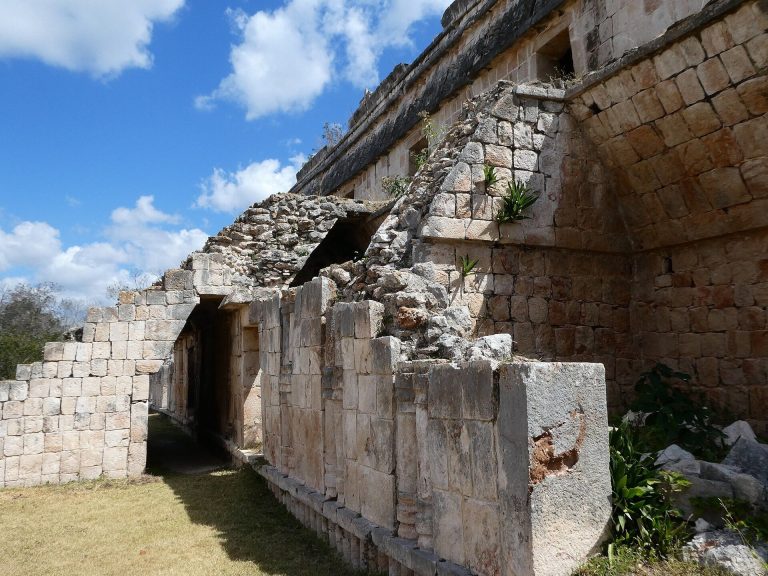
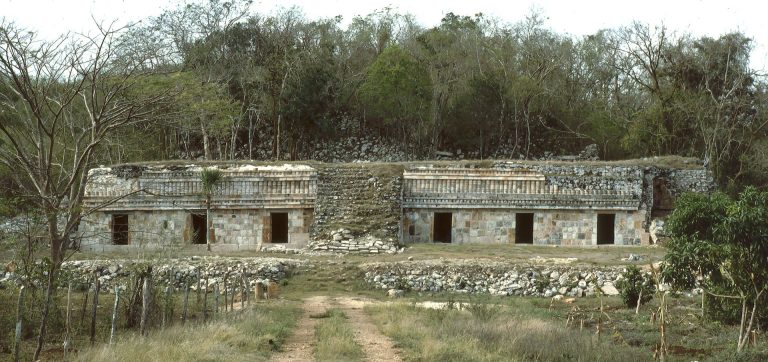
Xlapak’s remains occupy a valley in the forested, karst-limestone landscape of the Puuc Hills. Three principal groups contain three important palace buildings. Their architecture belongs to the Puuc tradition, whose façades combine carefully fitted stone mosaics with strongly divided lower and upper sections. The lower portions were left plain, while the upper sections projected slightly and rose above the ceiling line. Their mosaics were probably left unplastered and painted.
Group 1
Building I
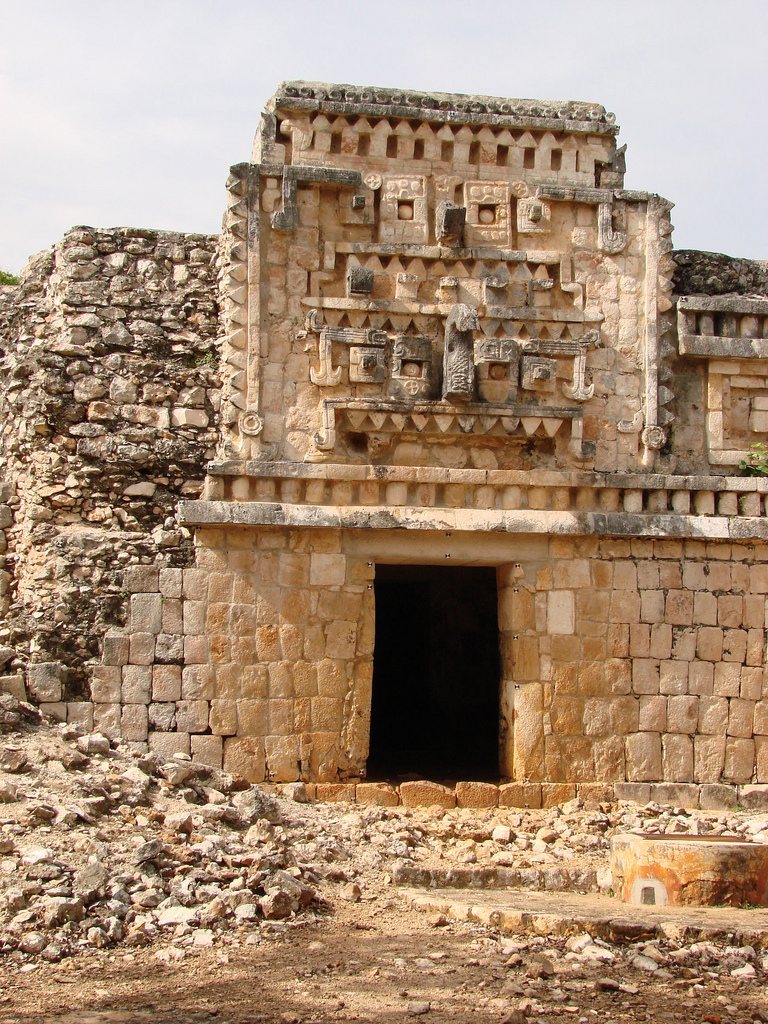
The principal structure of Group 1, known as the Palace or Building I, contains nine rooms and decorated façades. It is partly destroyed, yet its surviving architecture remains among the most impressive examples of Maya building in Yucatán. Three entrances open onto its main façade, which also has corner columns.
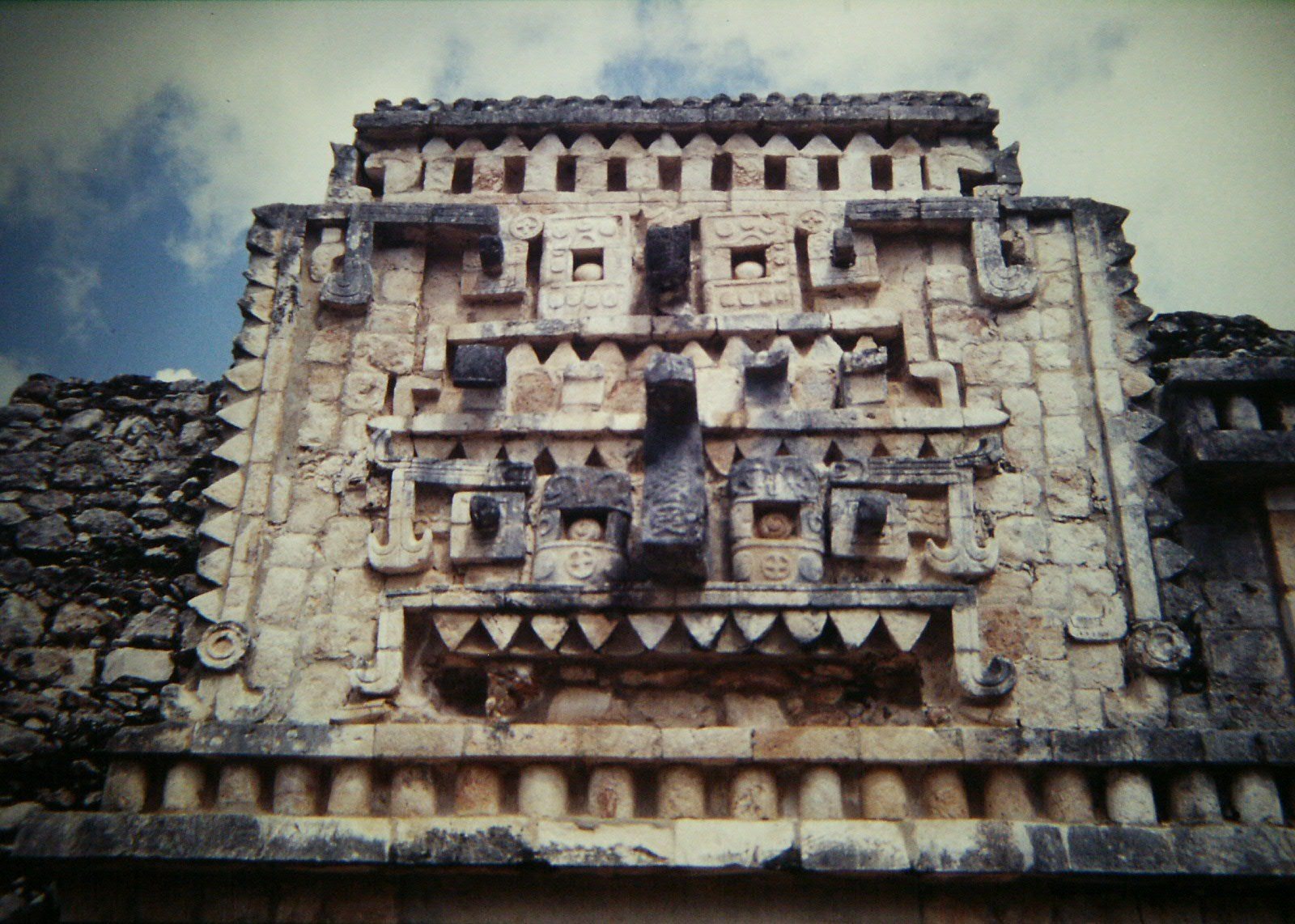
Large, superimposed masks of Chaac, the Maya rain deity, decorate the upper façade. Chaac was associated with rain and agriculture and is commonly shown with a prominent nose, fangs, and angular facial features. At Xlapak, the masks include several rows of tooth-like elements, while geometric and abstract designs fill the spaces between them. The masks and other architectural decoration remain well preserved.
Group 2
Palace Buildings
A second palace in Group 2 carries column decoration. Buildings II and III are largely destroyed, but surviving portions of their ornamental architecture indicate that they were also imposing structures. Together with Building I, they show how palace architecture formed the principal monumental expression of Xlapak.
Stone Objects and Architectural Details
Archaeological finds from Xlapak include a stone phallus approximately 1.2 metres high and several anthropomorphic stone heads about 40 centimetres high. The original function and position of these objects remain uncertain. They may have stood independently or been attached to buildings. The heads now rest on architectural elements shaped like bundles of tied wooden rods or the joints of reeds, forms also found elsewhere in Puuc architecture.